
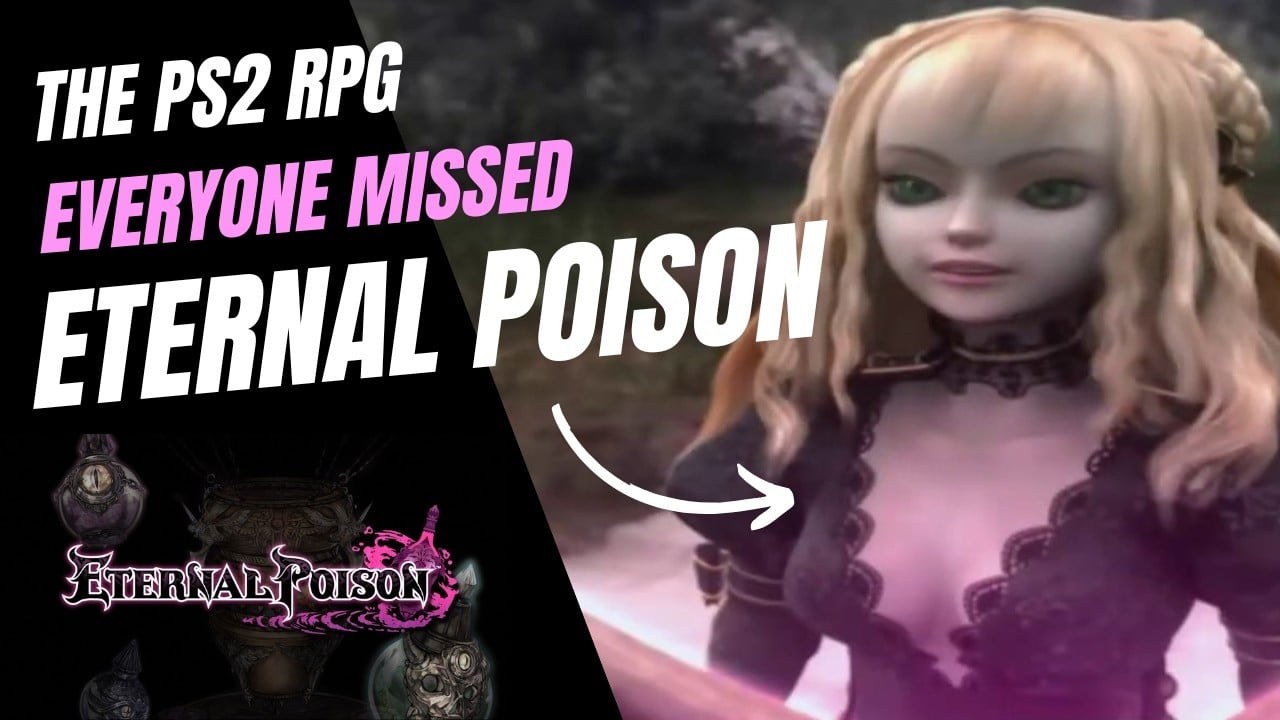
Most tactical RPGs want you to wipe the enemy off the map as fast as possible. Eternal Poison wants you to leave one alive, beat it to within an inch of its life, and drag it home in a book.
That one idea is what makes this game. It turns every battle into a gamble and every map into a hunt, and it’s why Eternal Poison is one of my favorite hidden gems on the PlayStation 2 (PS2).
This post contains affiliate links. If you buy through them I may earn a small commission, at no extra cost to you. It helps keep the channel going.
What is Eternal Poison?
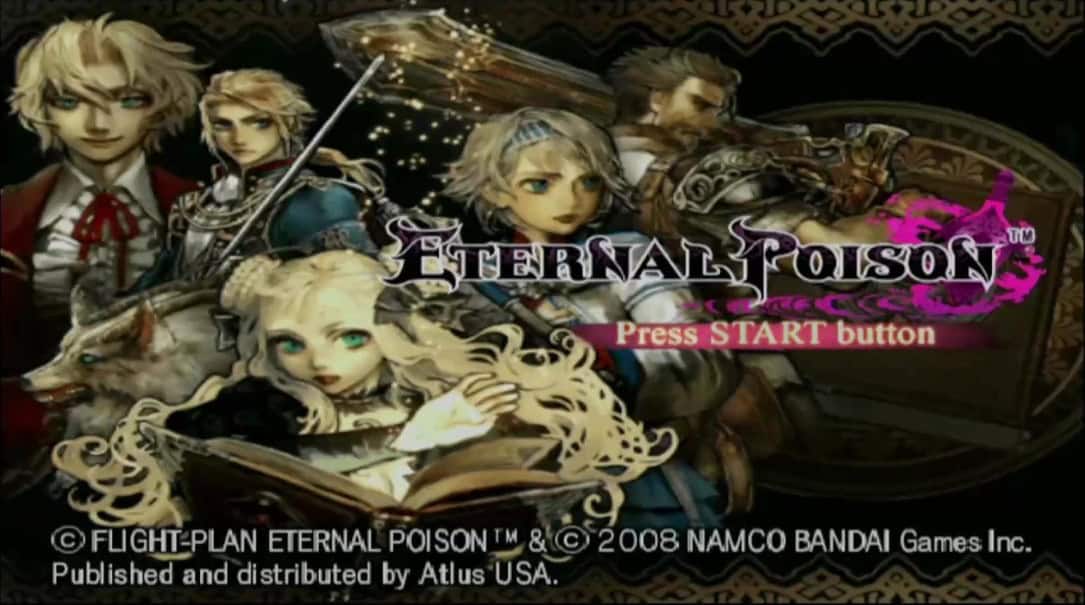
Eternal Poison is a tactical RPG developed by Flight-Plan, the studio behind Summon Night. It came out in Japan in early 2008 as Poison Pink, and Atlus brought it to North America in November 2008.
That timing matters. This is late-era PS2, when most publishers had already moved on to the PS3 and Xbox 360. Atlus was still doing what Atlus does best: bringing over strange, system-heavy games for the people who love that stuff.
The setup is dark fantasy. A demon realm called Besek appears and starts swallowing the kingdom, and different groups head inside for their own reasons. The back of the box calls it “five stories in one”: you pick which of five parties to follow, each with its own branching path, and not all of them are heroes.
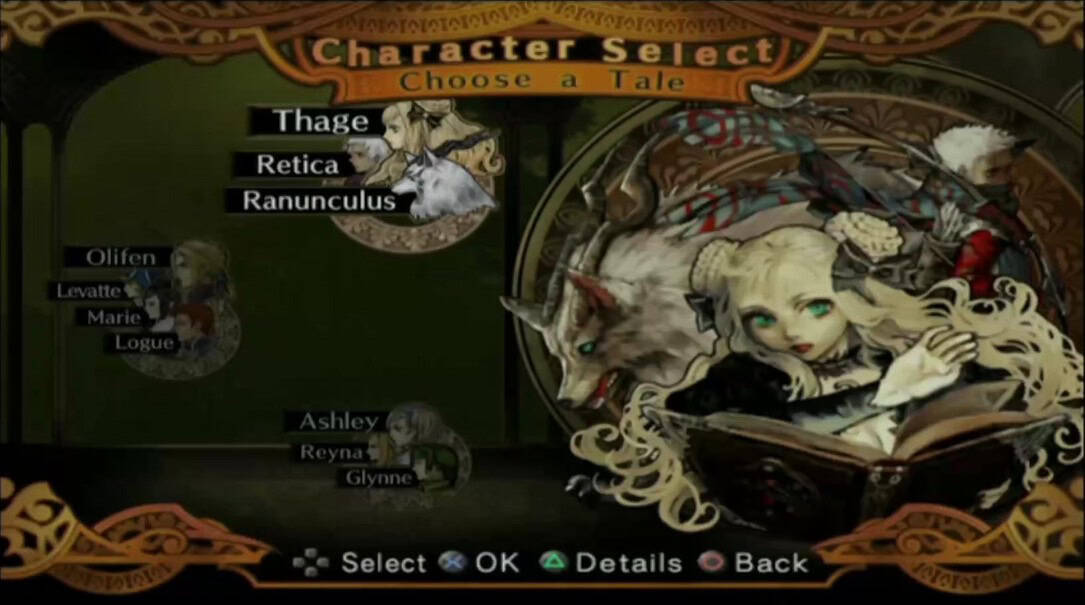
Thage, a book, and a very bad contract
I started with Thage, a witch who walks into Besek with a talking wolf named Ranunculus (Raki for short) and a book called the librum. Her goal is simple: “I’ll seize all the Majin. That’s why I’m in Besek.”
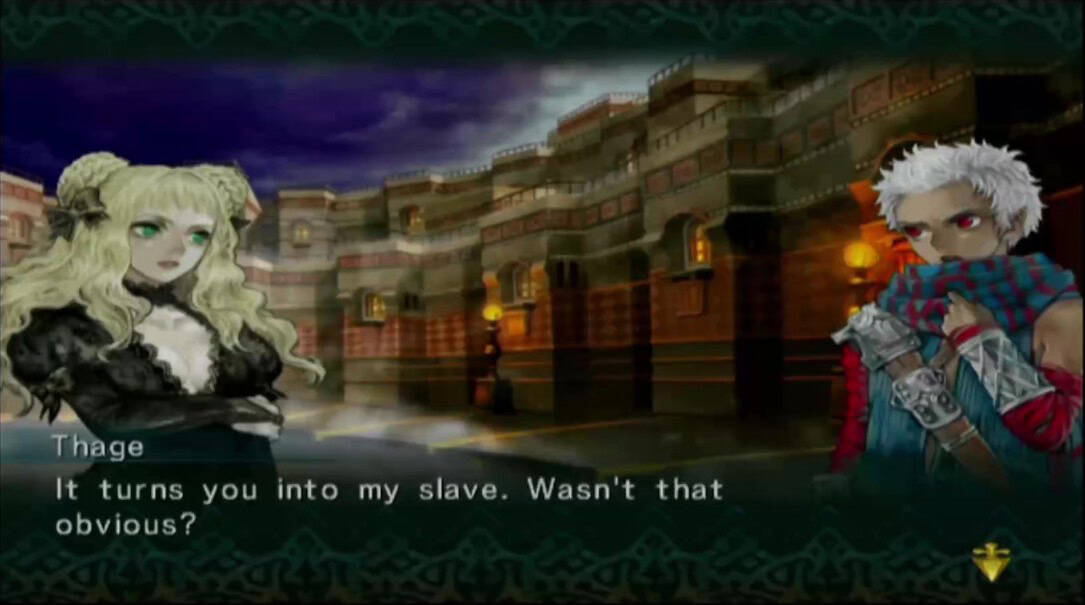
She is not a nice person, and that’s what makes her fun. Early on she runs into a kid named Retica in the middle of a Majin attack and binds Retica with something called the Oath of Obedience. When Retica asks what that means, she answers: “It turns you into my slave. Wasn’t that obvious?”
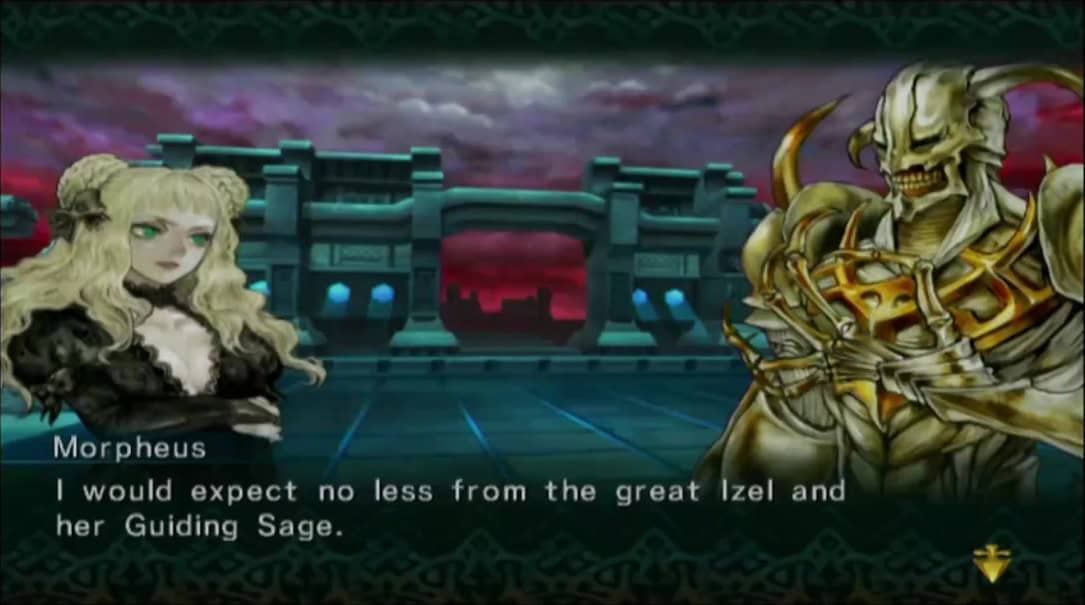
Then there’s Morpheus, a Majin Lord in gold armor who wants Thage’s librum and keeps showing up to threaten her for it. The game is full of characters with motives, and very few chosen-one speeches.
The hook: capturing Majin
The demons of Besek are called Majin, and catching them is the heart of the game. Here’s how it works, straight from the game’s own help screens:
- Overkill: every Majin has an Overkill threshold. Hit it hard enough to drop its HP below that number, and it becomes Bound.
- Capture: a Bound Majin can be captured. Any party member can do it, storing the Majin in Thage’s librum.
- Once captured, you have two choices: set the Majin and summon it to fight for you in battle, or throw it into Camellia for bonuses. More on Camellia in a second.
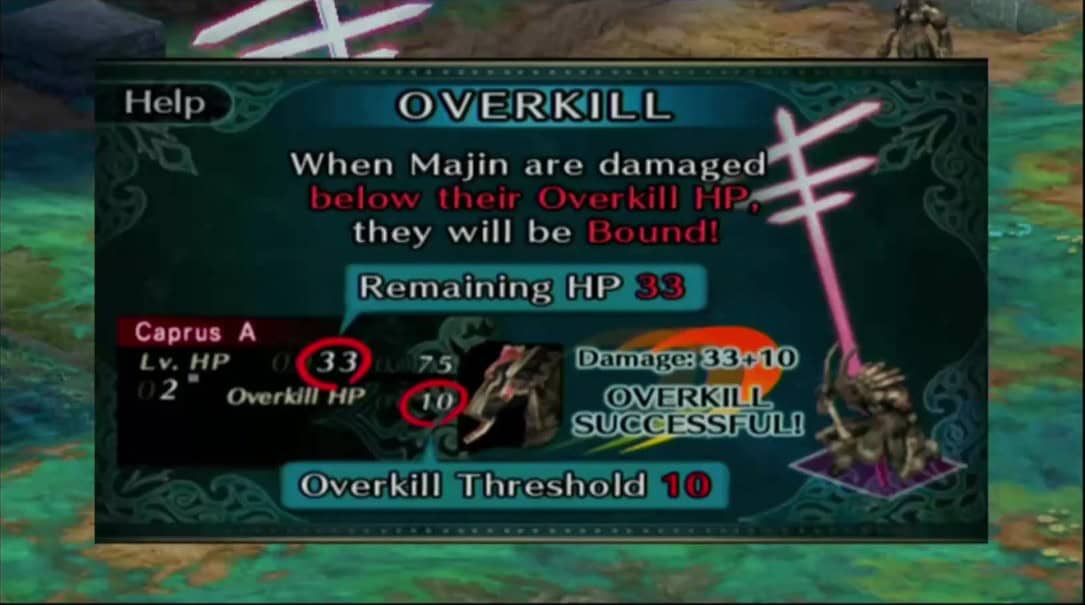
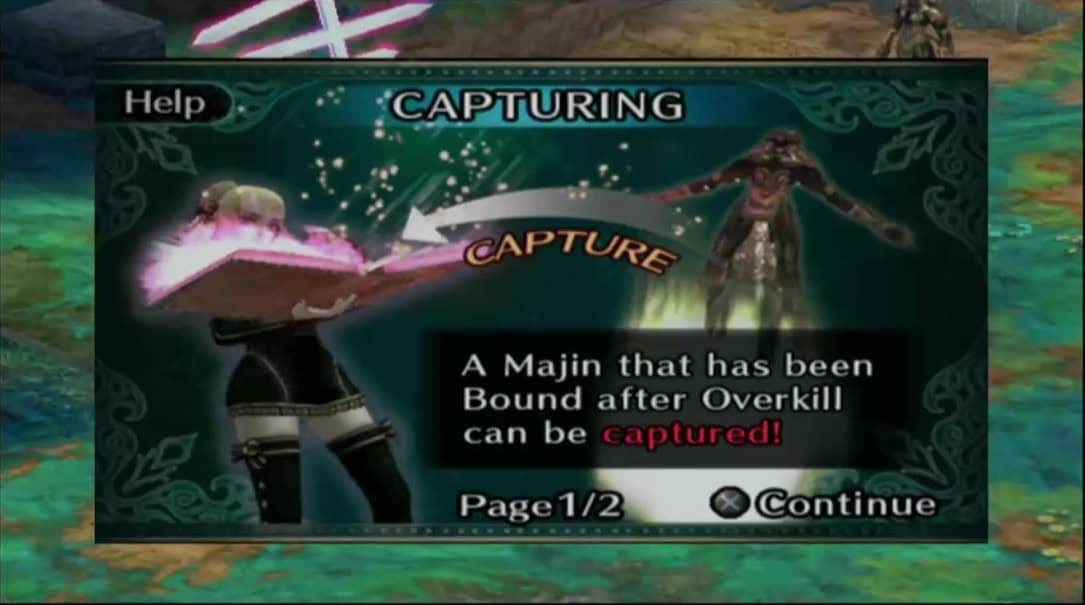
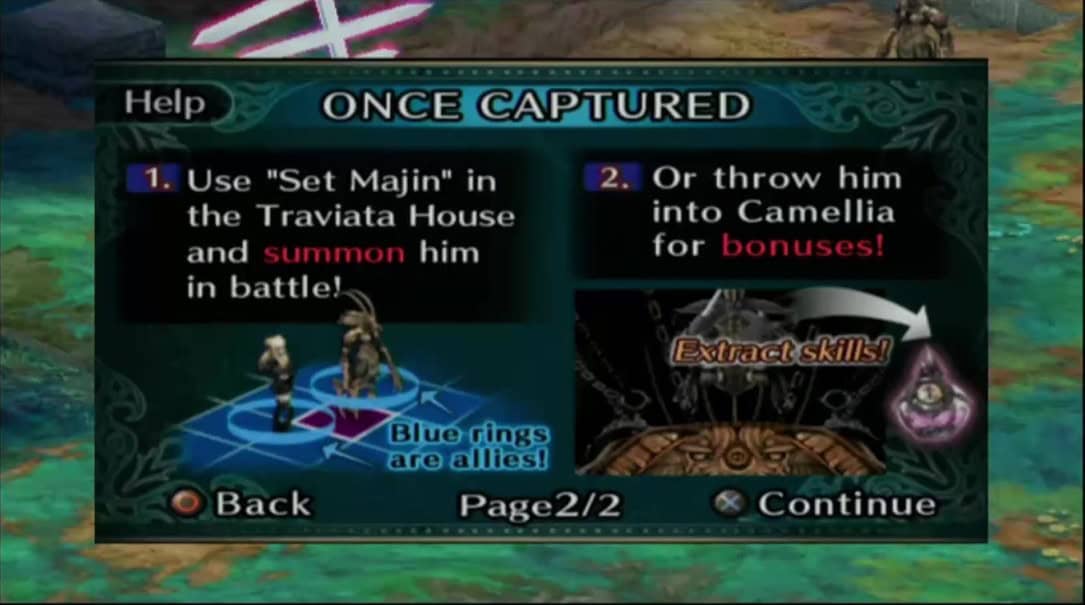
This changes how you play. You can’t just hit everything as hard as possible. You want each Majin low enough to bind, but not dead. So every fight becomes “win this battle, catch the one I want, and don’t get my party smoked doing it.”
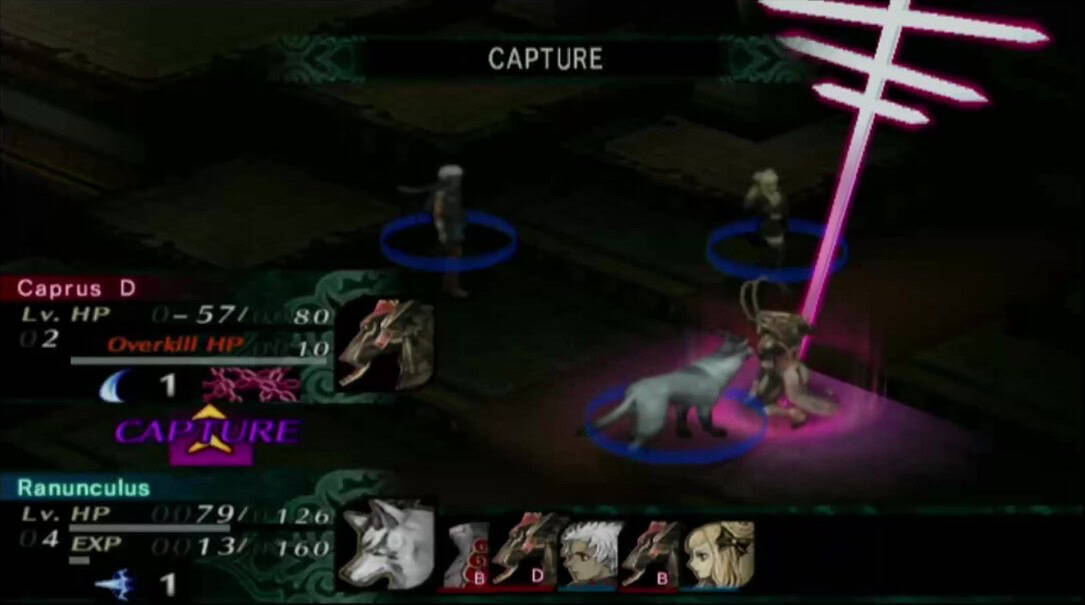
Once I realized capturing wasn’t optional, that it was basically a second progression system, I started playing way more carefully. I’d go into fights thinking: which one do I want, and how do I get it without losing anybody?
Camellia: the blender
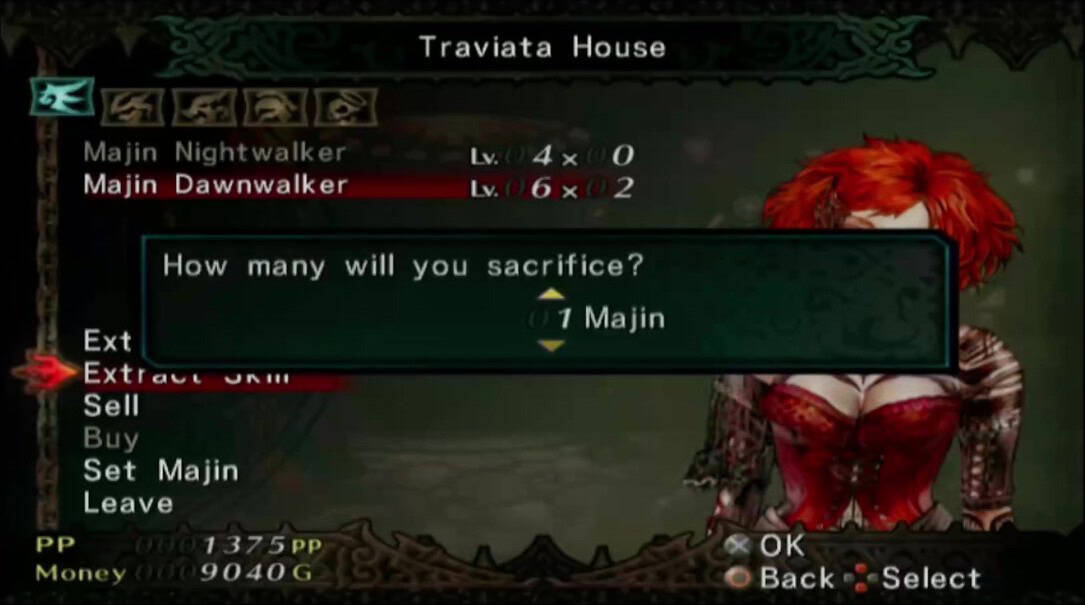
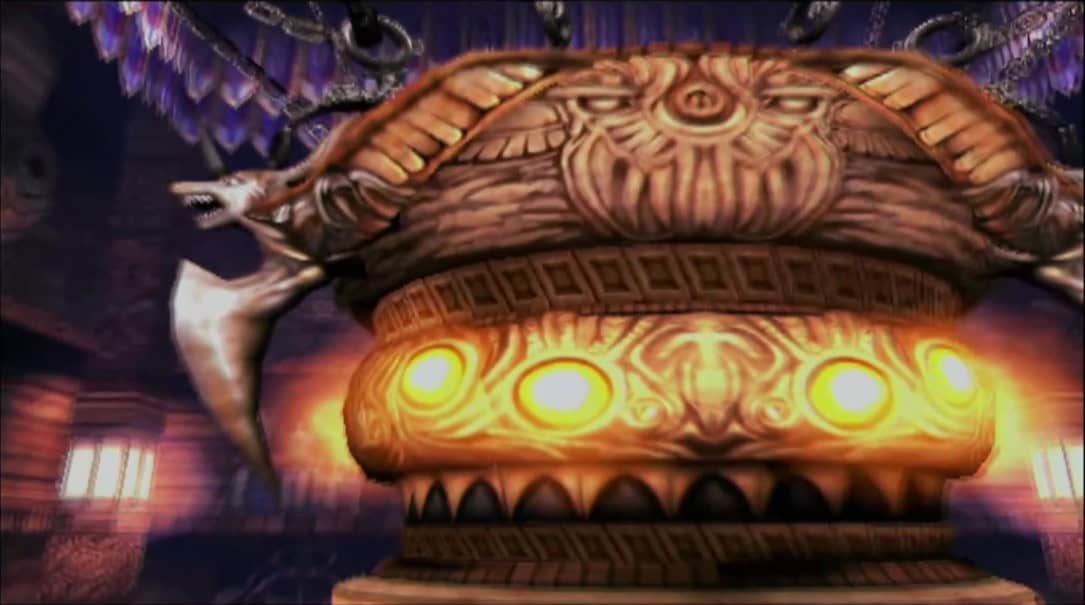
Back in town, the Traviata House is where you manage your captured Majin. You can set them for battle, sell them, or feed them to Camellia, a giant ornate machine that turns Majin into PP and new skills. The menu literally asks, “How many will you sacrifice?”
I call it the blender in the video, and I stand by that. You sure about that?
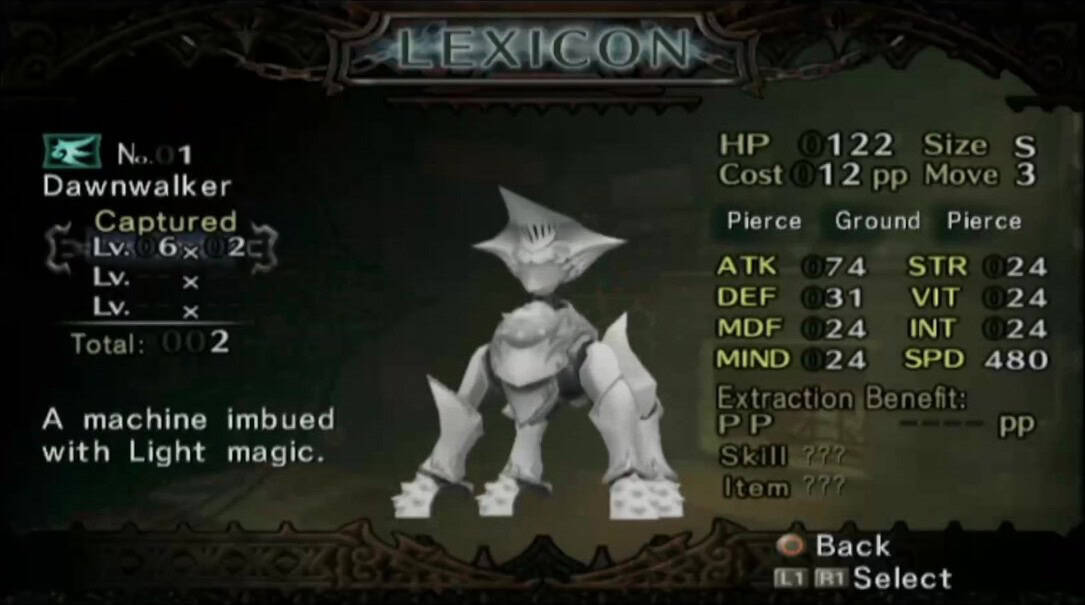
Every Majin you catch also gets logged in the Lexicon, sorted into types like Starving, Wretched, Howling, Dreadful and Infernal, with stats and a short description for each. If you’re the kind of player who has to fill every page, it’s dangerous.
How the battles play
The battles are classic tactical RPG territory: an isometric grid, movement ranges, attack ranges, and enemies that punish sloppy positioning. Charging in because your stats are higher won’t save you.
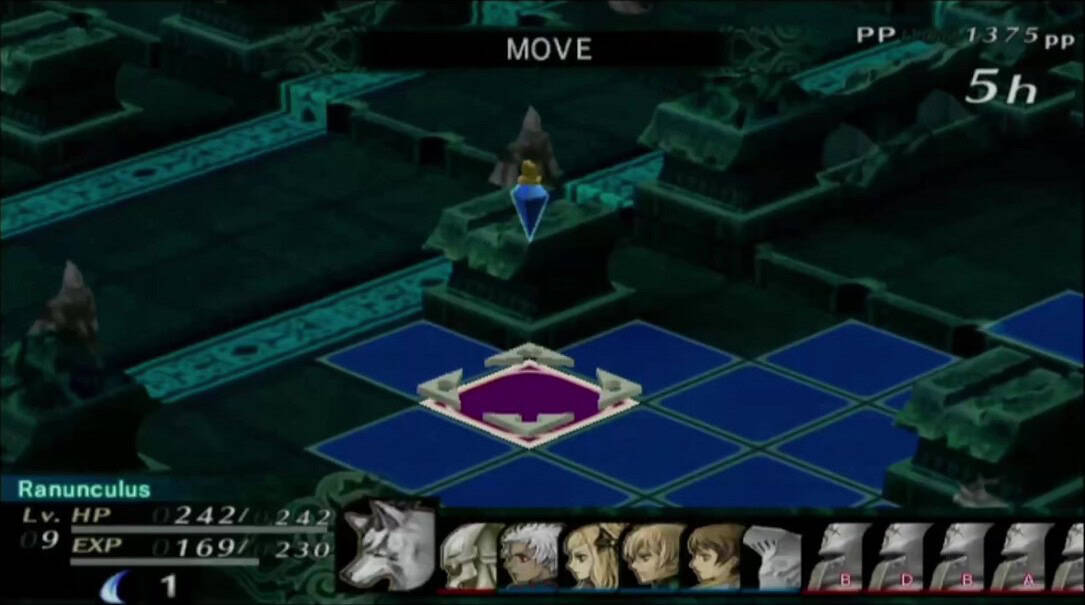
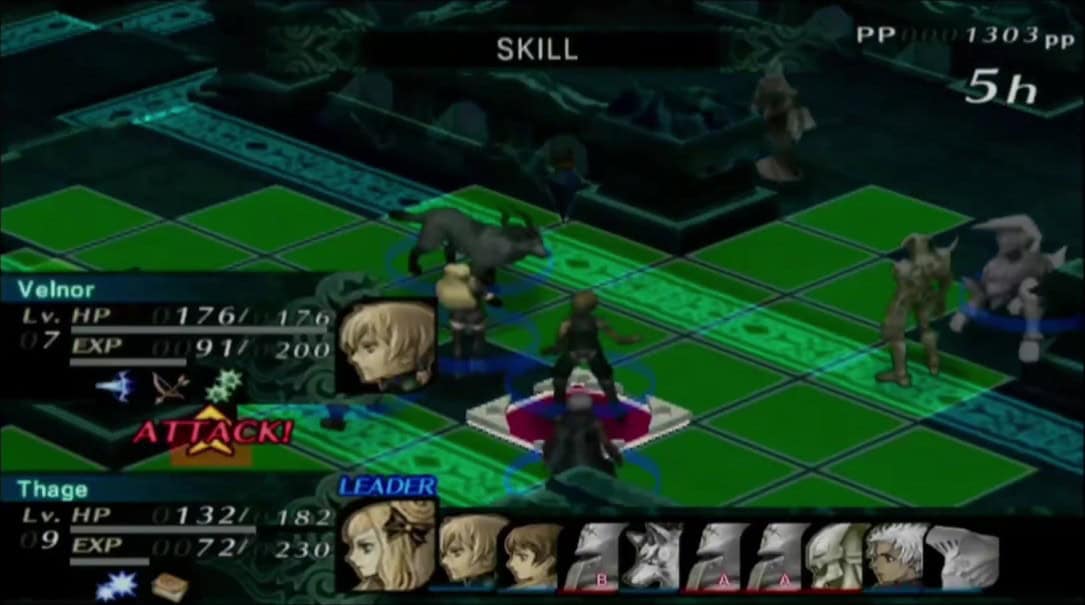
A few systems keep it interesting:
- Lead and Waiting: units that don’t act on their own can move and attack during your leader’s turn instead.
- Combos: two allies can attack the same target at once for a lot more damage, which is handy when you’re trying to hit an Overkill threshold.
- Weaknesses and resistances: every Majin has a weakness, and some are wrapped in a Demon Aura that blocks every attack until you find it.
- Class changes: characters can switch classes as they level up.
- Lose your main character and it’s over. Protect the witch.
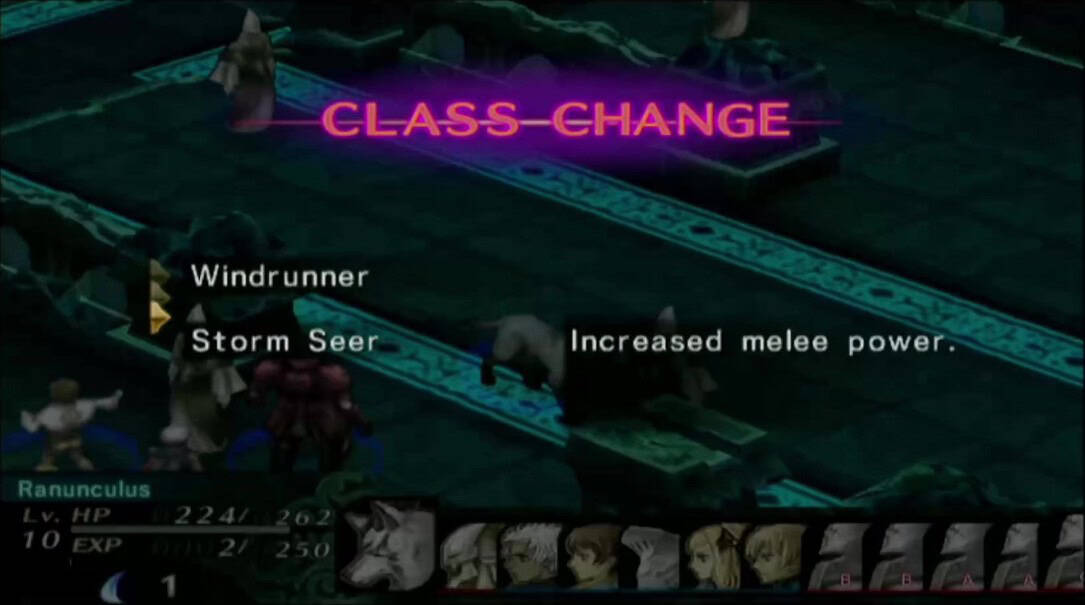
You won’t find a big crafting grind here. No farming materials for two hours to make one sword. The depth comes from how you fight and what you catch. It scratches the collector itch through hunting instead of crafting.
Between battles
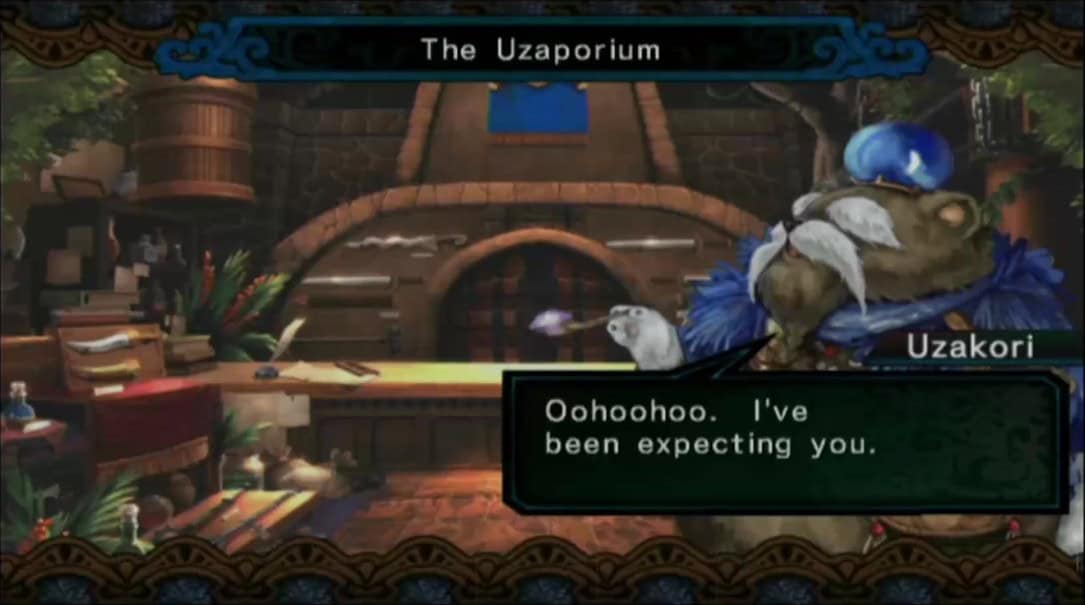
Your home base is Twilight’s Rest, in the city of Isapolis. From there you shop, gear up, save, and talk to some memorable weirdos, like Uzakori, the frog-like merchant who runs the Uzaporium and greets you with “Oohoohoo. I’ve been expecting you.”
Art and music
Eternal Poison has a look you’ll remember, whether you love it or not. The character designs are by an illustrator who goes by Tomatika, and they feel like they’re from one very specific moment in PS2 RPG history. If the style looks familiar, Tomatika has also drawn Final Fantasy XIV characters, which have their own following online. Fans of her work still find their way back to this game and wonder why nobody talks about it. Same.
The soundtrack, from a team that includes Takashi Okamoto, Yuki Nakagawa and Kazuma Katagiri, isn’t hero-anthem energy. It’s restrained and unsettling, more “you’re somewhere you shouldn’t be” than “go save the world.”
Does it hold up?
I think it still holds up today. The art style and the animations look great, and that’s a big part of the charm. After a while, though, the battle animations get repetitive and can slow things down. My move: leave them on the first time through a new area so you get the full show, then switch them off when you’re replaying areas.
Critics were split when it came out. IGN gave it a 3.5 out of 10, and Destructoid gave it an 8. That gap tells you a lot. If you want a polished, mainstream strategy game, this might not be it. If you like games that are a little strange but clearly made on purpose, it’s exactly your thing.
Collecting Eternal Poison
Here’s what matters if you’re hunting for a copy. The North American release came packed with a soundtrack CD. So a complete-in-box (CIB) copy is the case, the game disc, the soundtrack disc, and the manual. Plenty of loose copies and “complete” listings are missing that second disc, so check the photos before you buy.
My copy is the full set, soundtrack CD and all, which made me very happy. And it’s in great condition still. I’ve taken very good care of this game.
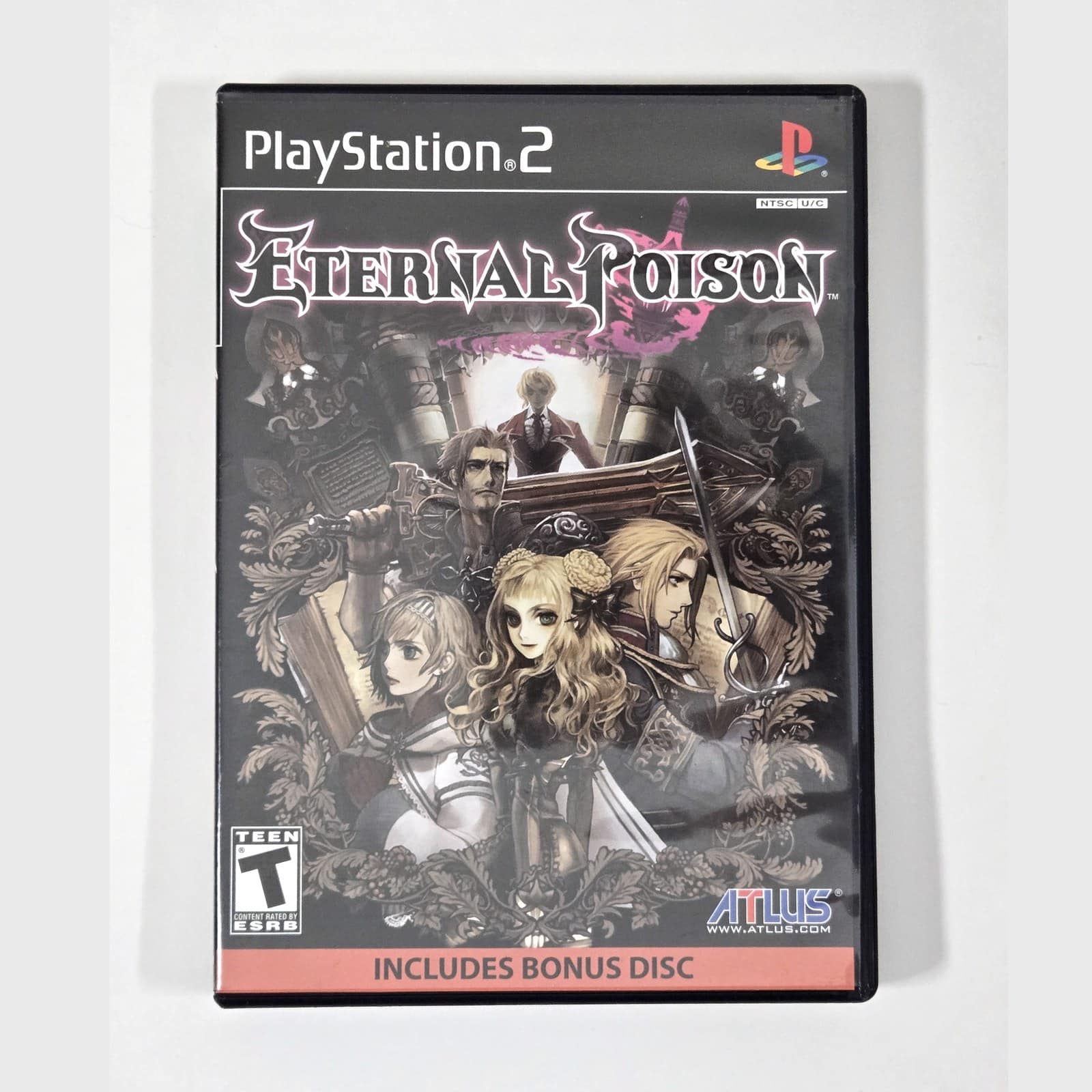
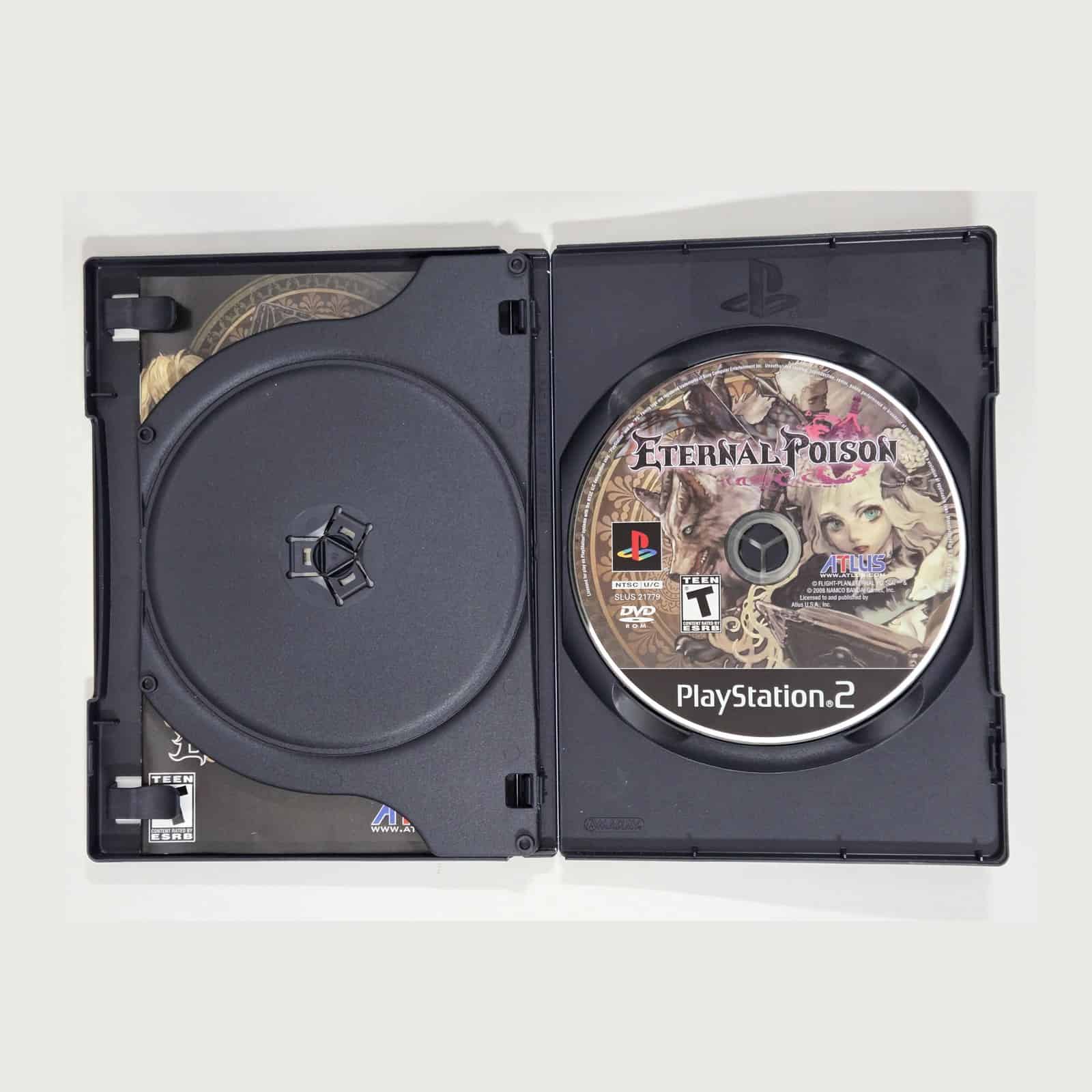
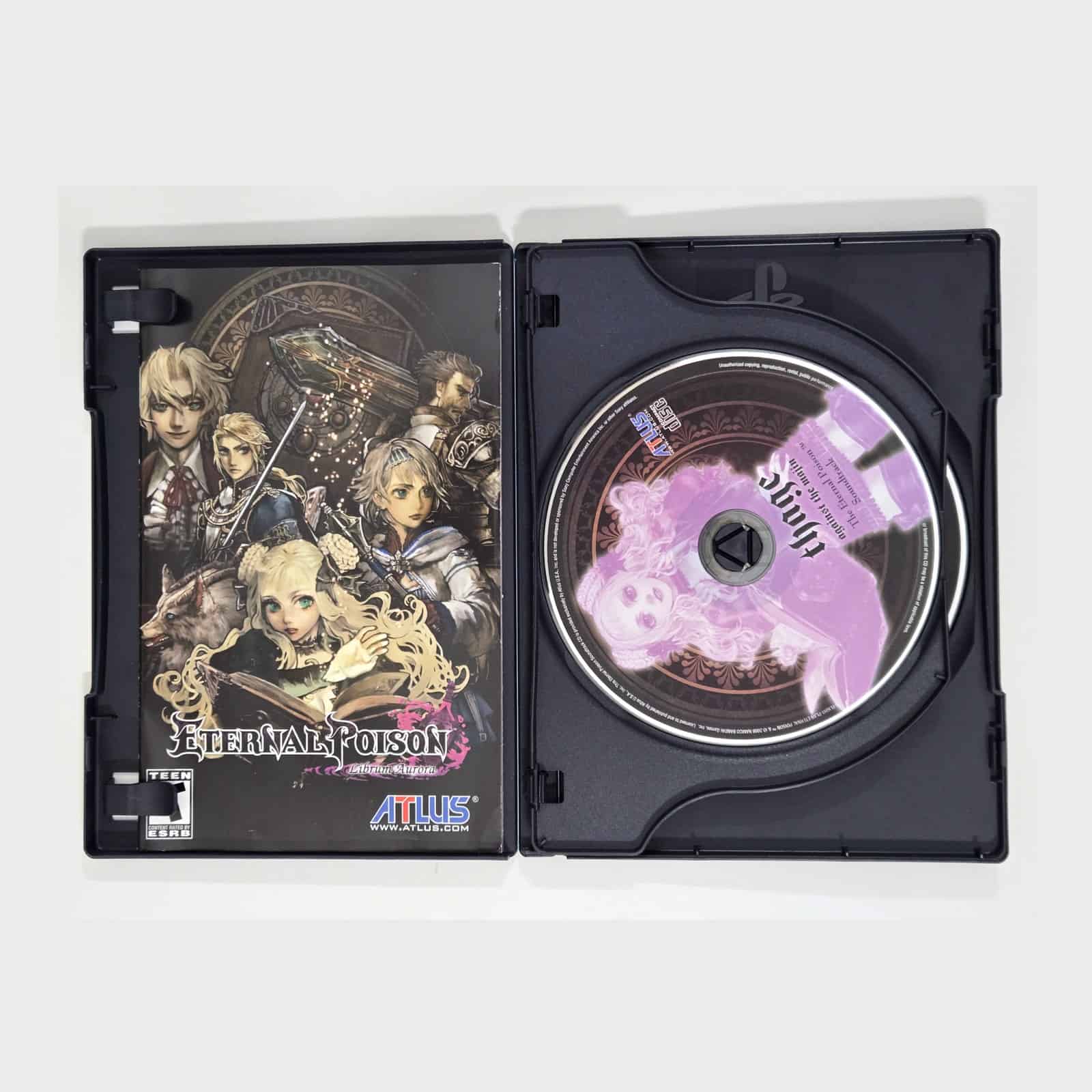
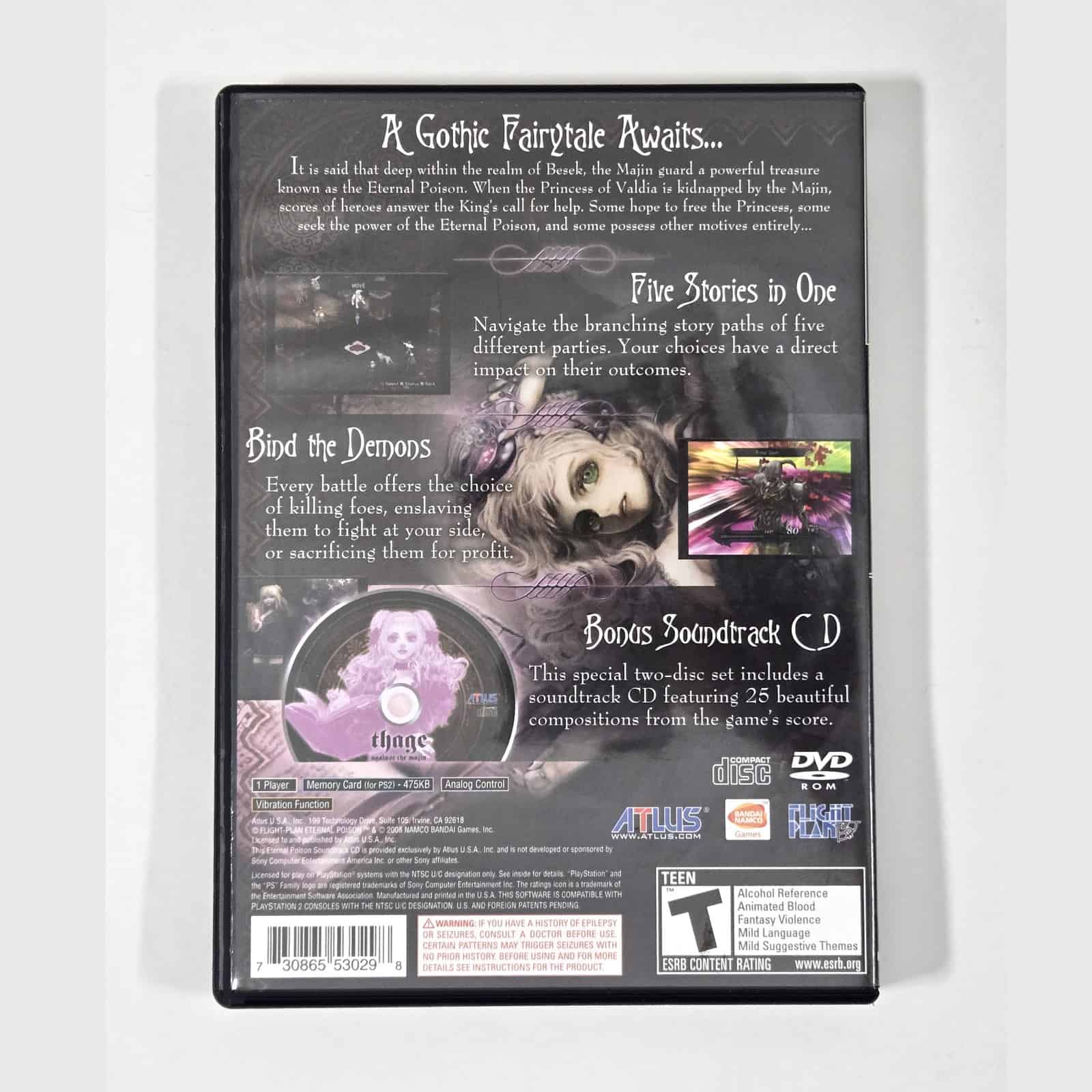
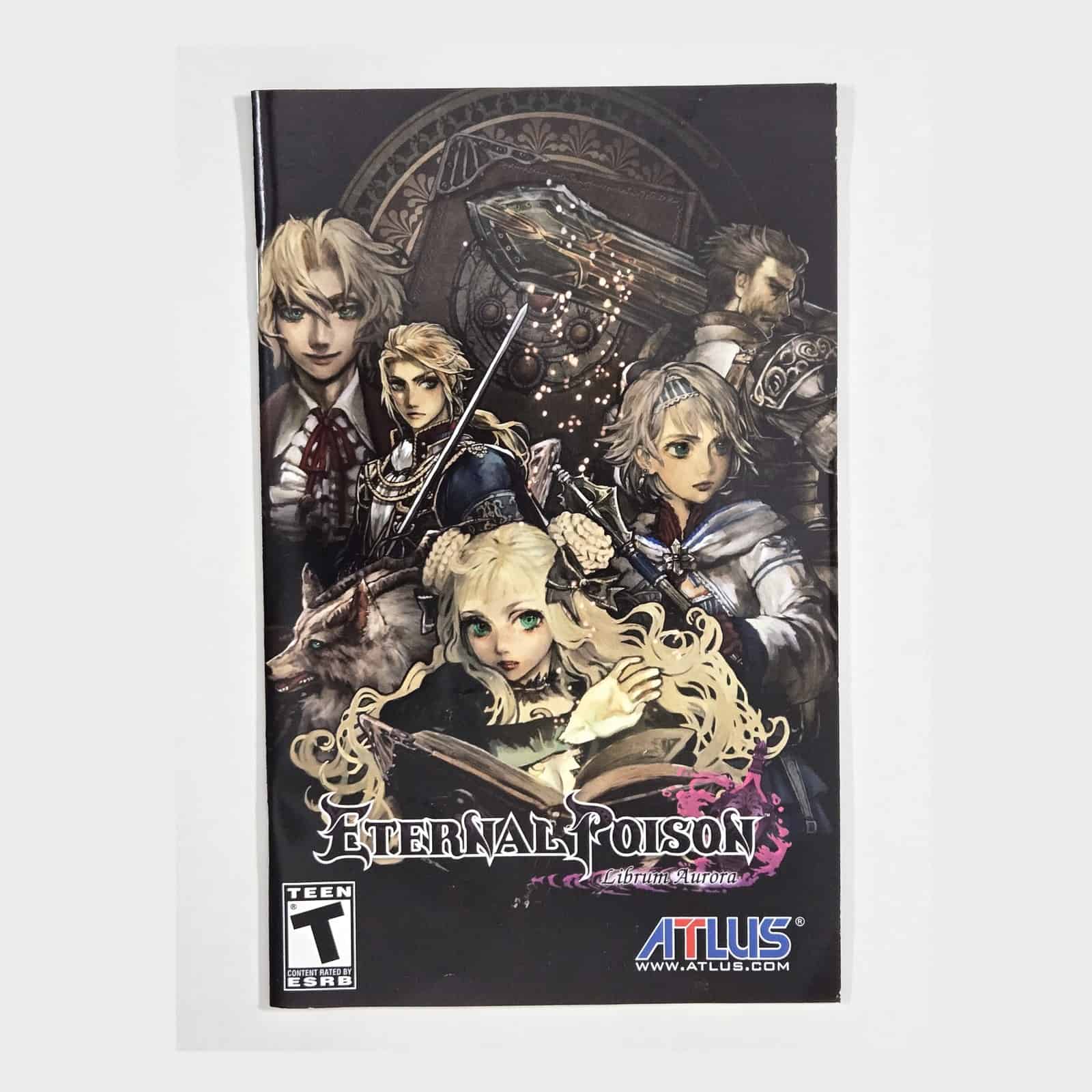
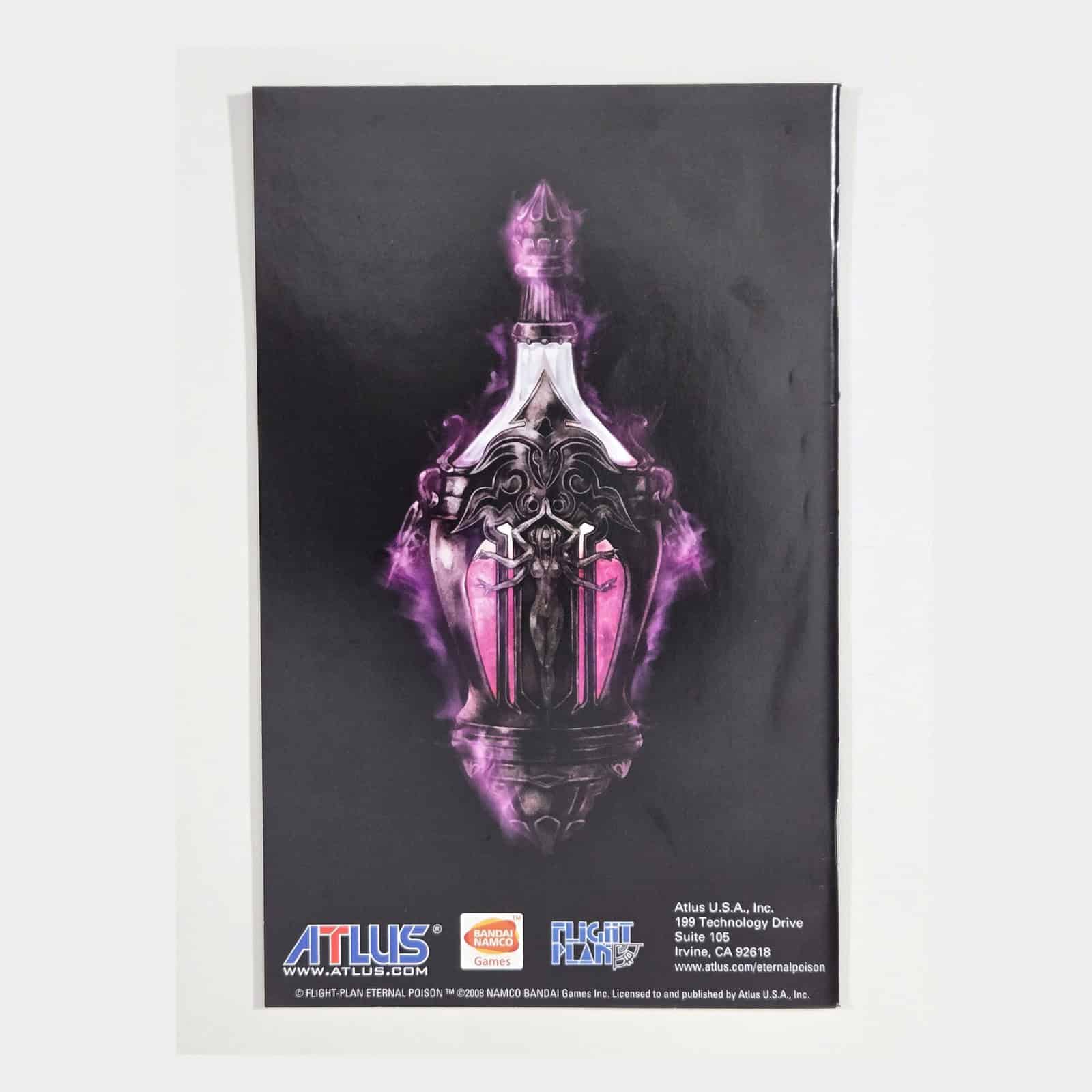
Dark fantasy, Atlus on the spine, a mechanic nobody else was doing, and a presentation that looks PS2-weird in the best way. That’s the kind of game that tends to age well on a shelf. It’s also the kind of game where someone pulls it off your shelf and goes, “Wait, what is that?”
Want one for your shelf? Check Eternal Poison on eBay, and look for listings that show both discs.
If you’re new to PS2 collecting, my PS2 Beginner’s Guide covers how to get set up cheap. And if La Pucelle: Tactics from that list clicked for you, Eternal Poison is a natural next step.
Join r/EternalPoison
I also run r/EternalPoison on Reddit. It’s quiet, but if you’ve played it, or you’re about to, come say hi.
Eternal Poison FAQ
Who made Eternal Poison? Flight-Plan developed it. Banpresto published it in Japan as Poison Pink in 2008, and Atlus published it in North America in November 2008.
Is Eternal Poison a PS2 exclusive? Yes. It only came out on the PlayStation 2, with no remaster or port.
What are Majin in Eternal Poison? Majin are the demons of Besek. You capture them in battle, then either summon them to fight for you or throw them into a machine called Camellia for PP and new skills.
How do you capture Majin in Eternal Poison? Drop a Majin’s HP below its Overkill threshold so it becomes Bound, then use the capture command. Any party member can capture, and the Majin is stored in Thage’s librum.
What comes in a complete copy of Eternal Poison? The North American release includes the game disc, a soundtrack CD, the manual, and the case. Check listings for the soundtrack disc, since it often goes missing.
Is Eternal Poison hard? It can be. Sloppy positioning gets punished, and trying to capture Majin means keeping dangerous enemies alive longer on purpose.
The verdict
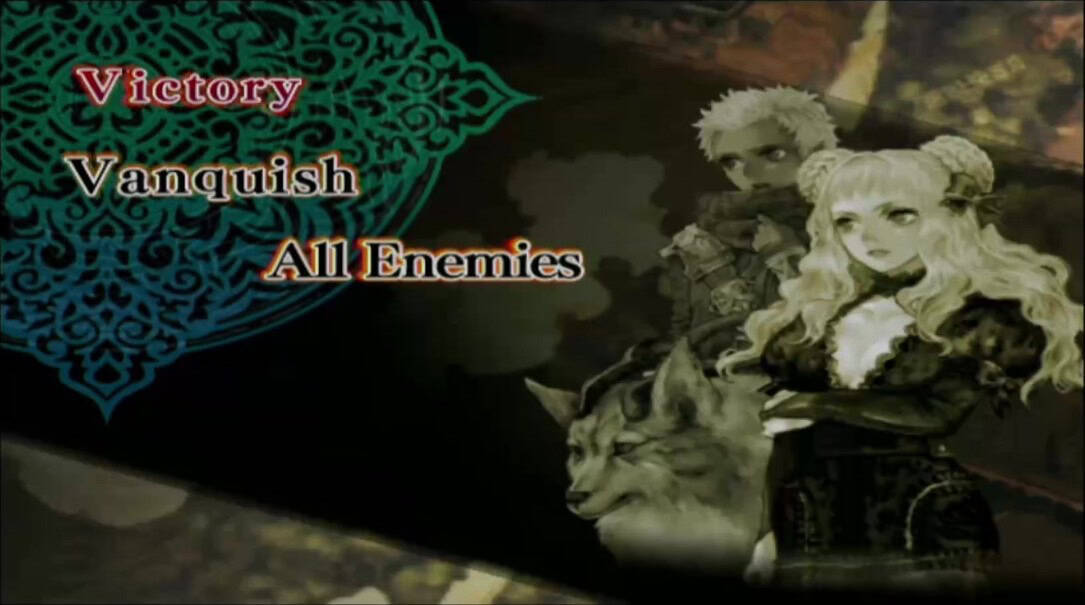
Eternal Poison isn’t just a tactical RPG. It’s a tactical RPG with a capture system that changes how you think about every fight. It rewards patience, it rewards planning, and it rewards the kind of player who likes things slightly strange. If you’re digging through the PS2 library for something that doesn’t feel like every other strategy game, put this one on your list.
You stay frosty.
Leave a Reply
You must be logged in to post a comment.