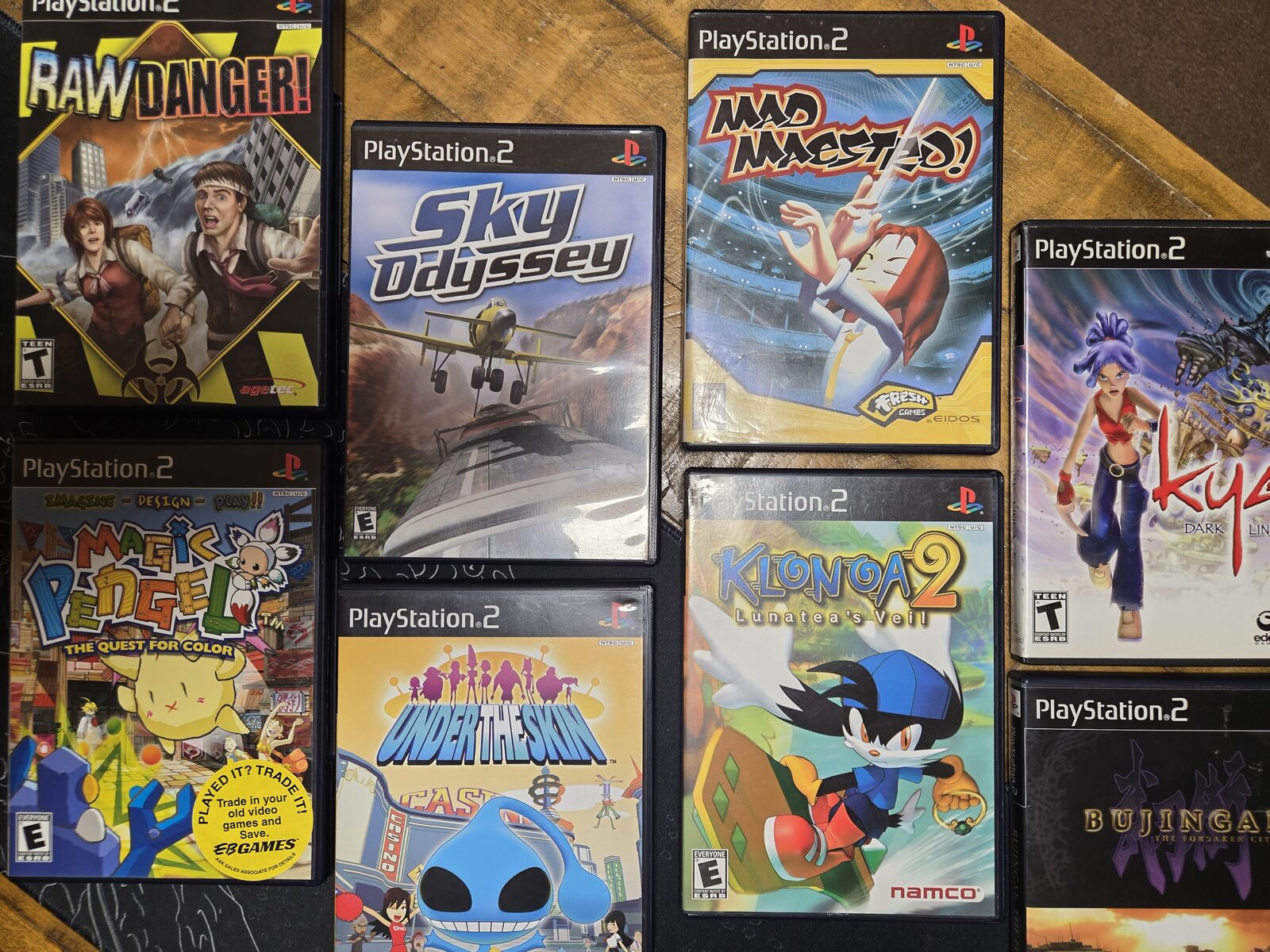
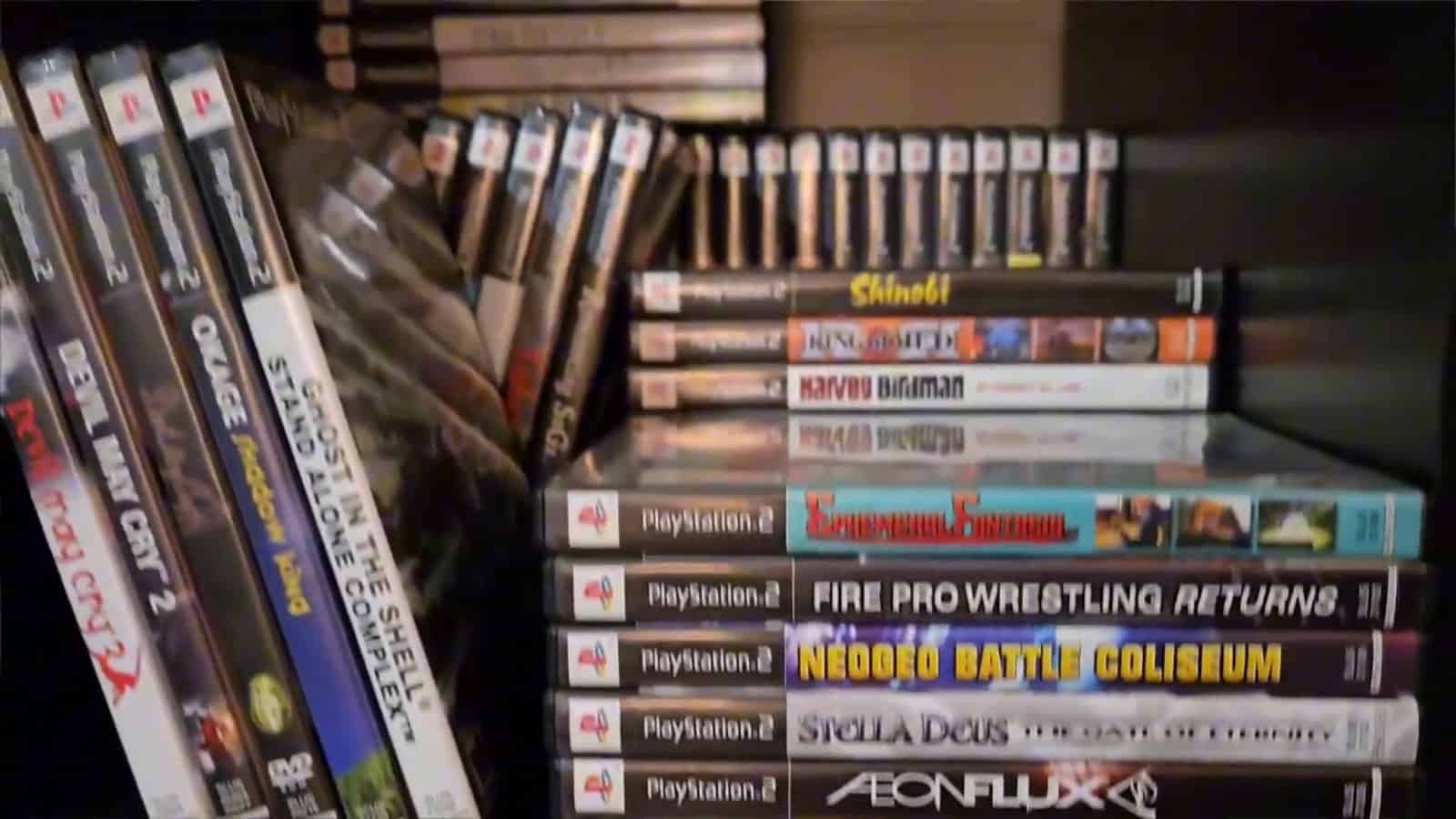
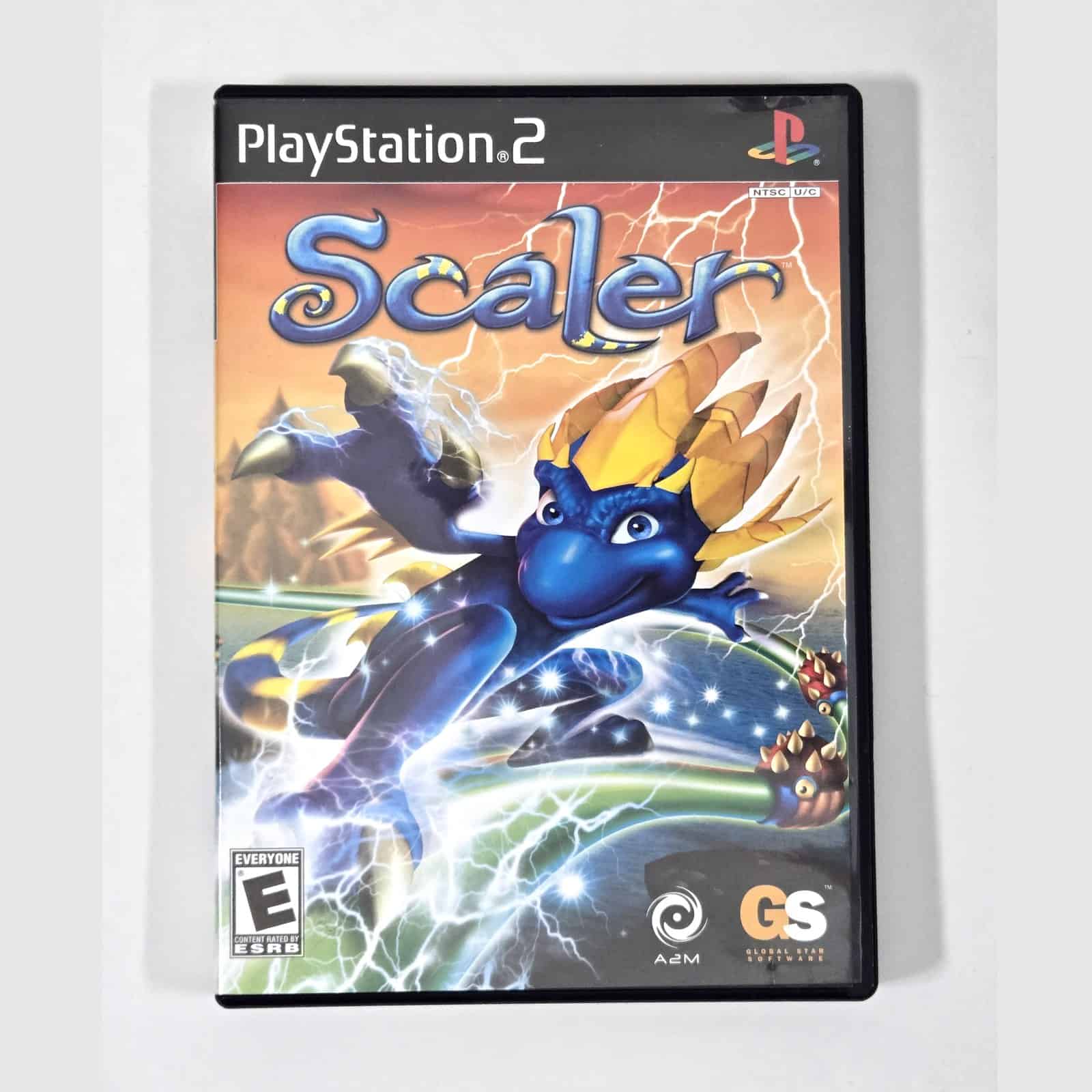
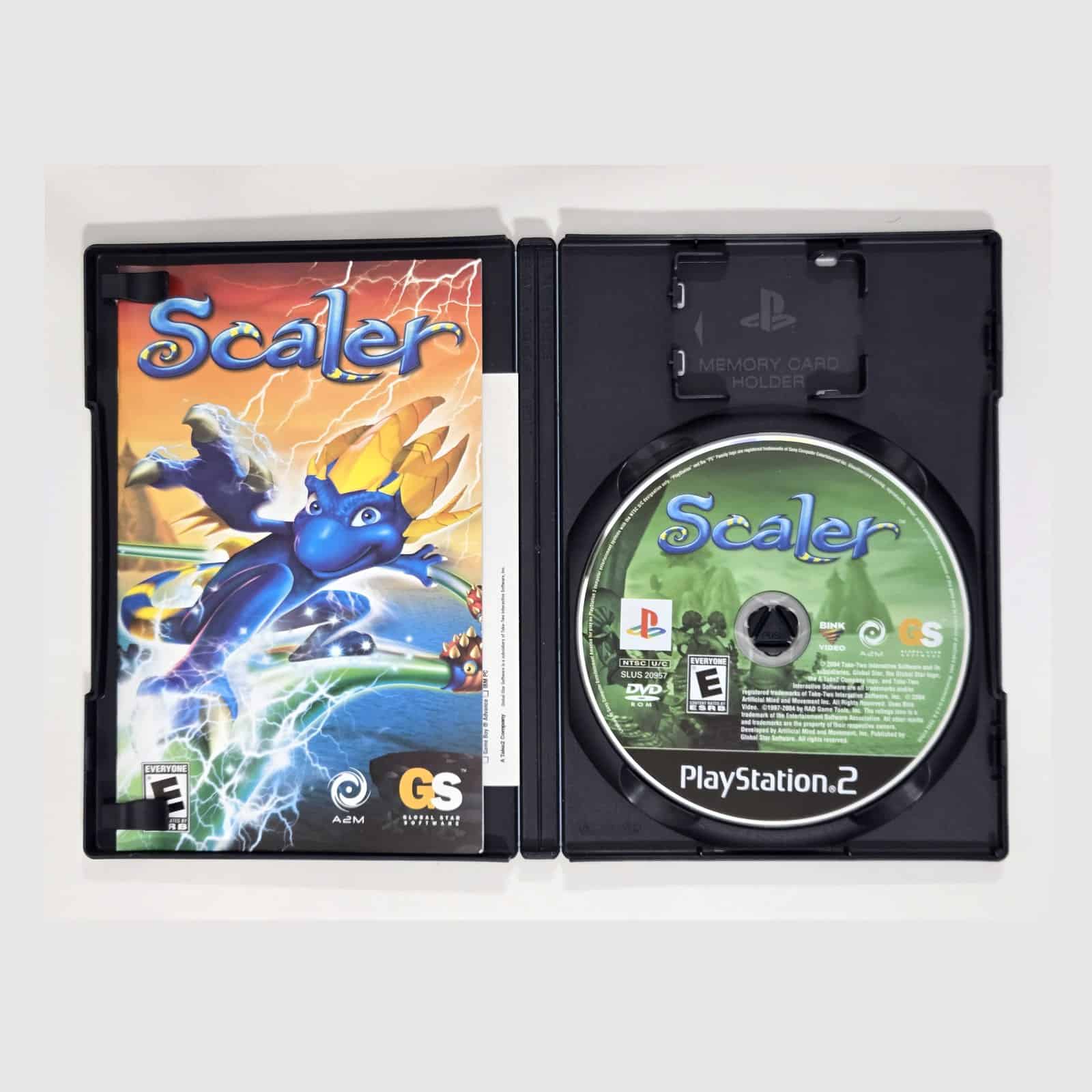
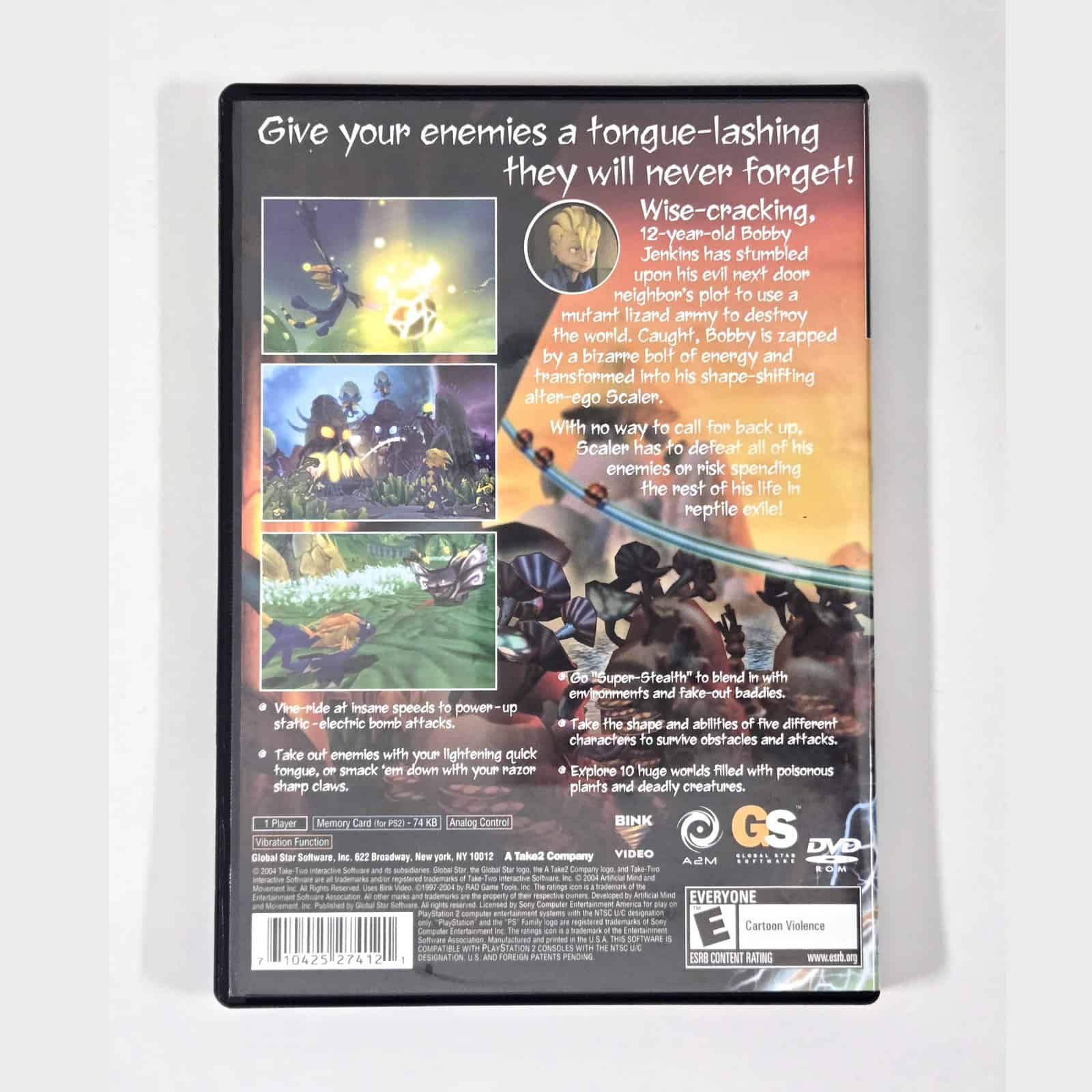
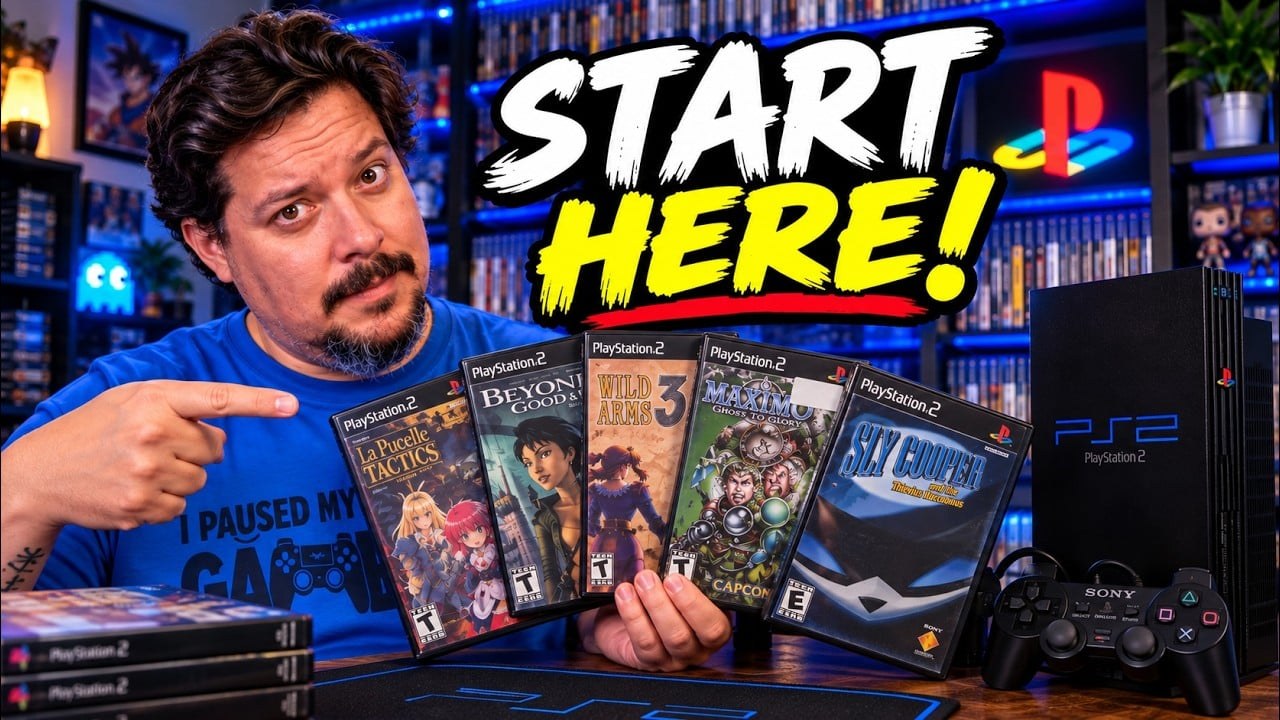
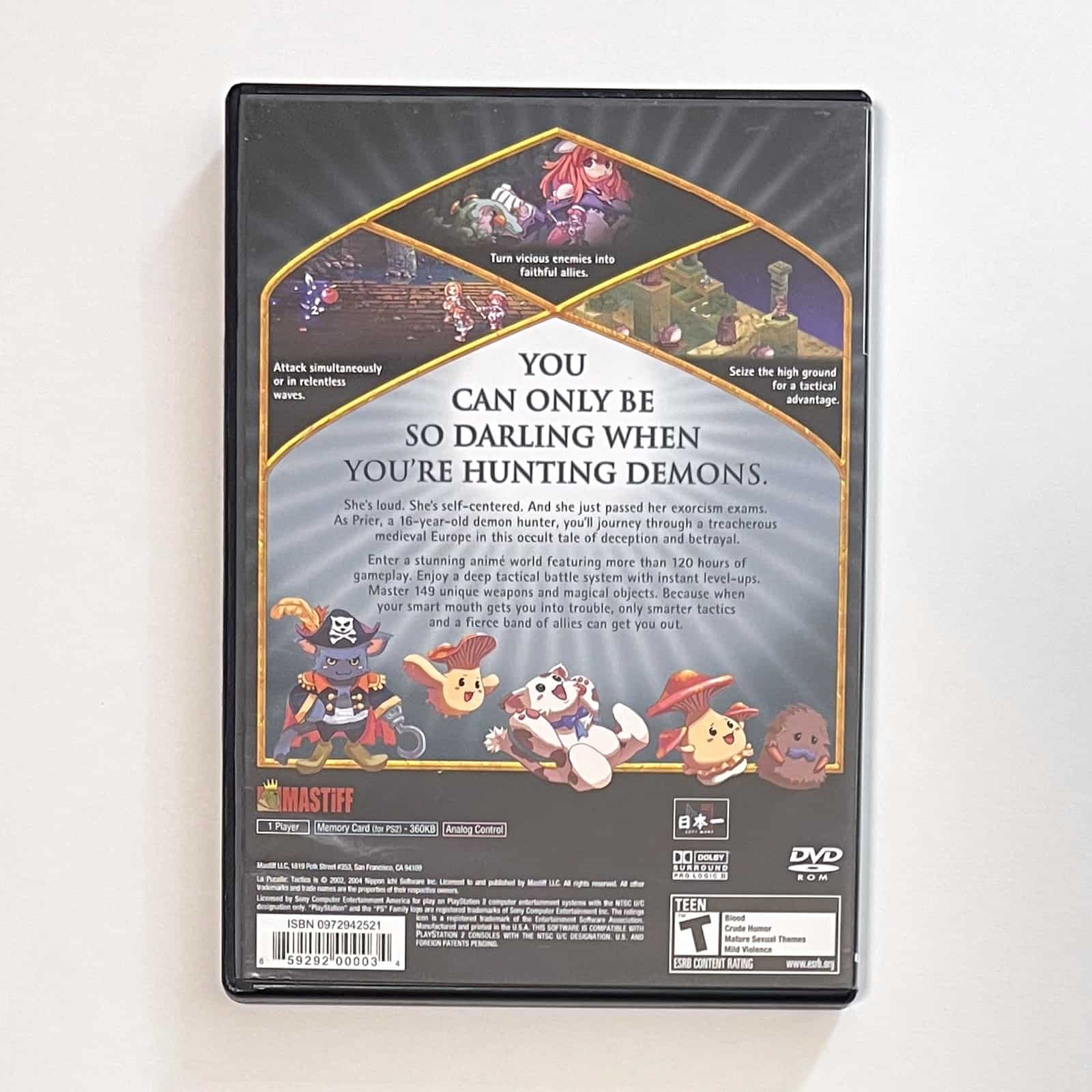
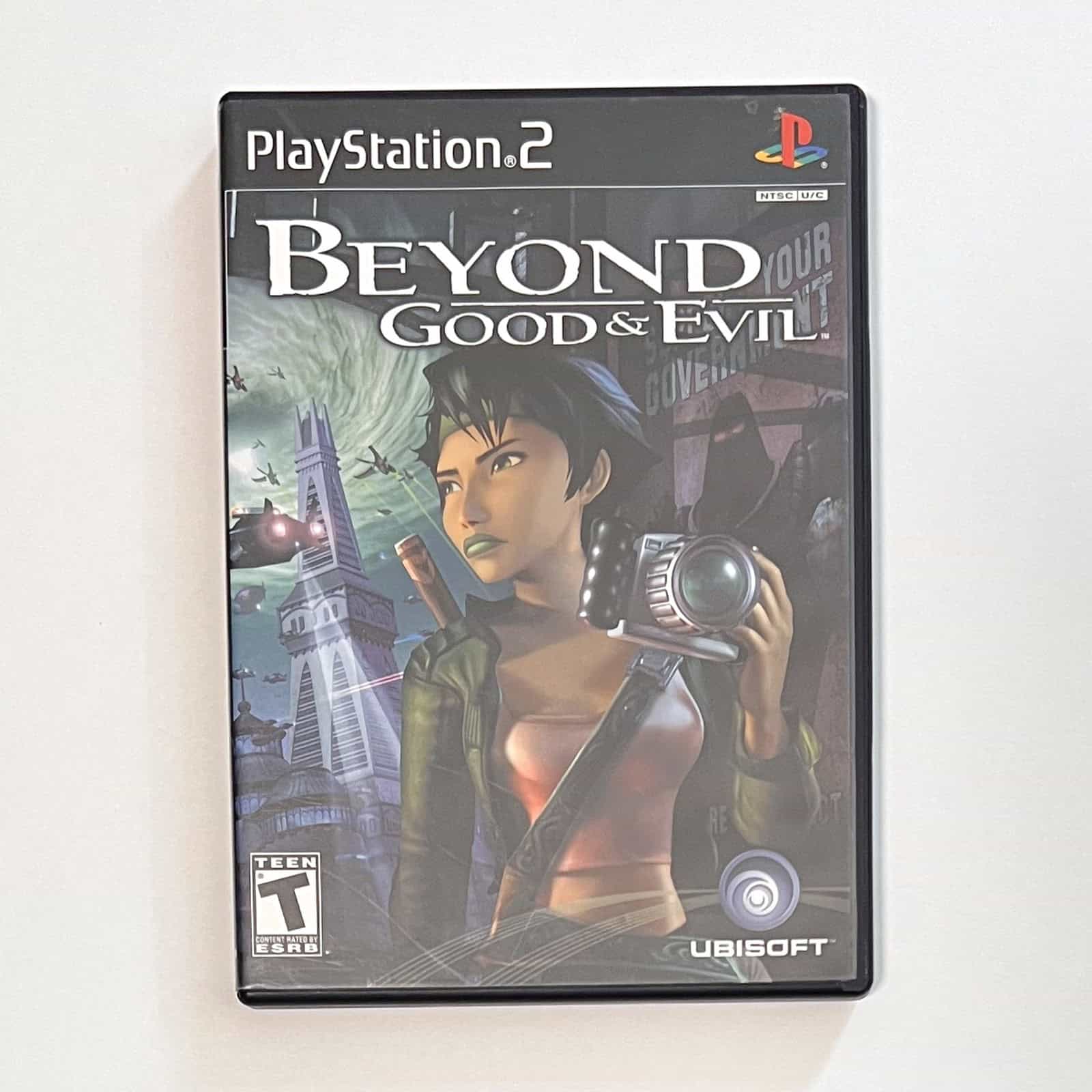
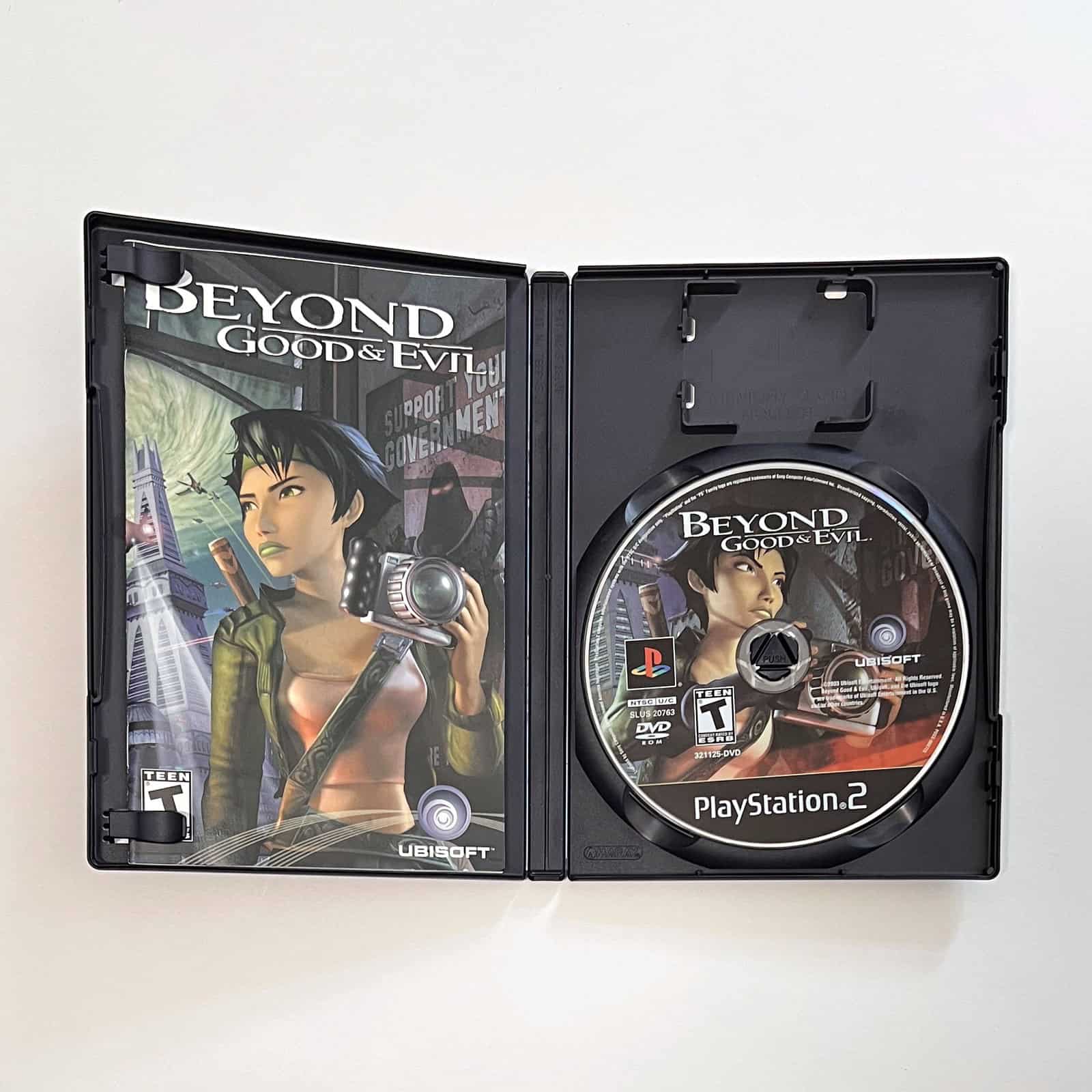
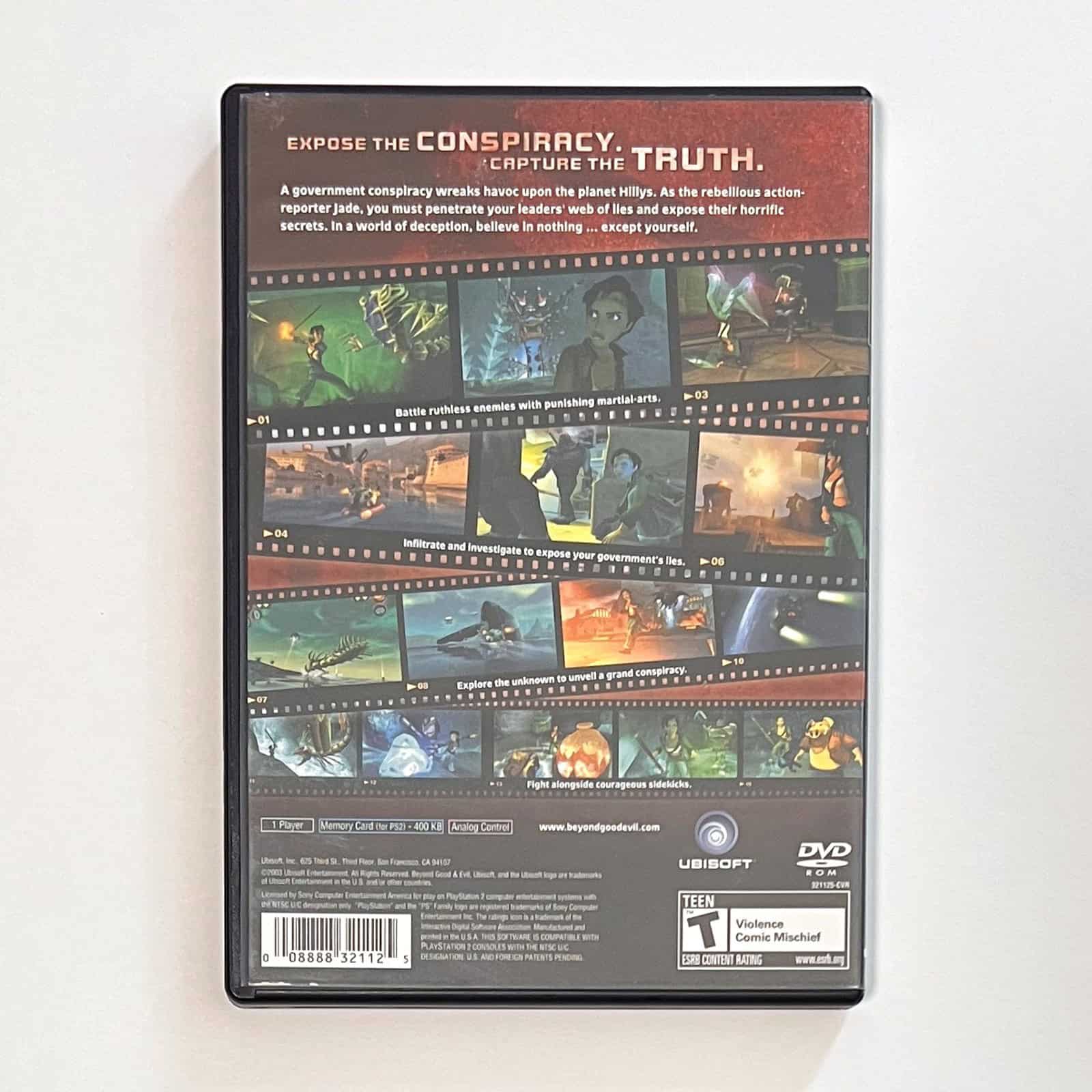
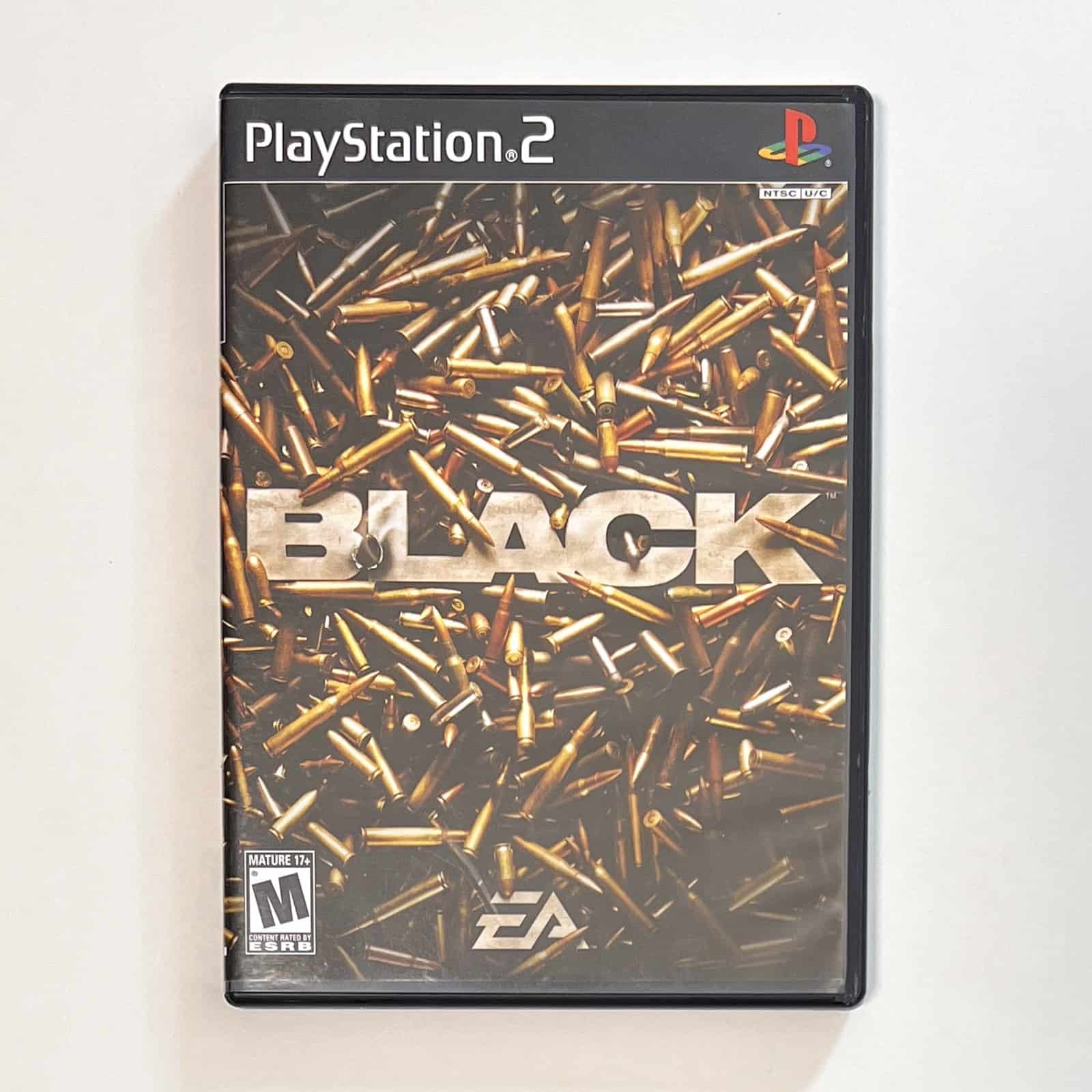
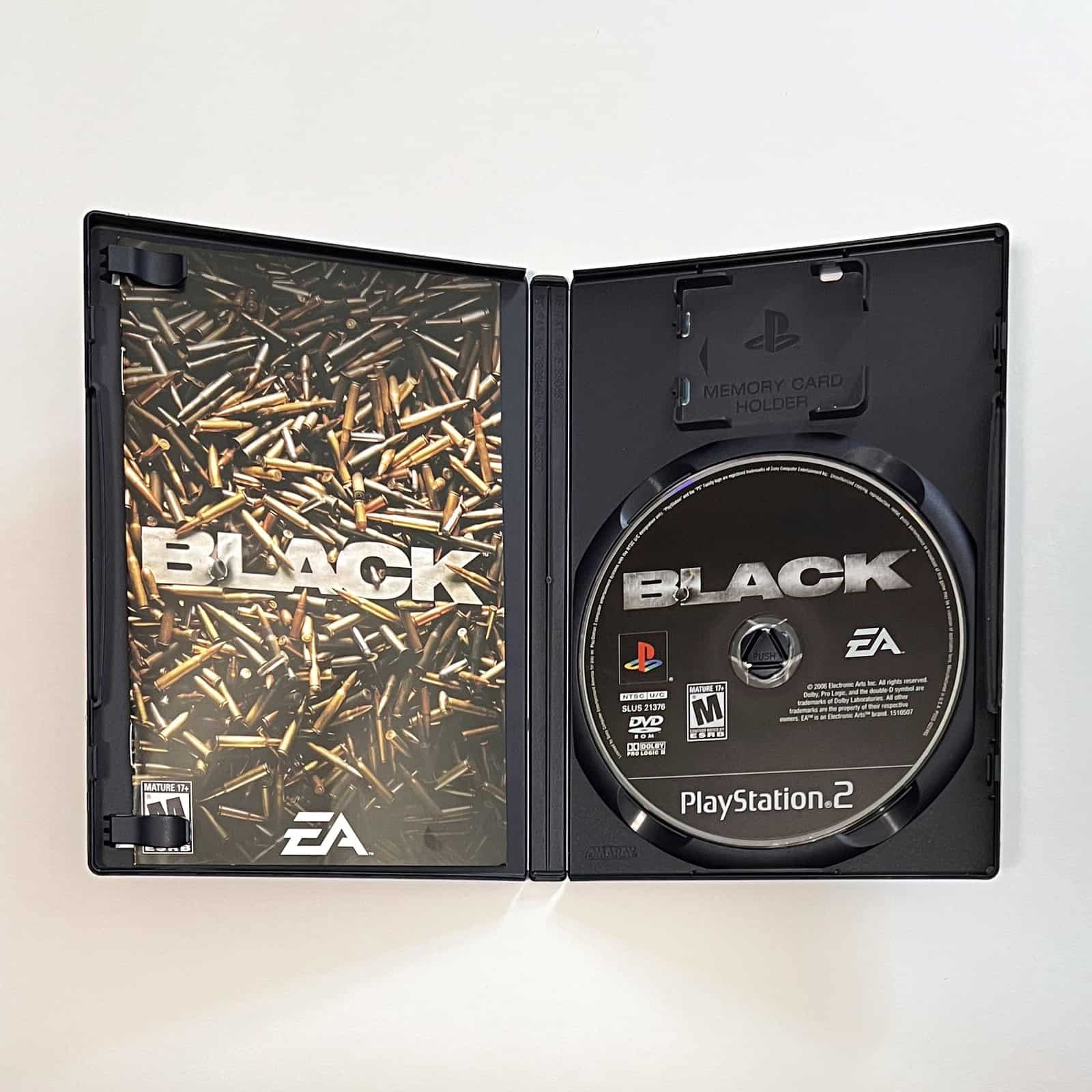
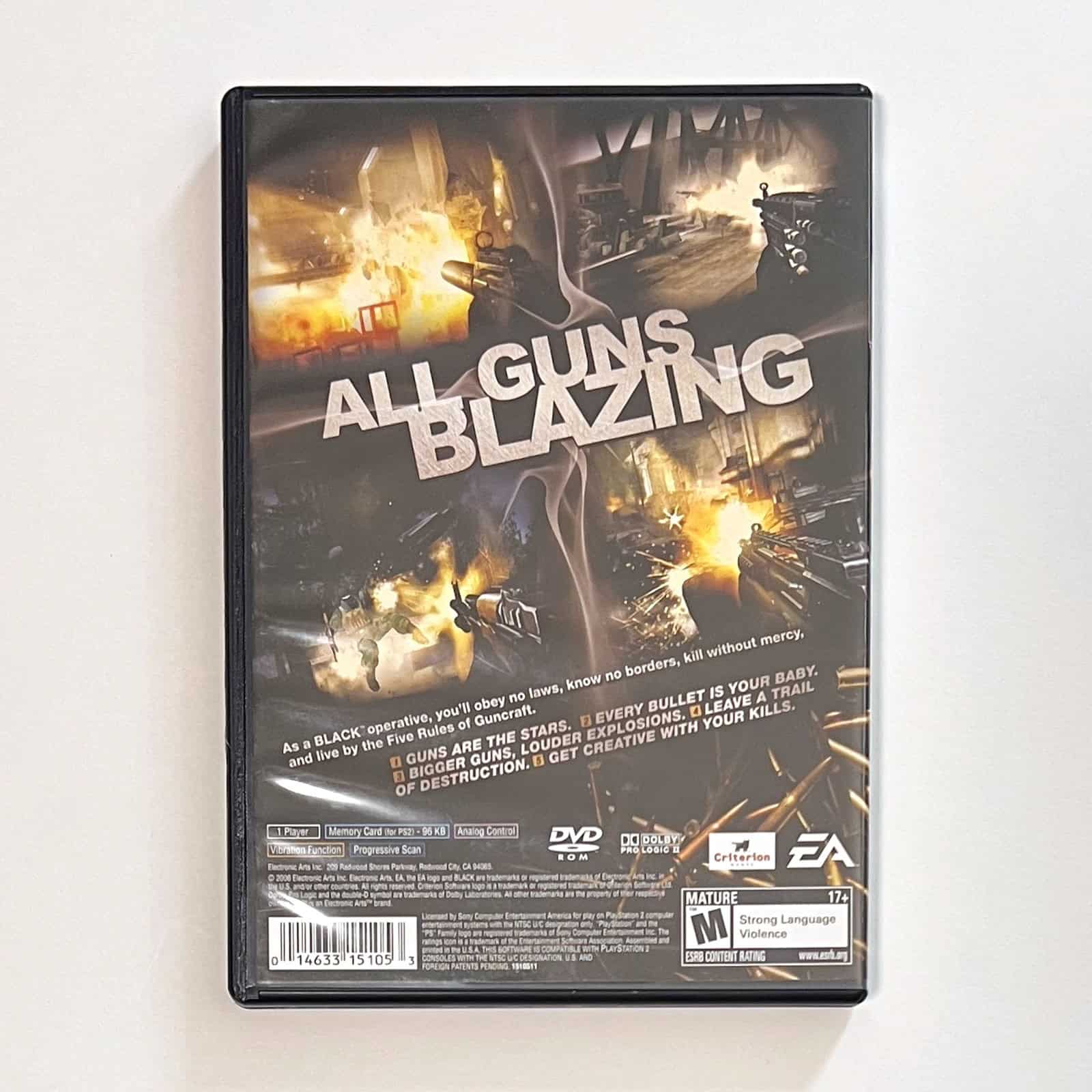
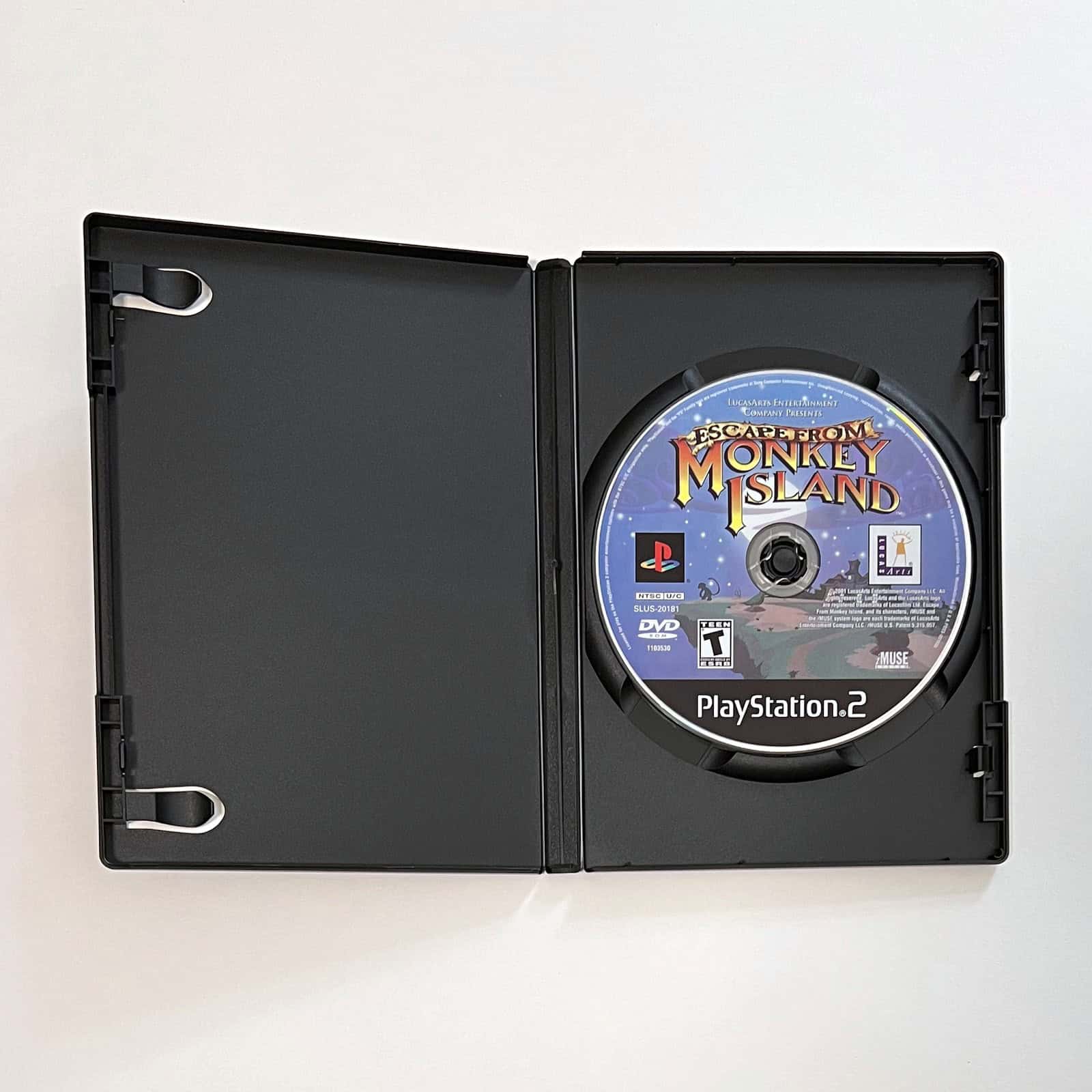
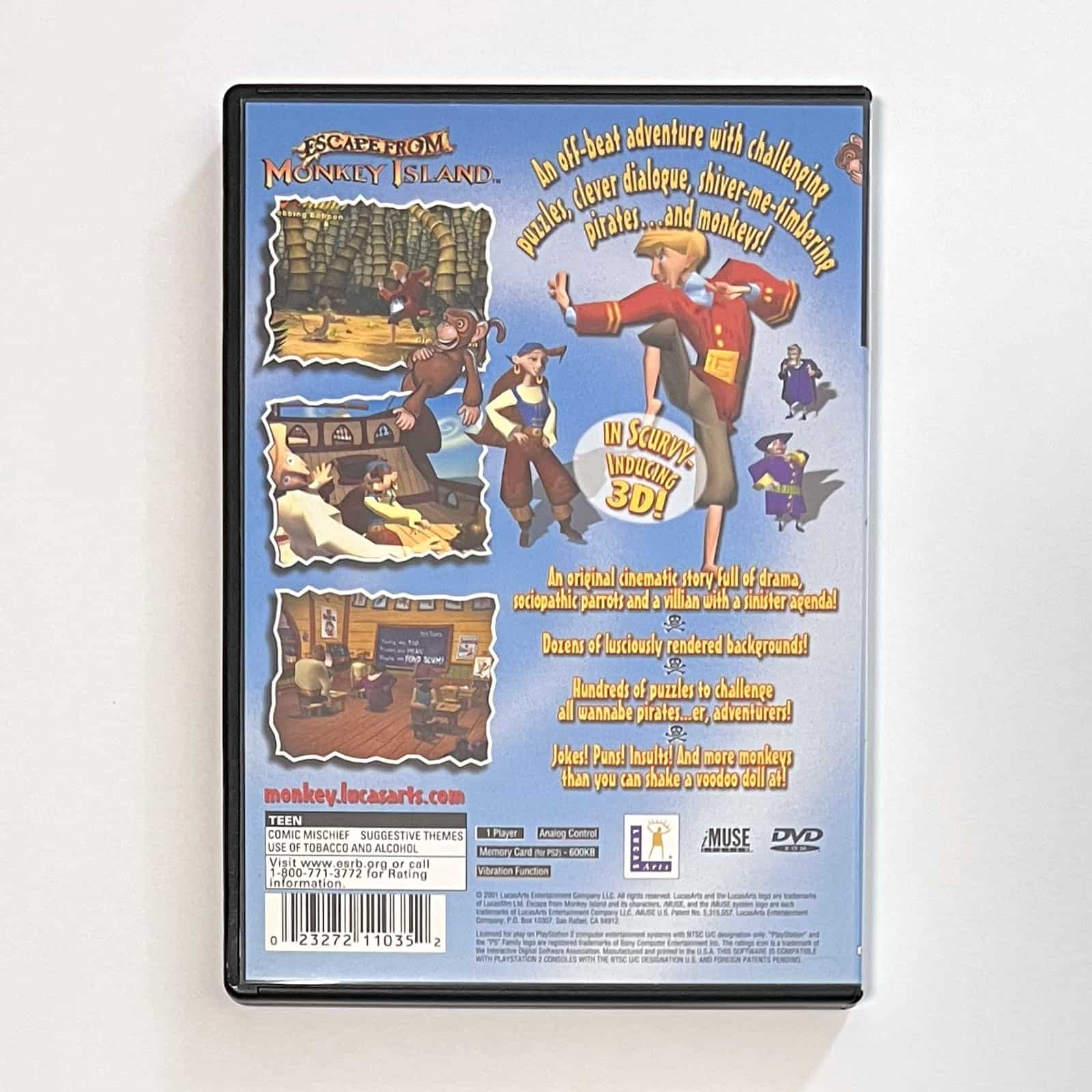
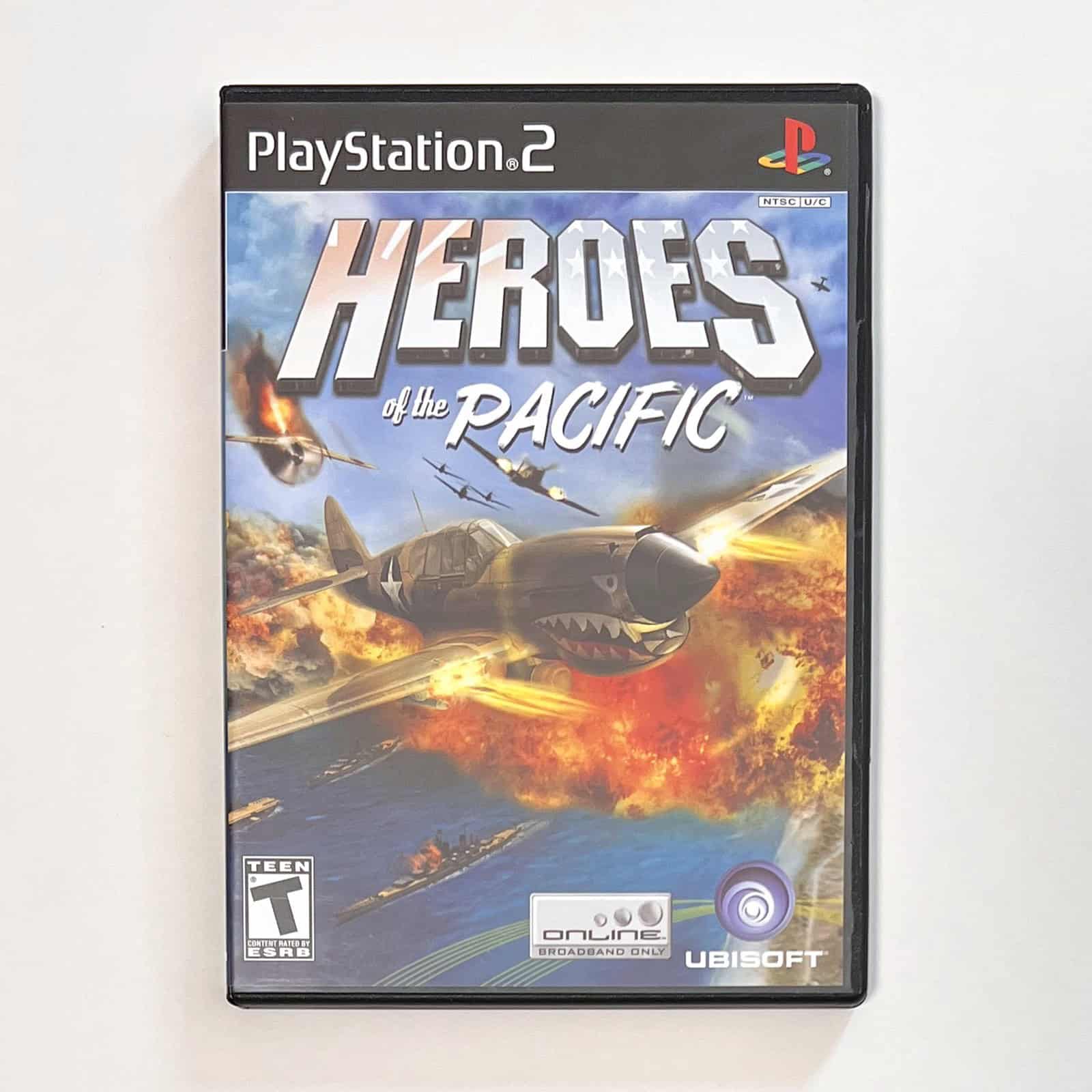
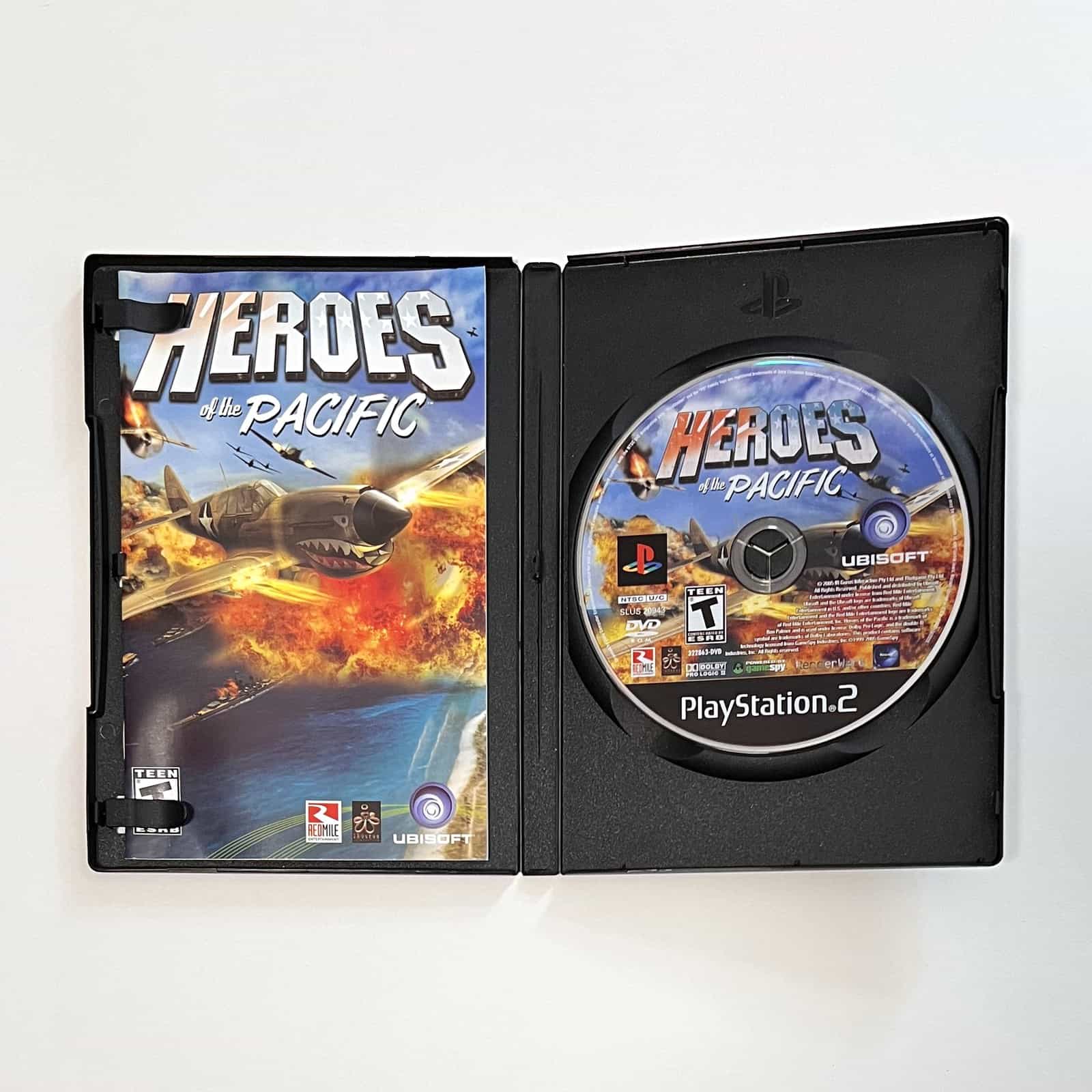
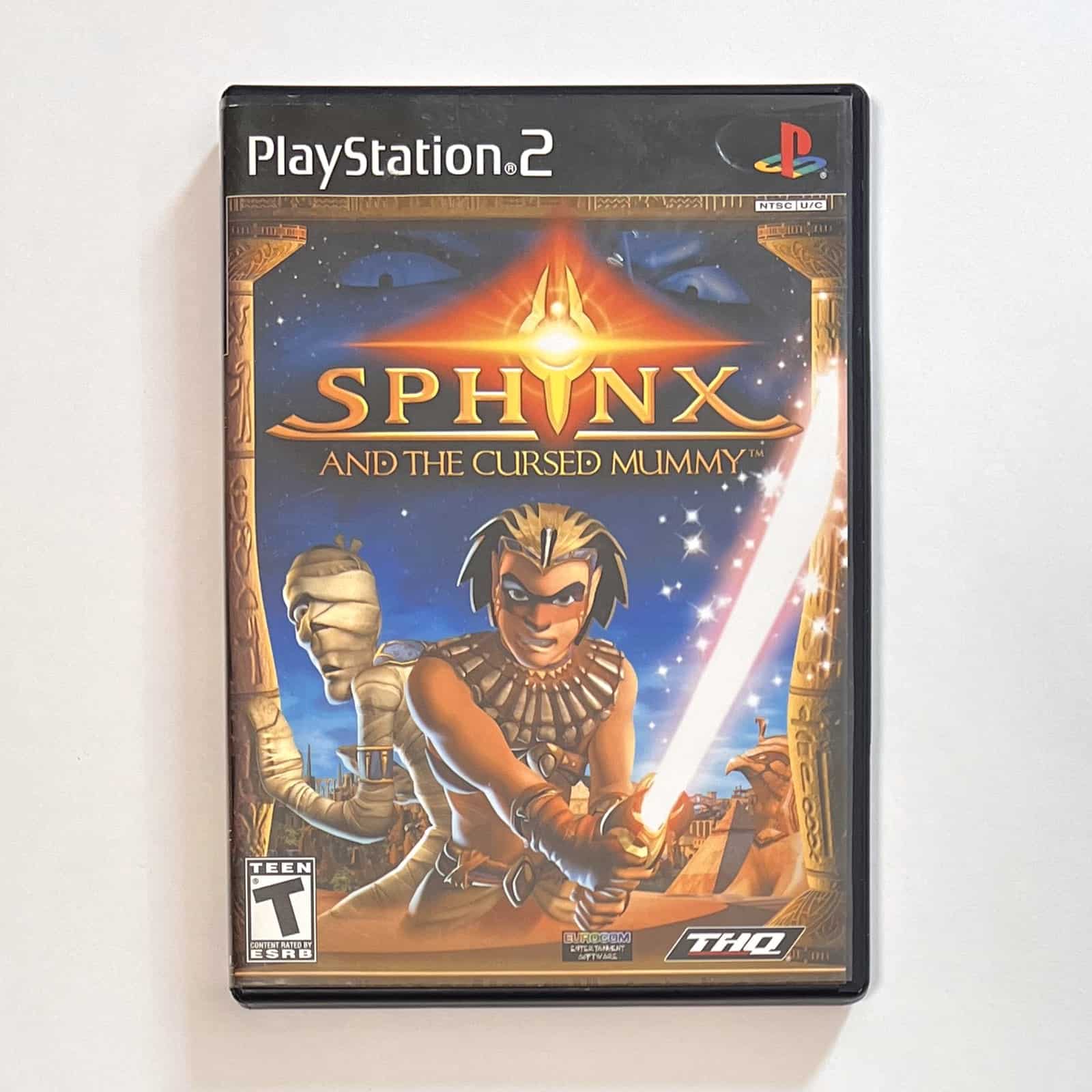
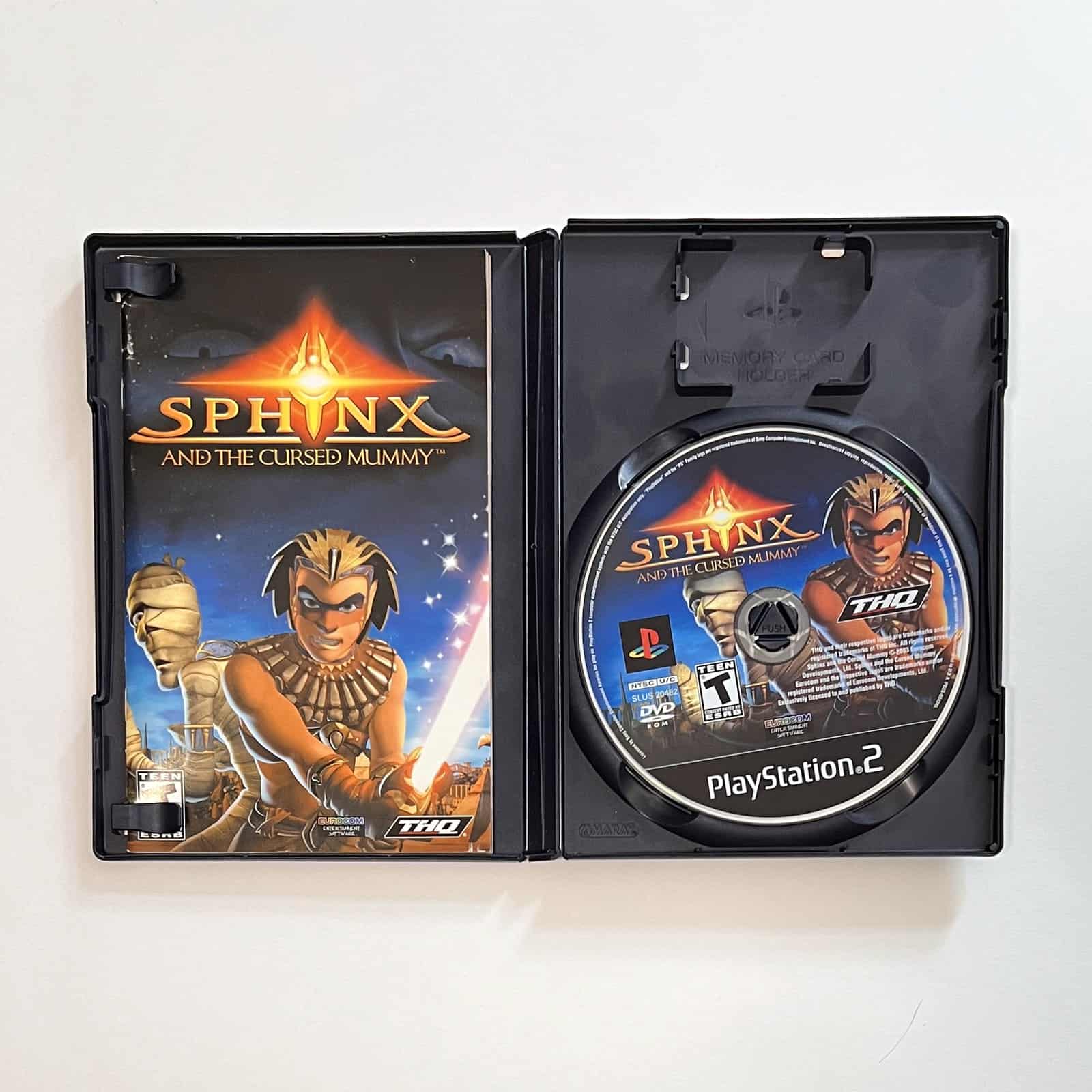
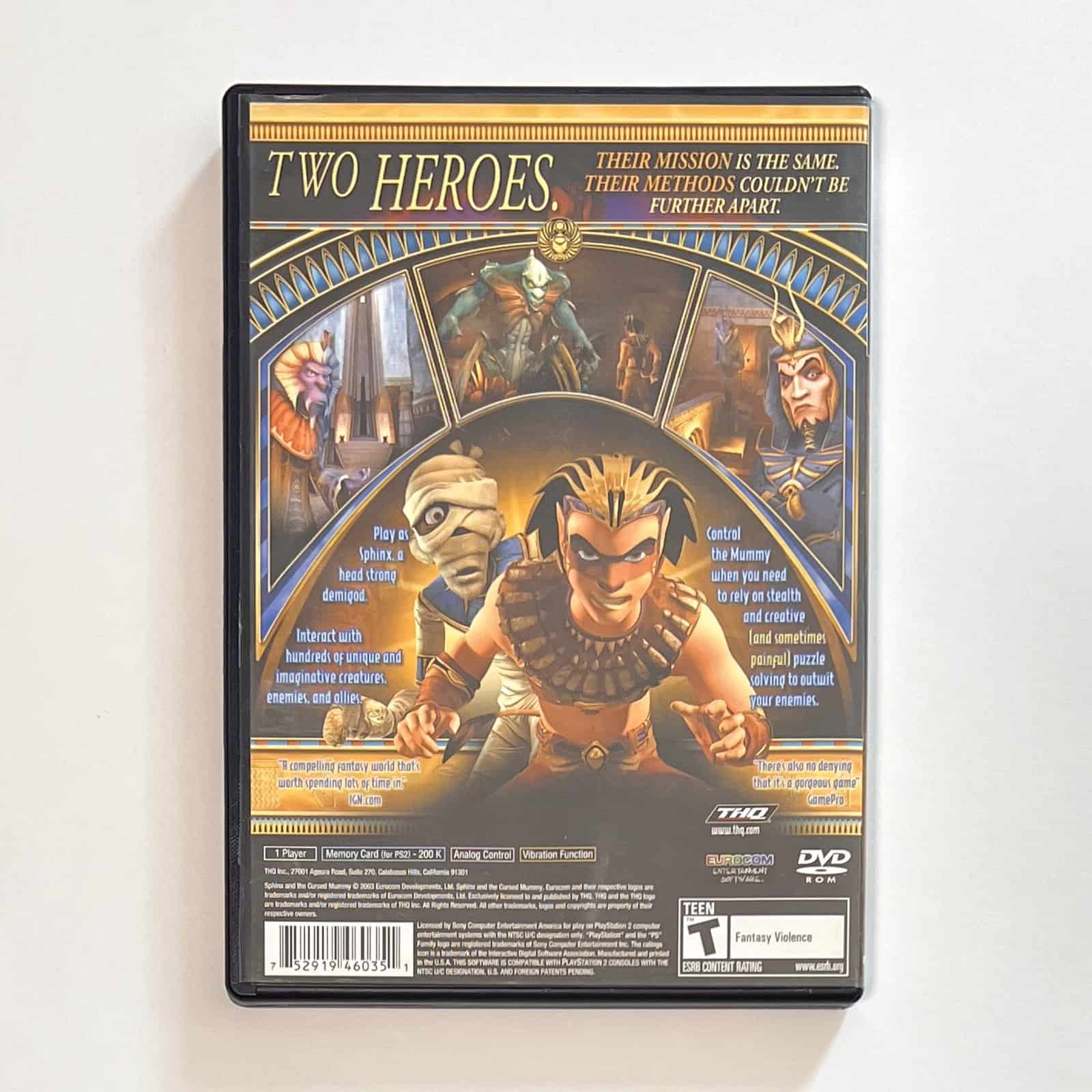
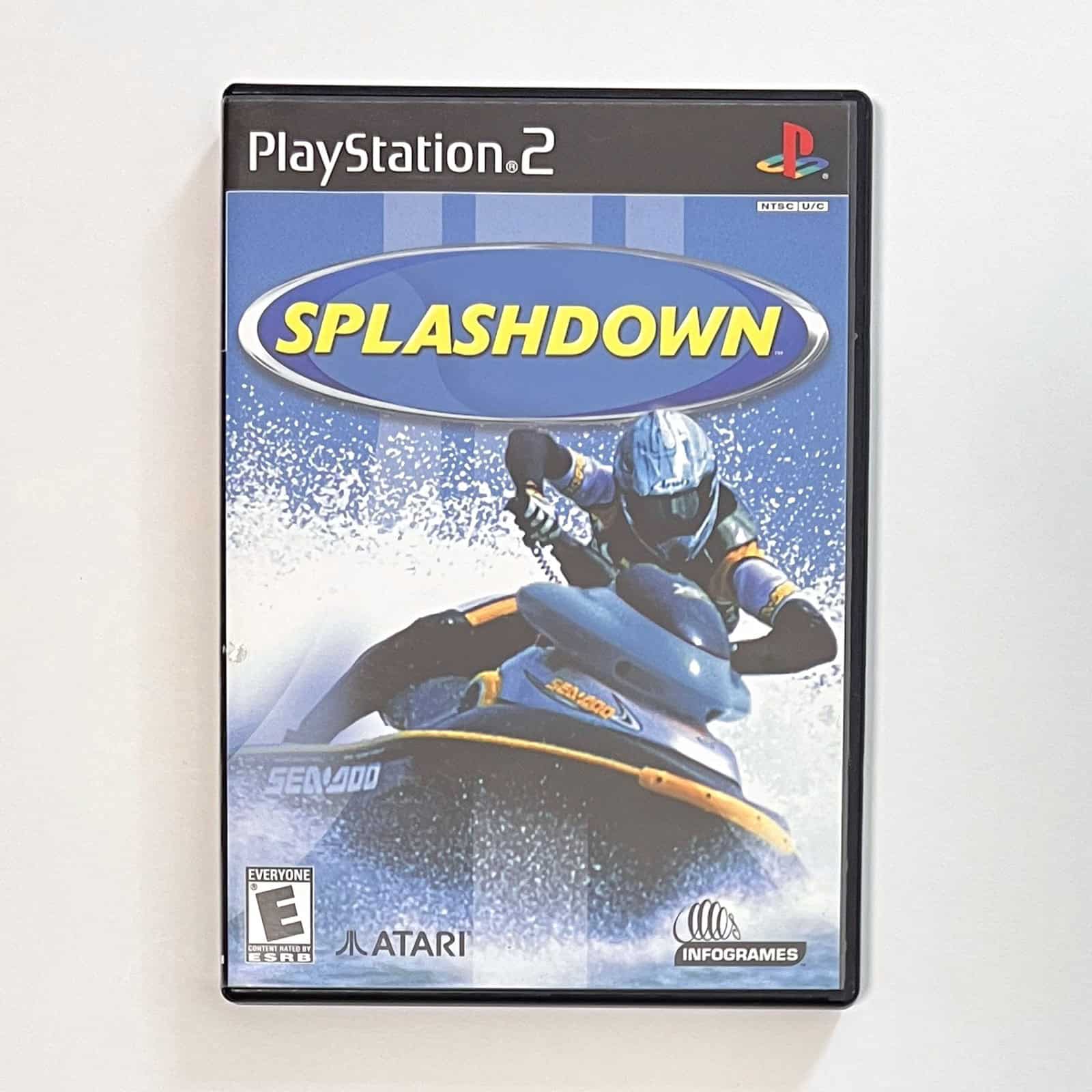
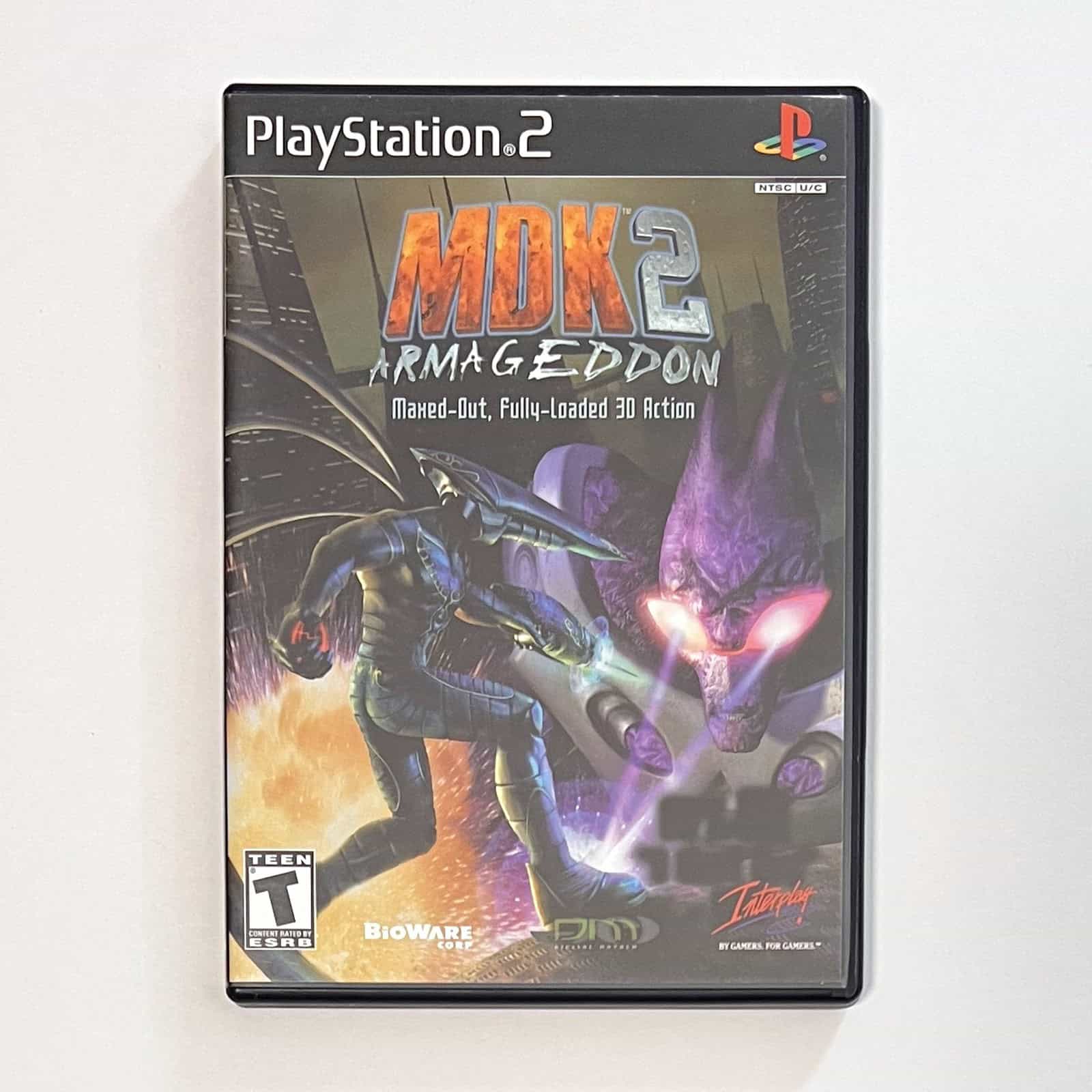
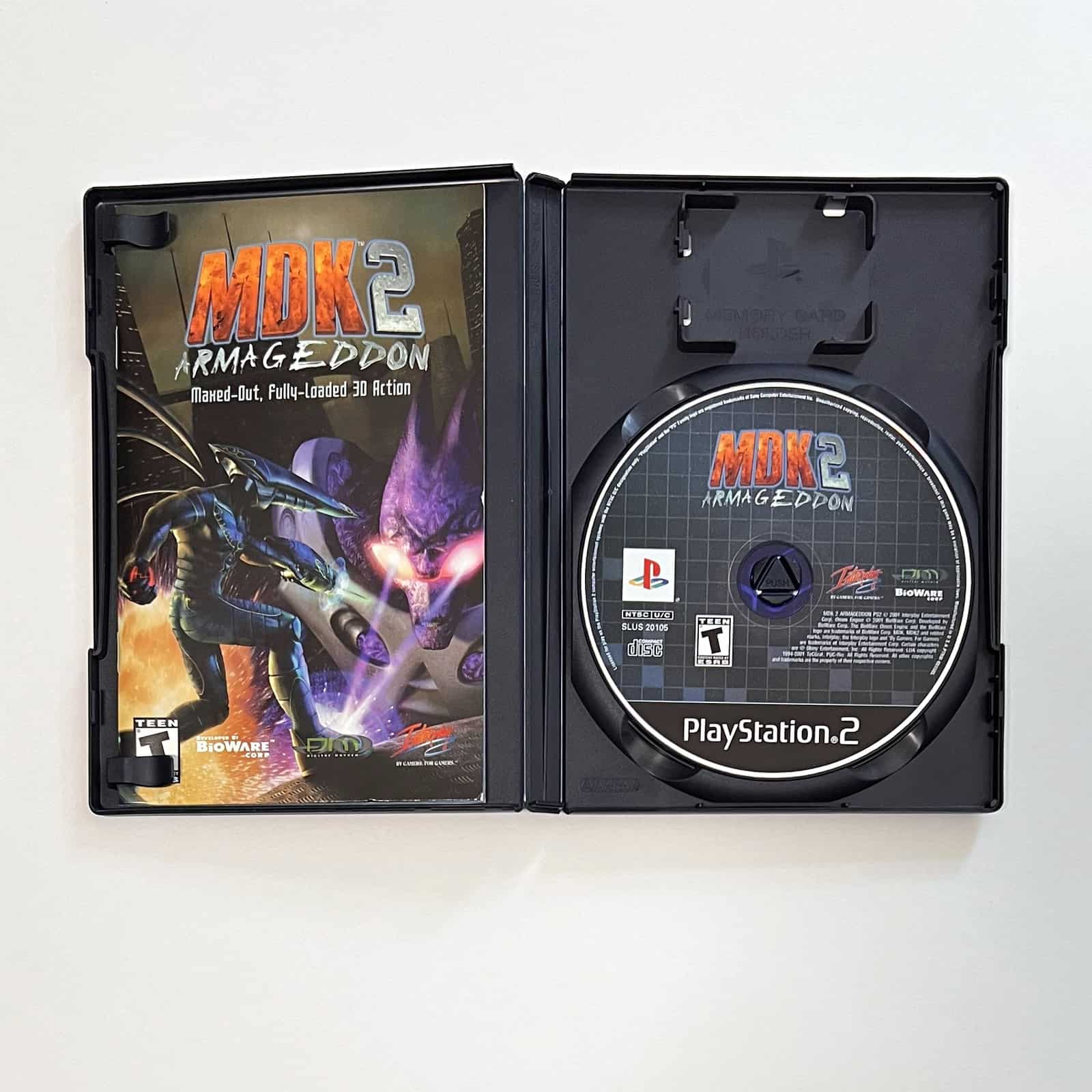
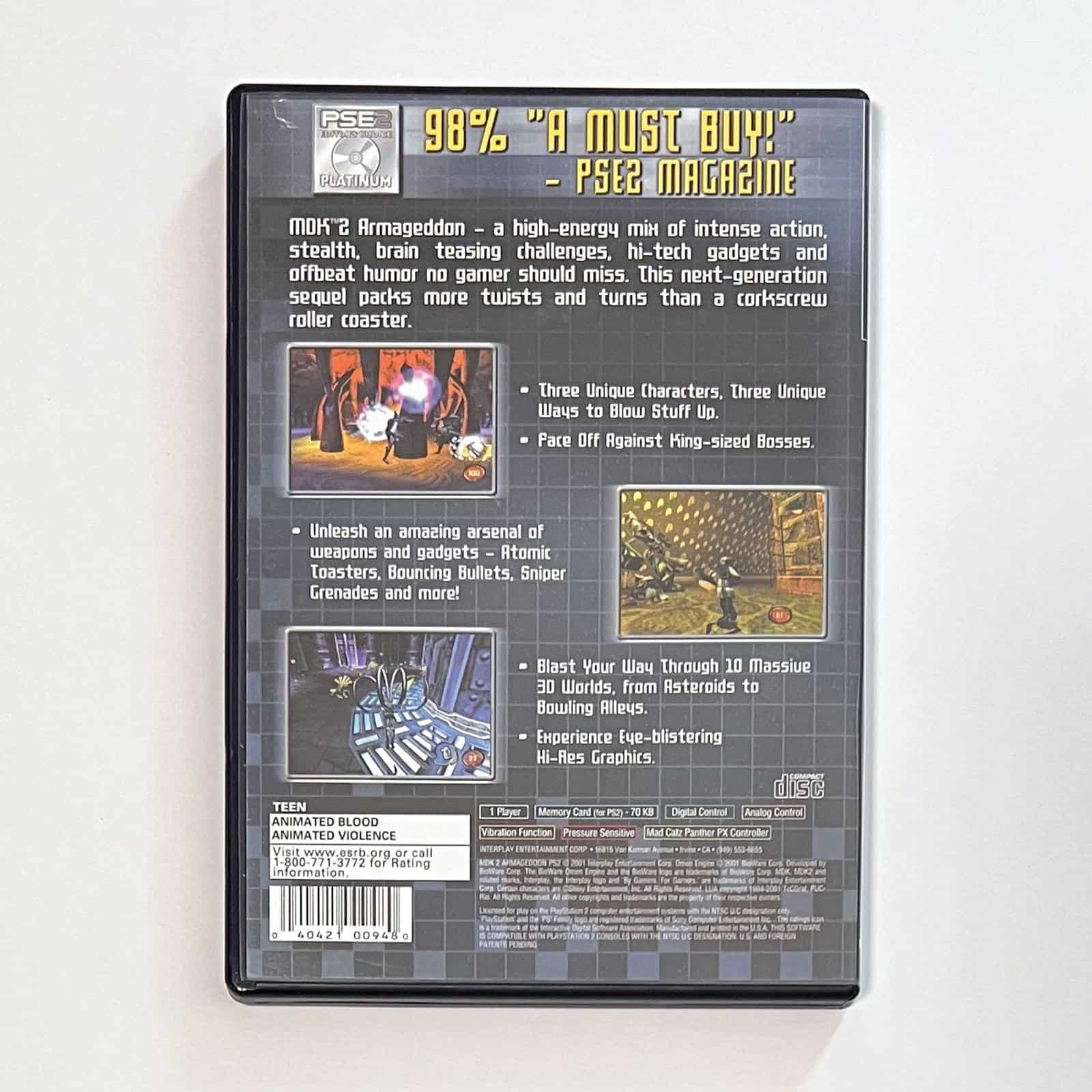
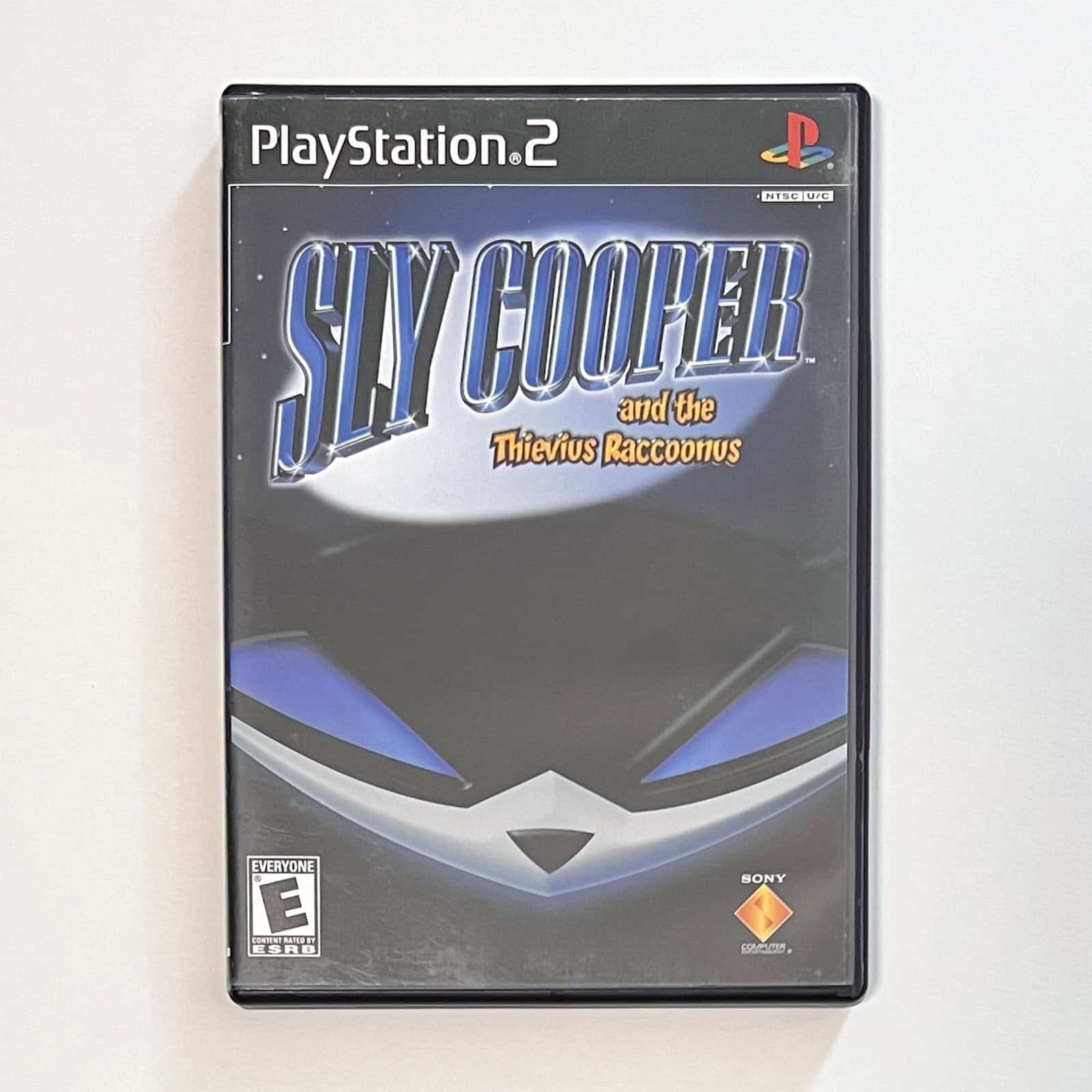
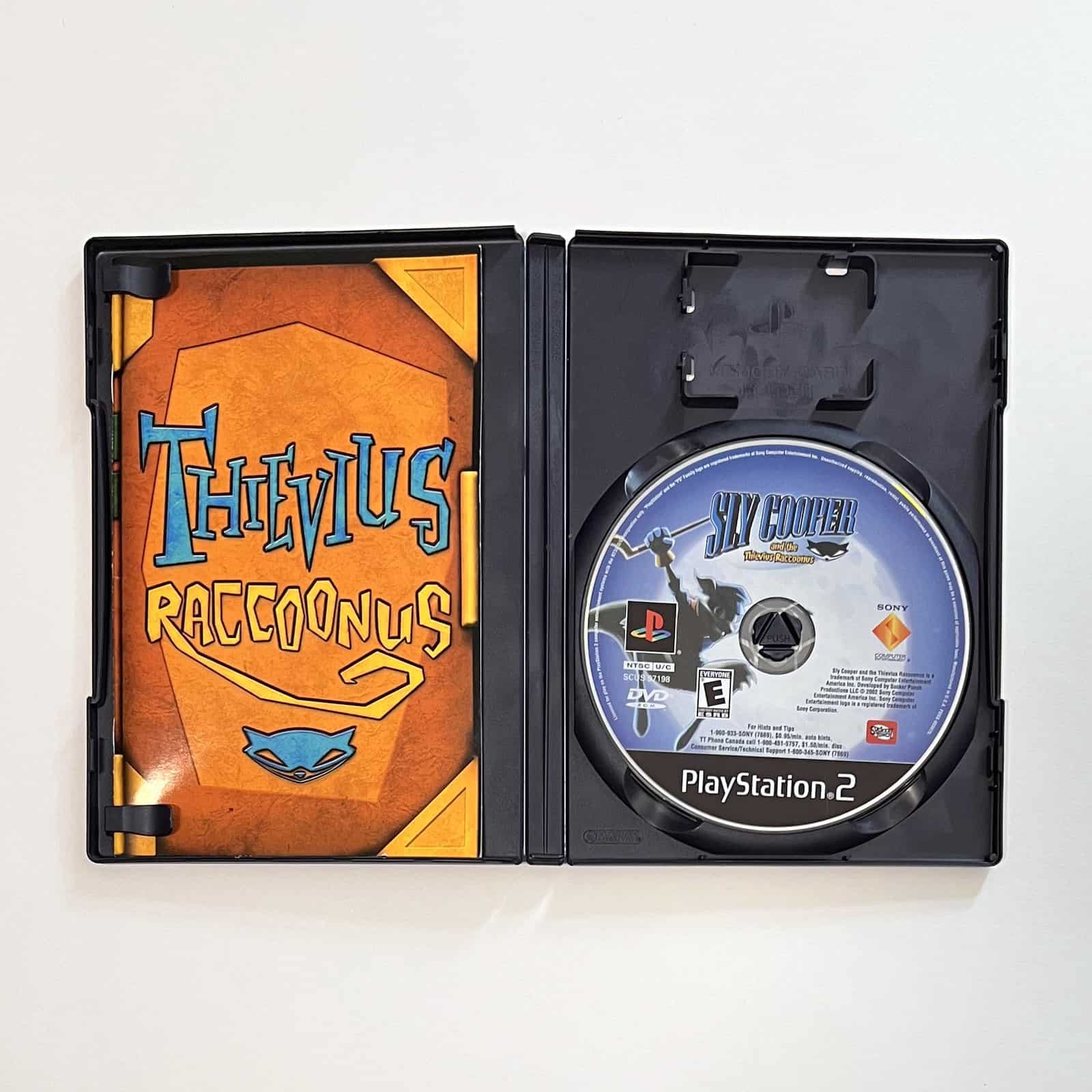
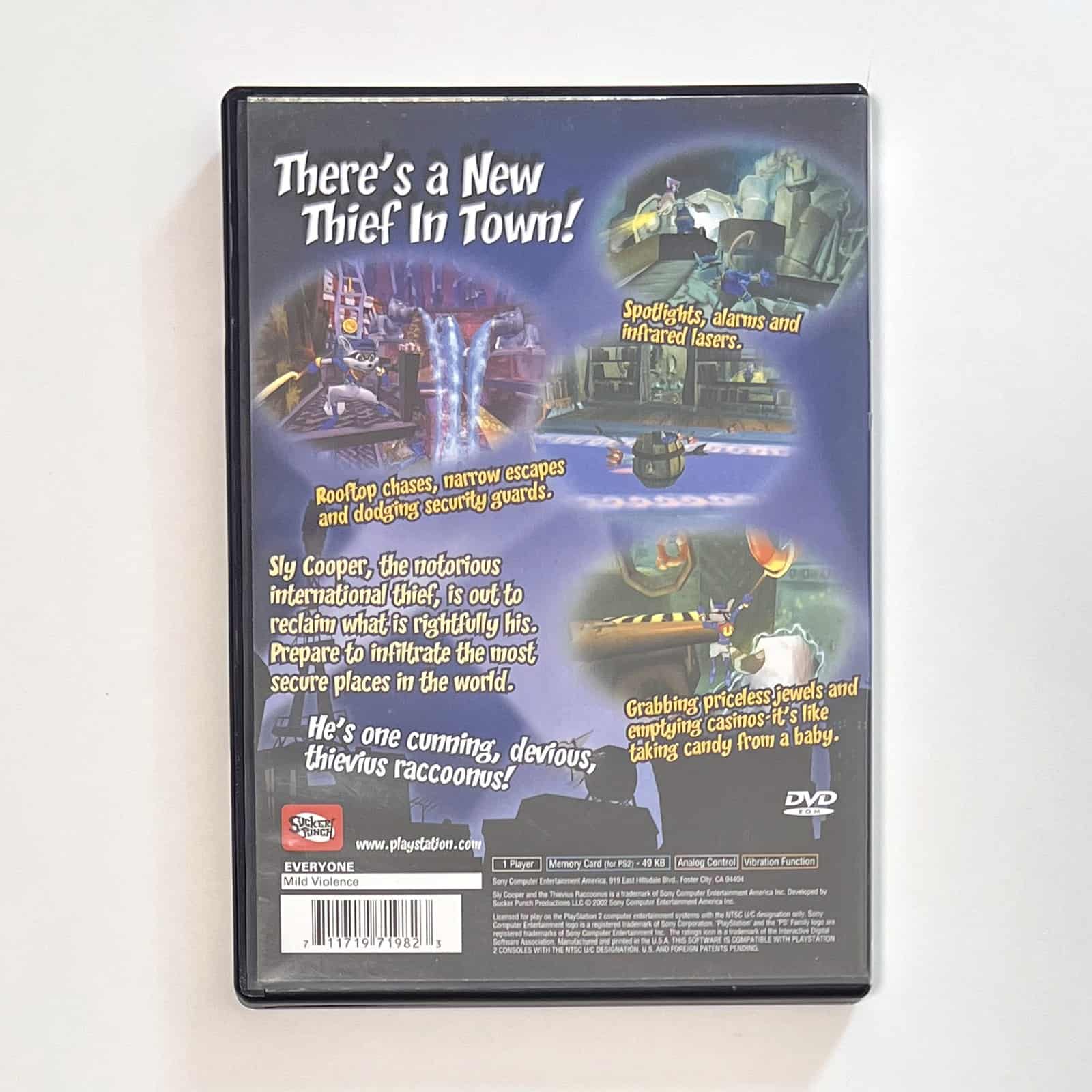
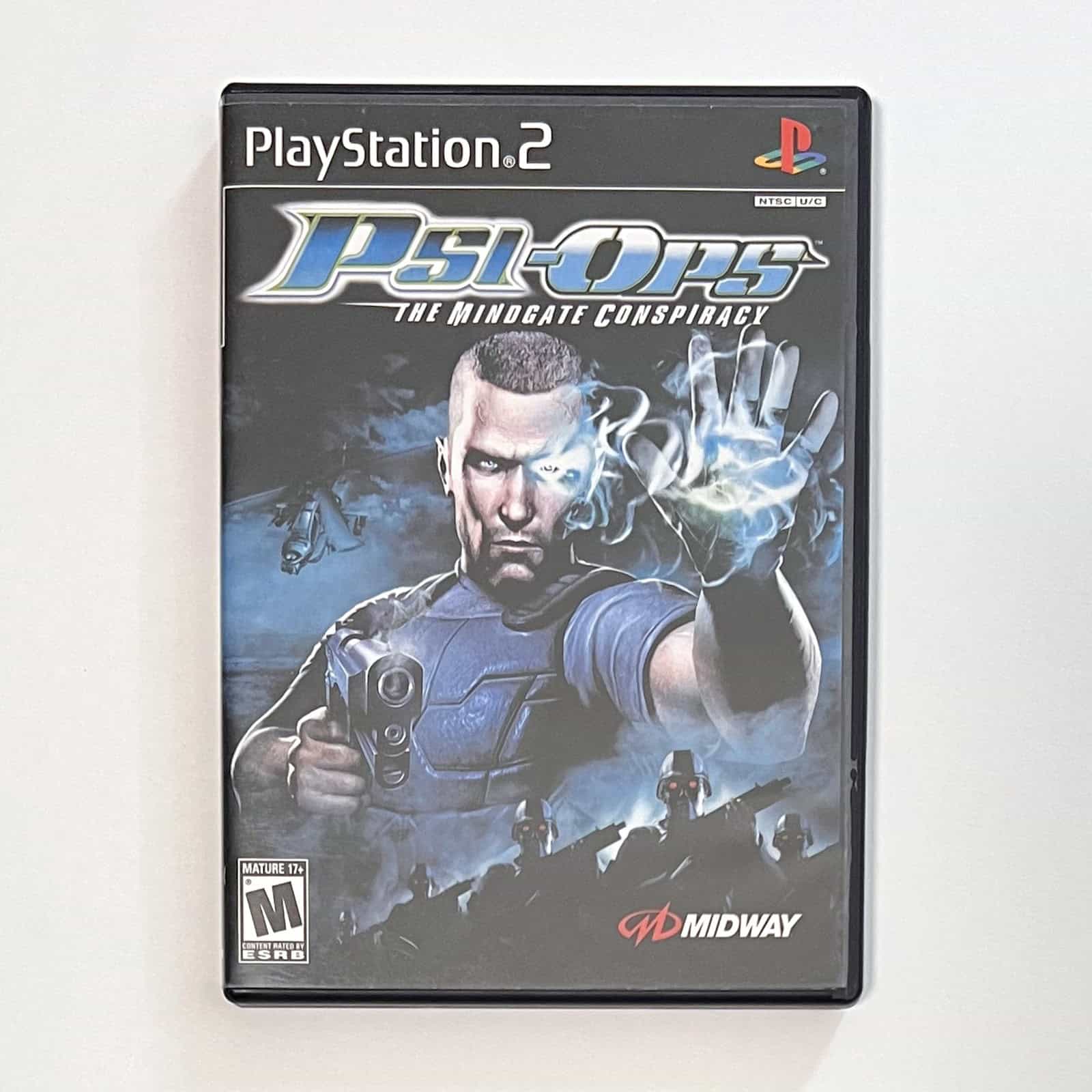
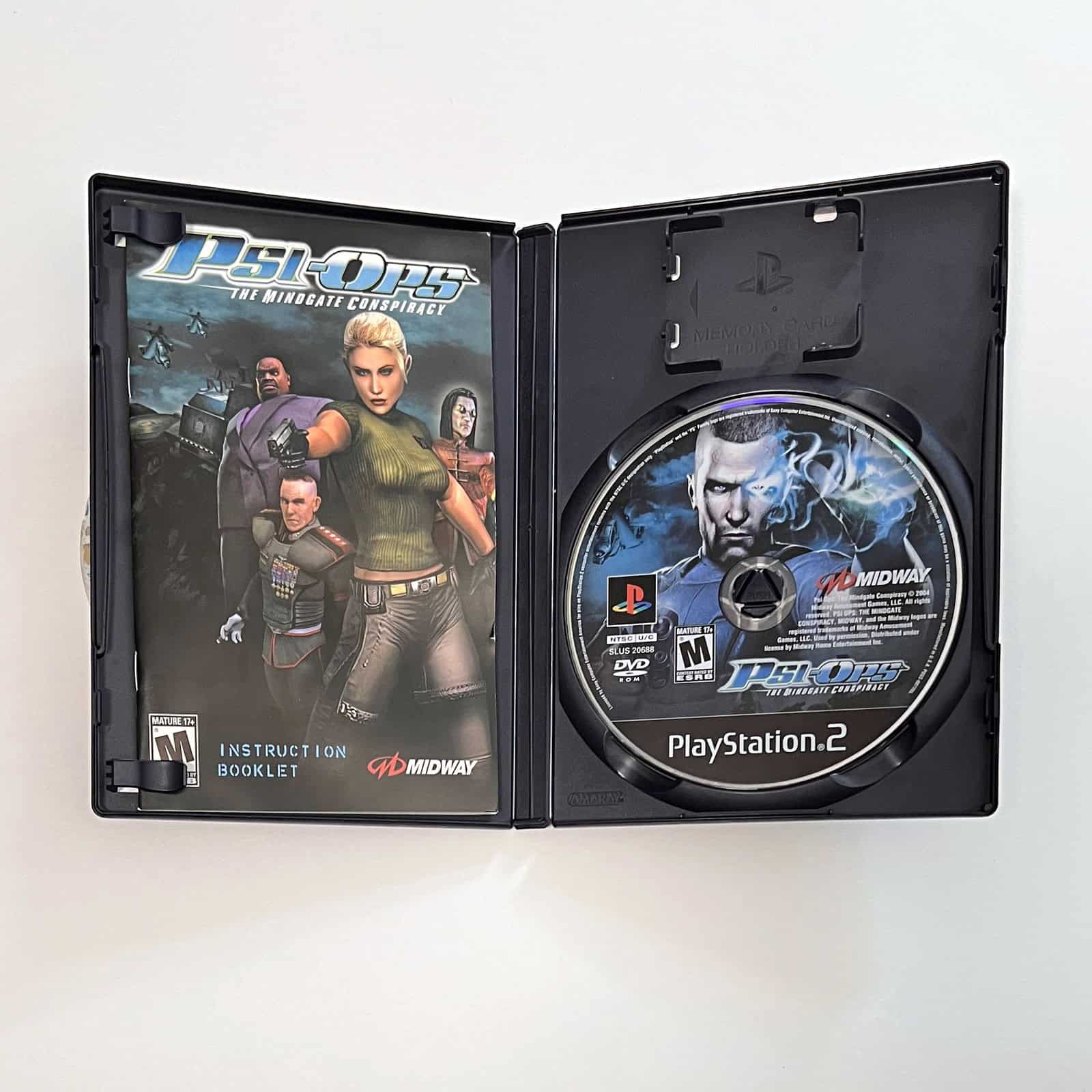
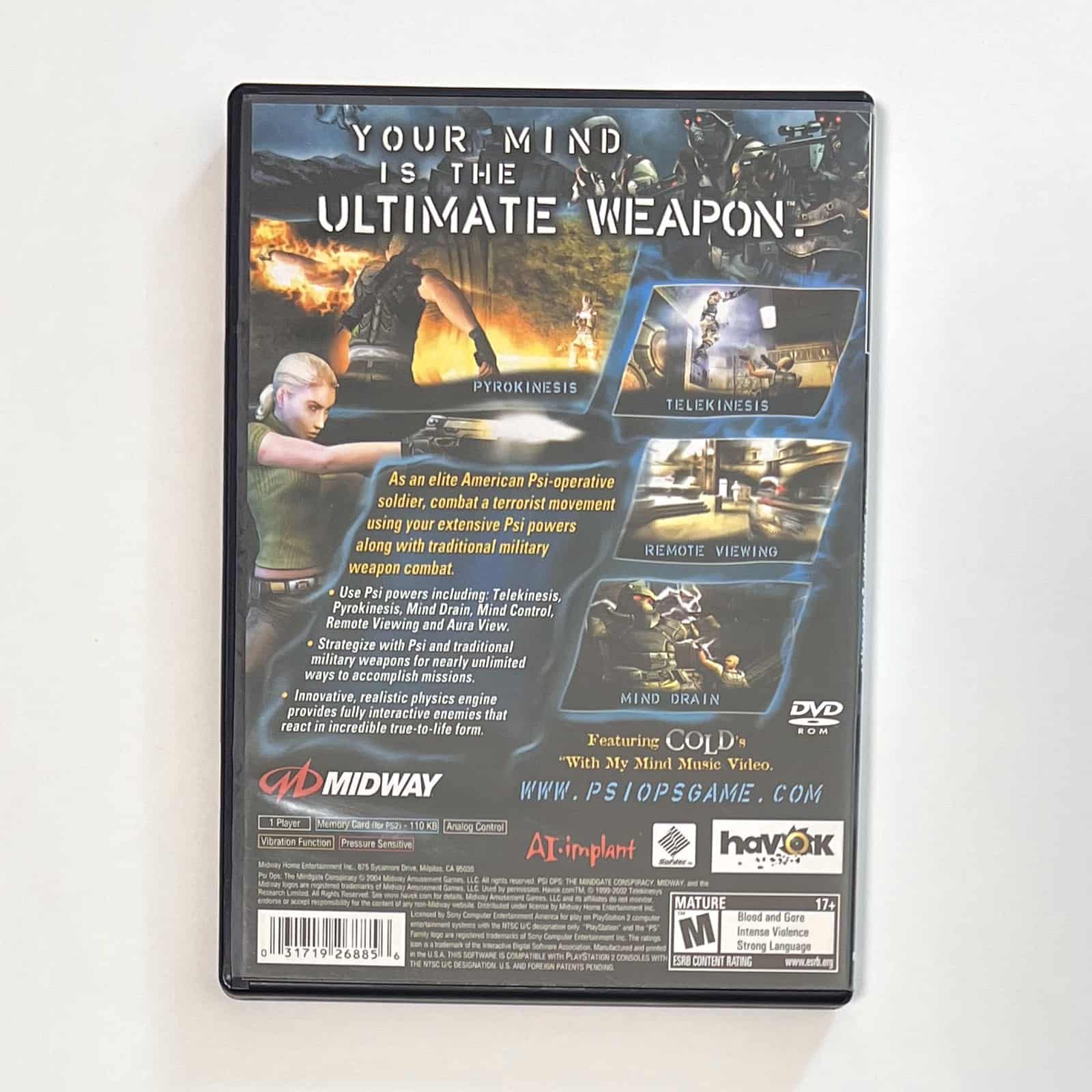
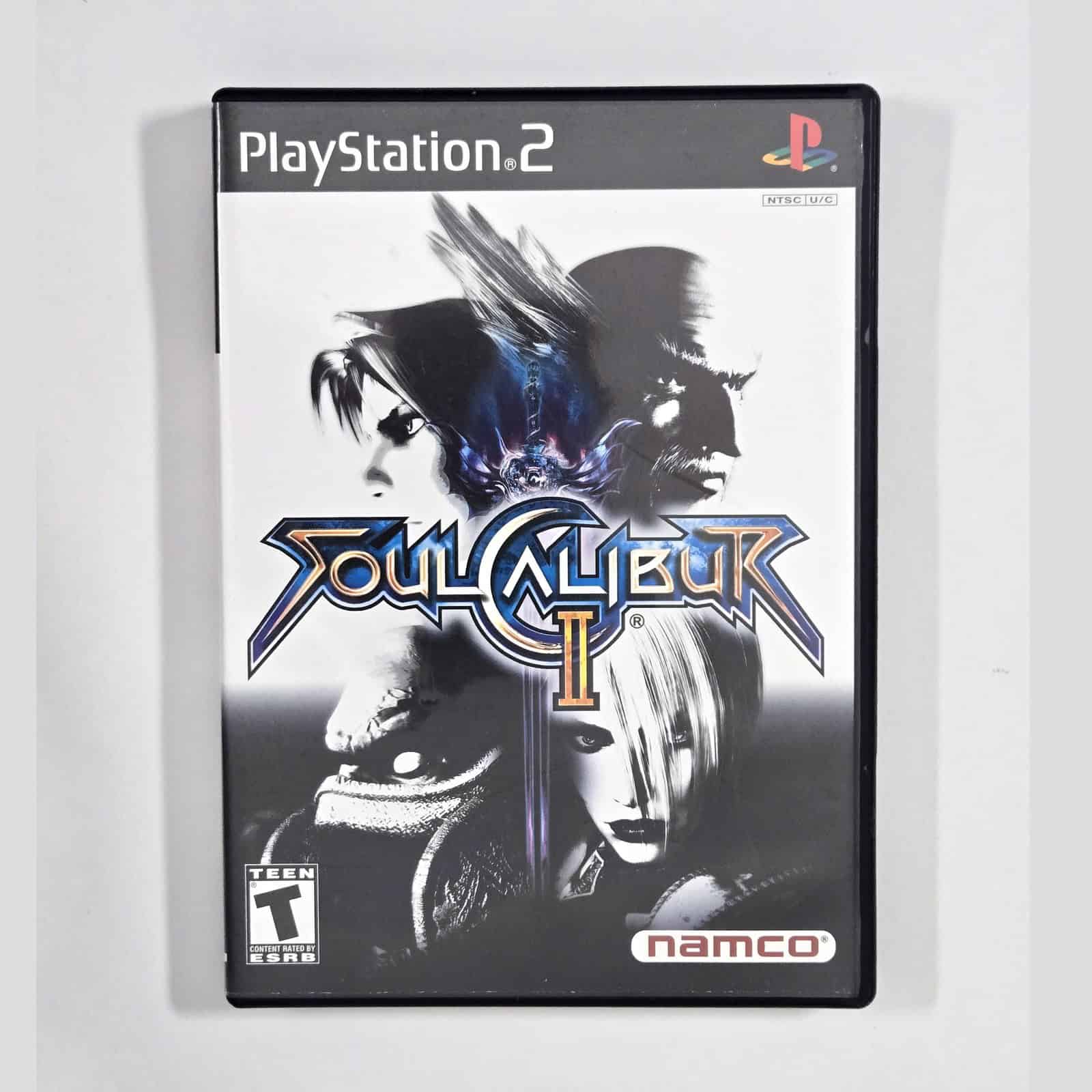
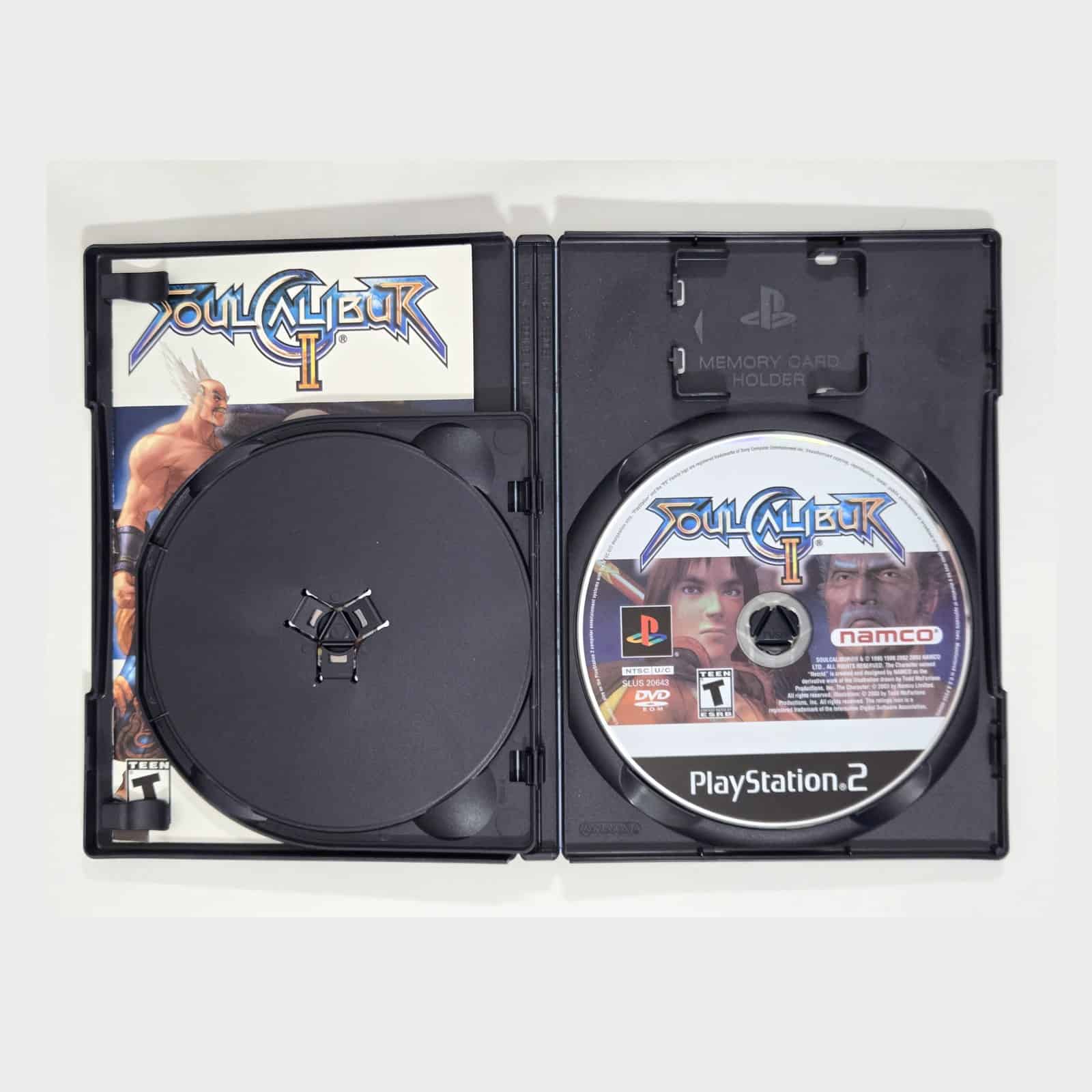
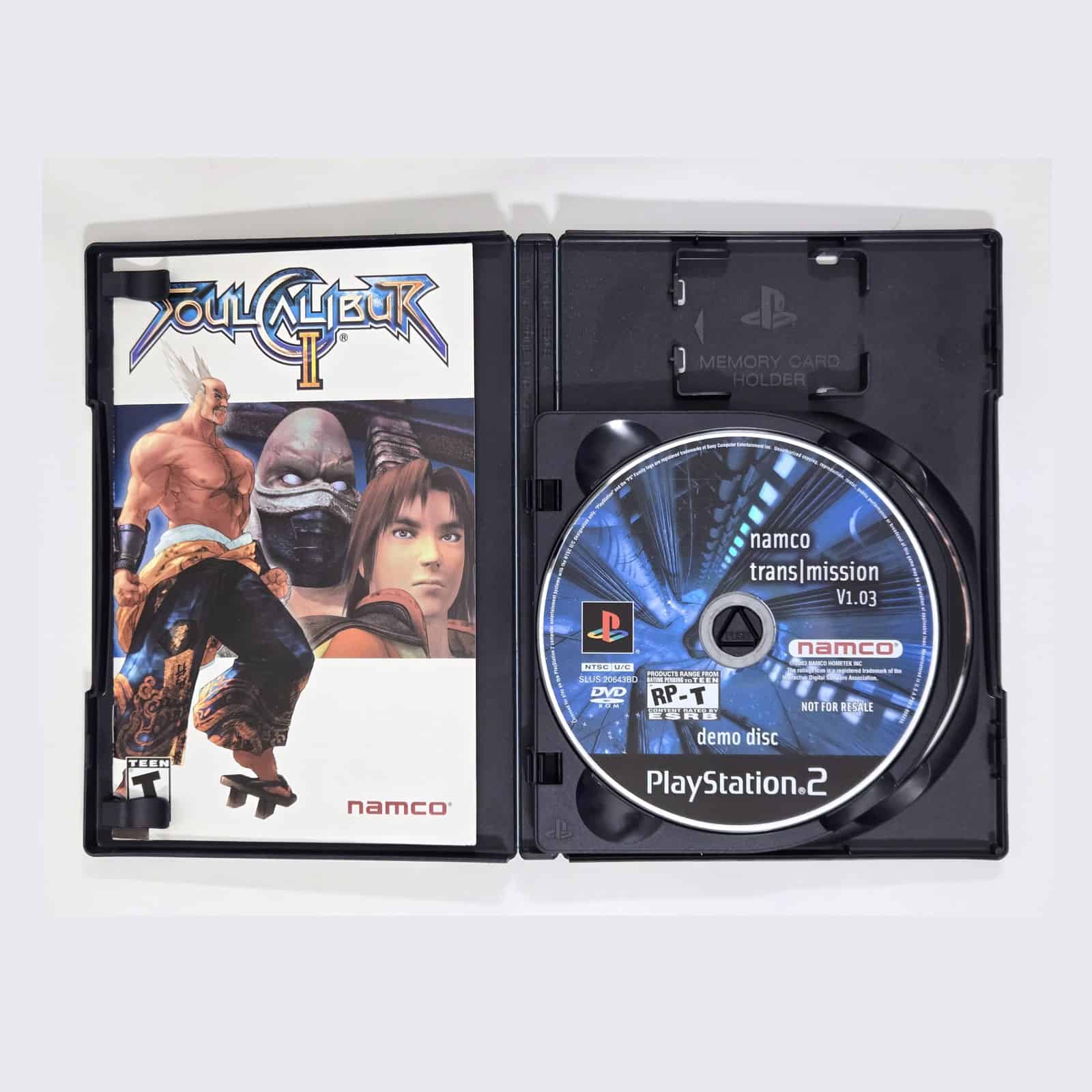
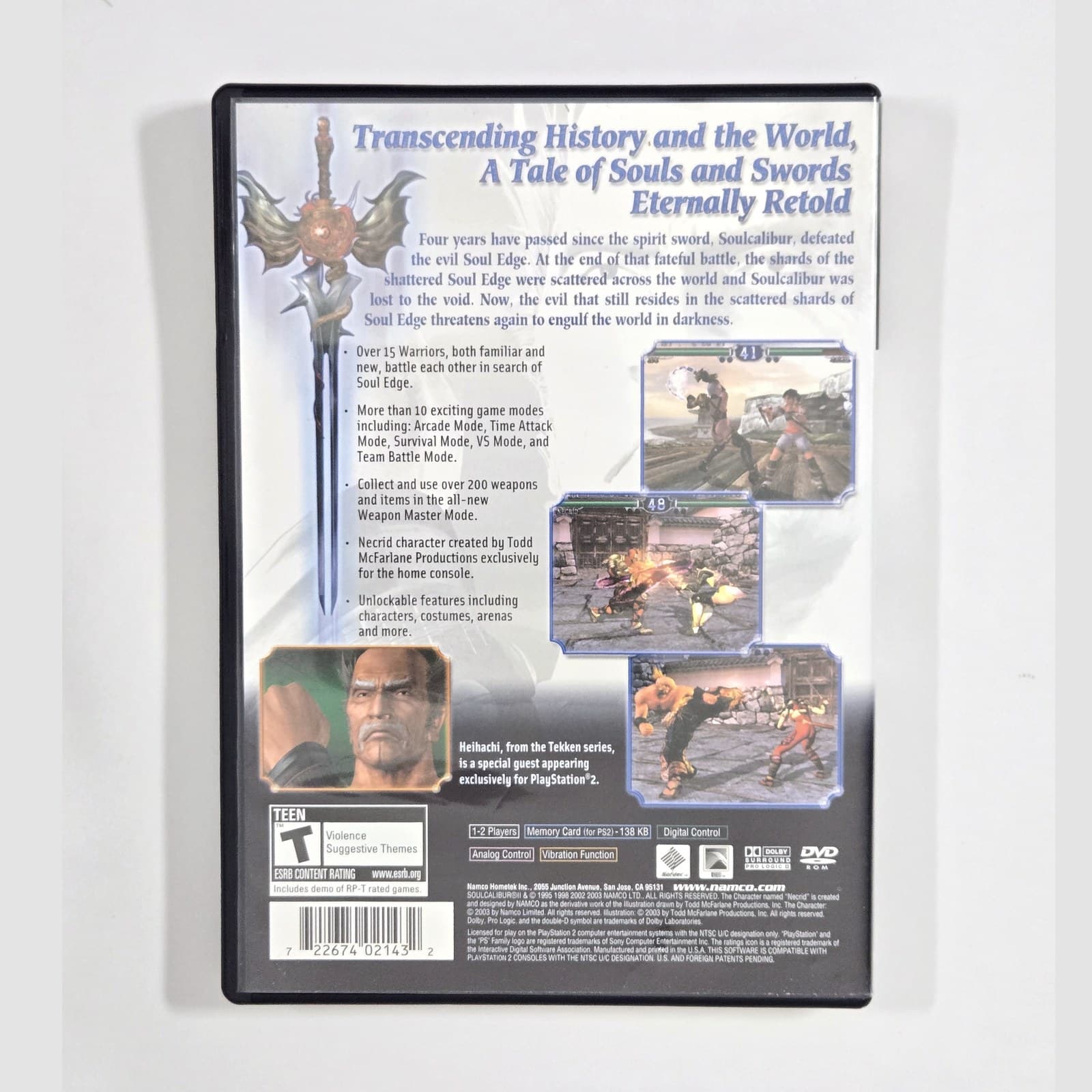
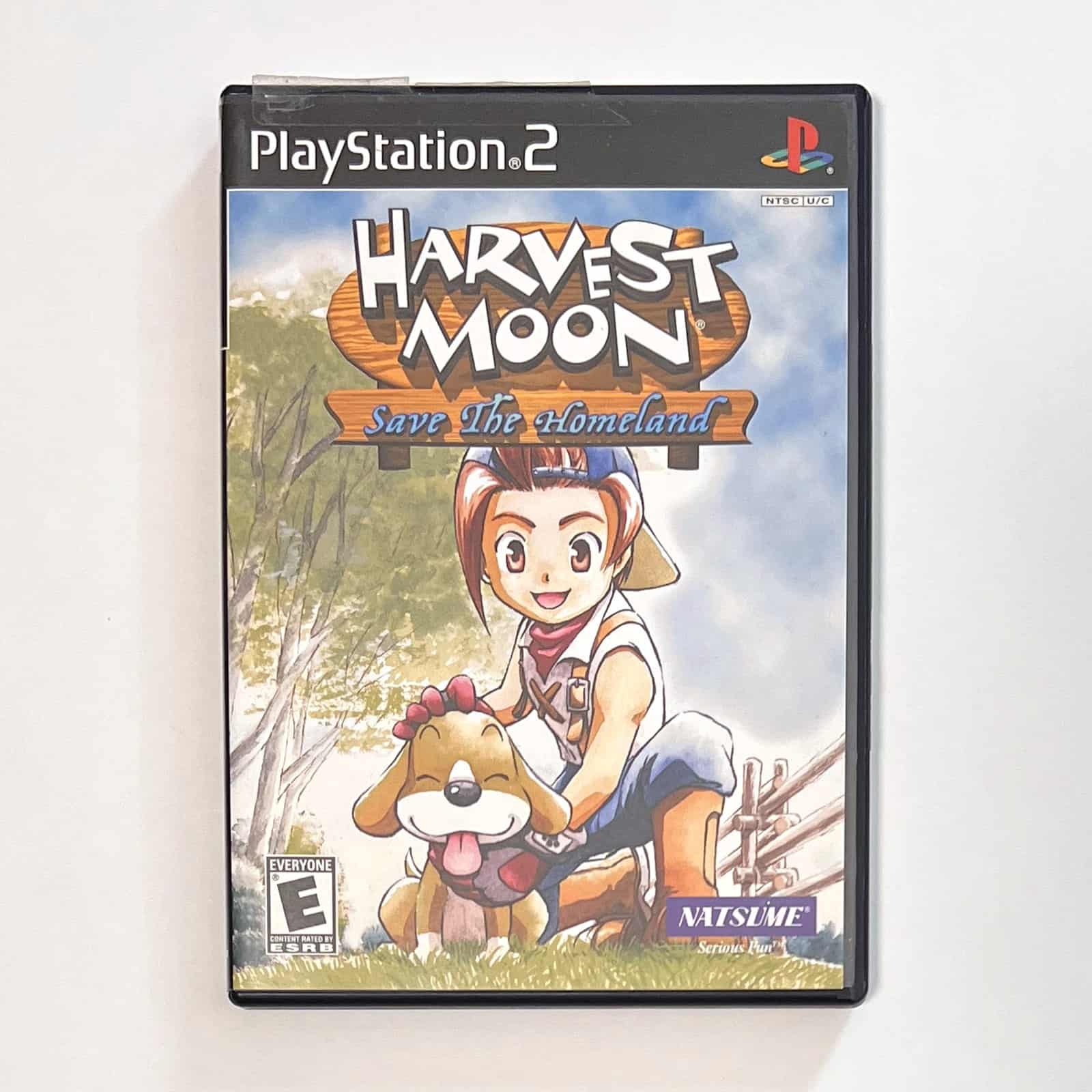
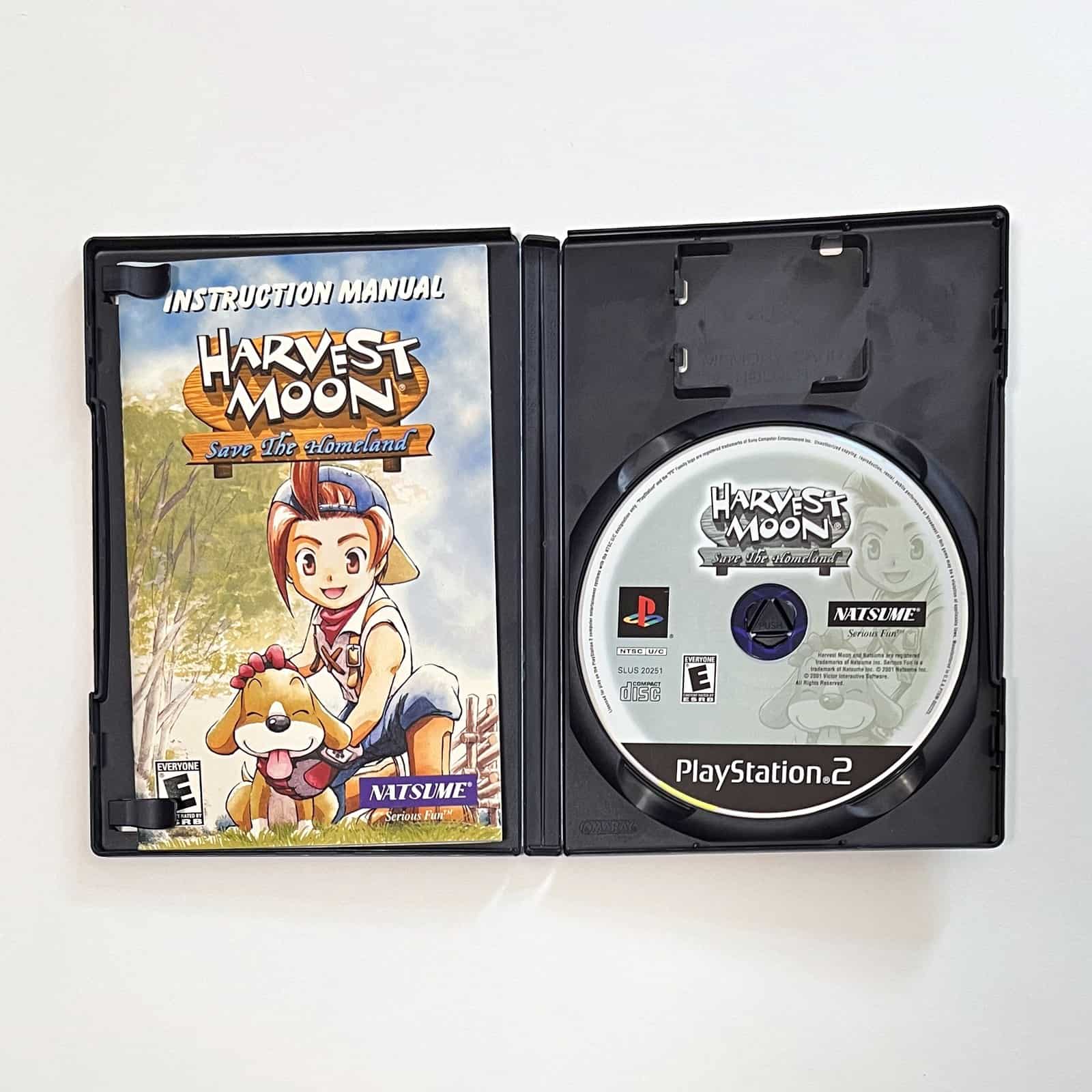
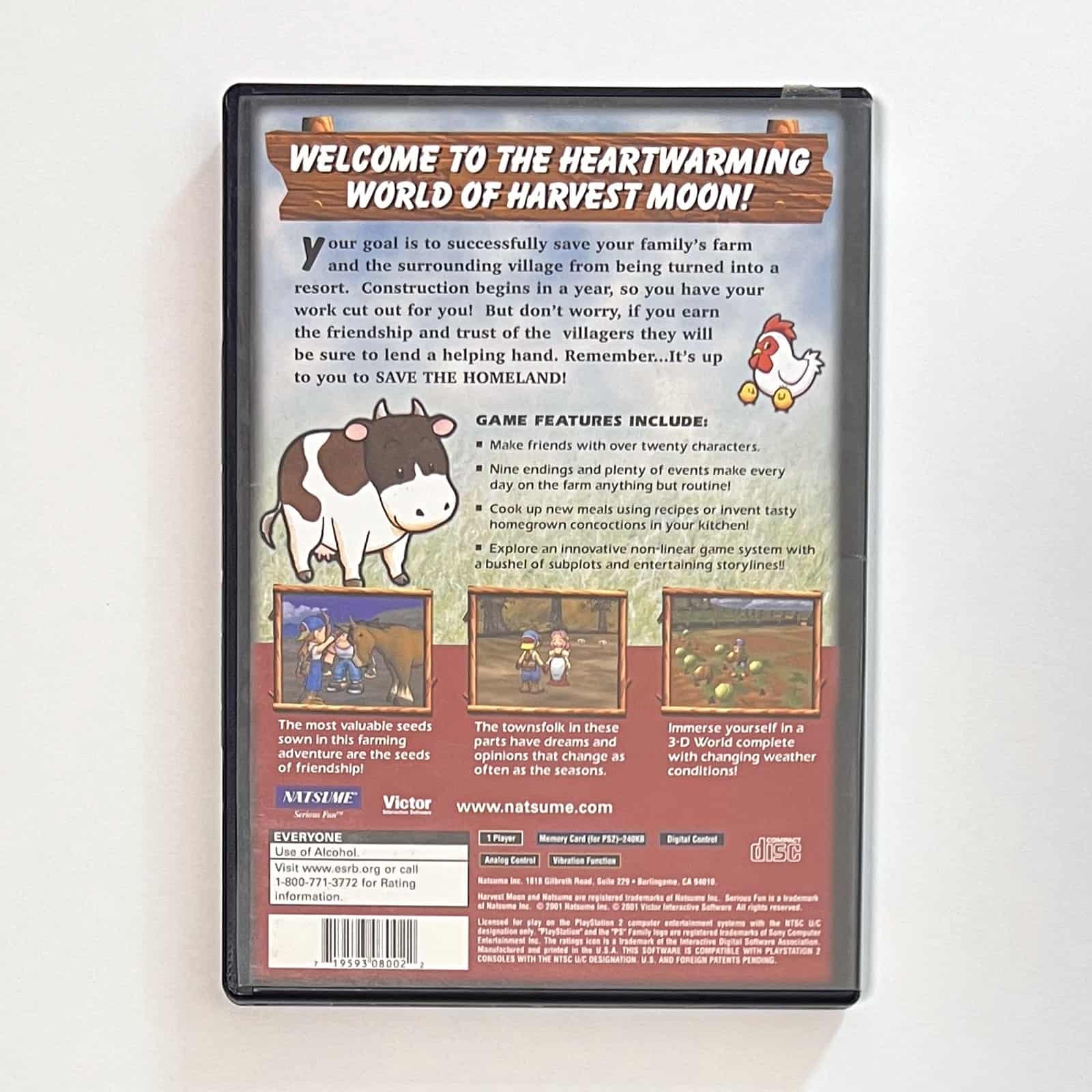
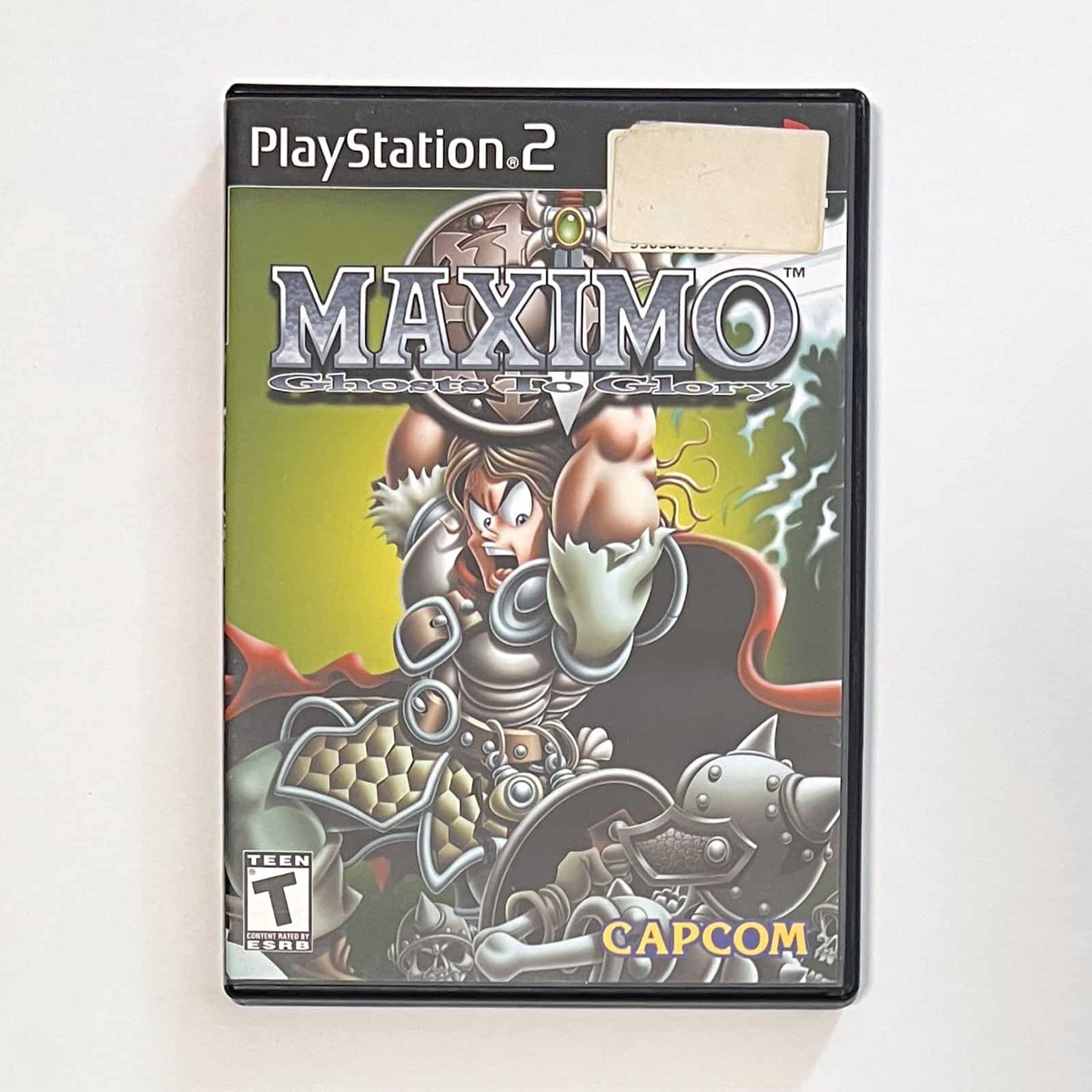
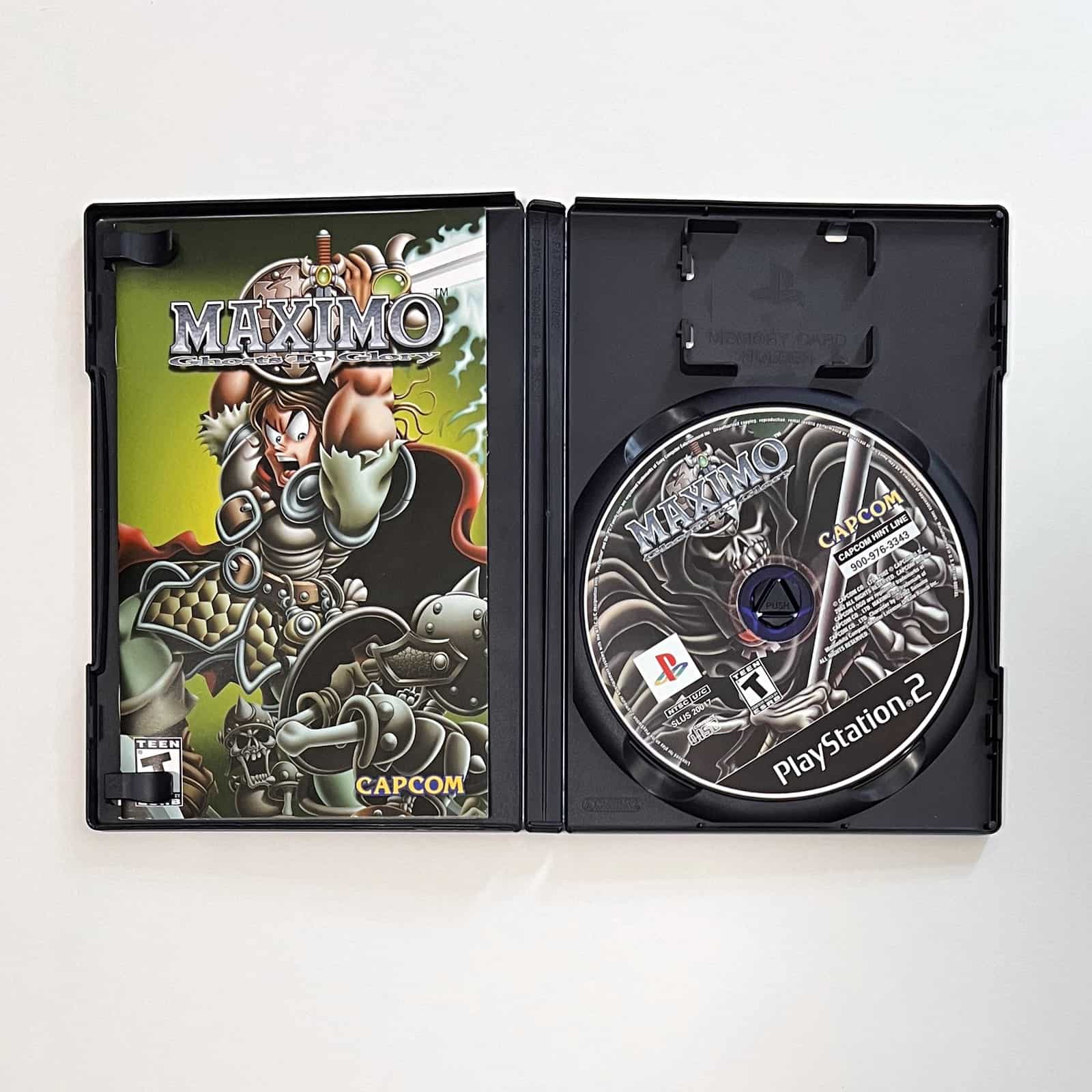
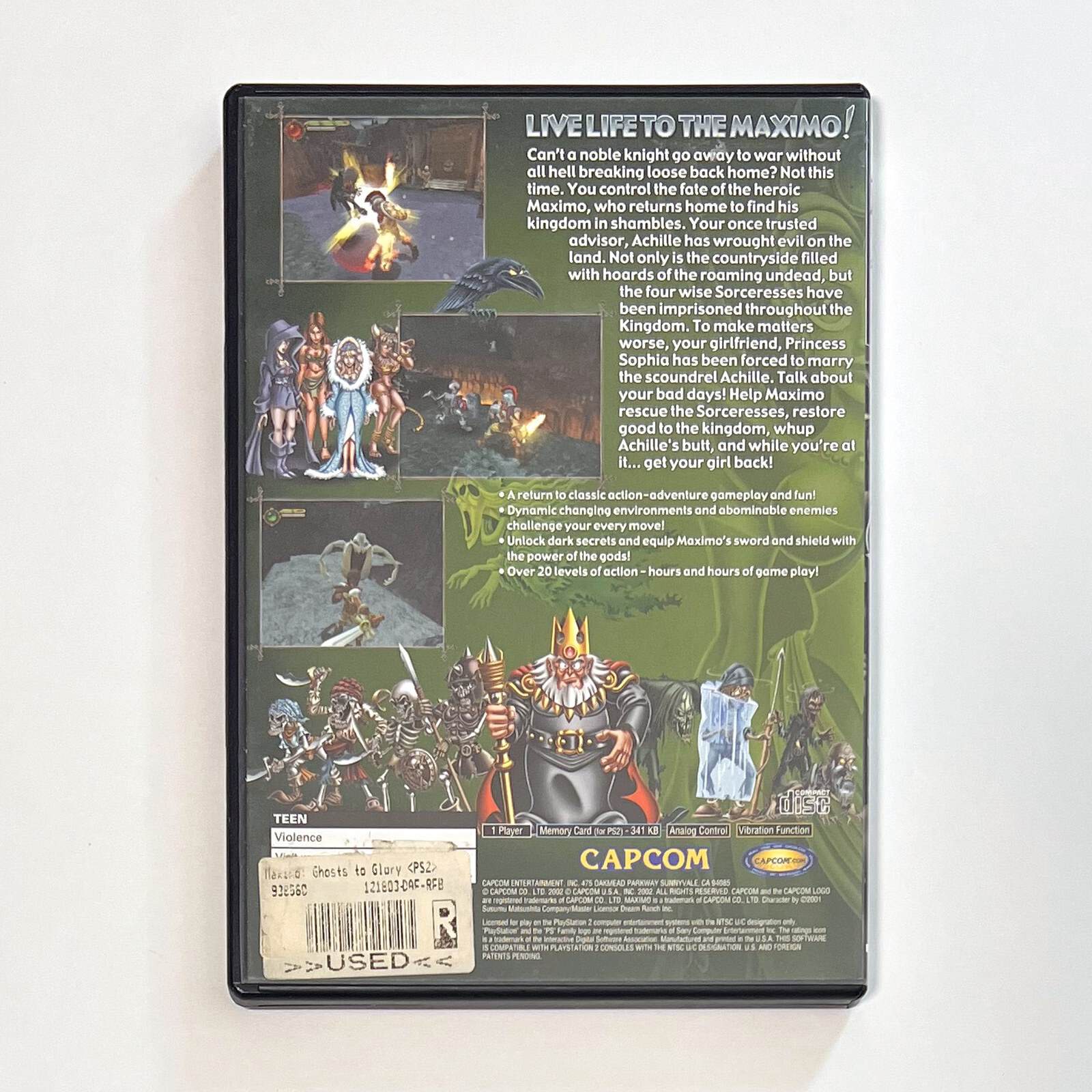
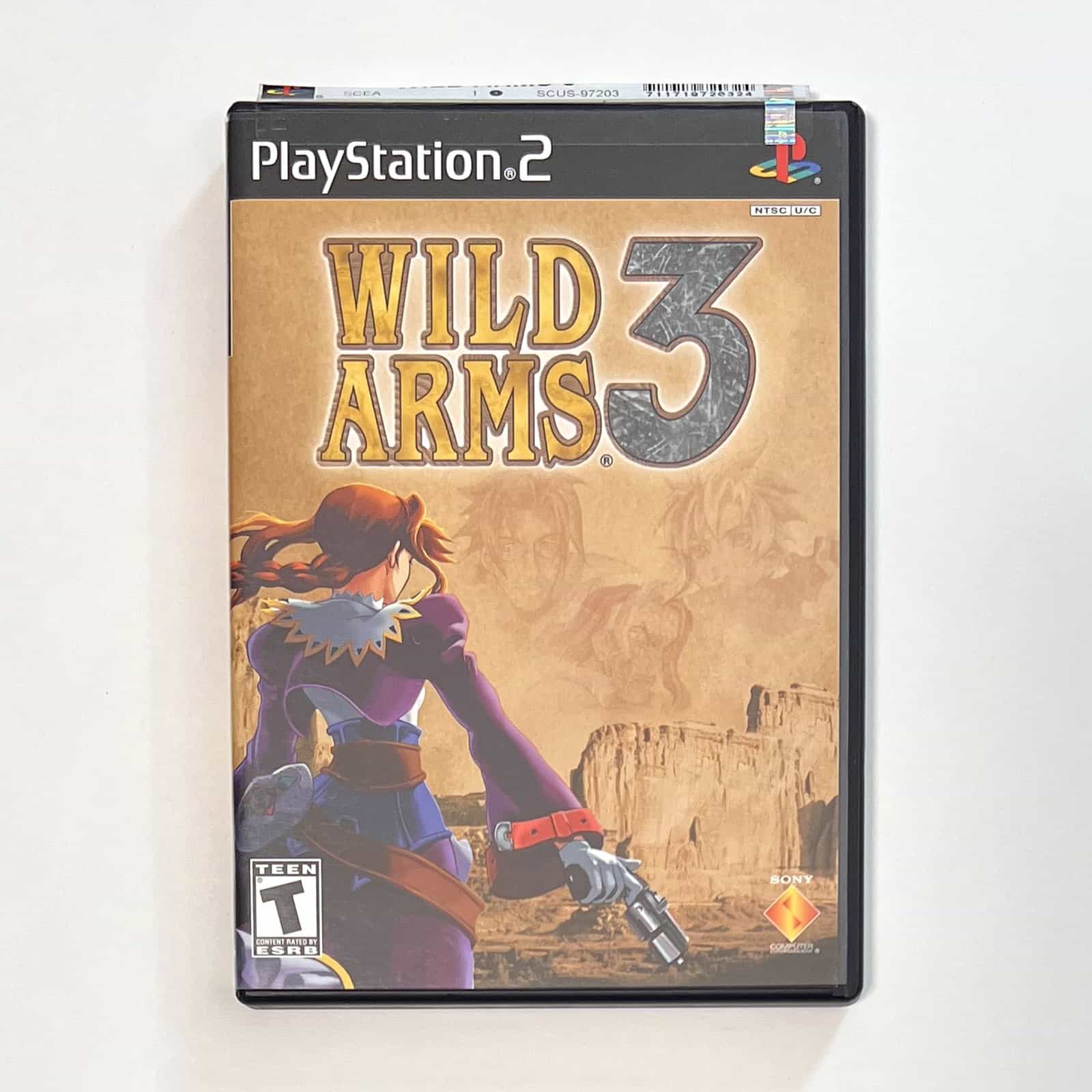
Every PS2 hidden gems video eventually lands on the same three games: Okami, Ico, Beyond Good & Evil. Great games. Not hidden. This list is the stuff that doesn’t make those lists. Eight games, every one off my own shelf, with what’s great, what’s rough and what to know before you go hunting.
This is Volume 1.
Some links in this post are affiliate links. If you buy through them, I may earn a small commission at no extra cost to you.
The list at a glance
#
Game
Year (NA)
What it is
Where to buy
1
Mad Maestro!
2002
Rhythm game where you conduct an orchestra with pressure-sensitive buttons
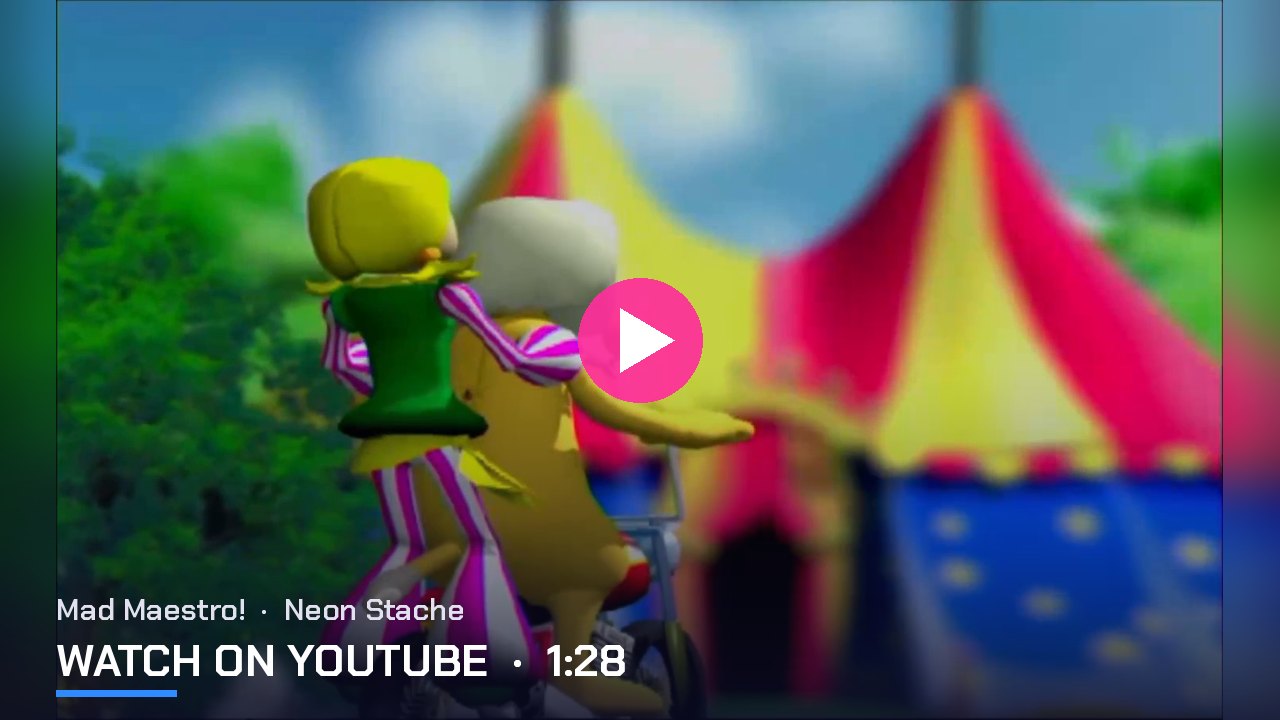
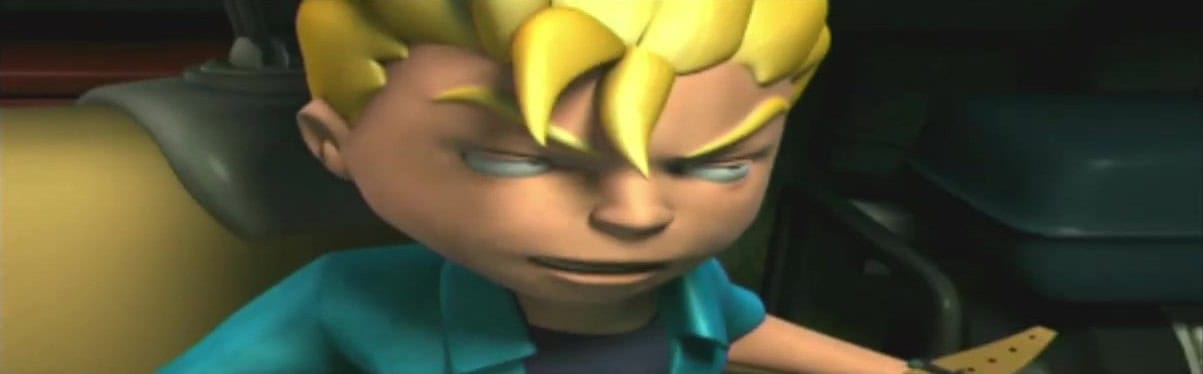
Think Guitar Hero, except you’re the guy with the baton. You play Takt, a kid who runs the youth orchestra in a town that wants to tear down its concert hall. A fairy shows up, and the two of you recruit the weirdest orchestra ever, including a clown, her lion and a reporter, all to save the hall.
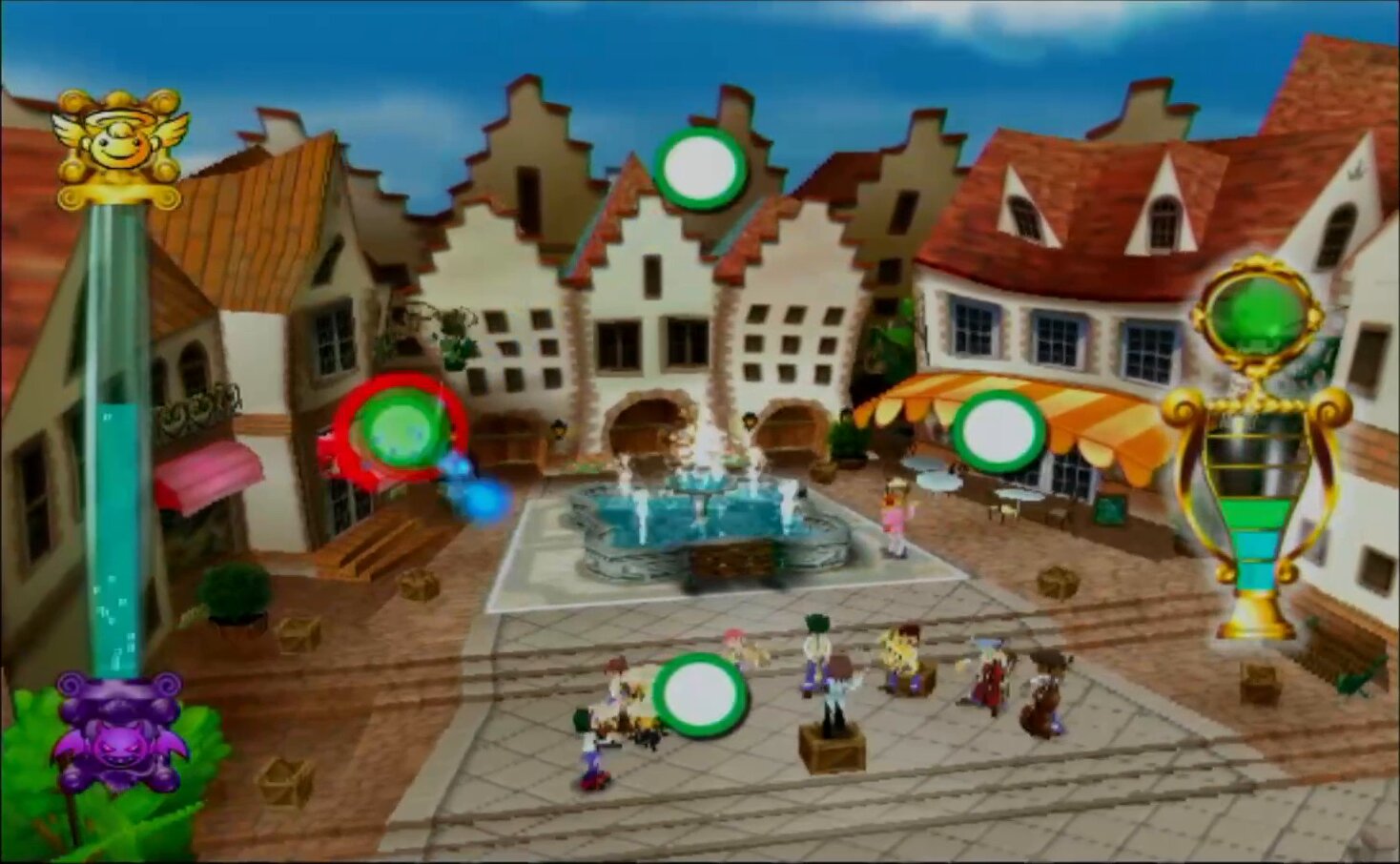
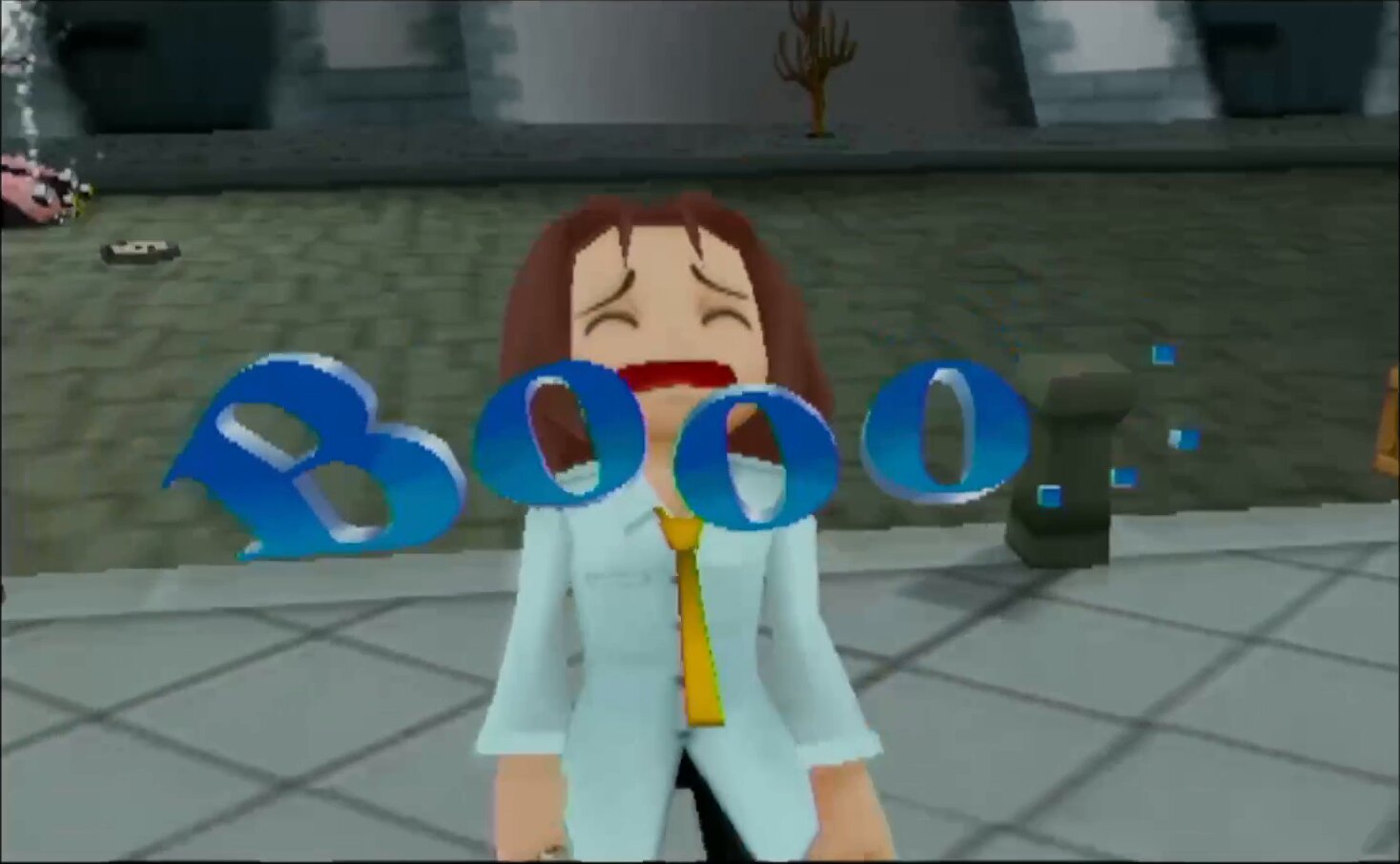
The whole game runs on something most PS2 owners never knew their controller could do: the face buttons on the DualShock 2 are pressure sensitive. Every note asks for a light tap, a medium press or a hard squeeze, and the music is all classical: Beethoven, Brahms, Tchaikovsky. Play well and you fill the Tension Meter, which kicks off Angel Mode. Blow three notes and you drop into Devil Mode, where your score bleeds out until you nail a clean run again.
Why it made the list: Some critics back in the day thought the pressure thing was too fussy. In Japan, though, it did well enough to get three follow-ups (two expansions and a full sequel, Let’s Bravo Music), and none of them ever came here. If you’ve got a DualShock 2 and a soft spot for weird rhythm games, this one’s an easy pickup.
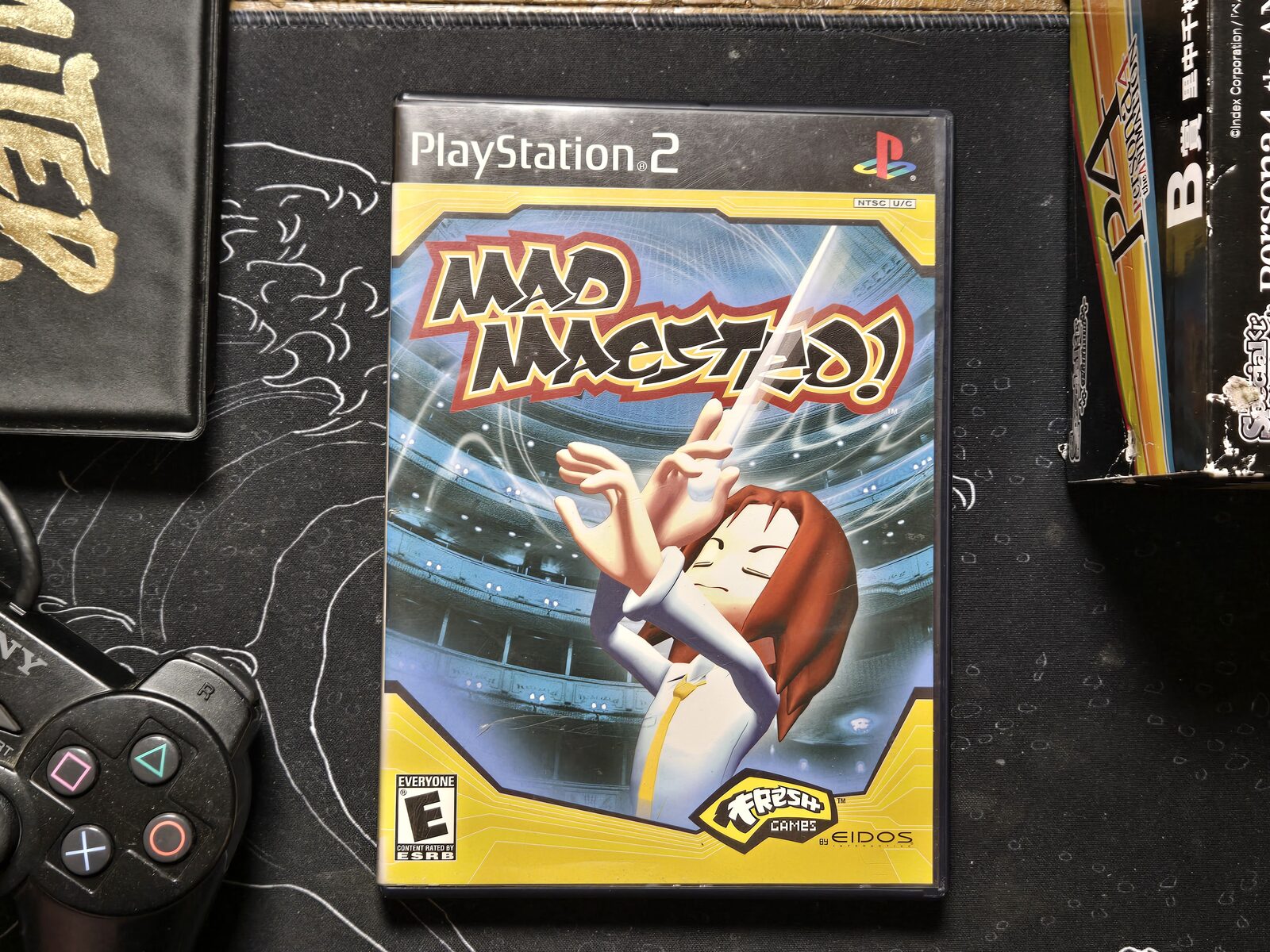
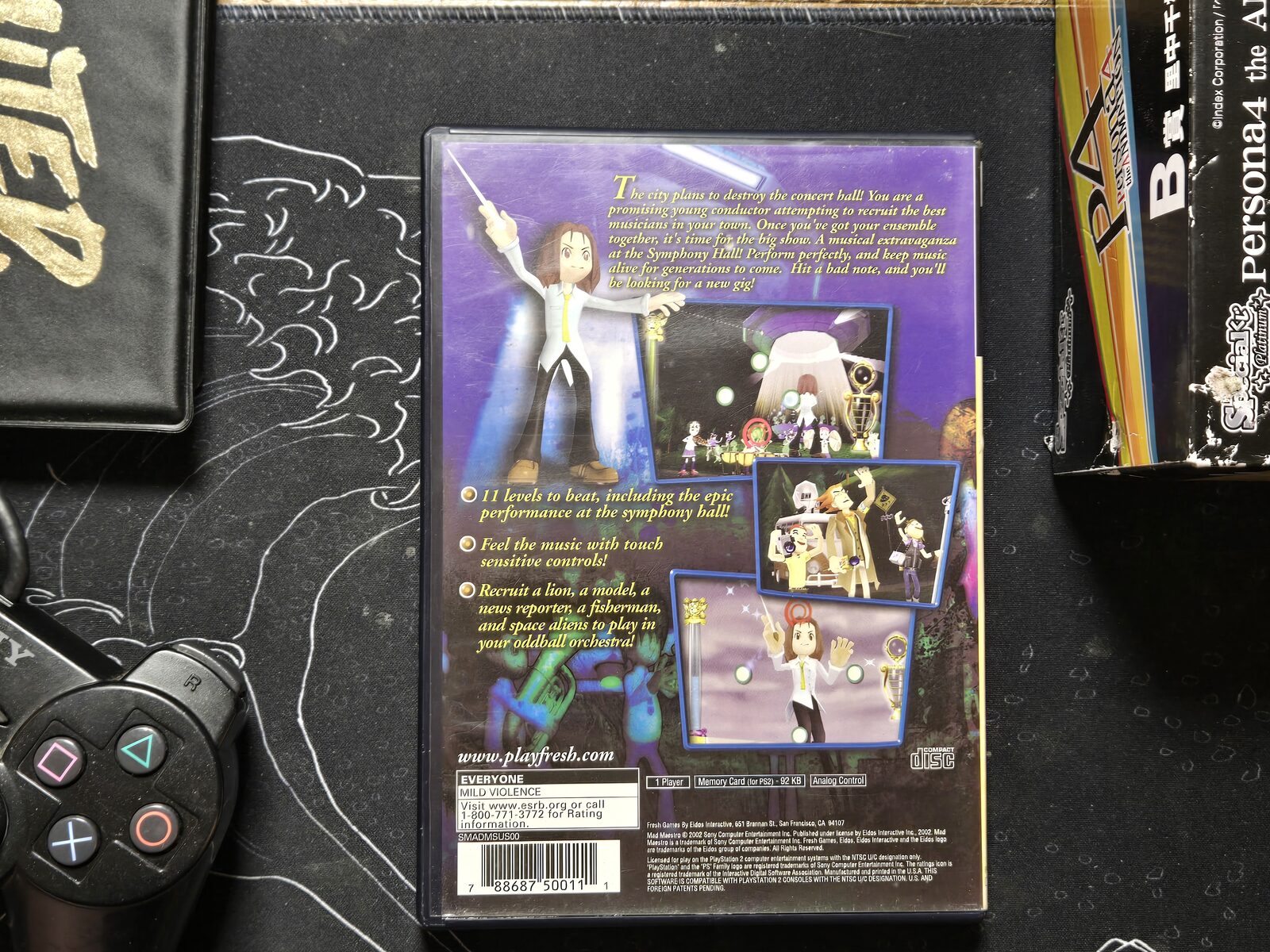
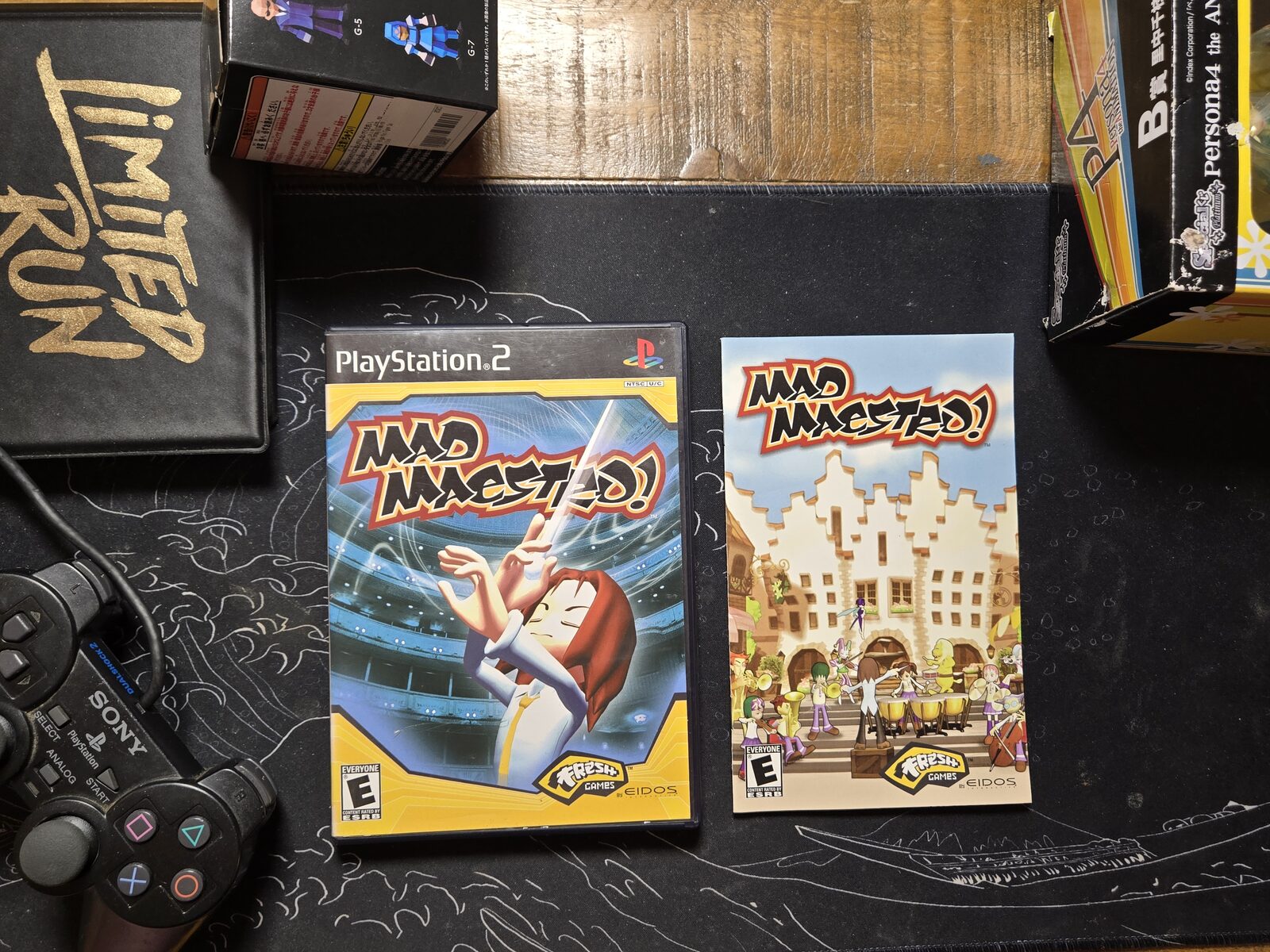
My copy: Mad Maestro! for PS2, North American release, complete with case, disc and manual.
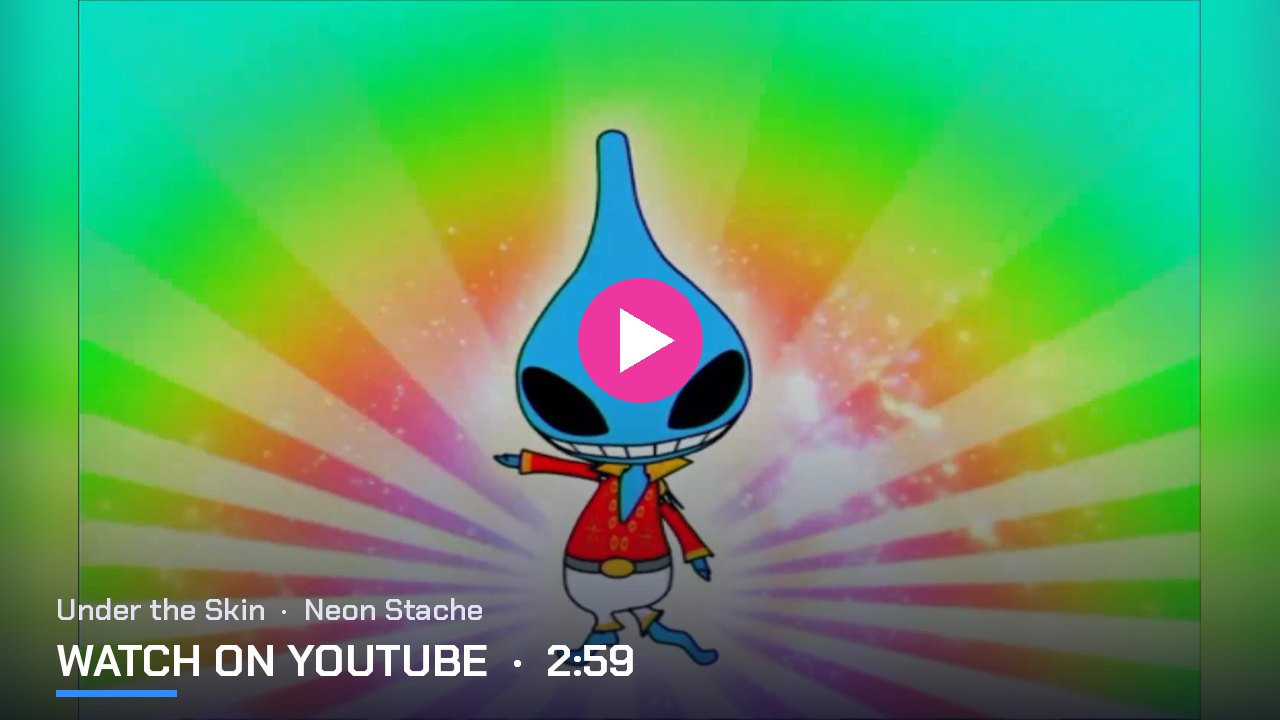
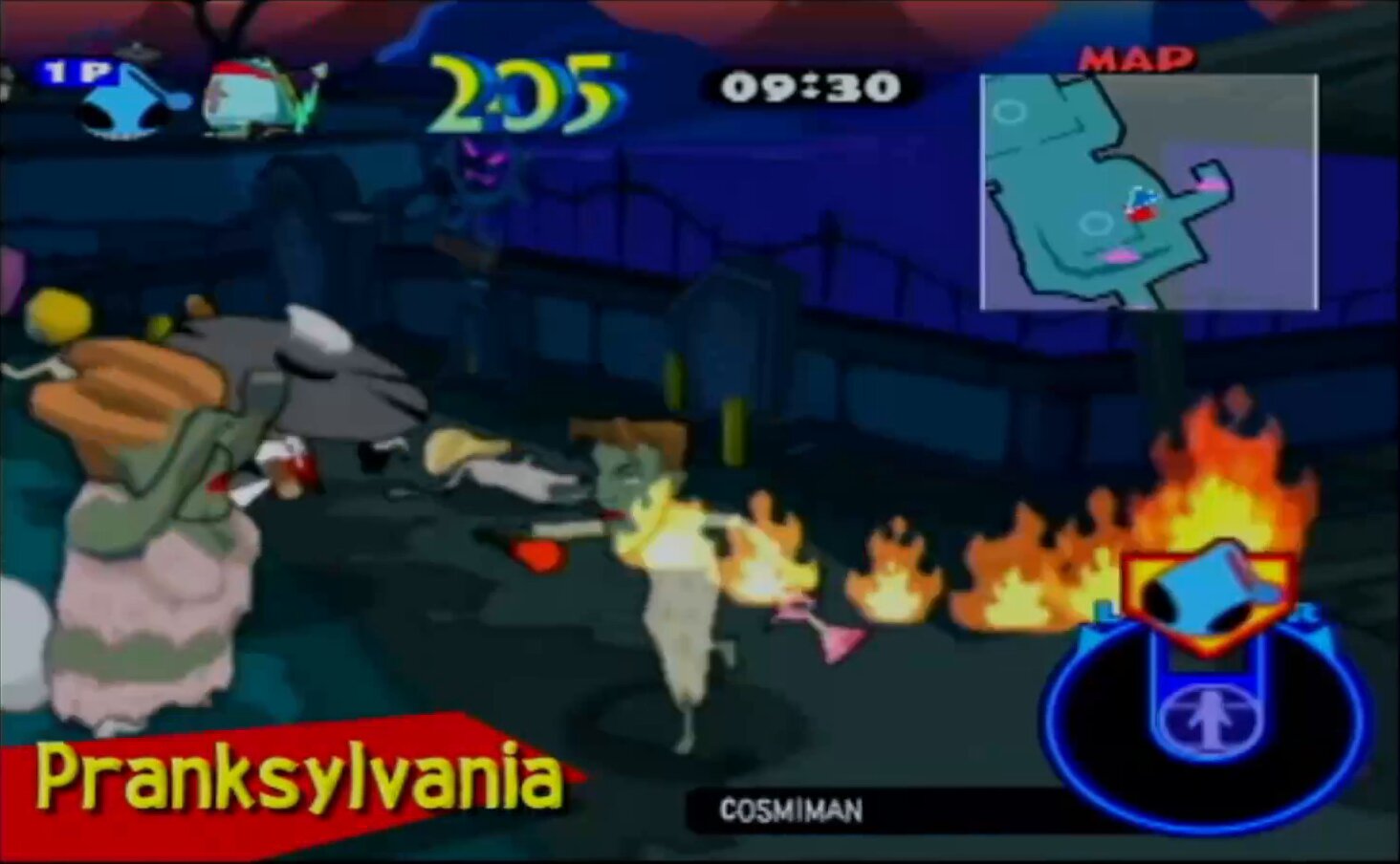
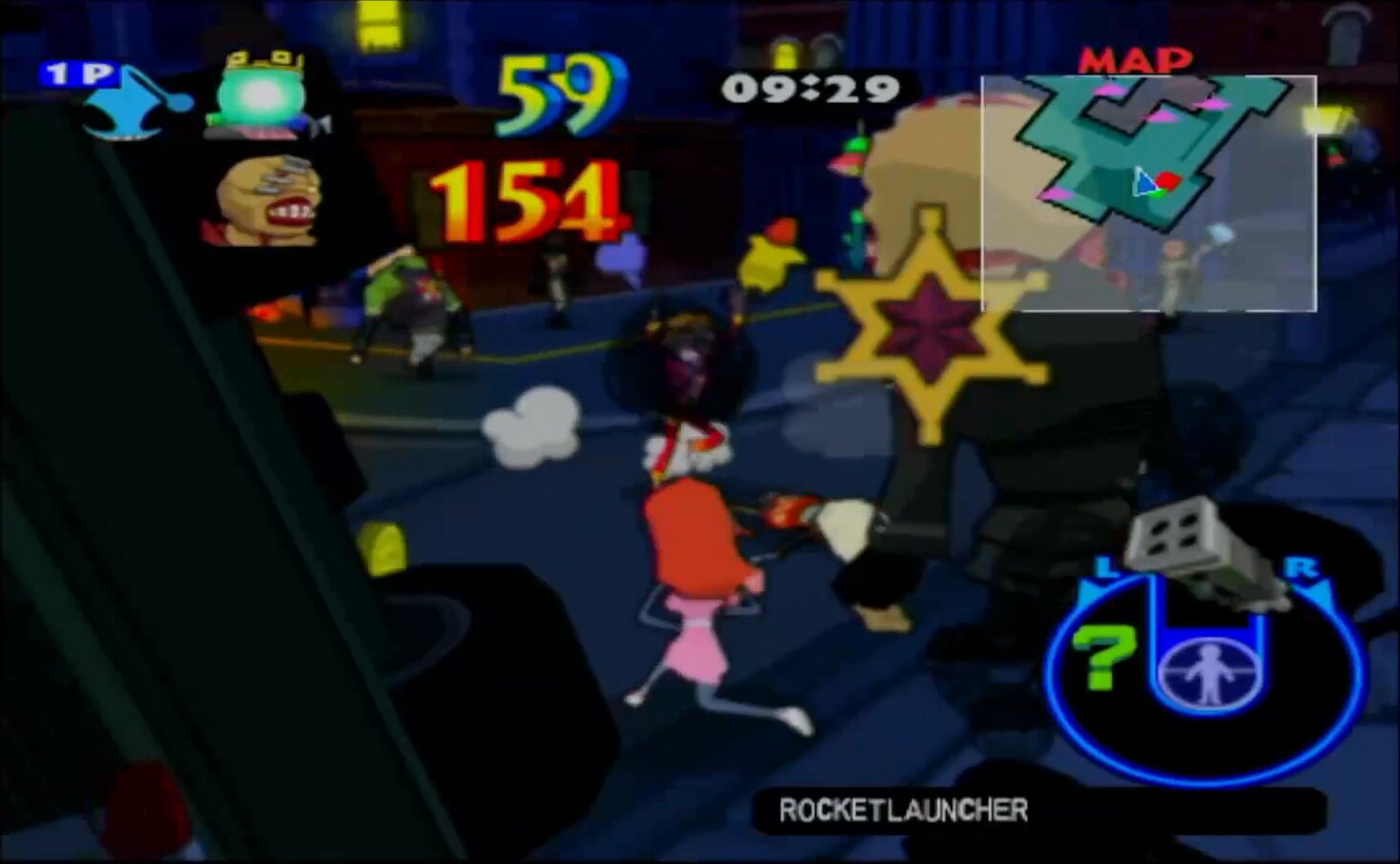
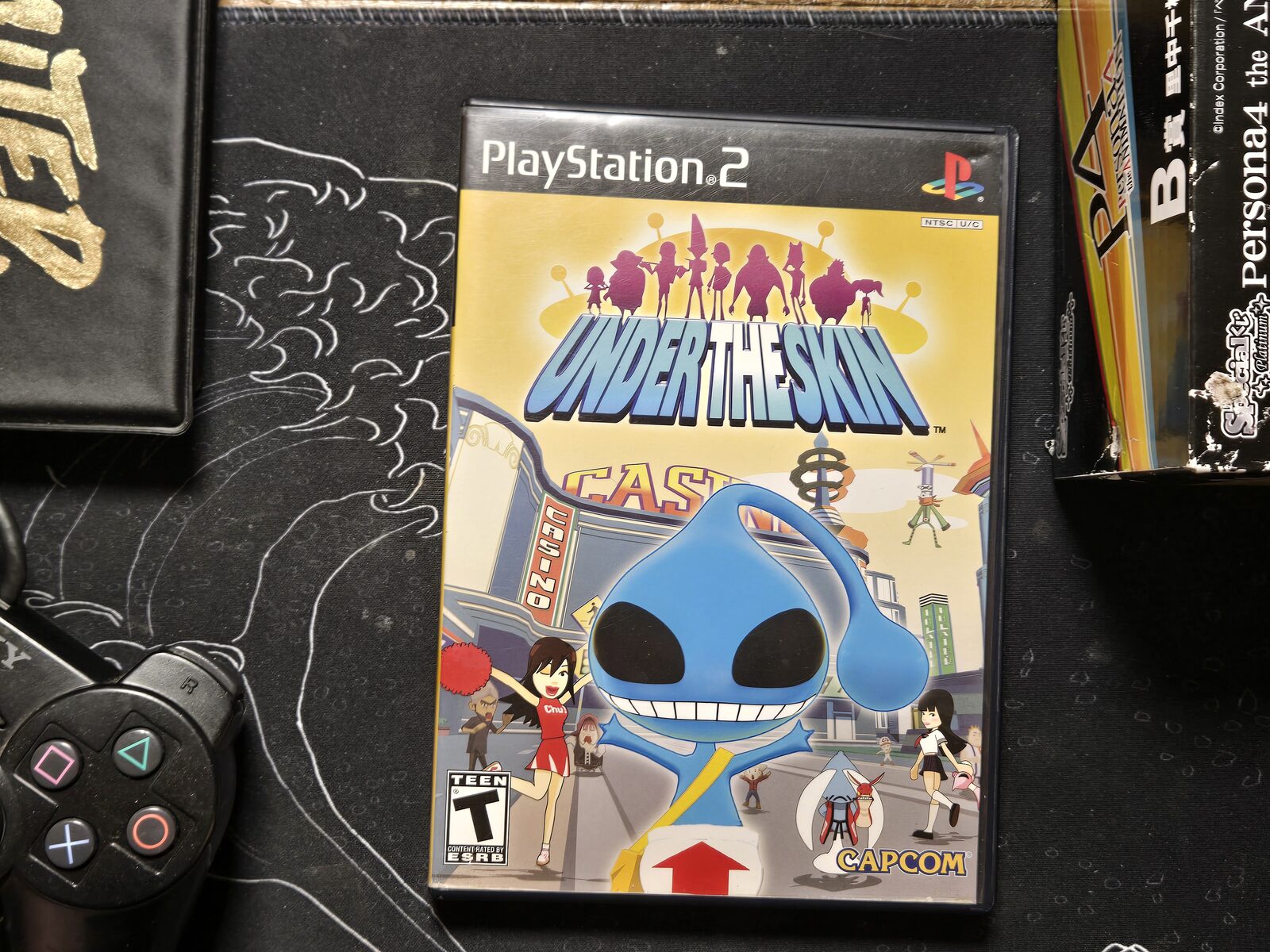
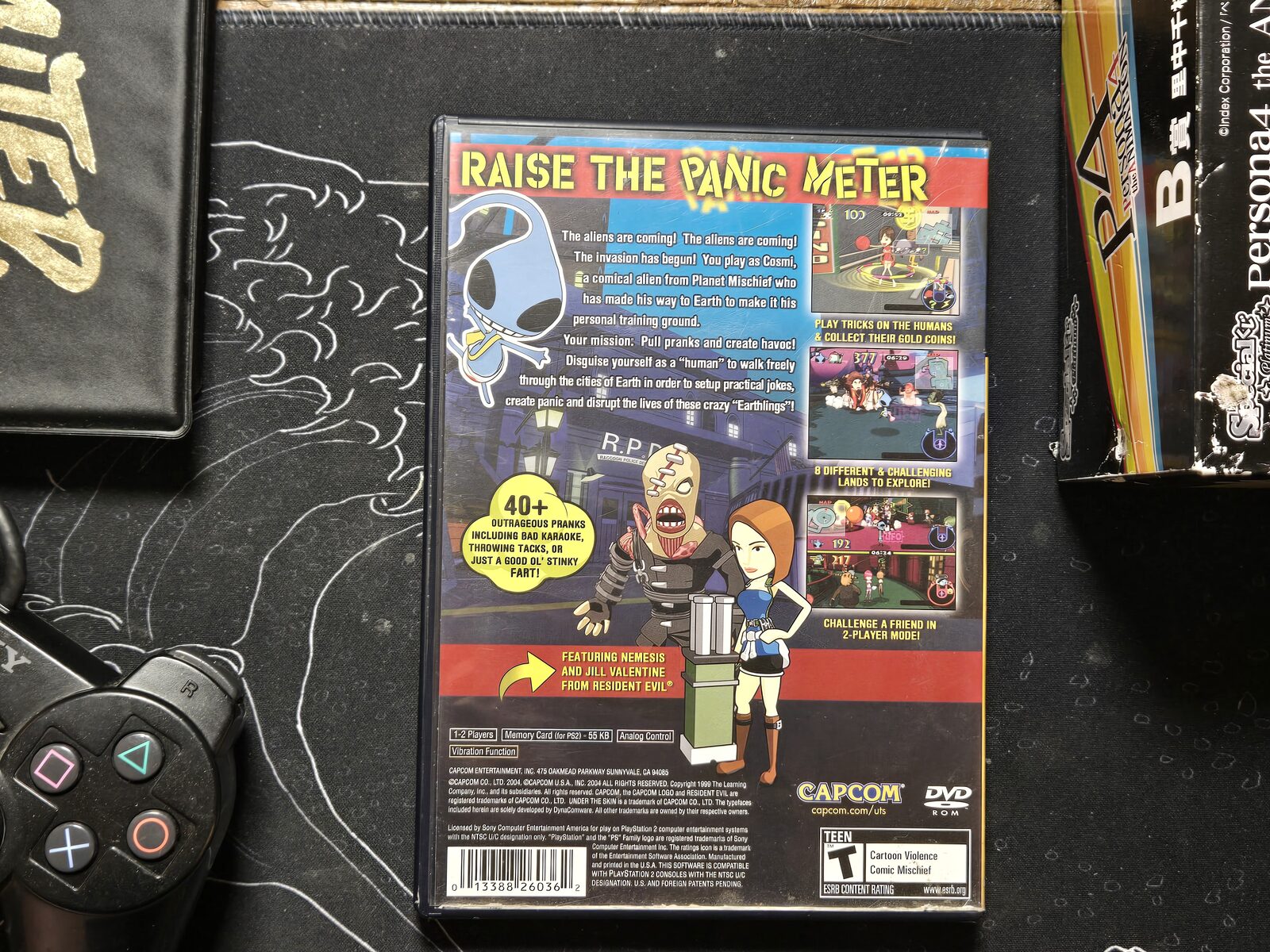
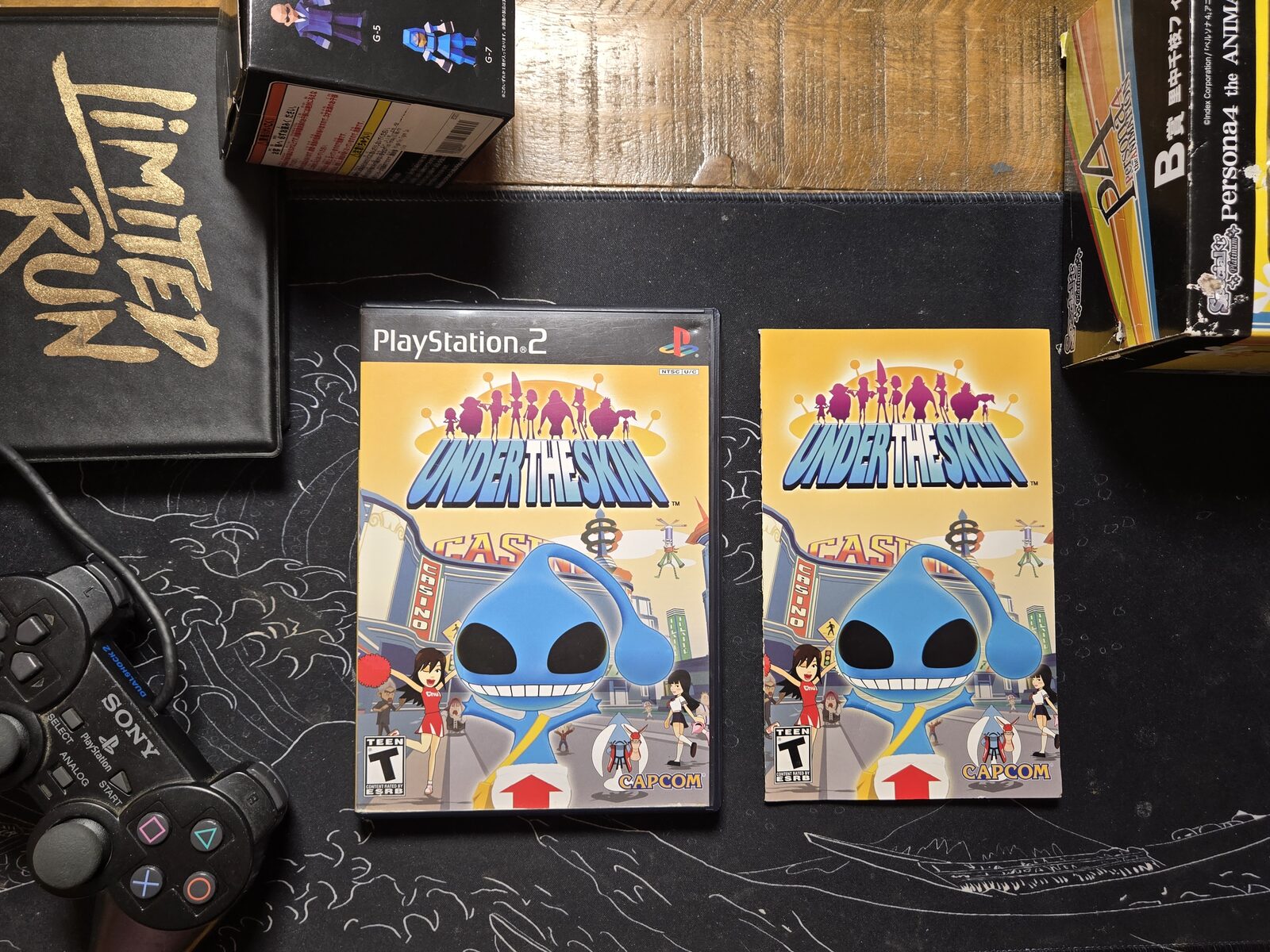
Capcom, 2004. And get this: it came from Capcom Production Studio 4, the same team that made Resident Evil 4. So what did they make alongside it? A game where you play Cosmi, a three-year-old alien from Planet Mischief who comes to Earth to prank people and impress his dad.
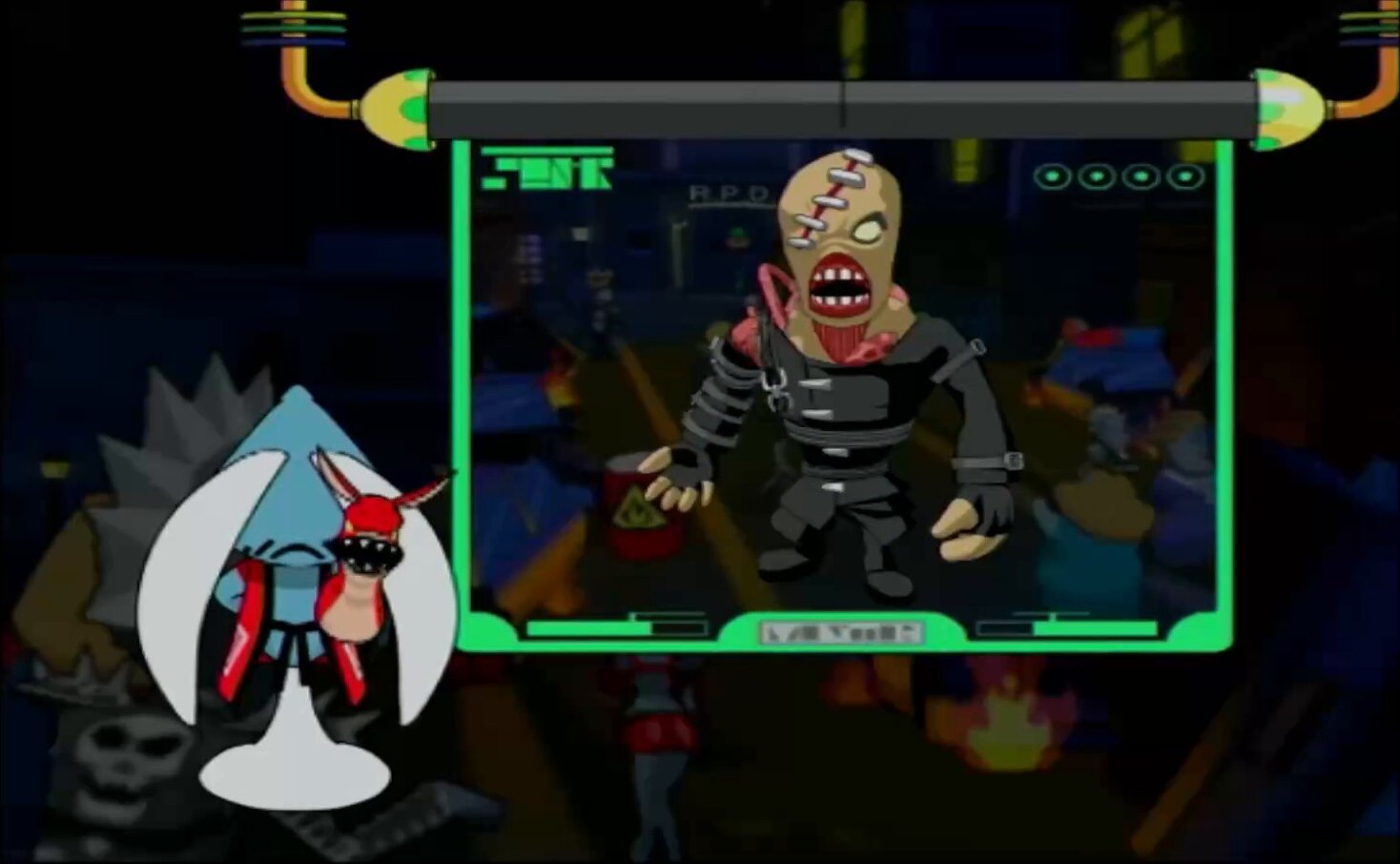
You zap a human with your ray gun, steal their look and walk around disguised as them. Every disguise comes with its own prank: a boombox, a vacuum cleaner, a bazooka. Knock people over and you collect coins, which you need to clear each stage. Take a hit and your disguise drops to your underwear. Take another and you’re a little blue alien standing in the middle of a very angry crowd. The levels have names like Pranksylvania and Big Booty Bay, and one of them drops you into Raccoon City, with Nemesis.
Why it made the list: Honestly, the camera does fight you, and for me it’s most fun in smaller bursts. But it’s such a kooky game for the era, and the Resident Evil cameo alone is worth the price of admission. Of everything on this list, it’s the one I’d call a literal hidden gem.
My copy: Under the Skin for PS2, North American release, complete with case, disc and manual.
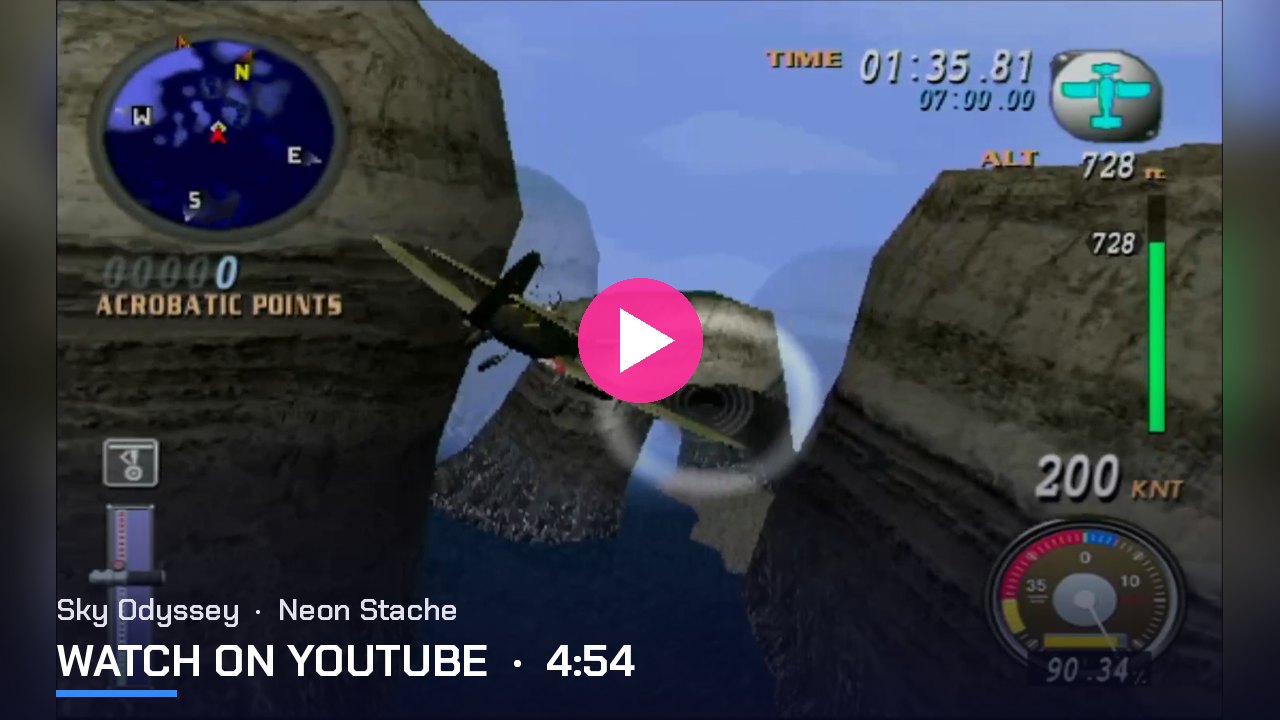
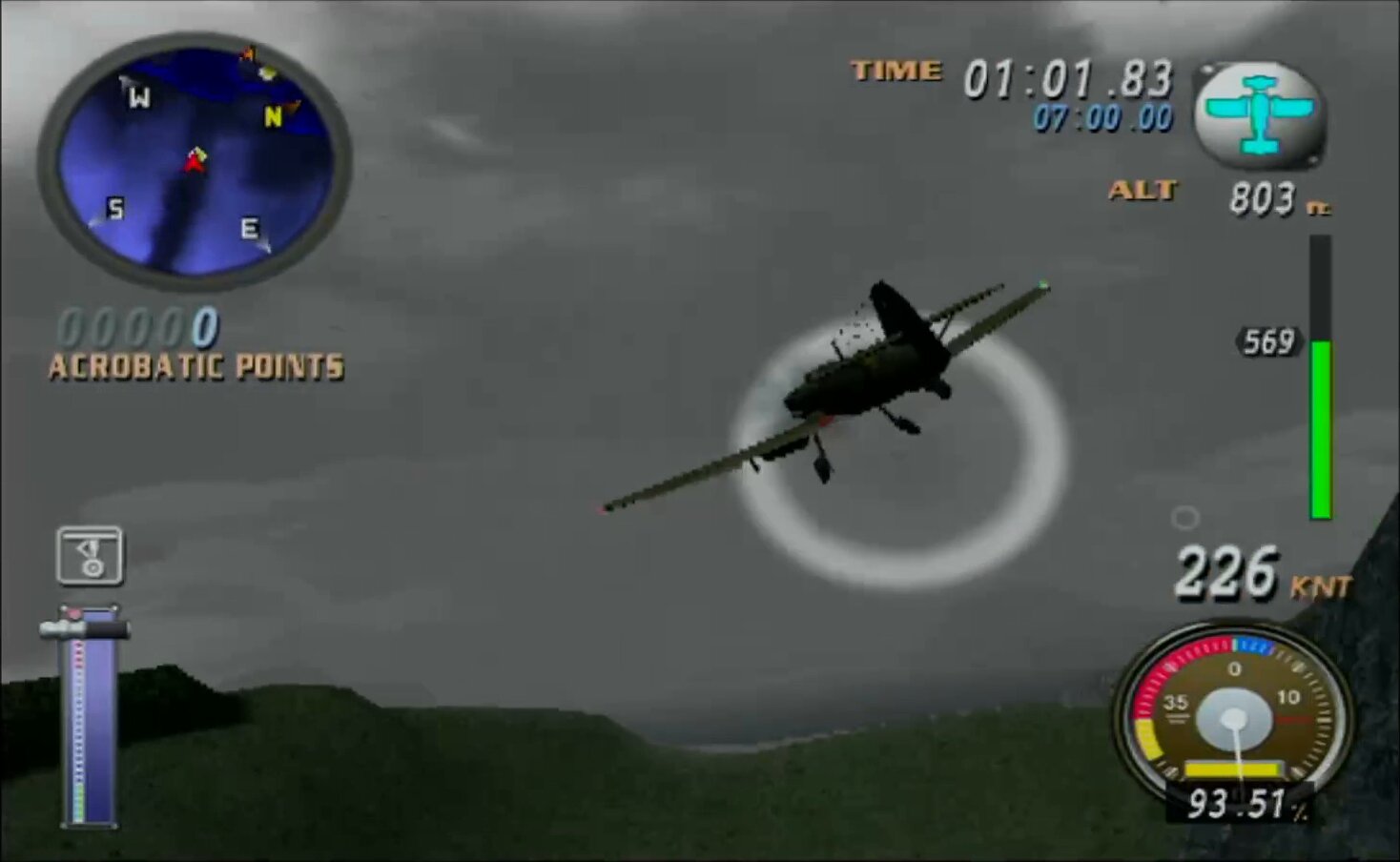
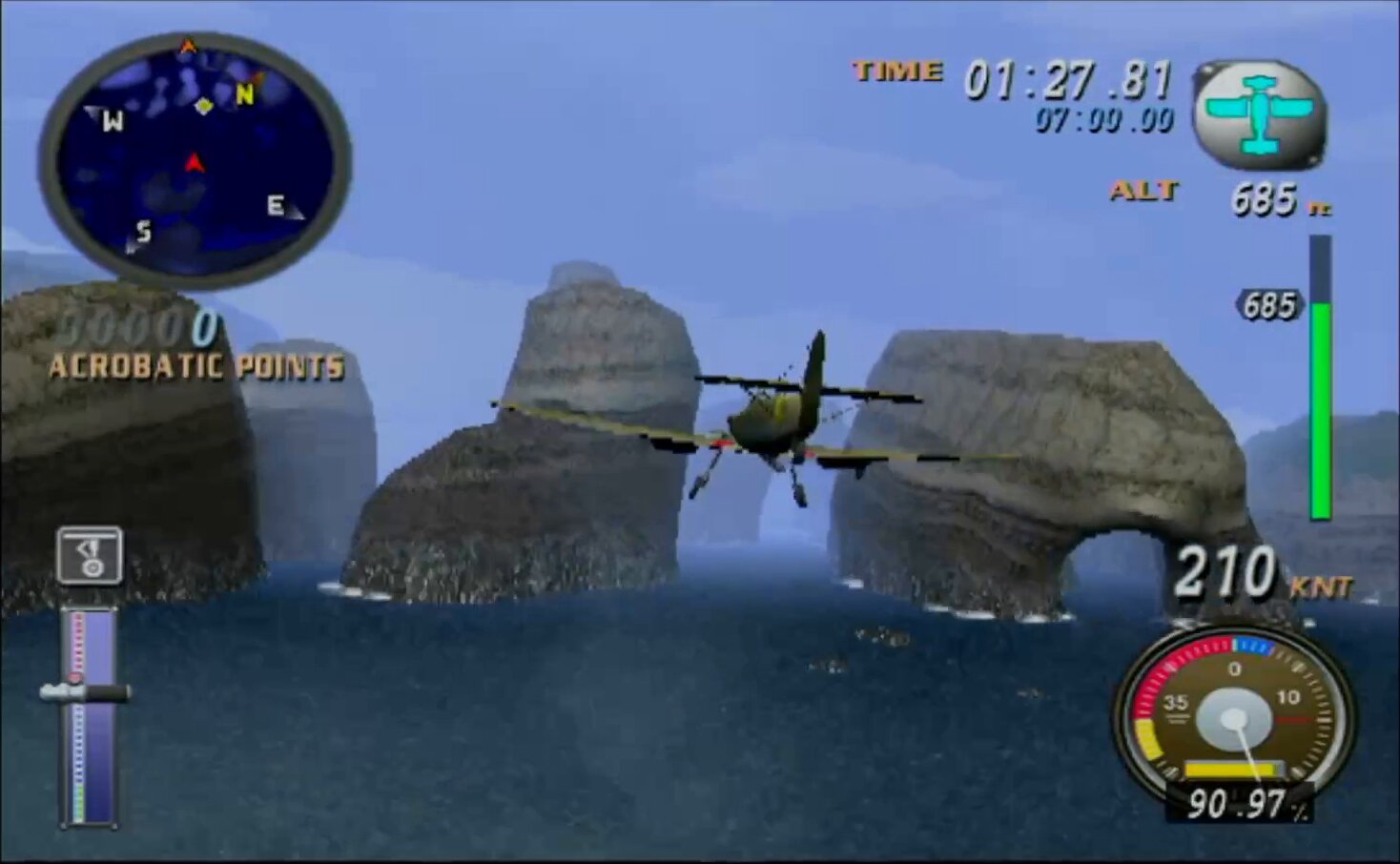
Sky Odyssey came out in November 2000, just weeks after the PS2 launched in North America. Picture Pilotwings with an Indiana Jones story. No dogfights, no guns. You’re hunting for a lost tower on an island nobody has ever mapped, and the weather is the enemy: storms, rockslides, all of it. One mission has you refuel in midair from a moving train, and it does not forgive you for going too fast or too slow.
The hangar is a nerd’s dream. Real planes like the Fairey Swordfish sit next to prototypes that never saw combat, like the Kyushu J7W Shinden. Yes, the same weird Japanese prototype from my Heroes of the Pacific review. Small world. There’s even a Sky Canvas mode where you skywrite words before the wind blows them away, and the music is by Kow Otani, who later scored Shadow of the Colossus.
Why it made the list: My favorite part: IGN gave it a 9 out of 10, then handed it their award for Game No One Played of 2000. It’s awesome, but there’s a steep learning curve, and it’s a flying game, not an action game. Go in knowing that and it’s one of the cheapest good times on the system.
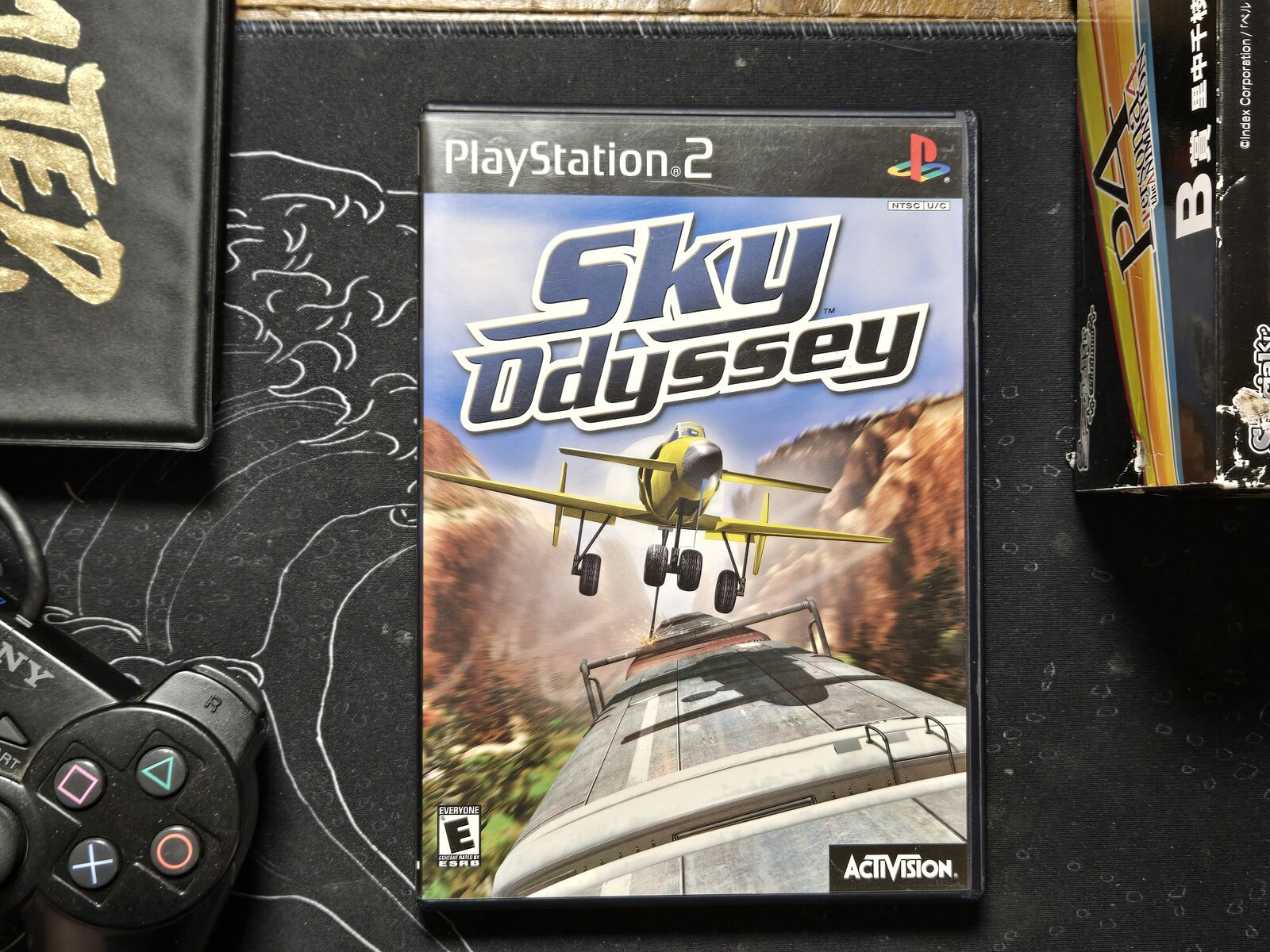
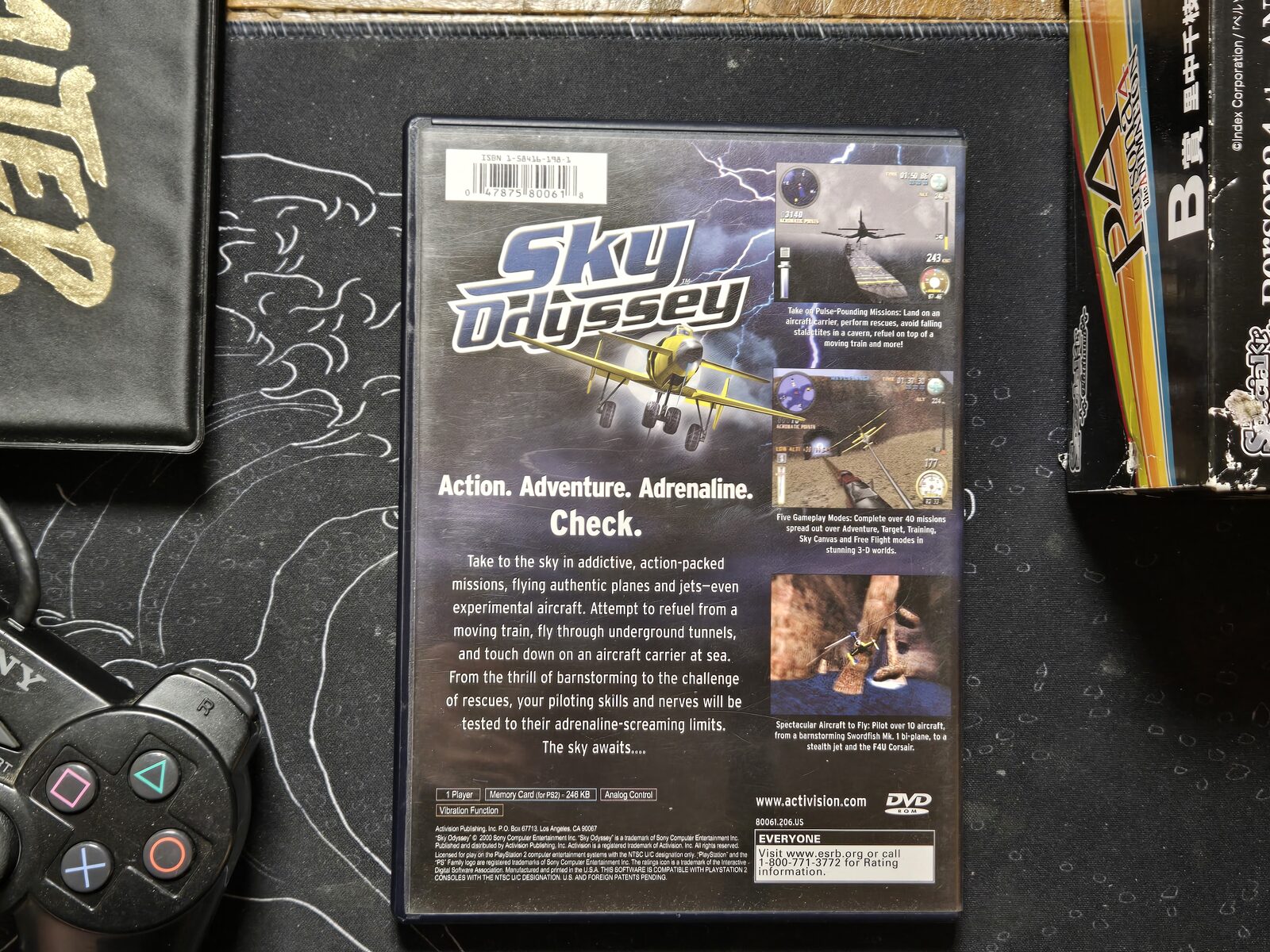
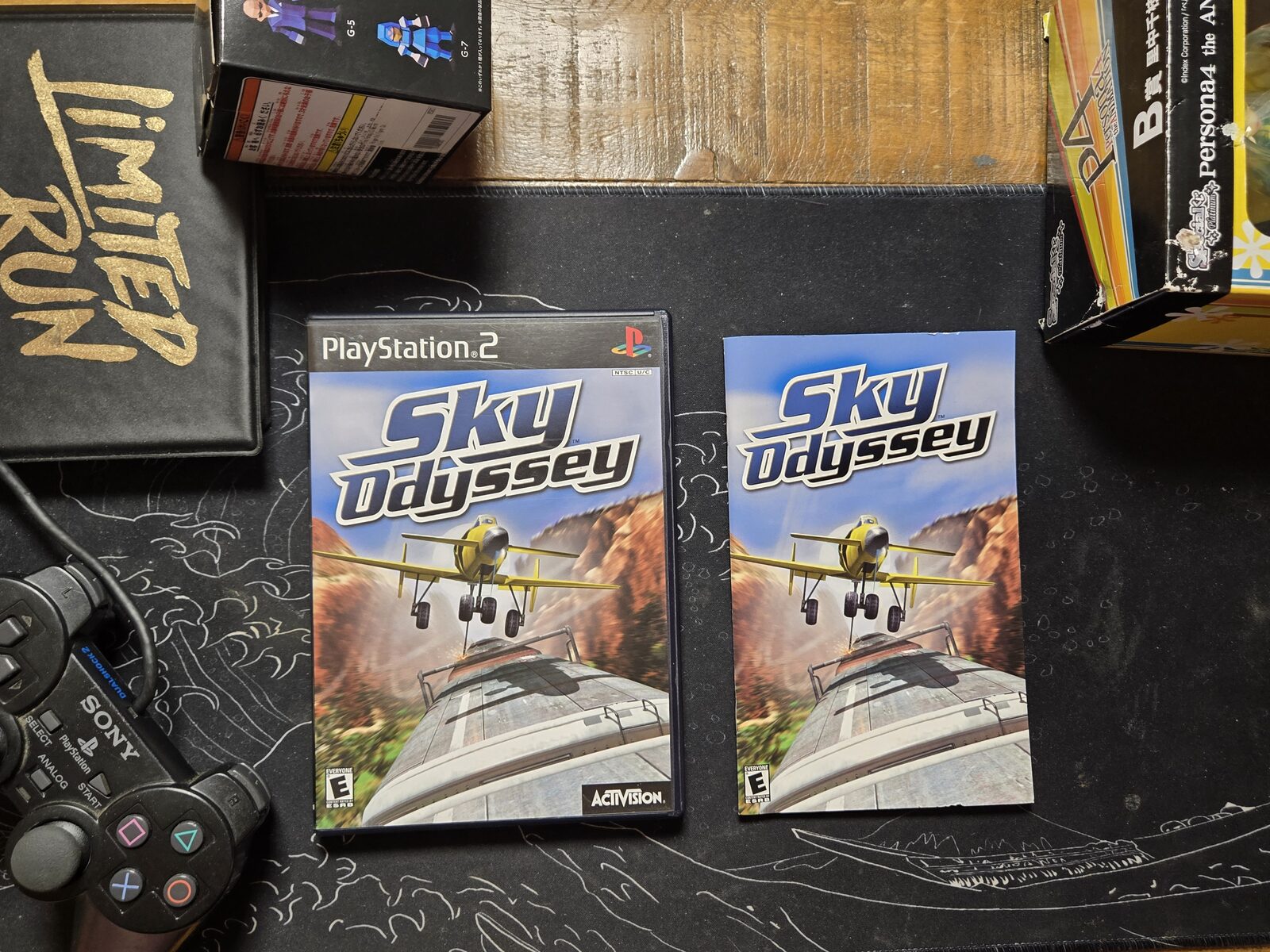
My copy: Sky Odyssey for PS2, North American release (Activision), complete with case, disc and manual.
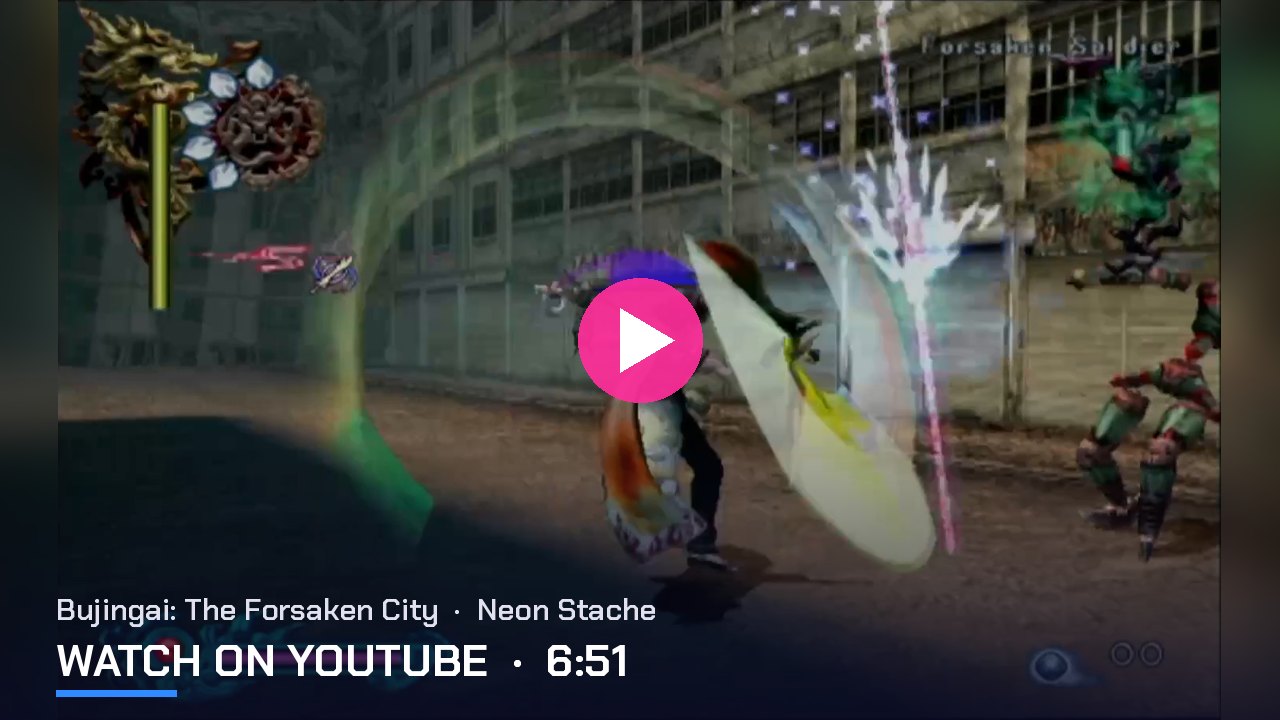
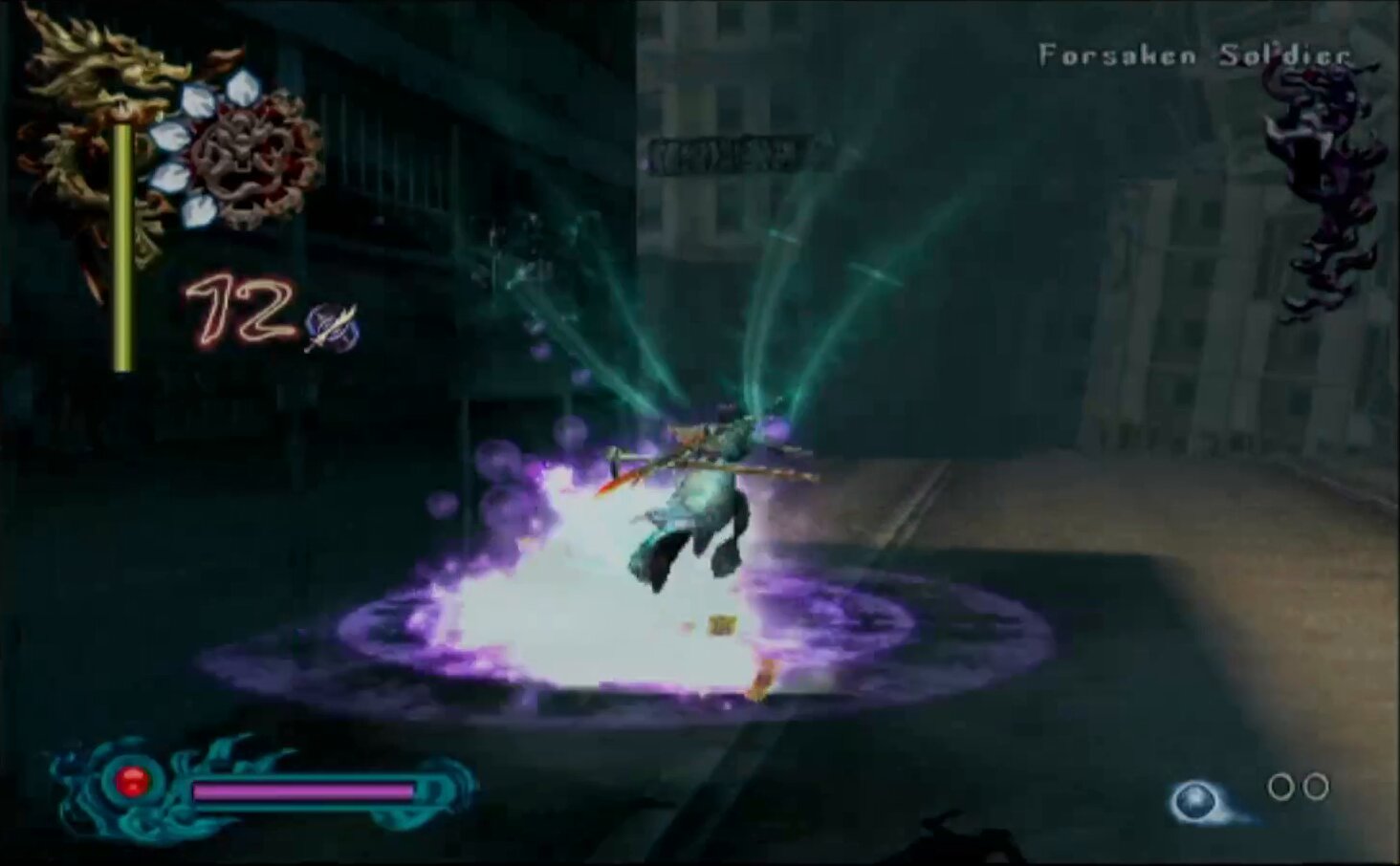
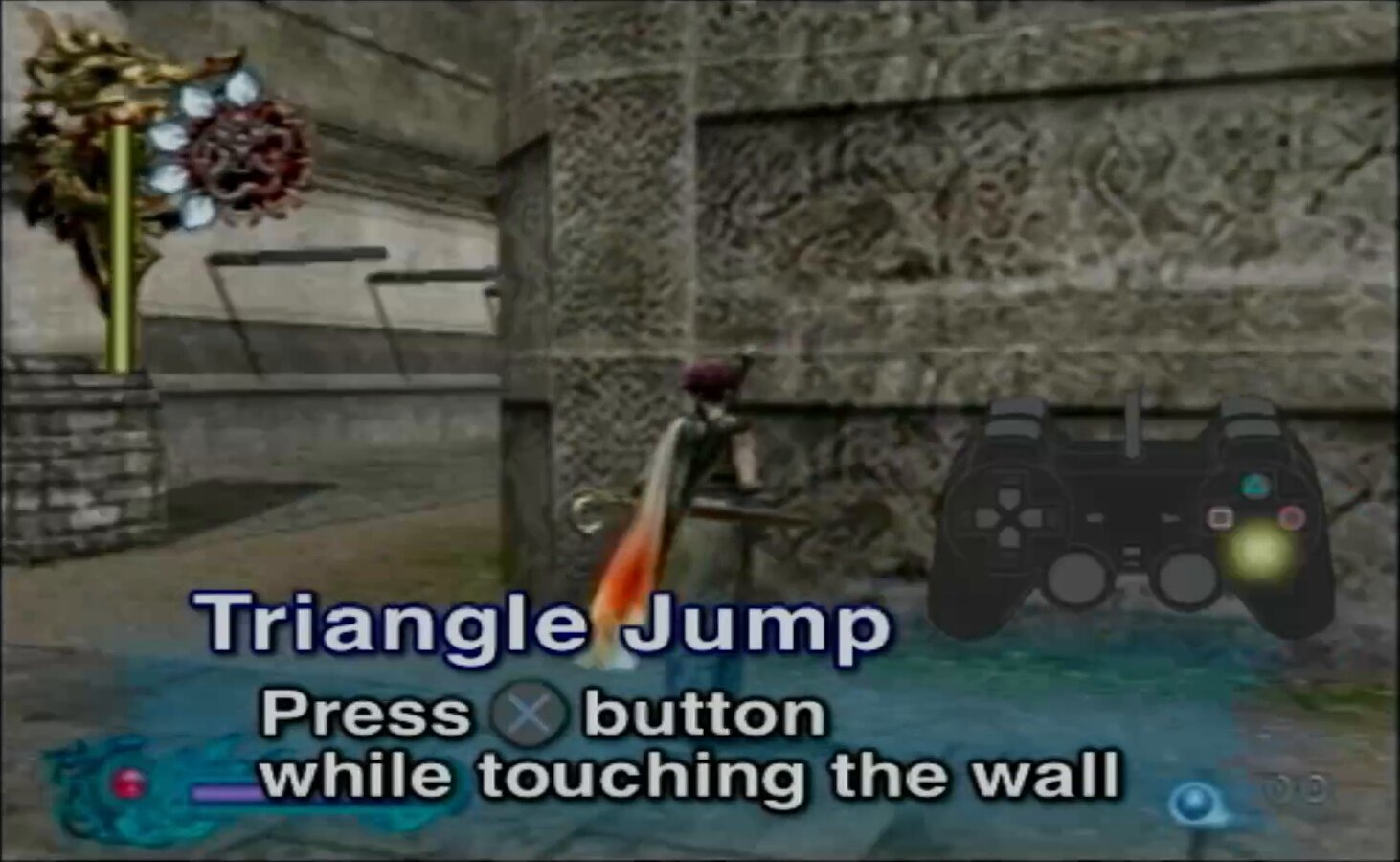
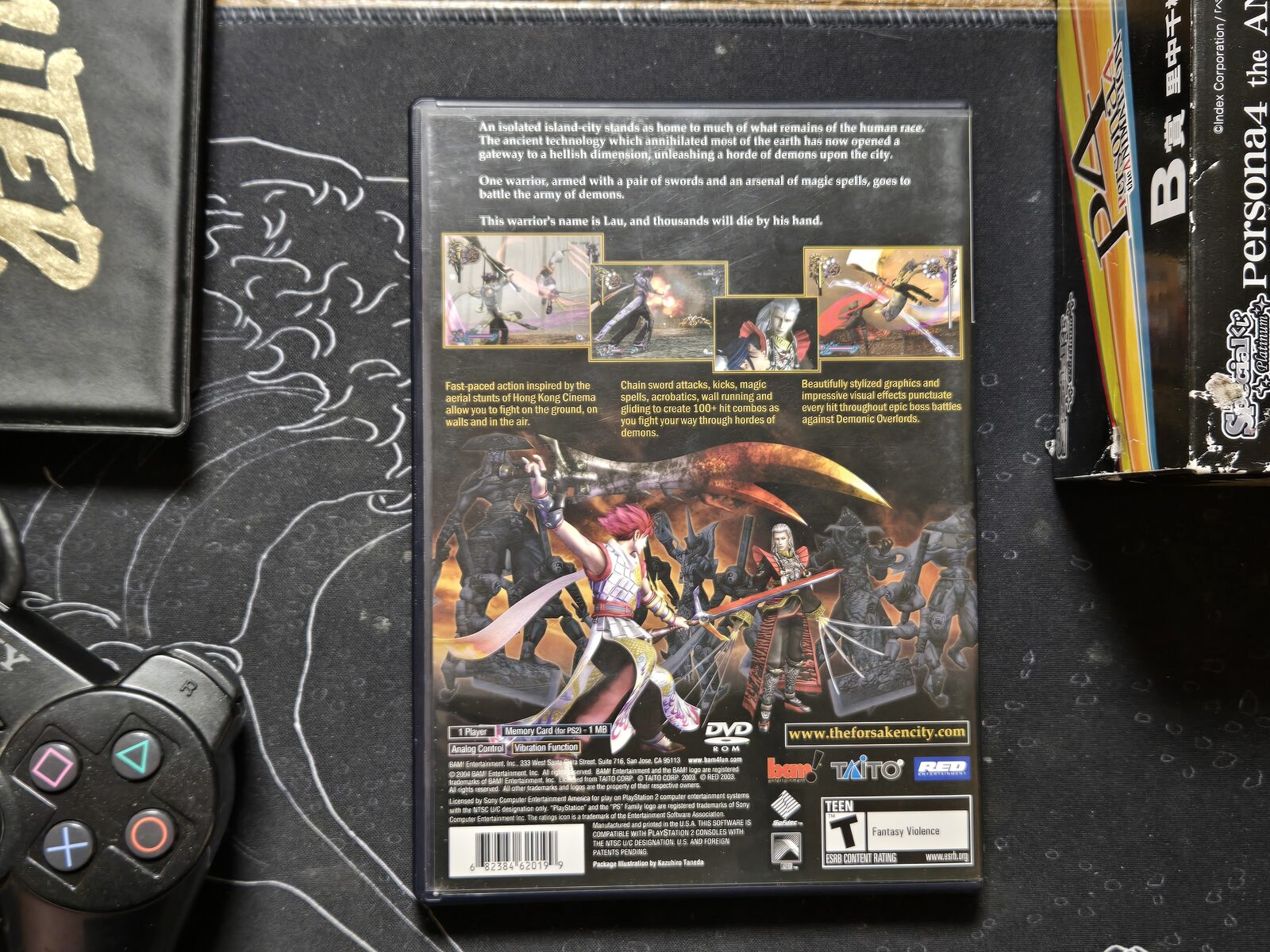
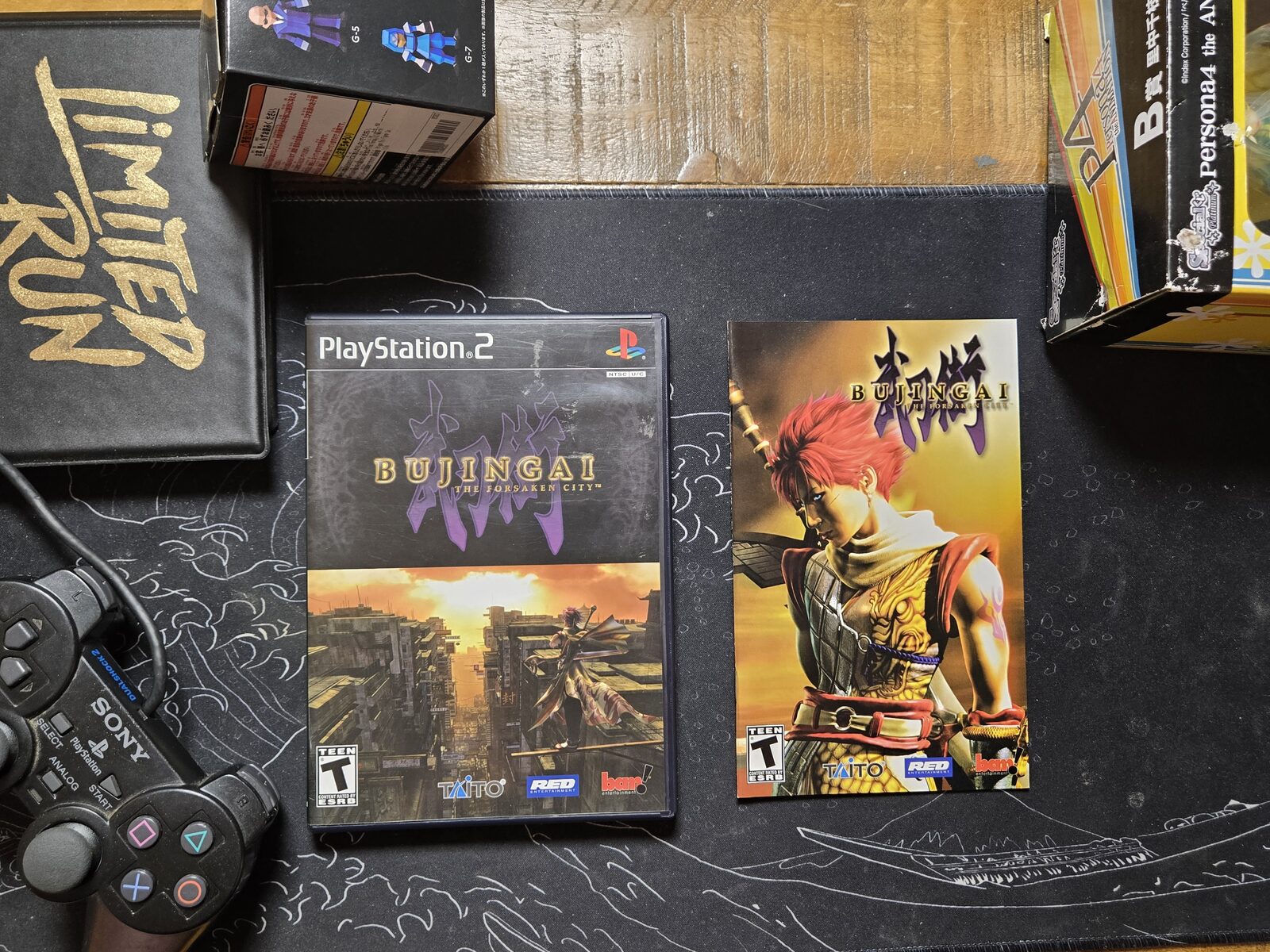
If Devil May Cry grew up watching Hong Kong kung fu movies, you’d get Bujingai. Dual swords, wall running, gliding, and combos that can go past 1,000 hits on a single enemy.
The hero, Lau, is built on Gackt, the Japanese rock star. The team used his likeness and motion capture for the character, and you can even unlock an outfit based on Gackt’s own look. It came from Taito working with Red Entertainment, the studio behind Gungrave, and BAM! Entertainment brought it to North America in 2004.
Why it made the list: The platforming is the weak spot for me. The jumping and gliding can be a real pain, and the story is basically there to get you to the next fight. But the fights are the actual game, and they’re great.
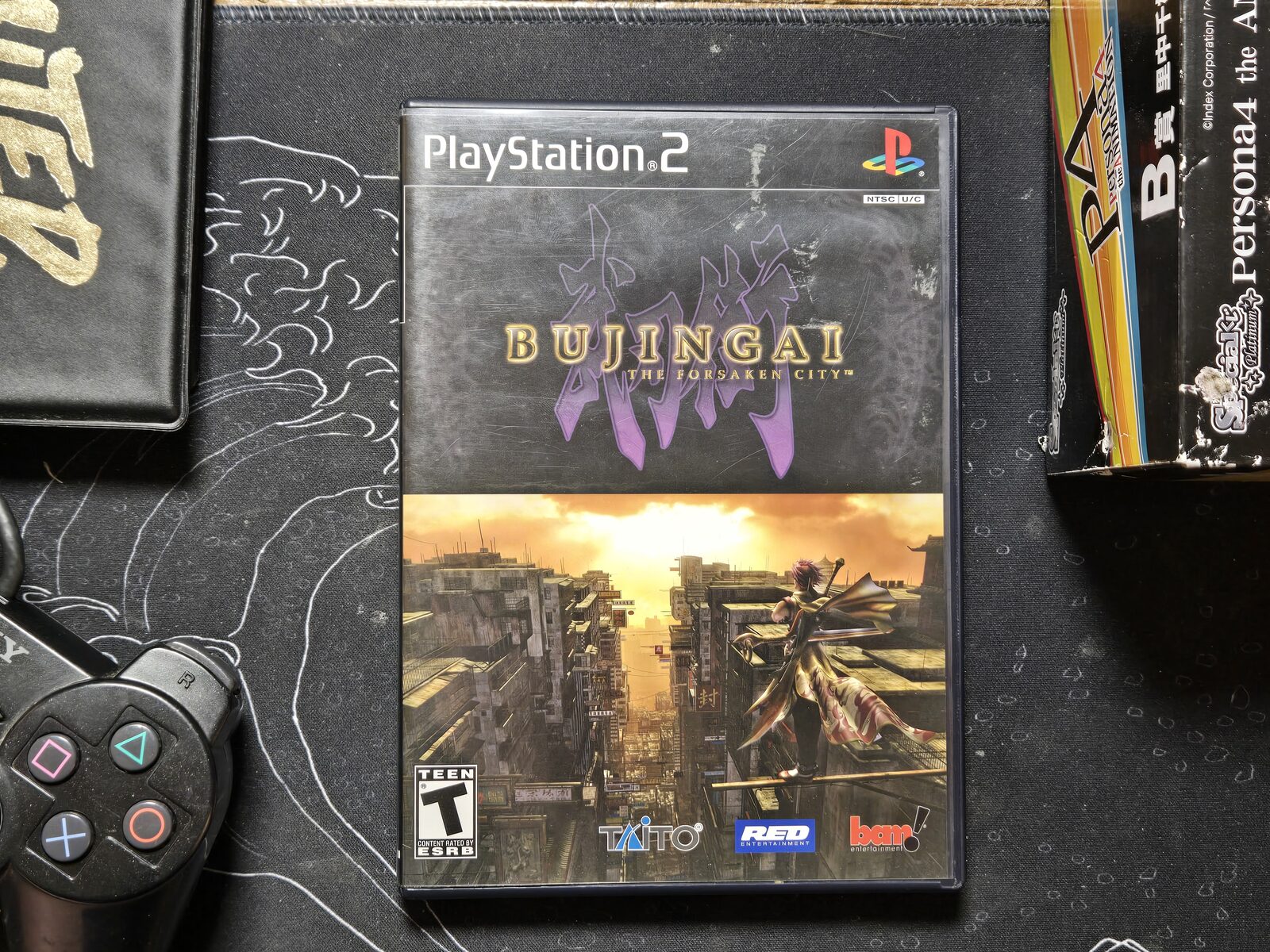
My copy: Bujingai: The Forsaken City for PS2, North American release, complete with case, disc and manual.
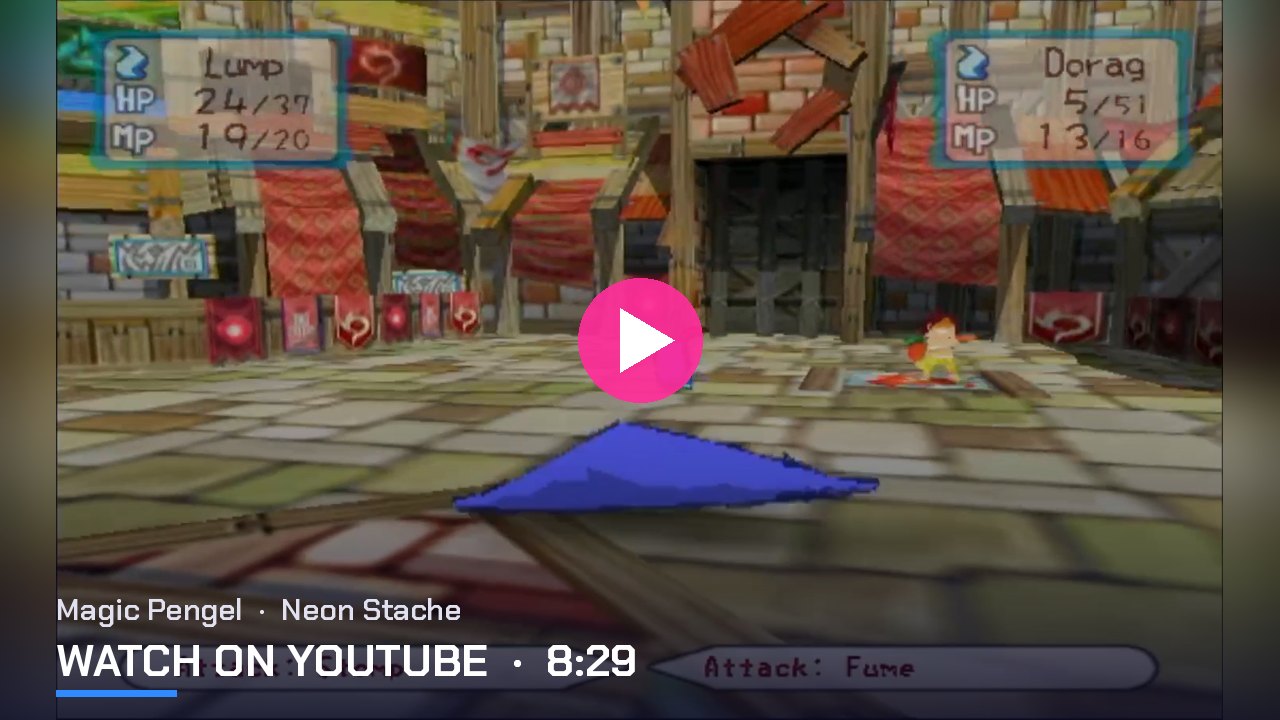
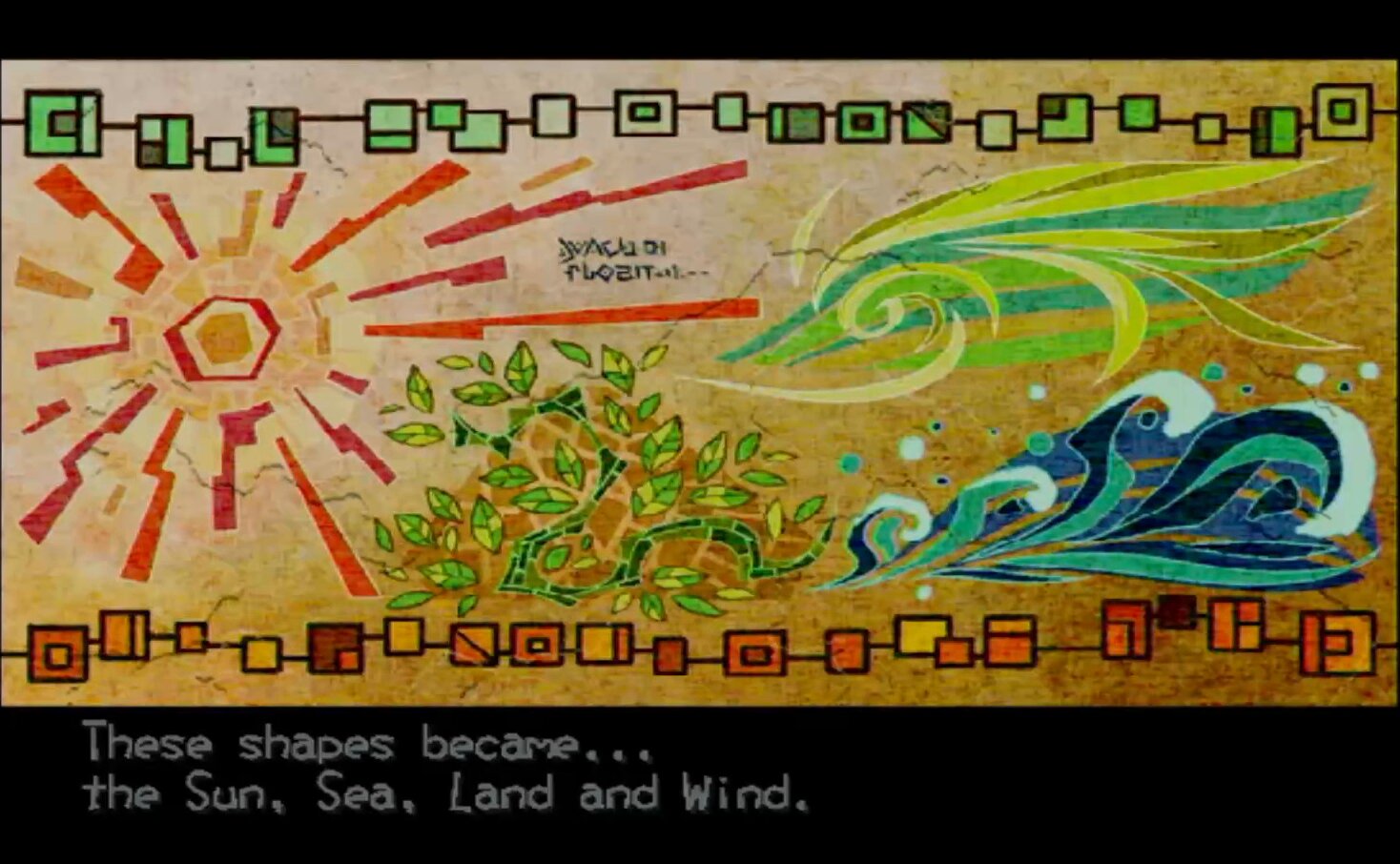
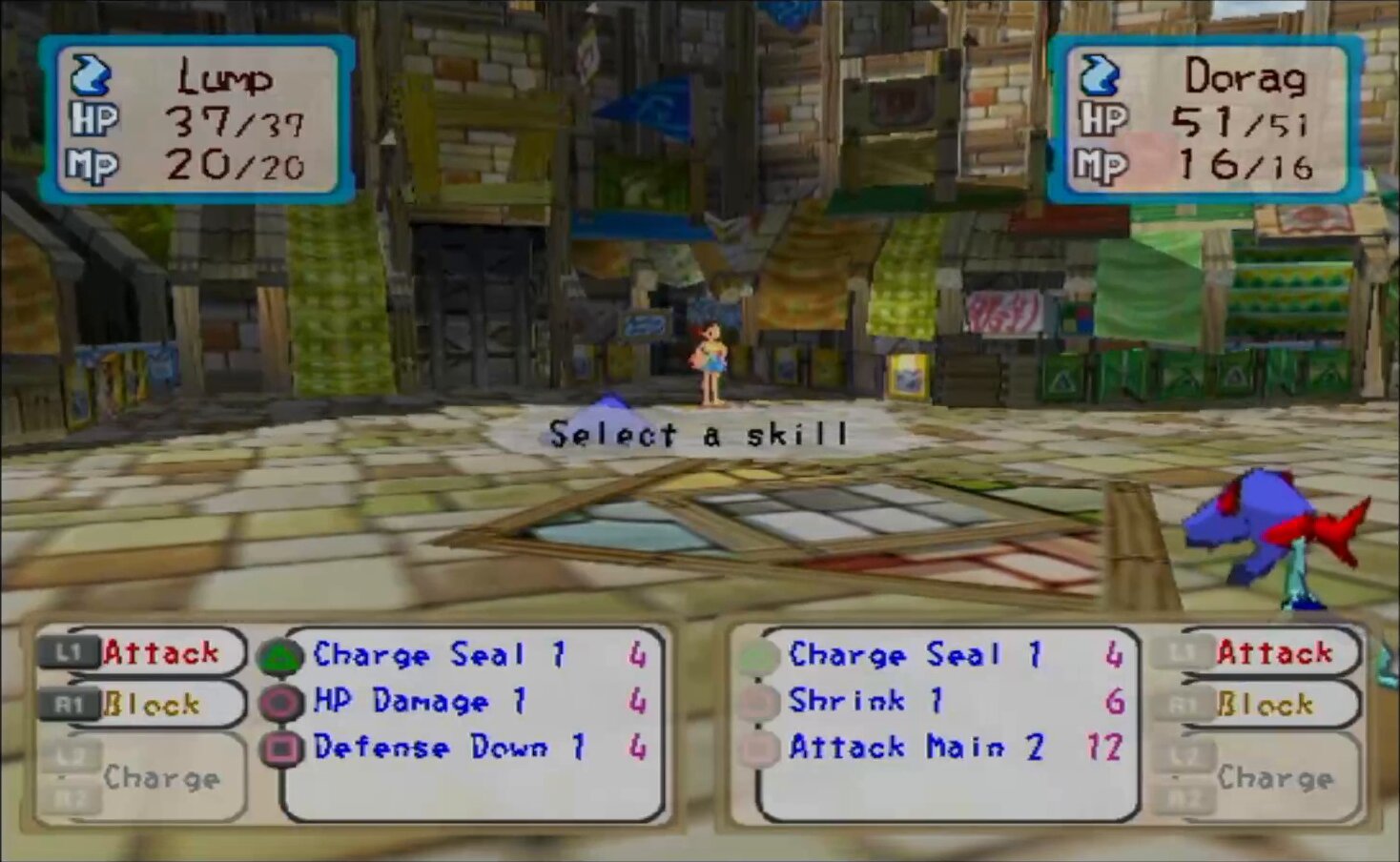
Here’s one you’ve probably never heard of. Magic Pengel is basically Pokémon, except you have to draw the Pokémon yourself. You sketch a body, arms, legs, whatever you want, right there with the controller. The body parts you pick and how much magic ink you spend decide your doodle’s stats. Then it walks into the ring and fights.
Fights are rock-paper-scissors: attack, magic, block. You can’t pick the same move twice in a row, so no spamming. Why are you doing all this? To win tournaments and pay off a mortgage on your friends’ homeland. You know, 2026 problems. And the art direction had help from Studio Ghibli and Gainax, on a doodle fighting game.
Why it made the list: The honest part: the story is short and it repeats. But drawing a monster and watching it actually walk into battle never gets old for me. It’s also the second-priciest game on this list, so it’s one to watch for rather than impulse-buy.
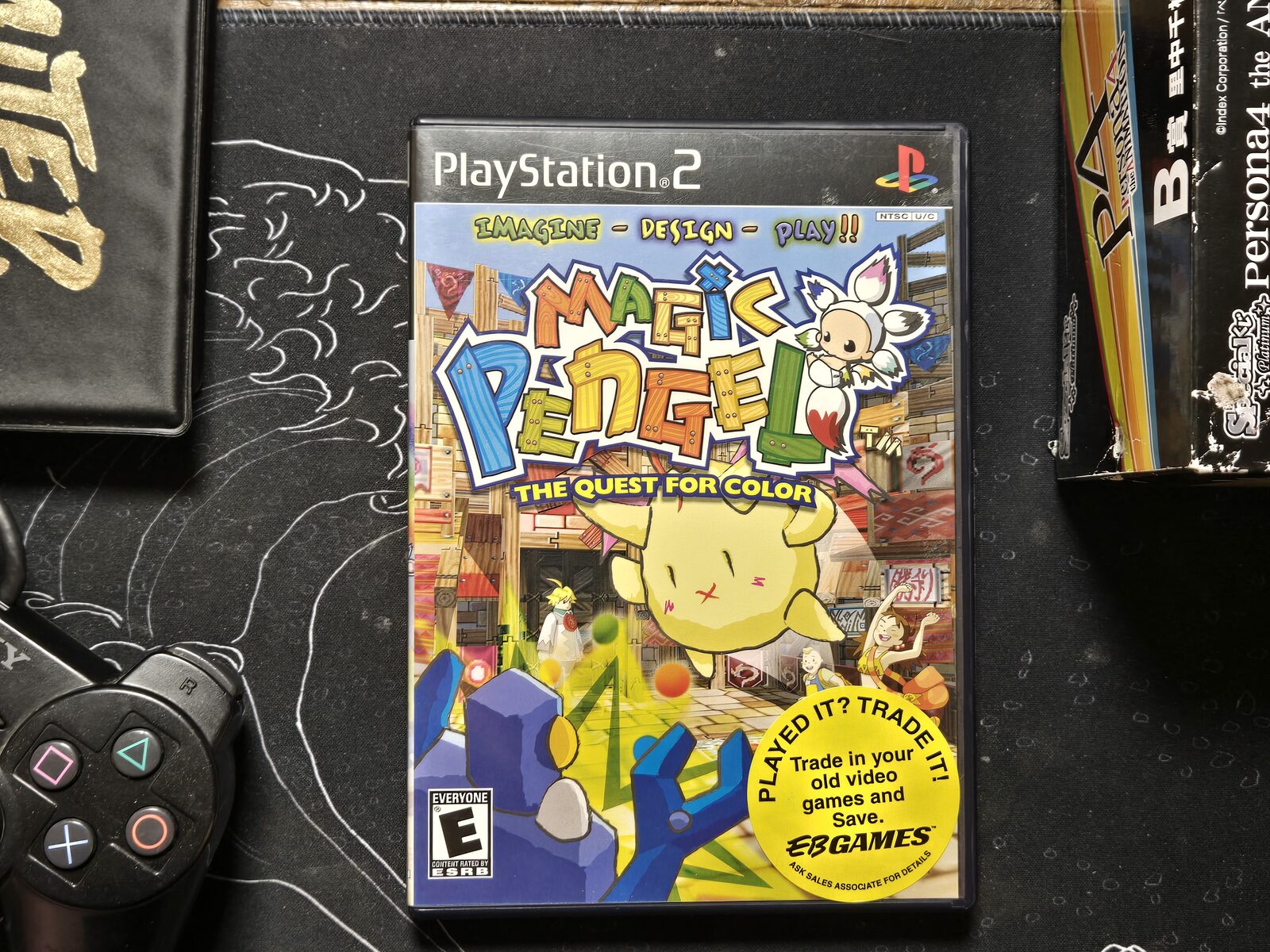
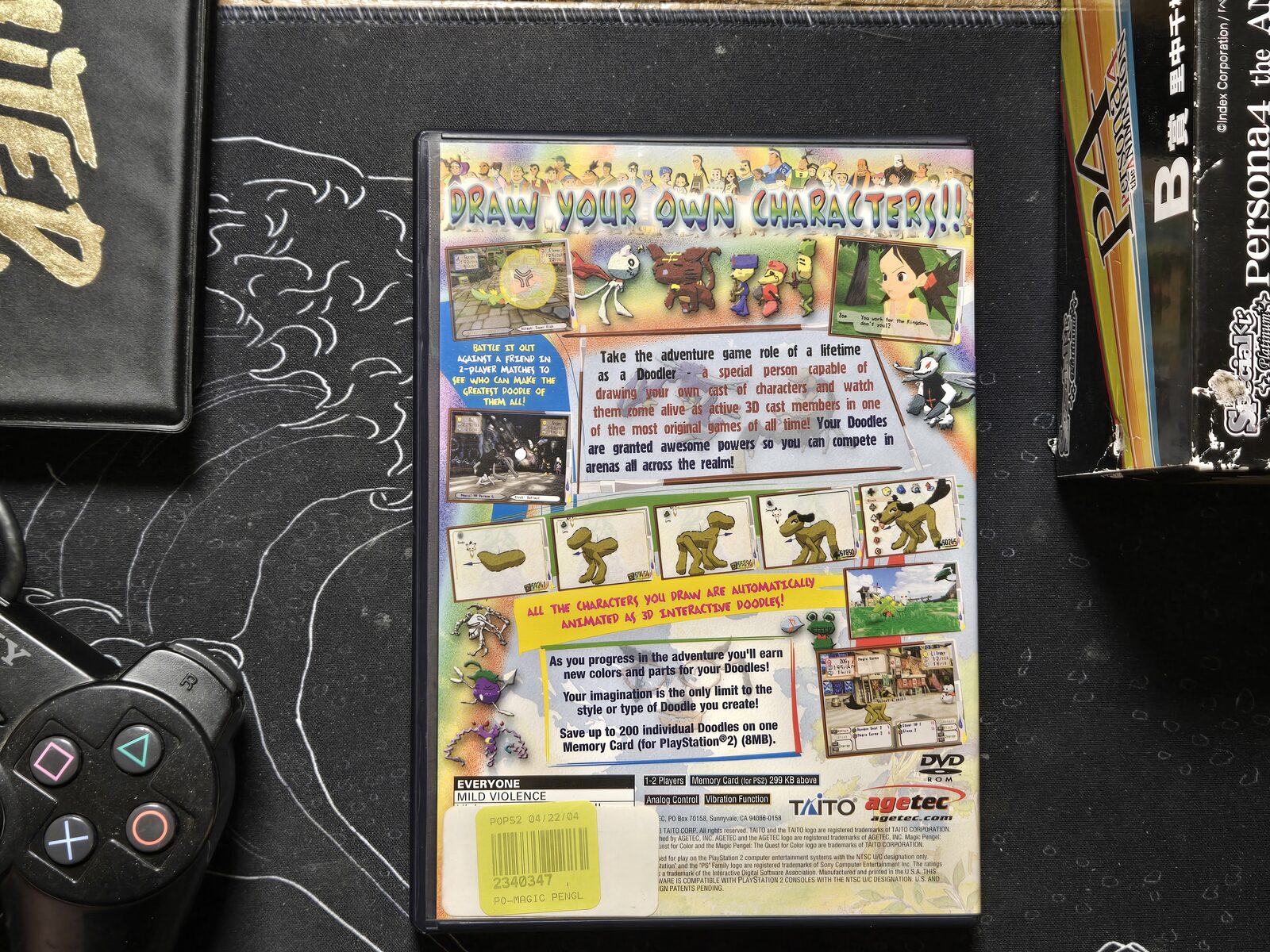
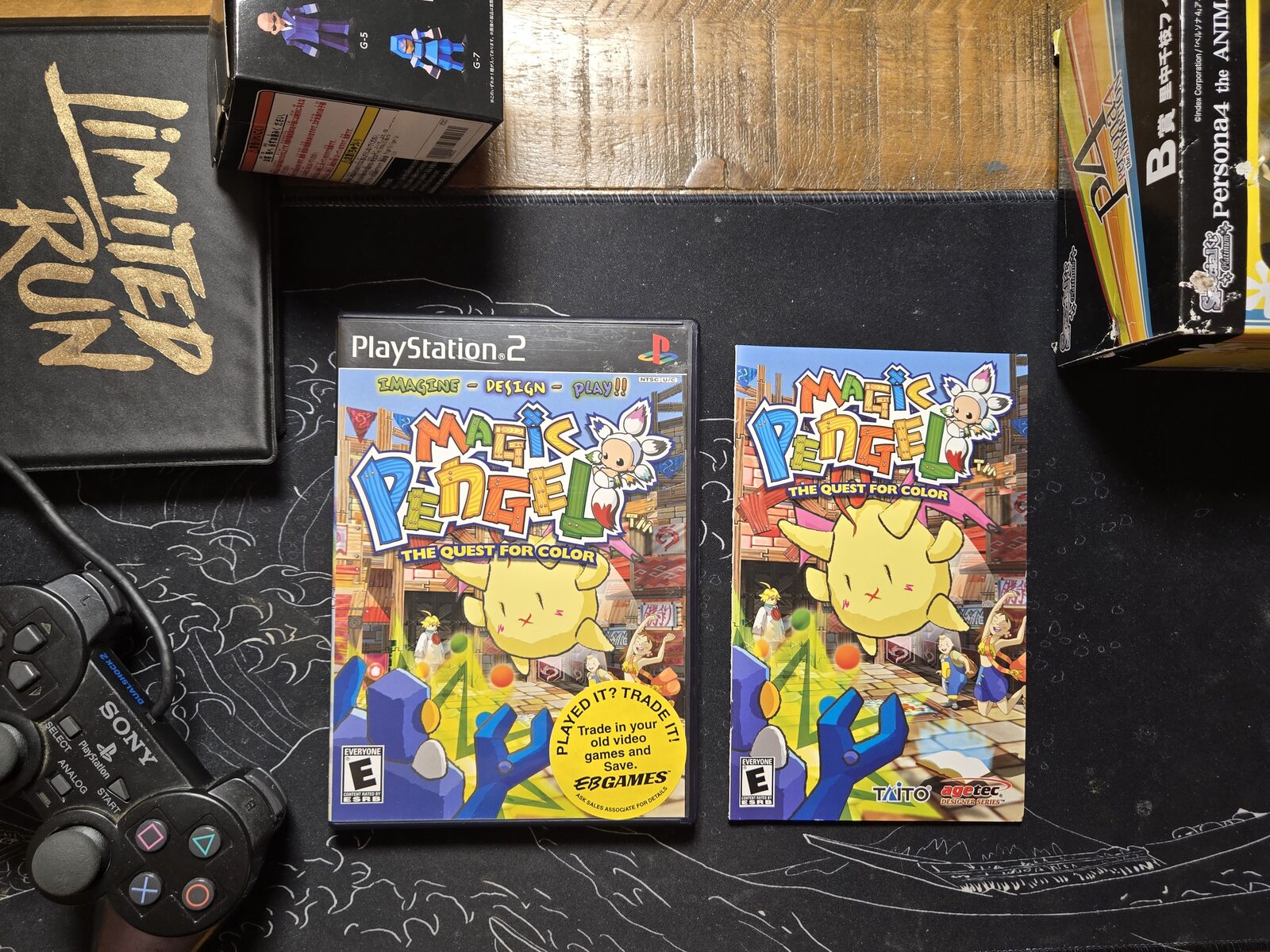
My copy: Magic Pengel: The Quest for Color for PS2, North American release (Agetec), complete with case, disc and manual.
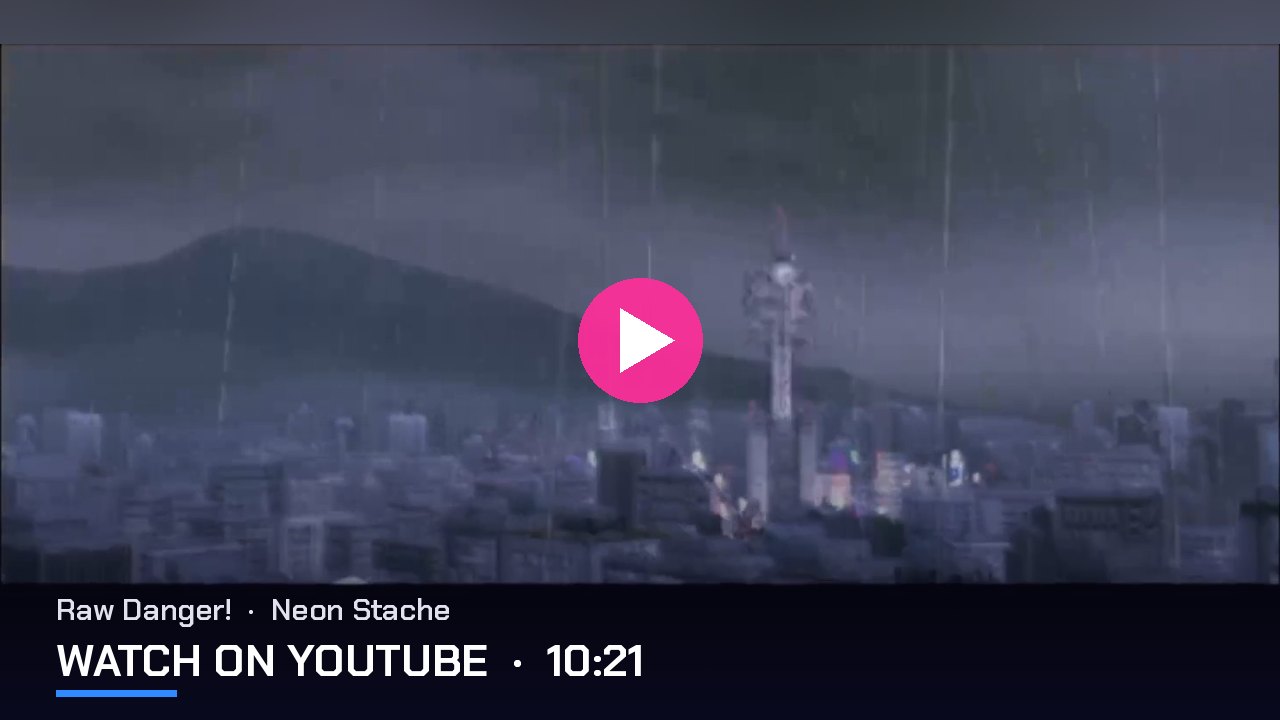
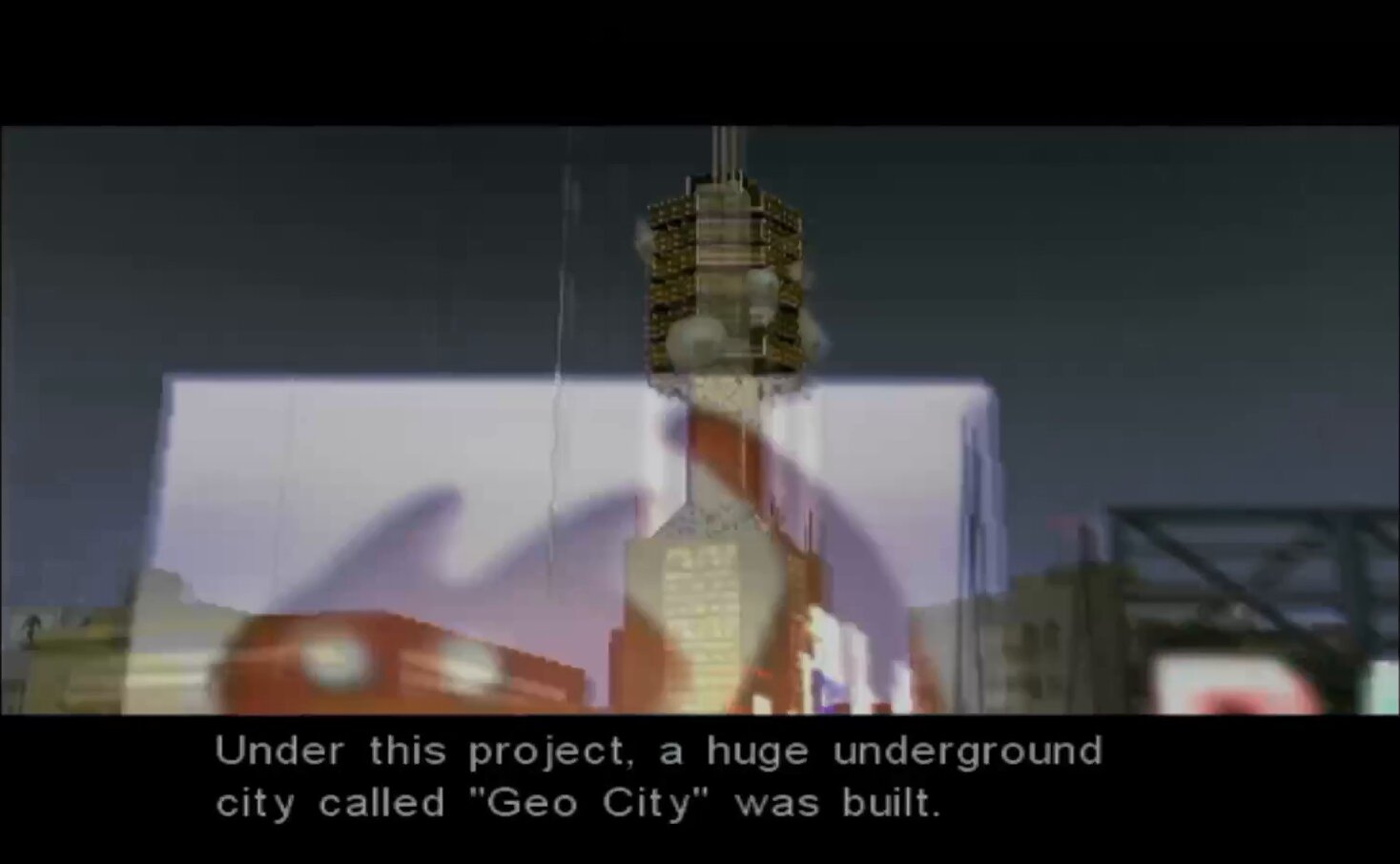
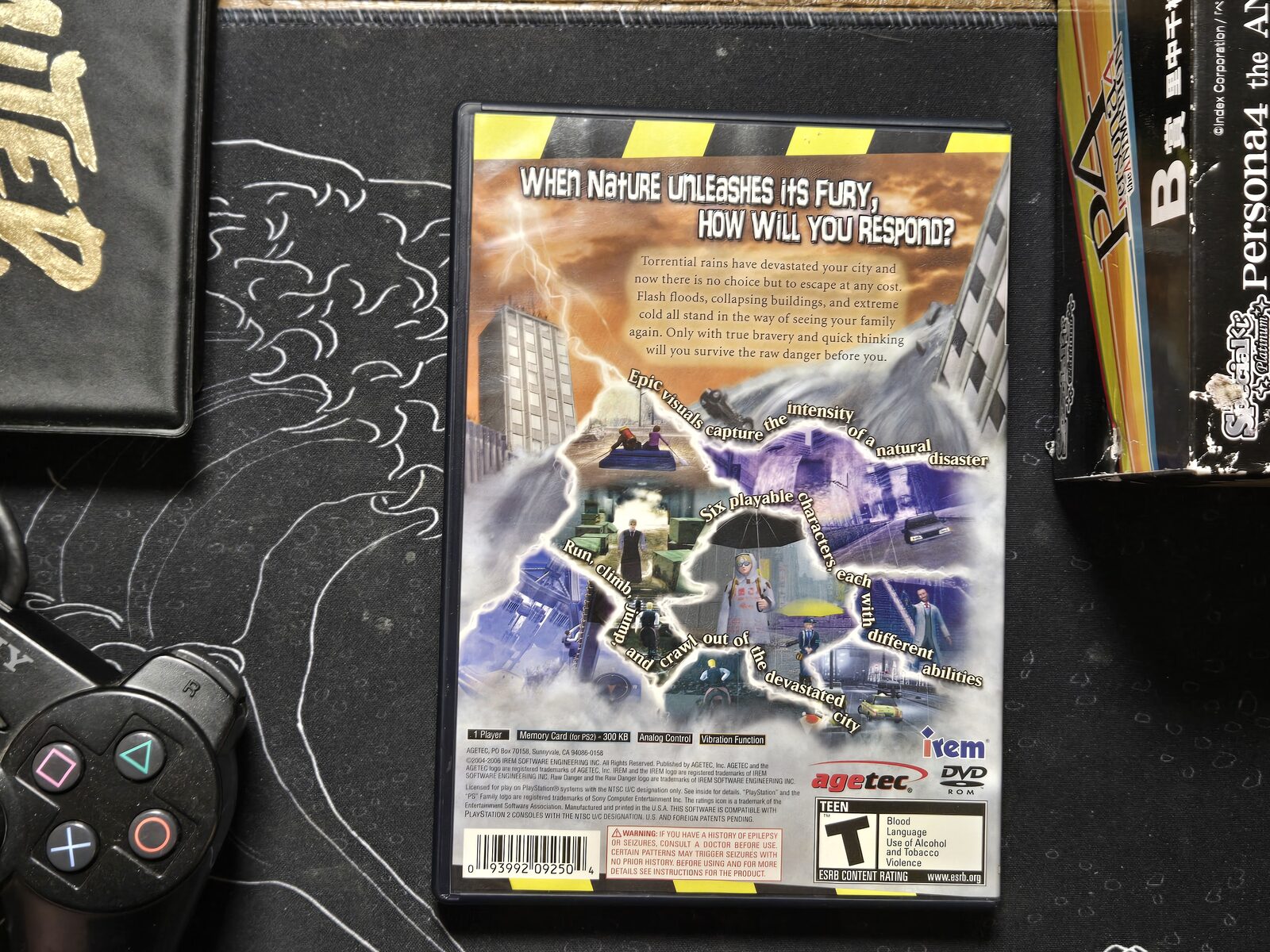
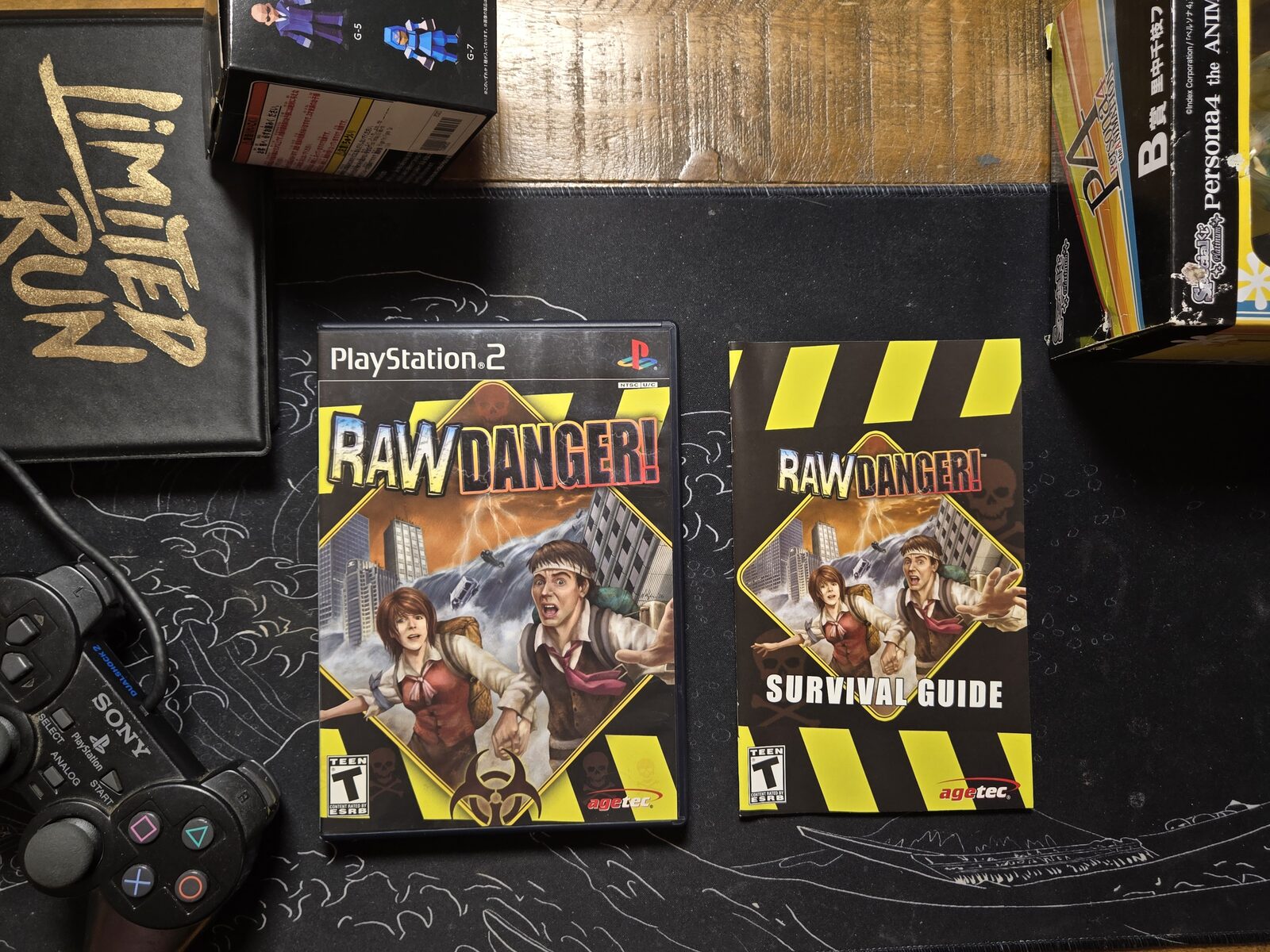
Raw Danger! hit North America in 2007, late in the PS2’s life. It’s survival horror where the monster is the weather. On the night a huge new underground complex called Geo City opens, days of rain finally break a levee, then a dam, and the whole city floods.
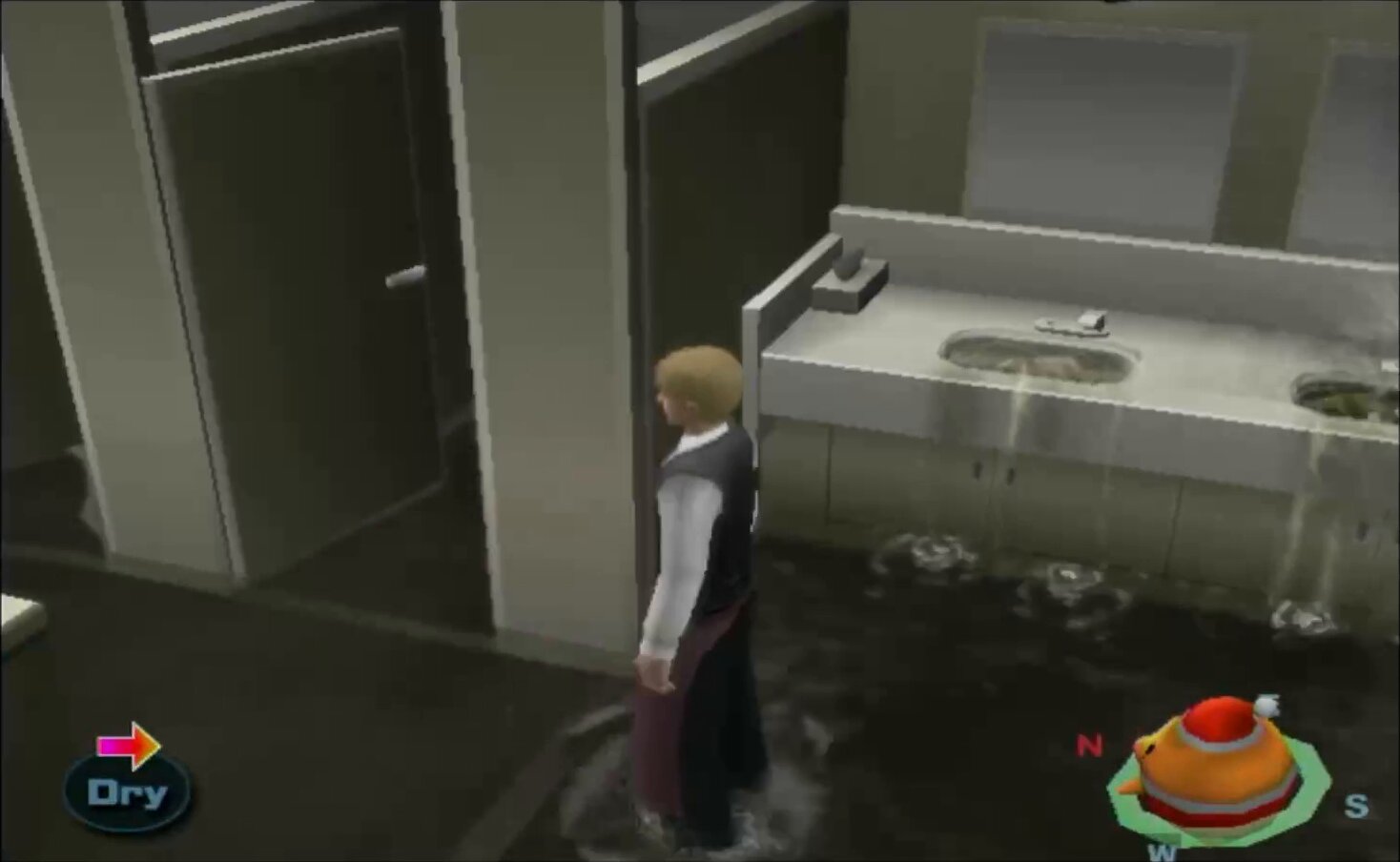
You play six different people, including a waiter working the opening, a cab driver, a high schooler and a fugitive still wearing handcuffs, and their stories cross over. What you do as one person changes what happens to the others, and how it all ends. The catch: staying wet can kill you. Water and cold drag your body temperature down, and that drags your health down, so you’re hunting for shelter, food and dry clothes while the city goes under. If it looks familiar, it’s the sequel to Disaster Report.
Why it made the list: Reviews were all over the place back then, from pretty good to pretty rough. And yeah, it’s rough around the edges. But there’s nothing else like it.
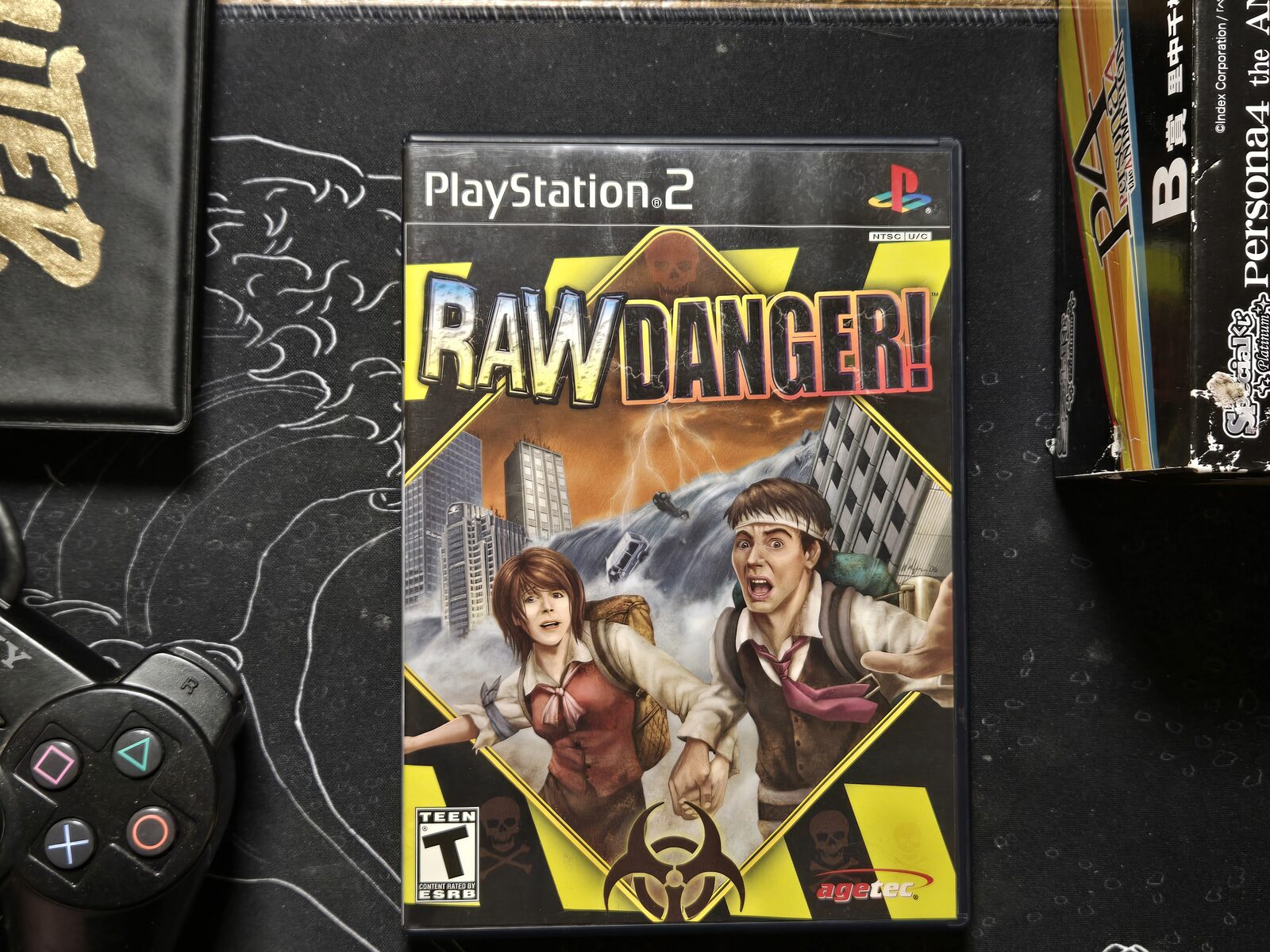
My copy: Raw Danger! for PS2, North American release (Agetec), complete with case, disc and the “Survival Guide” manual.
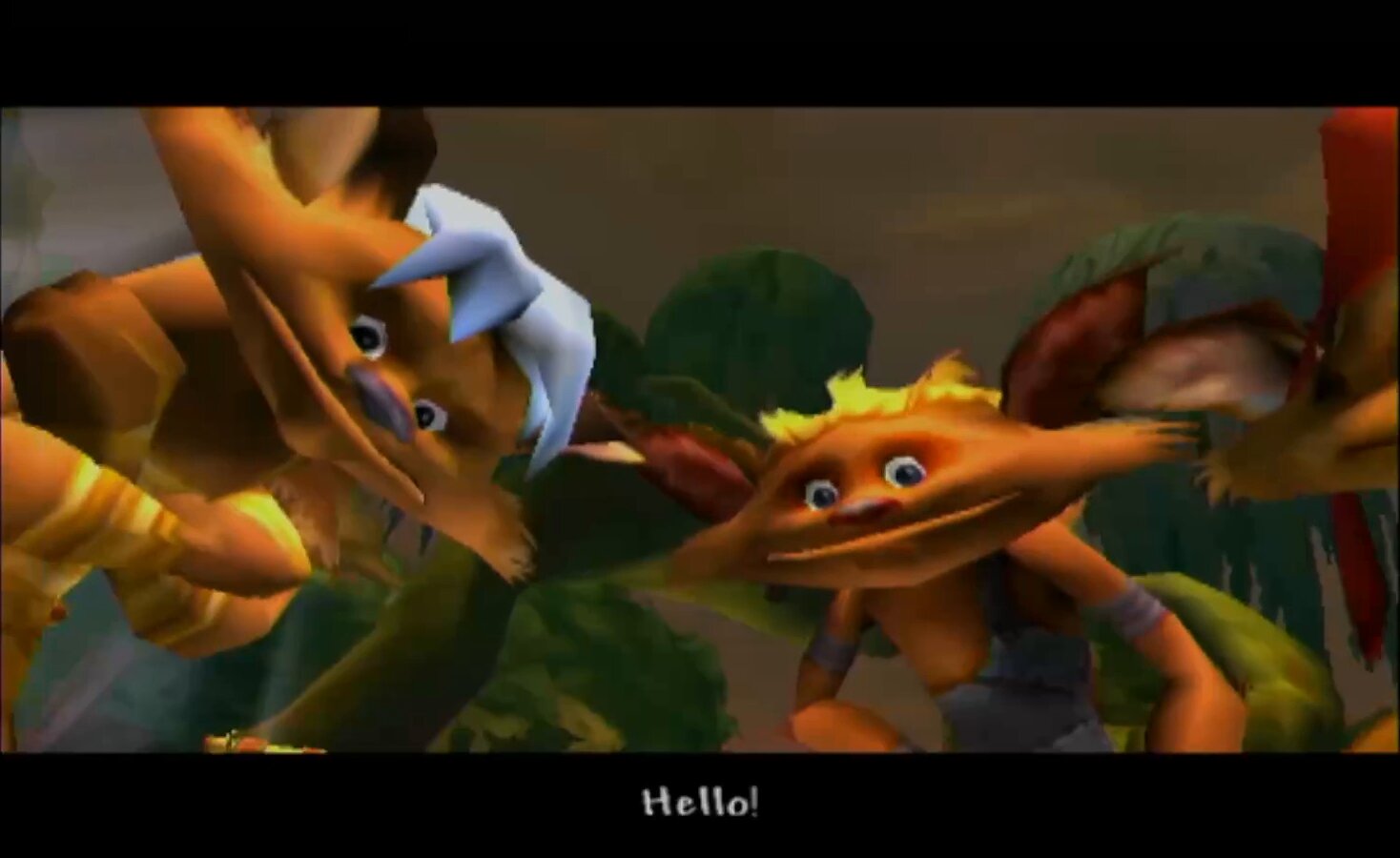
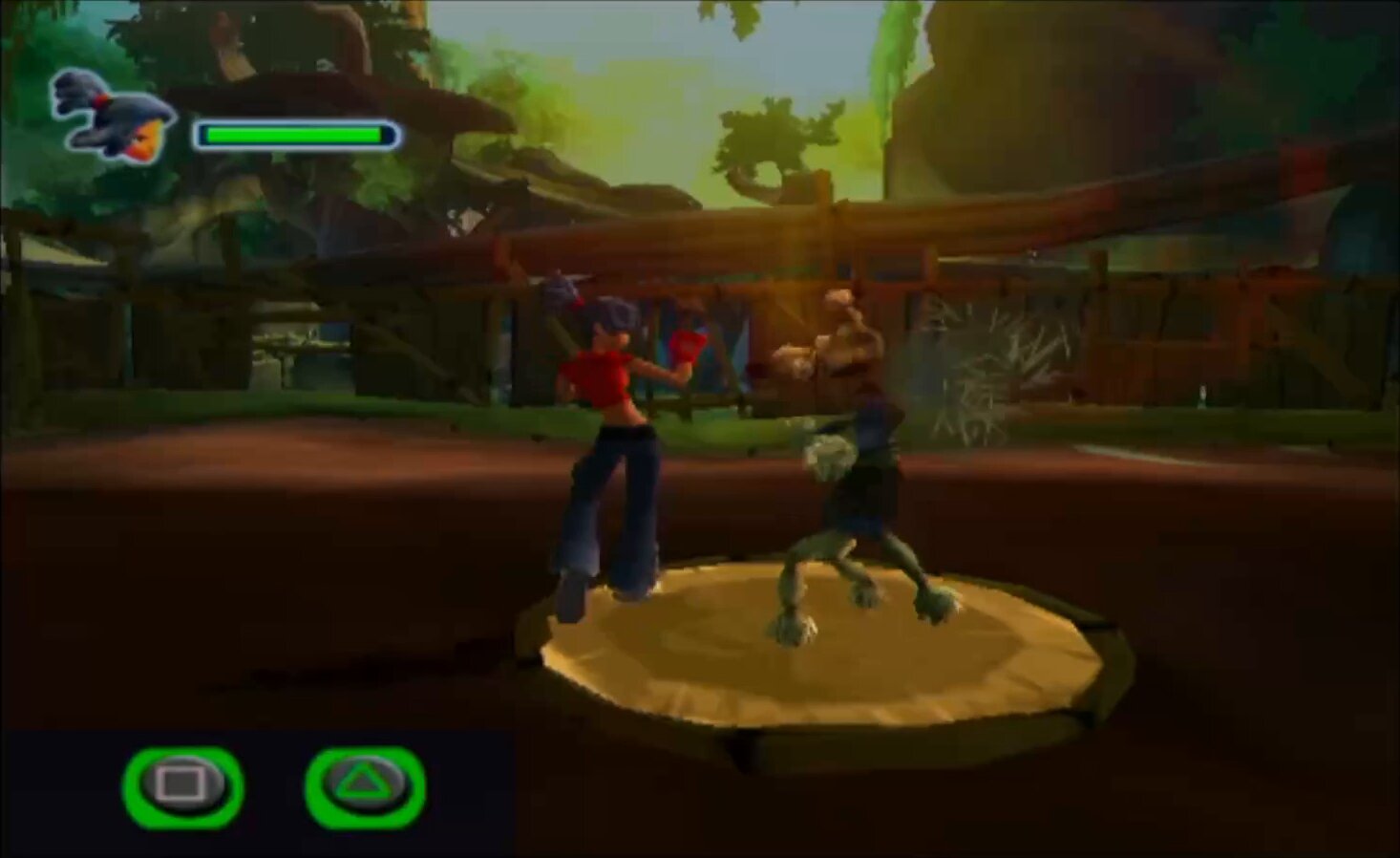
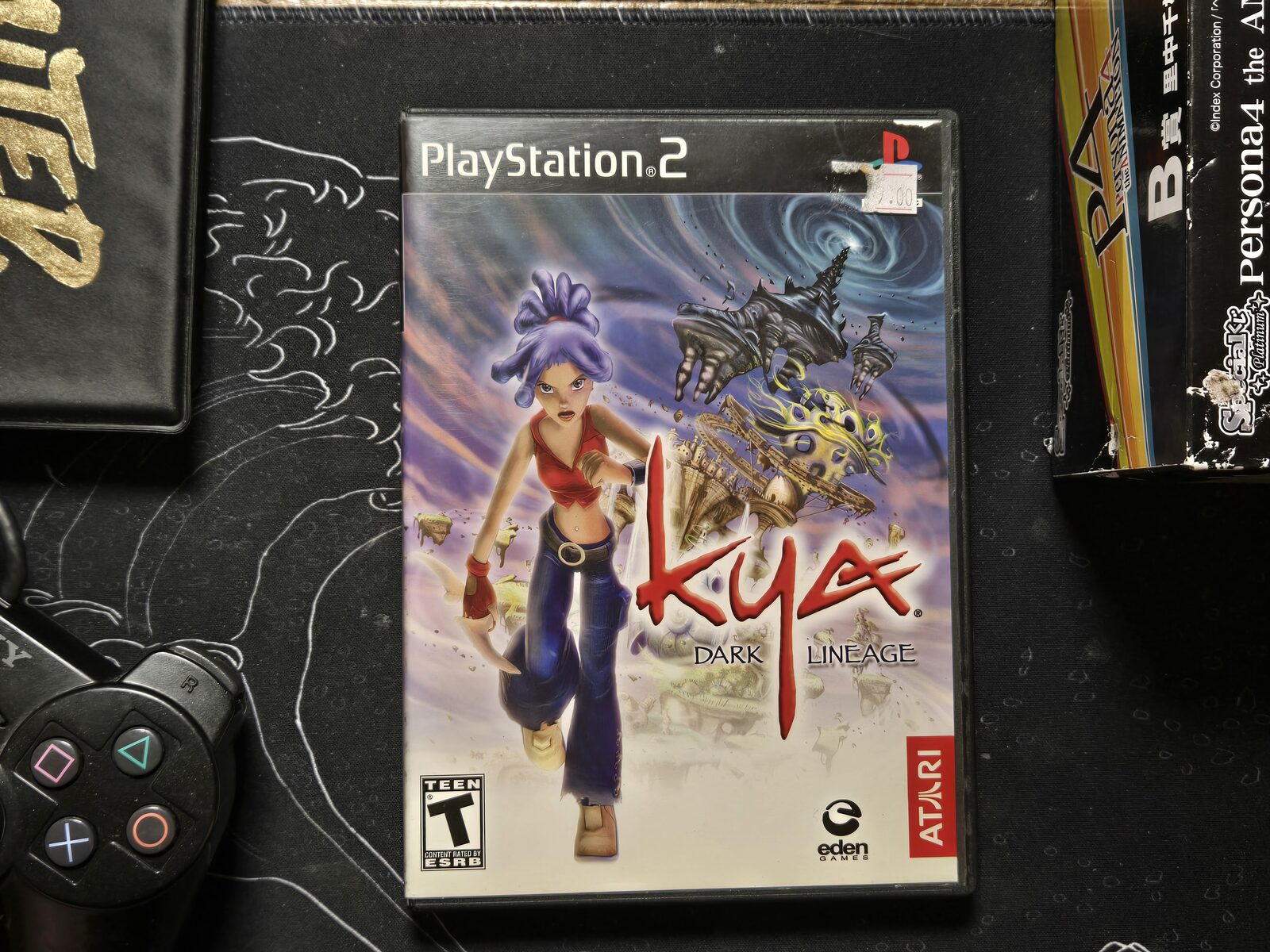
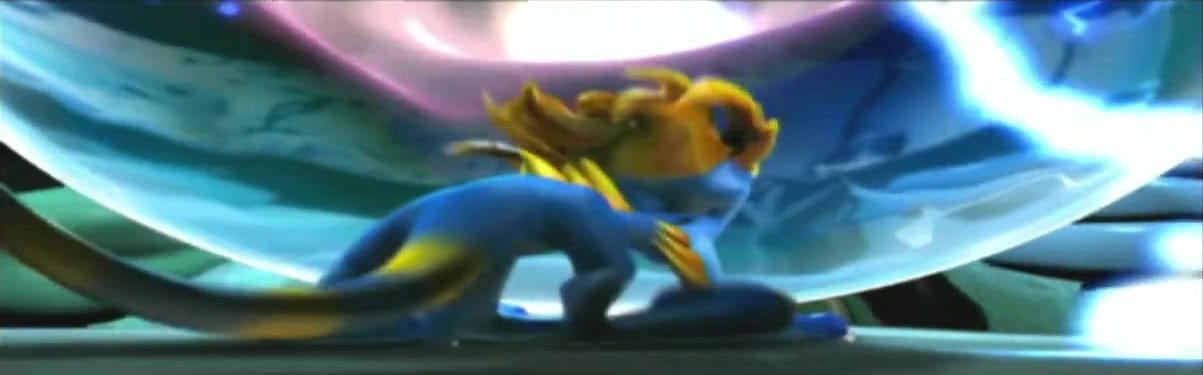
If you like Beyond Good & Evil (and who doesn’t?), Kya is the other French action-adventure from 2003 that nobody remembers. It’s from Eden Games in Lyon, the studio that later made Test Drive Unlimited, and it launched as a PS2 exclusive in North America.
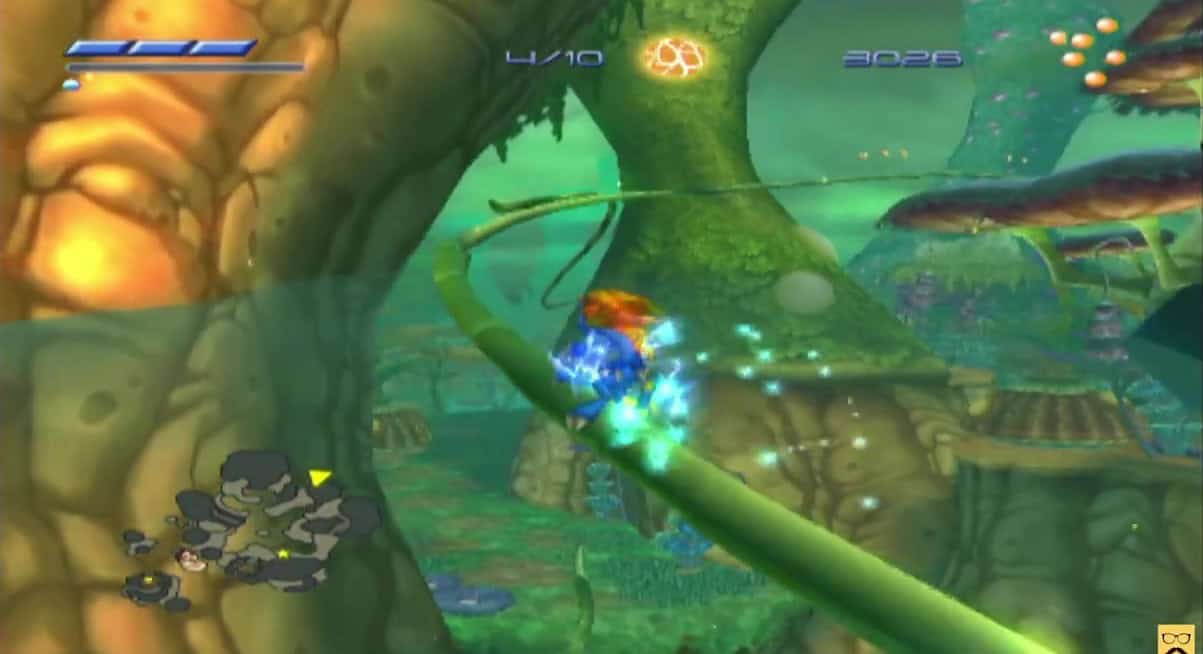
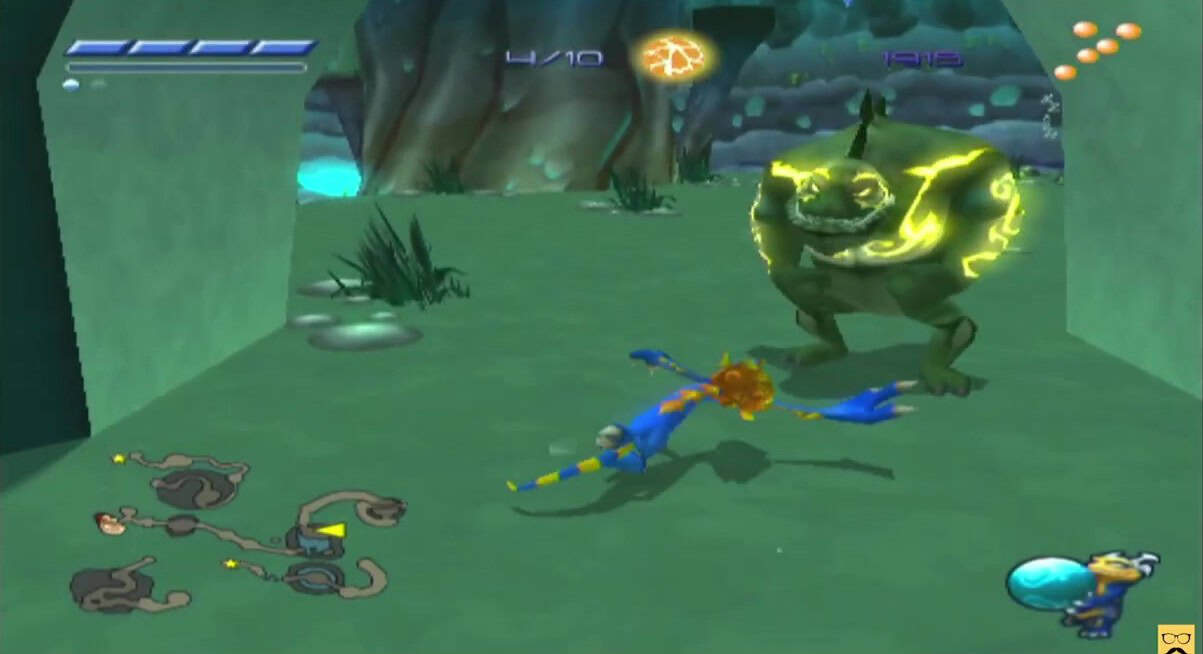
Kya and her brother get pulled through a portal into another world. She free-falls through giant wind currents, fights hand to hand and throws a boomerang, and there are even snowboard-style sections. Let’s be honest, snowboarding on the PS2 was epic. The best idea: when you knock out the Wolfen soldiers, you can turn them back into the Nativs they used to be. You’re not killing them. You’re saving them.
Why it made the list: Honest take: the camera controls can be loose, and reviews were split right down the middle back in the day. You should still check it out.
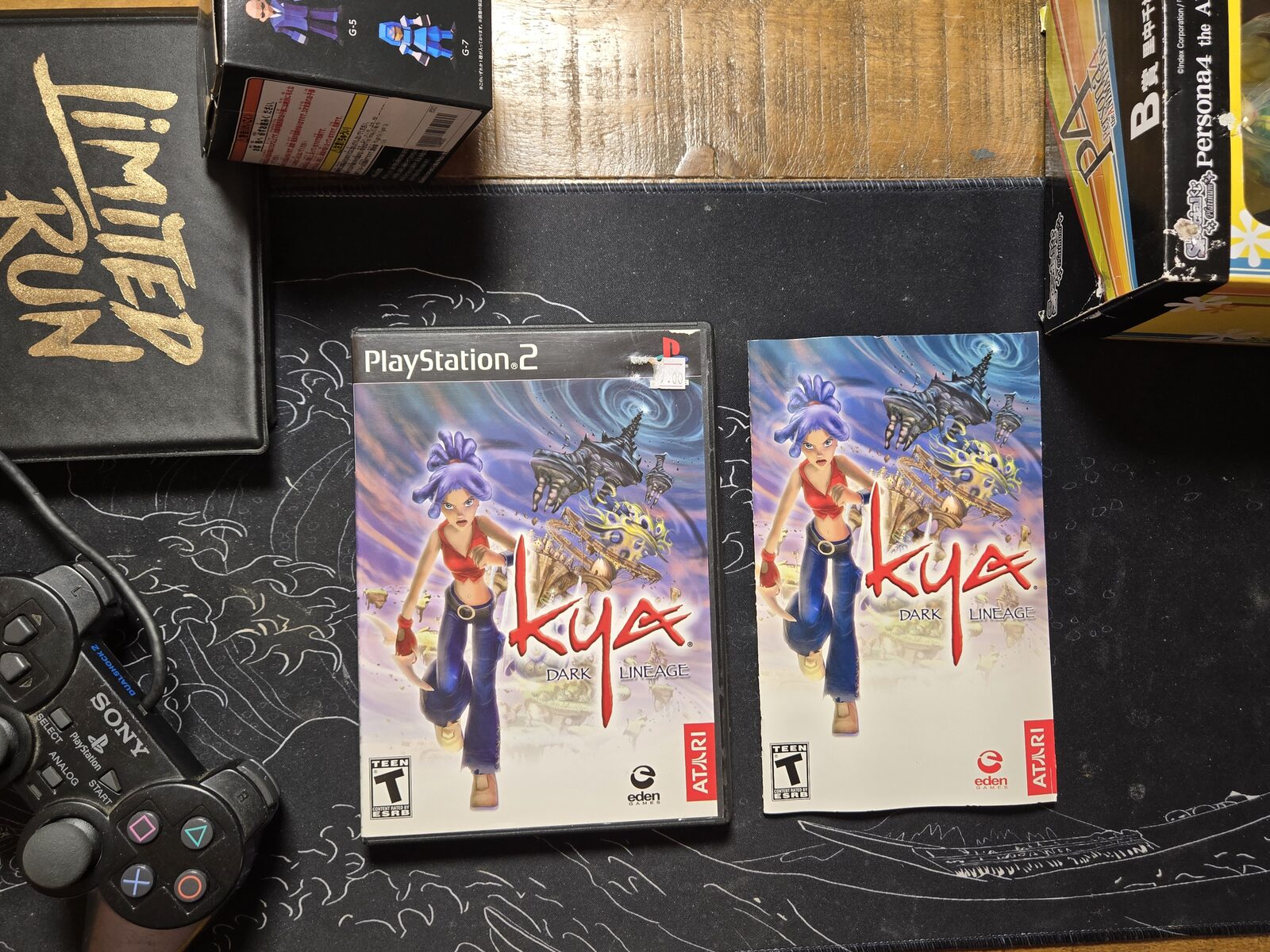
My copy: Kya: Dark Lineage for PS2, North American release (Atari), complete with case, disc and manual.
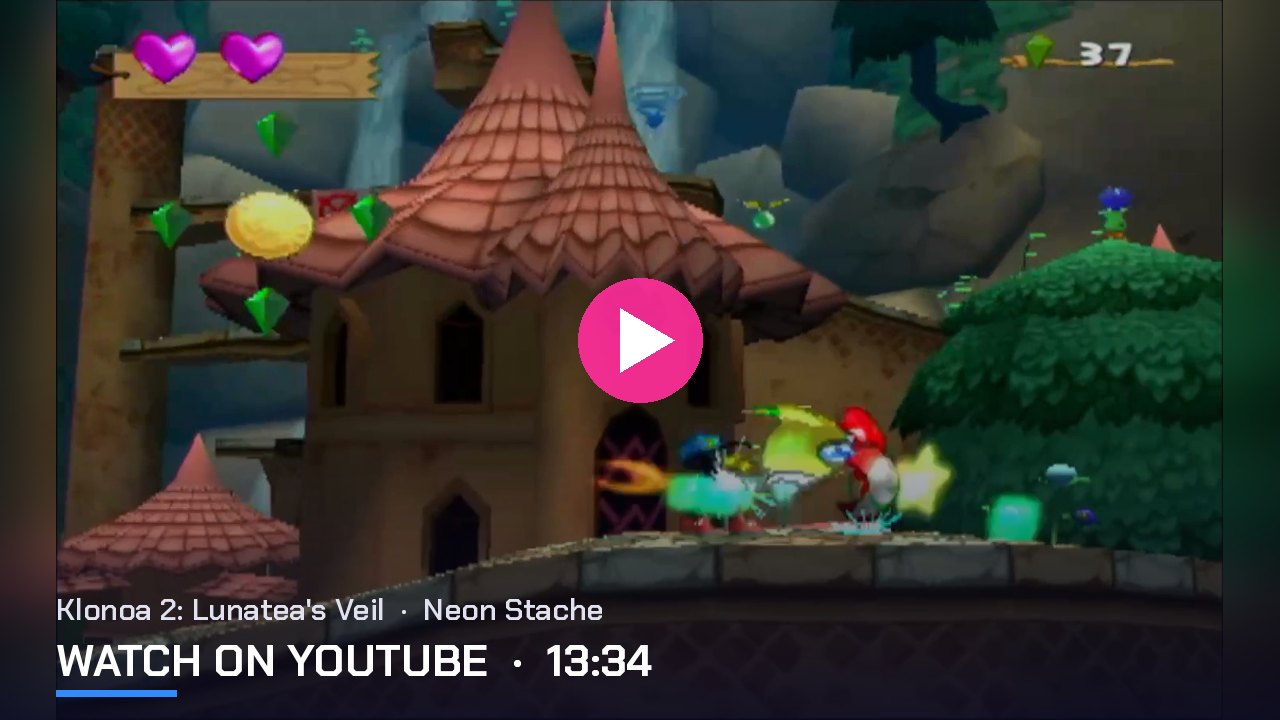
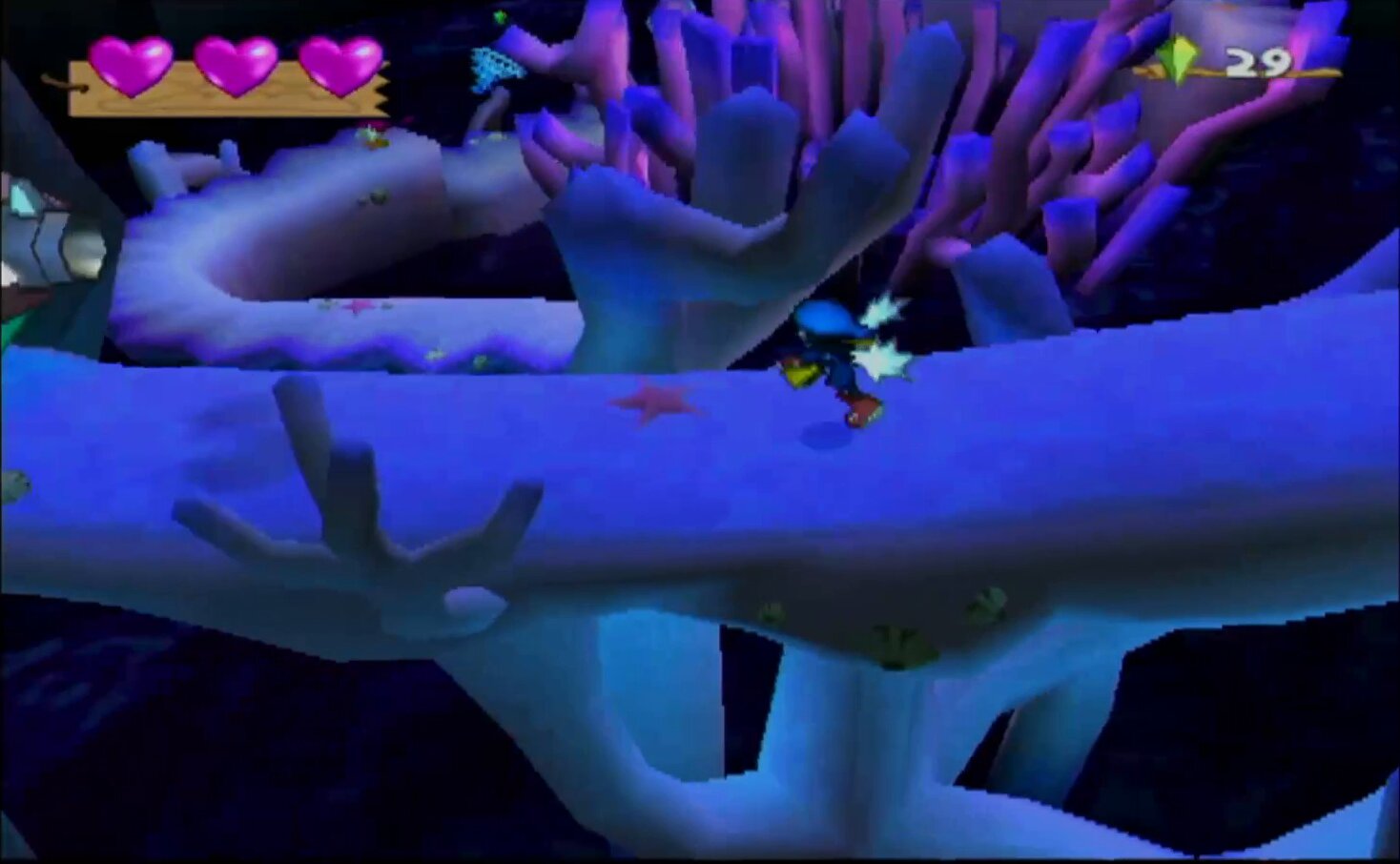
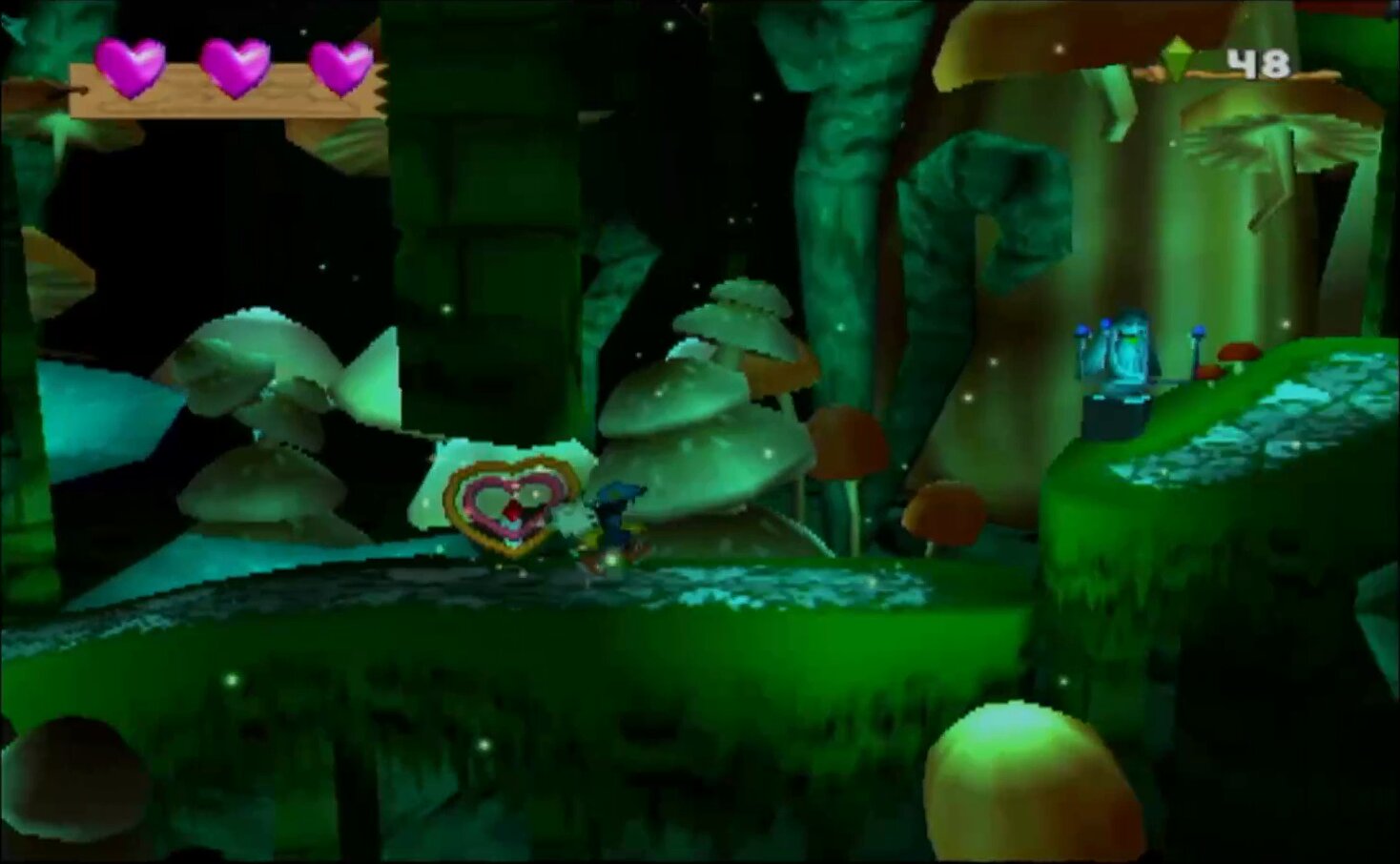
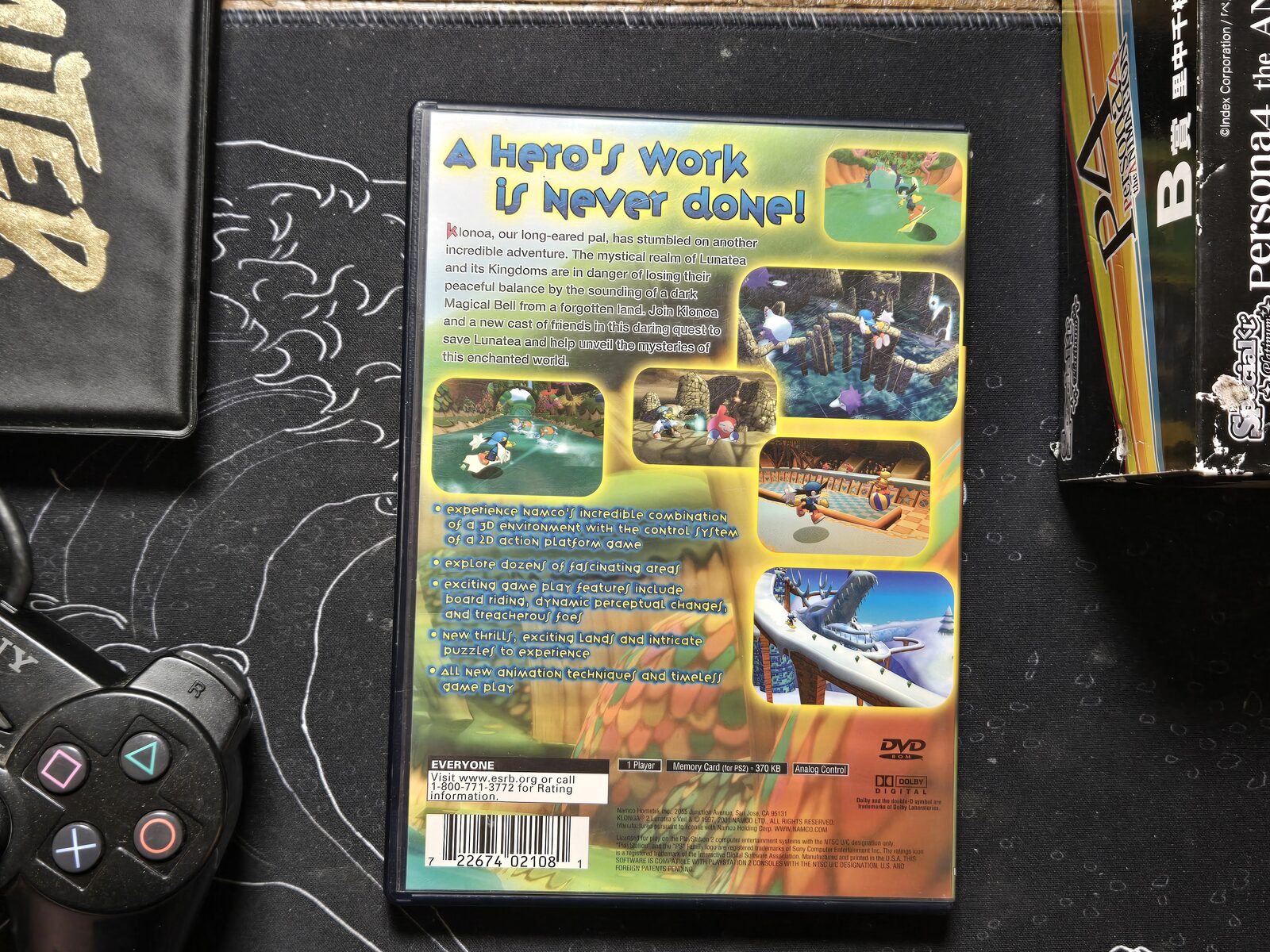
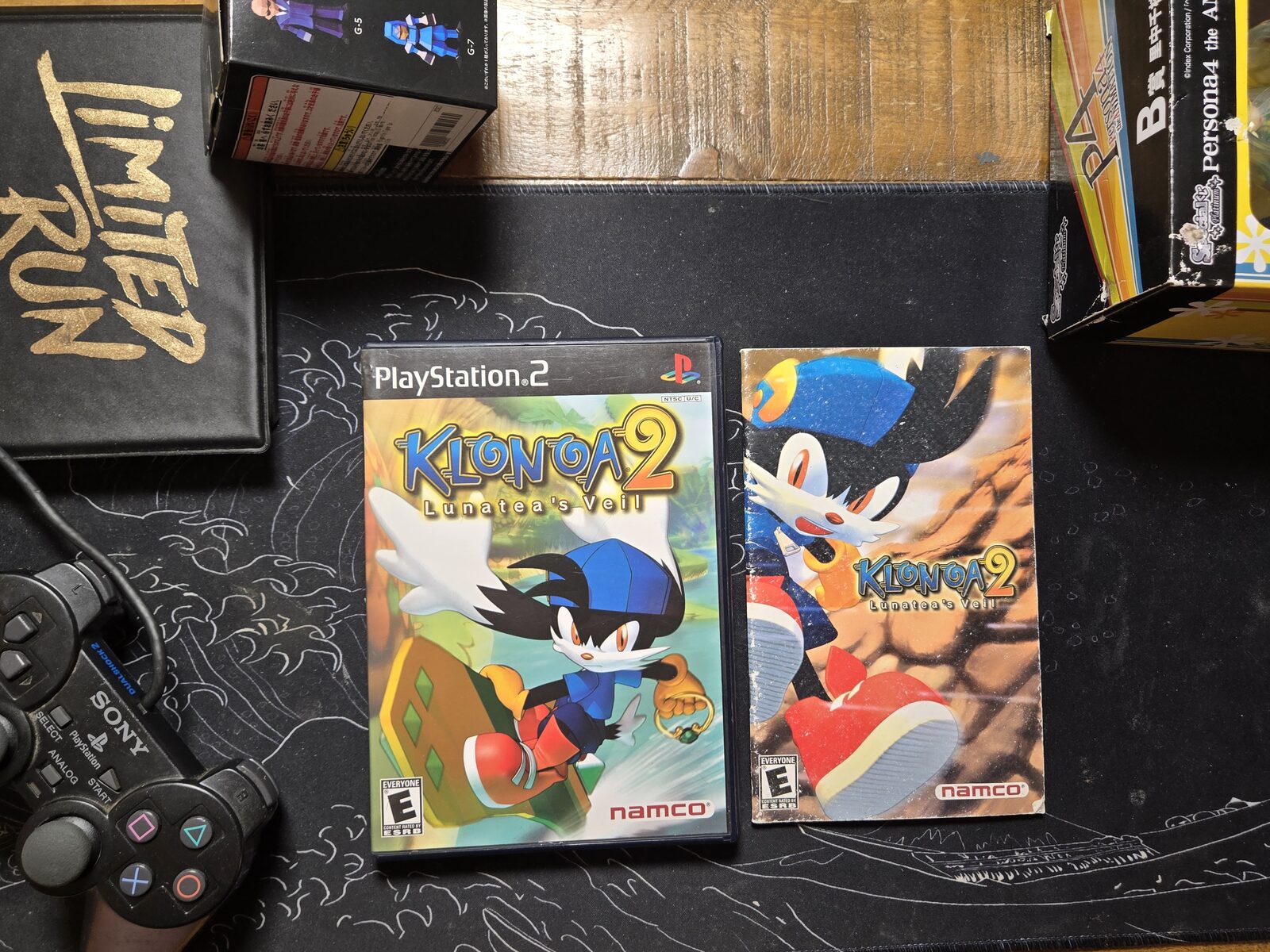
I saved the best for last. Klonoa 2 is a side-scroller that lives in a full 3D world. The camera swings around you, the paths curve into the background, and the whole thing looks like a wonderful cartoon.
The trick is simple. You grab an enemy with your wind ring, then jump off it for a double jump. Almost every puzzle and boss is built on that one idea. Simple, perfect.
Why it made the list: Critics loved it. It sits at 91 on Metacritic, and GameSpy named it the PS2’s platform game of the year for 2001. It still didn’t sell like it should have. It got remastered in 2022 as part of the Klonoa Phantasy Reverie Series, but this right here is the original, and the original is the one I’ll always prefer. Nothing beats the OGs.
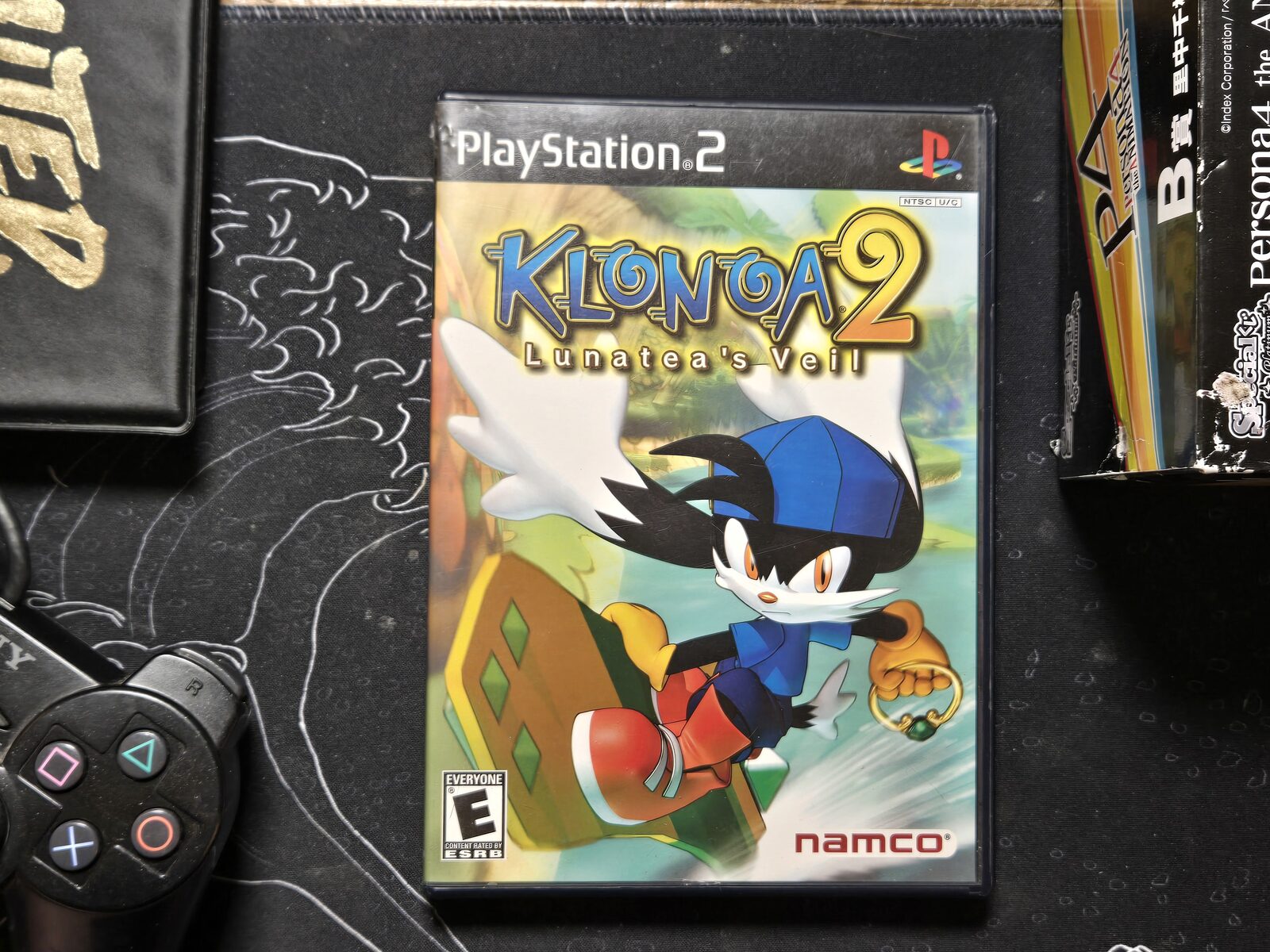
My copy: Klonoa 2: Lunatea’s Veil for PS2, original North American release (Namco), complete with case, disc and manual.
Beyond the usual Okami and Ico picks, some of the most underrated PS2 games are Klonoa 2: Lunatea’s Veil, Kya: Dark Lineage, Sky Odyssey, Under the Skin, Magic Pengel, Raw Danger!, Bujingai and Mad Maestro!. Each one tried something no other game on the system did, from drawing your own fighters to conducting an orchestra with pressure-sensitive buttons.
What is the best PS2 hidden gem on this list?
For me it’s Klonoa 2: Lunatea’s Veil. It scored 91 on Metacritic and won GameSpy’s PS2 platform game of the year for 2001, but it never sold the way it deserved. One simple idea, grabbing enemies with the wind ring to double jump, carries every puzzle and boss.
Is Klonoa 2 on modern consoles?
Yes. Klonoa 2 was remastered in 2022 as part of the Klonoa Phantasy Reverie Series. If you want the original, you’ll need a PS2 (or a backwards-compatible PS3), and that’s the version I prefer.
Is Raw Danger! a sequel to Disaster Report?
Yes. Raw Danger! is the sequel to Disaster Report, known in Japan as Zettai Zetsumei Toshi 2. It swaps the earthquake for a flood and adds six playable characters whose stories affect each other.
That’s Volume 1. My top pick is Klonoa 2, but Under the Skin is the one I’d hand to someone who thinks they’ve seen everything on the PS2. Which of these eight are you tracking down first? And if you’ve got a PS2 game you never see anyone talk about, tell me in the YouTube comments. I want it for Volume 2.
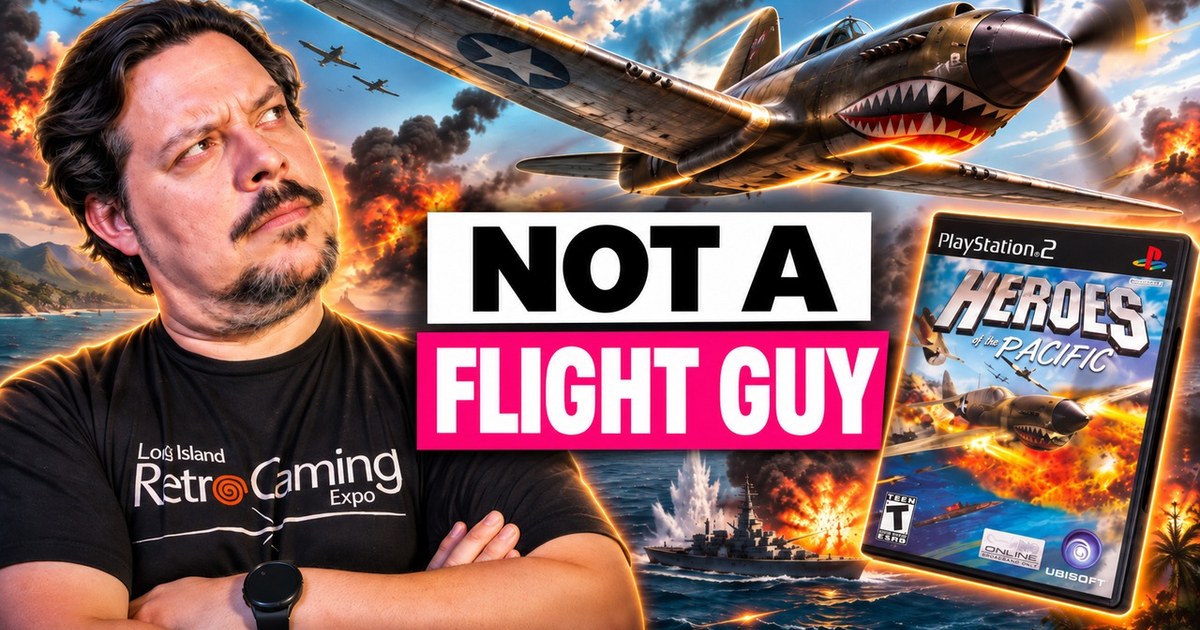
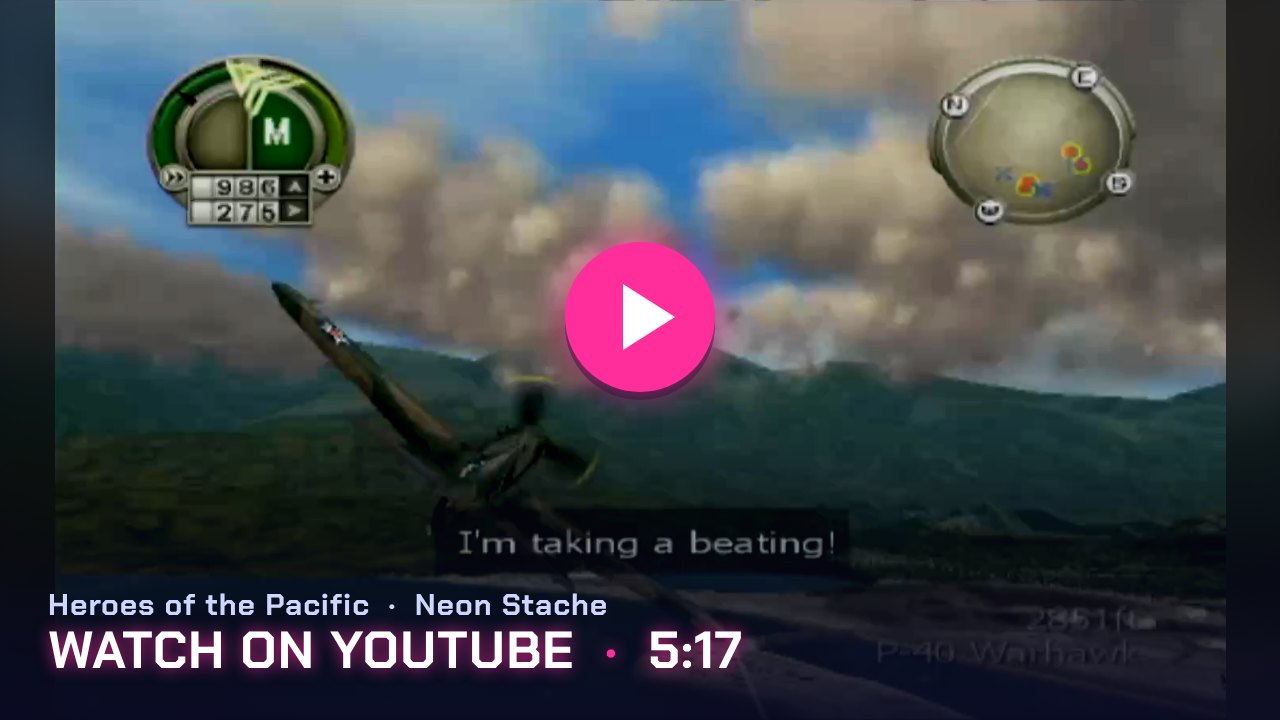
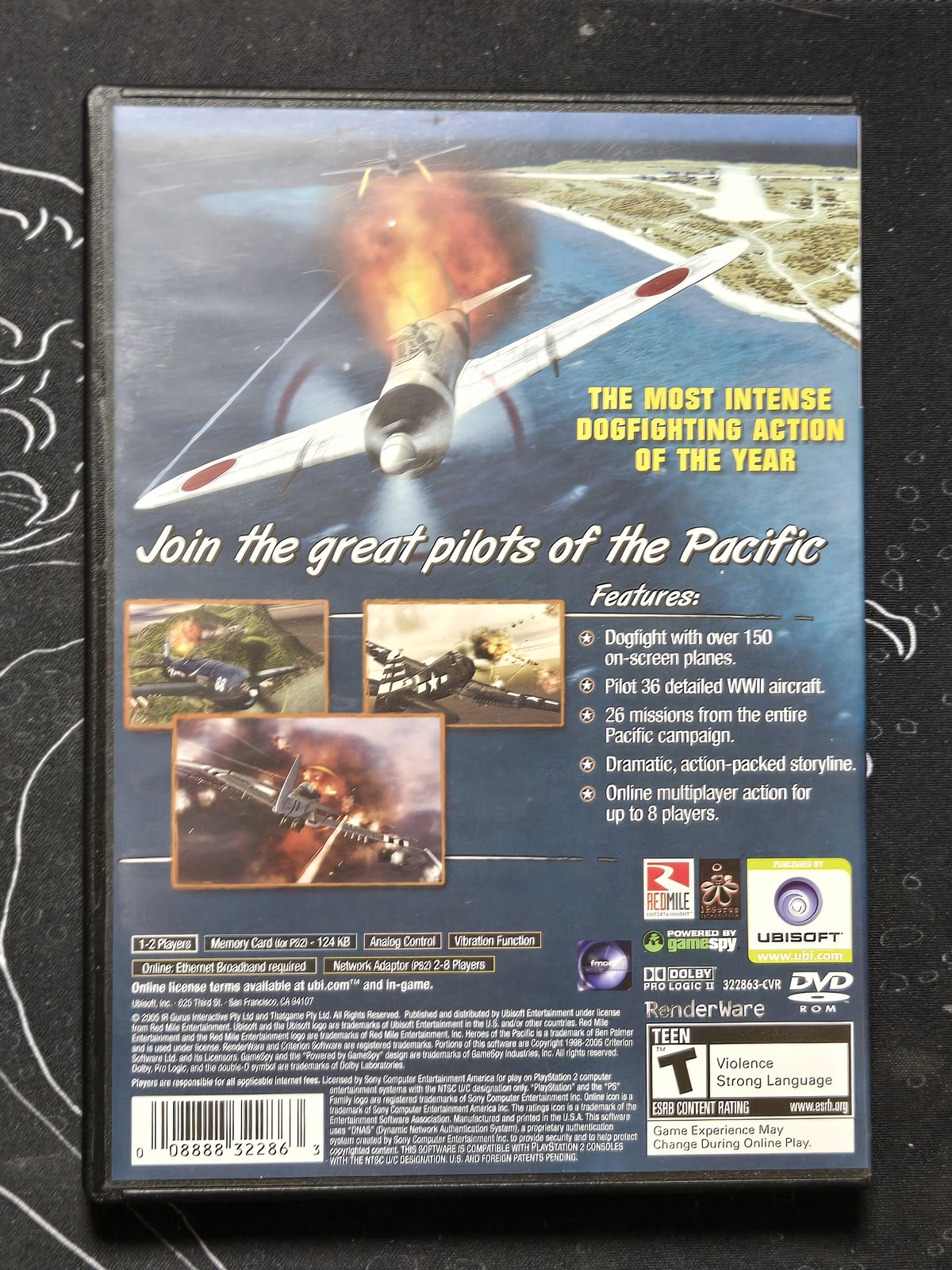
I’m not a flight game guy. Give me a flight sim with fuel mixtures, trim tabs and a hundred buttons and I’m out before takeoff. So Heroes of the Pacific on PS2 had no business winning me over. It did anyway, and it’s one of the cheapest good times you can put on your shelf.
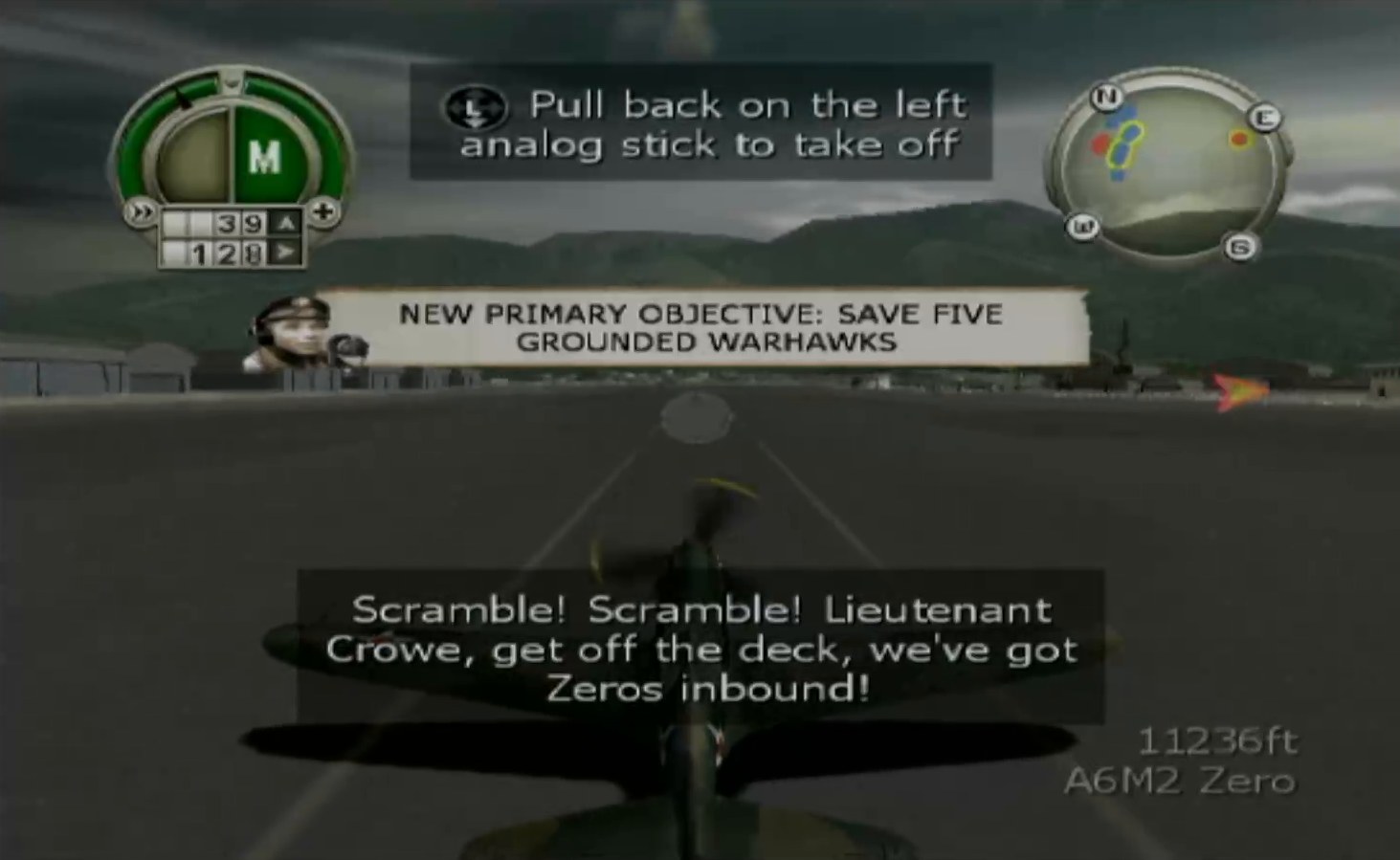
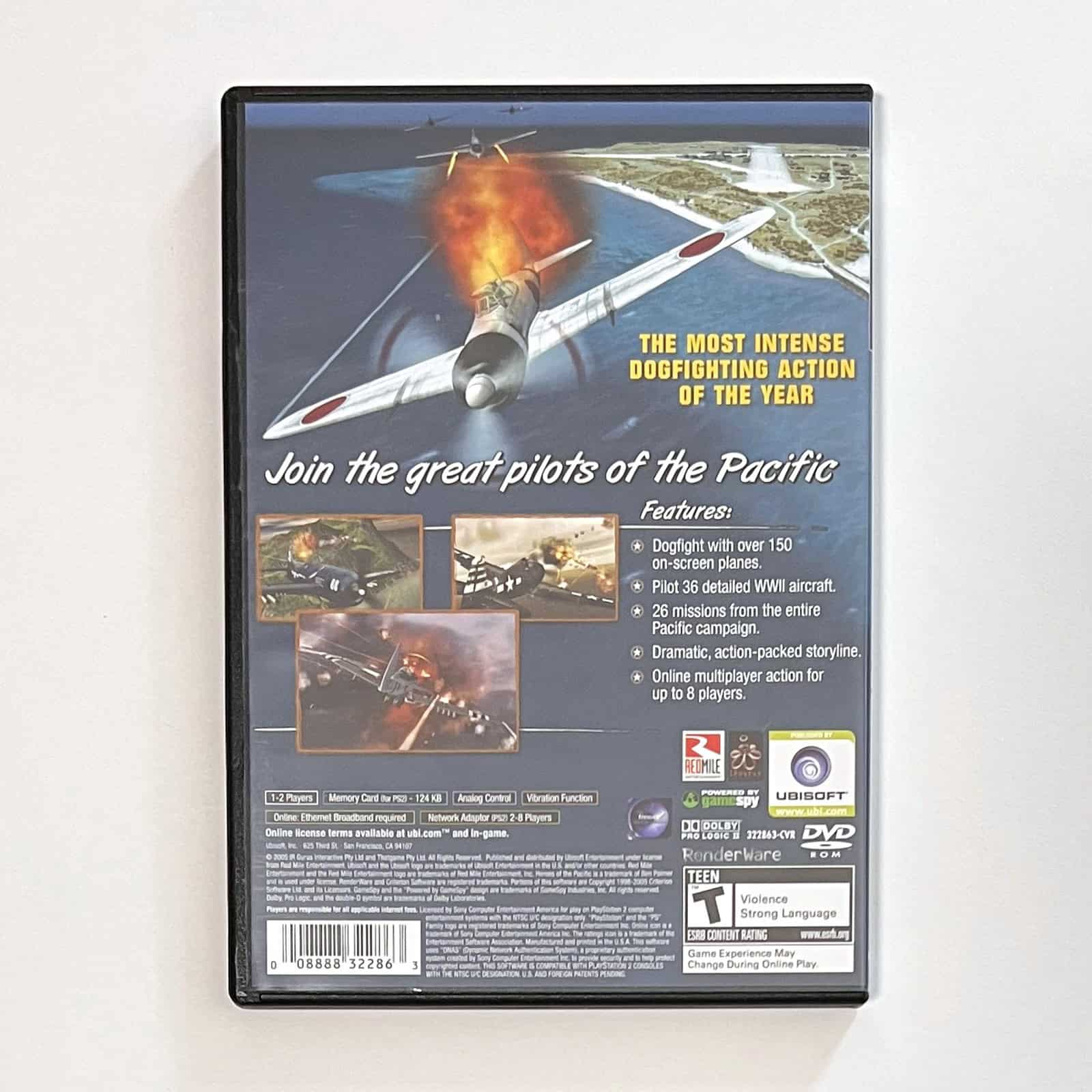
Heroes of the Pacific is a World War II air combat game for the PlayStation 2 (PS2), developed by IR Gurus and published in North America by Ubisoft in 2005. You fly 26 missions across the Pacific War, from Pearl Harbor to Iwo Jima, and you can play it as an easygoing arcade shooter or switch on the stricter Professional flight model.
This post contains affiliate links. If you buy through them, I may earn a small commission at no extra cost to you.
Heroes of the Pacific PS2 at a glance
Platform
PlayStation 2 (also released on Xbox and PC)
Release (North America)
September 2005
Serial
SLUS-20943 (NTSC-U)
Developer / publisher
IR Gurus / Ubisoft (Codemasters in Europe)
Players
1-2 local; 2-8 online with the PS2 network adapter (servers long gone)
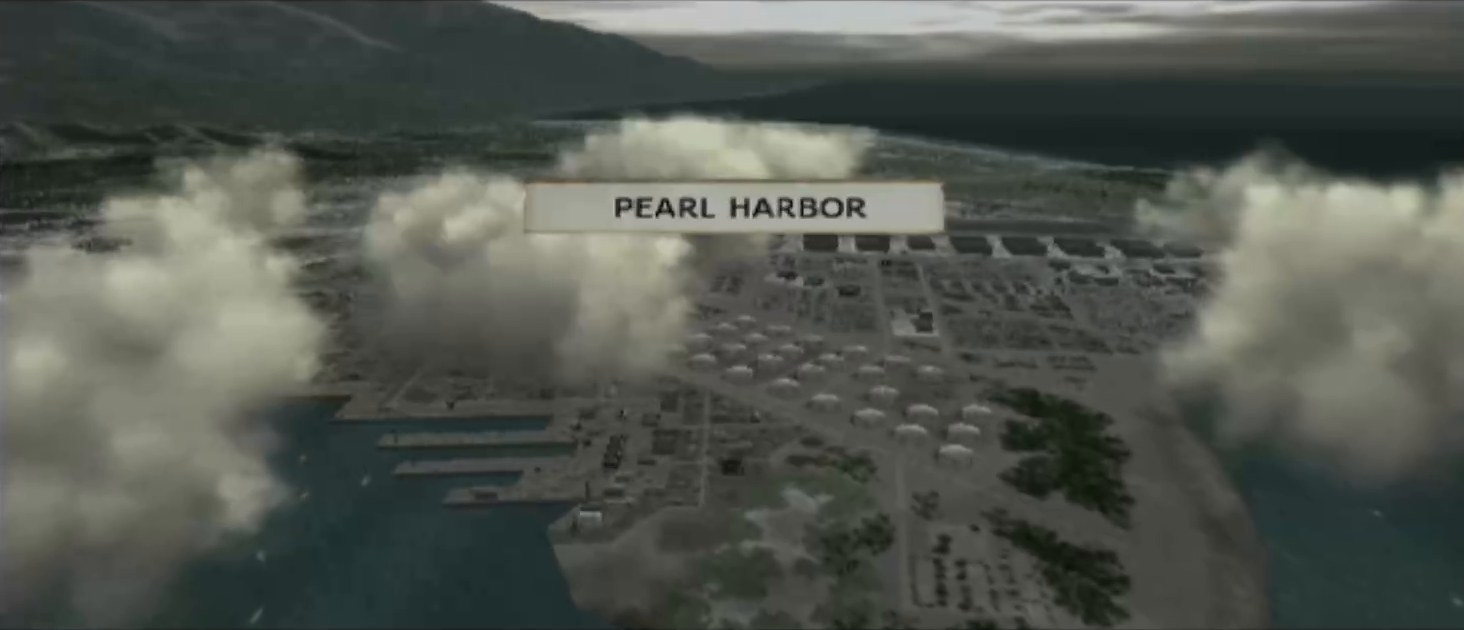
You play Lieutenant Crowe, a pilot who’s on the ground at Pearl Harbor when the attack starts. From there the campaign follows the Pacific War through its big set pieces, ending at Iwo Jima. Between missions you spend upgrade points and unlock new planes.
The back of the box promises 36 detailed WWII aircraft and dogfights with more than 150 planes on screen, and it delivers on the chaos. Late in the game you can even unlock experimental designs that never saw combat, like the Japanese J7W Shinden. The Shinden also turns up in Sky Odyssey, one of the eight games in my PS2 hidden gems Vol. 1 list.
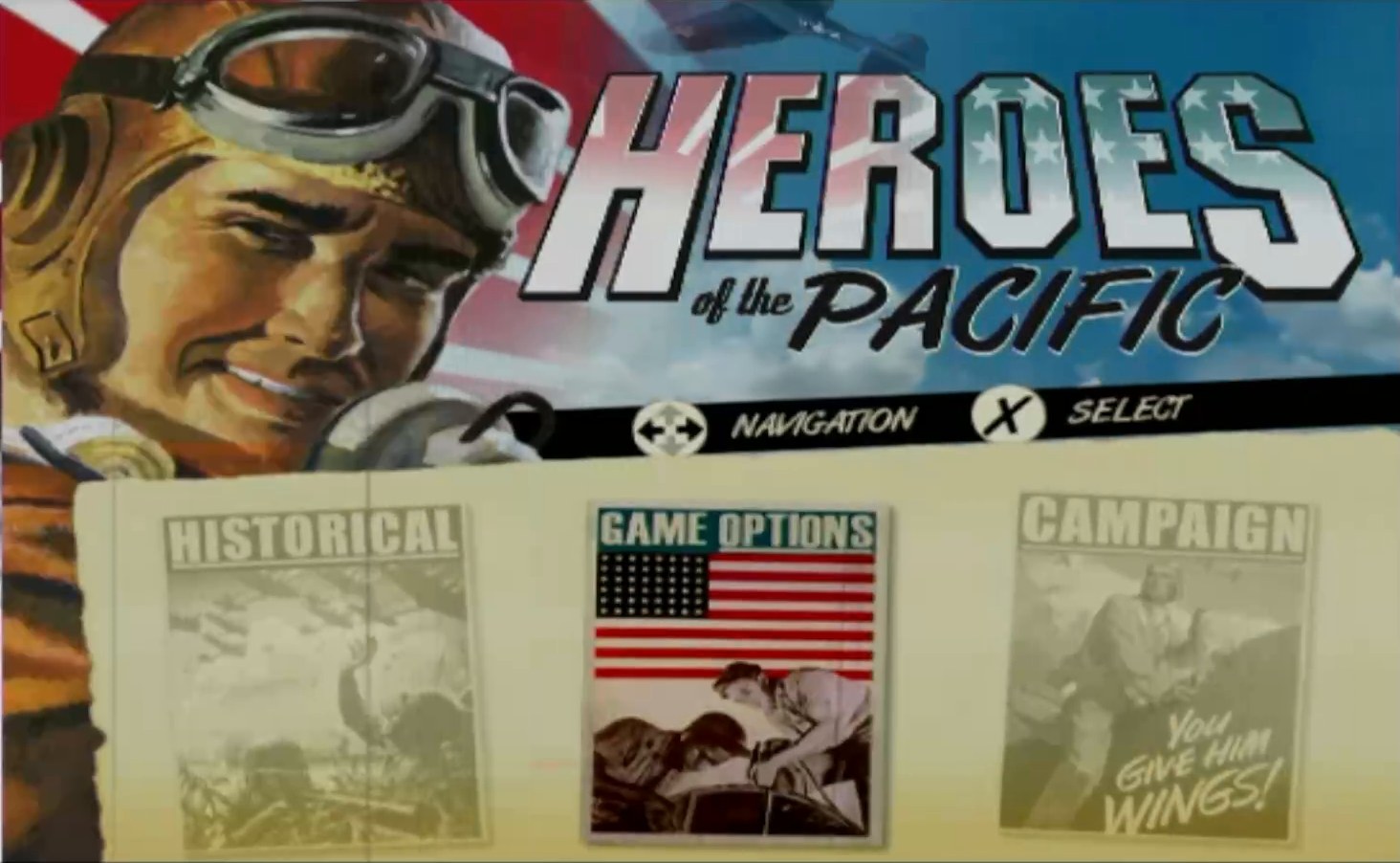
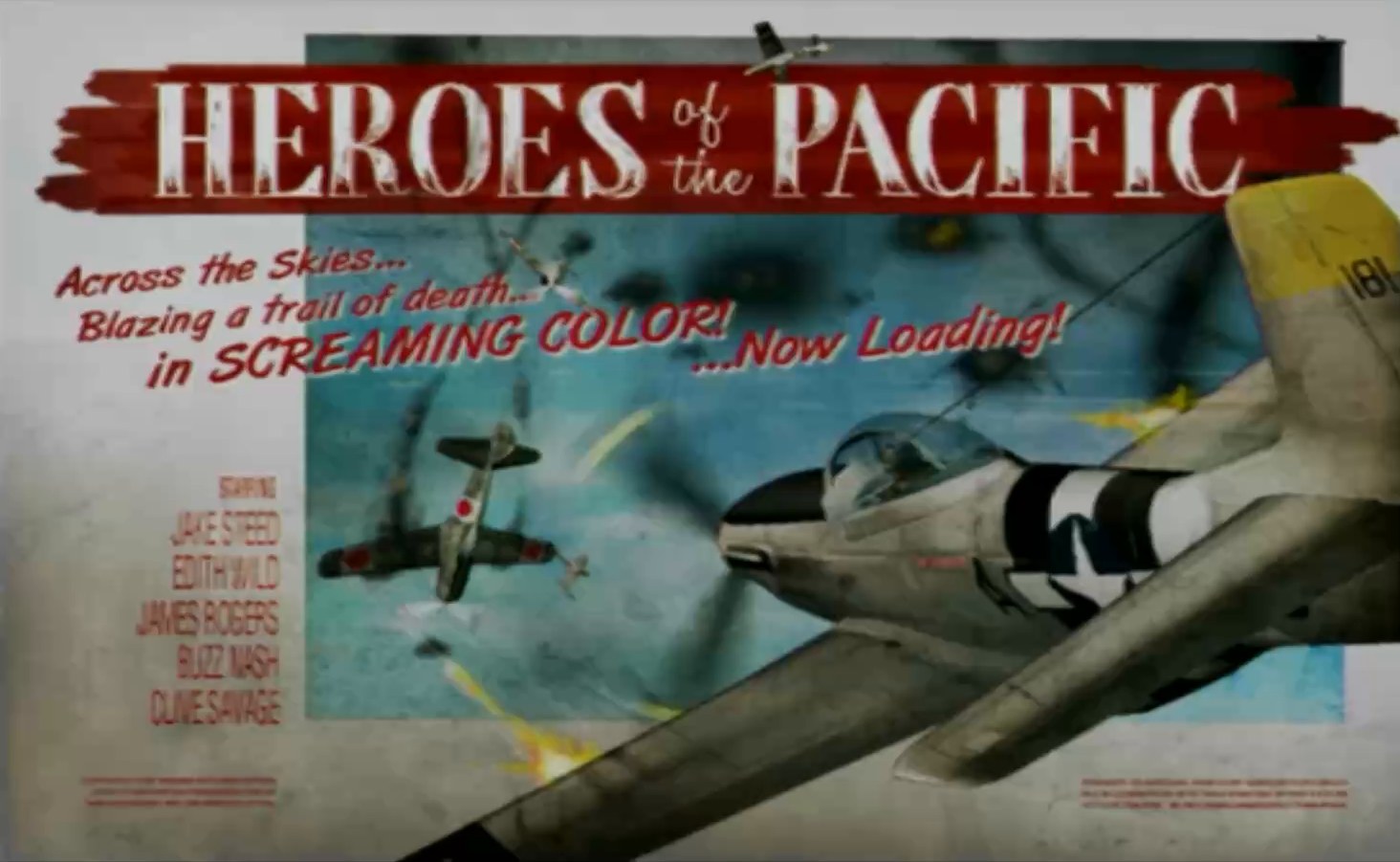
The presentation goes all-in on the 1940s. The menus are styled like old propaganda posters and newspapers, and even the loading screens look like movie posters. I said it in the video: “Honestly, they do look pretty good… little bit of extra detail.” It’s the kind of polish you don’t always get from a mid-budget PS2 game.
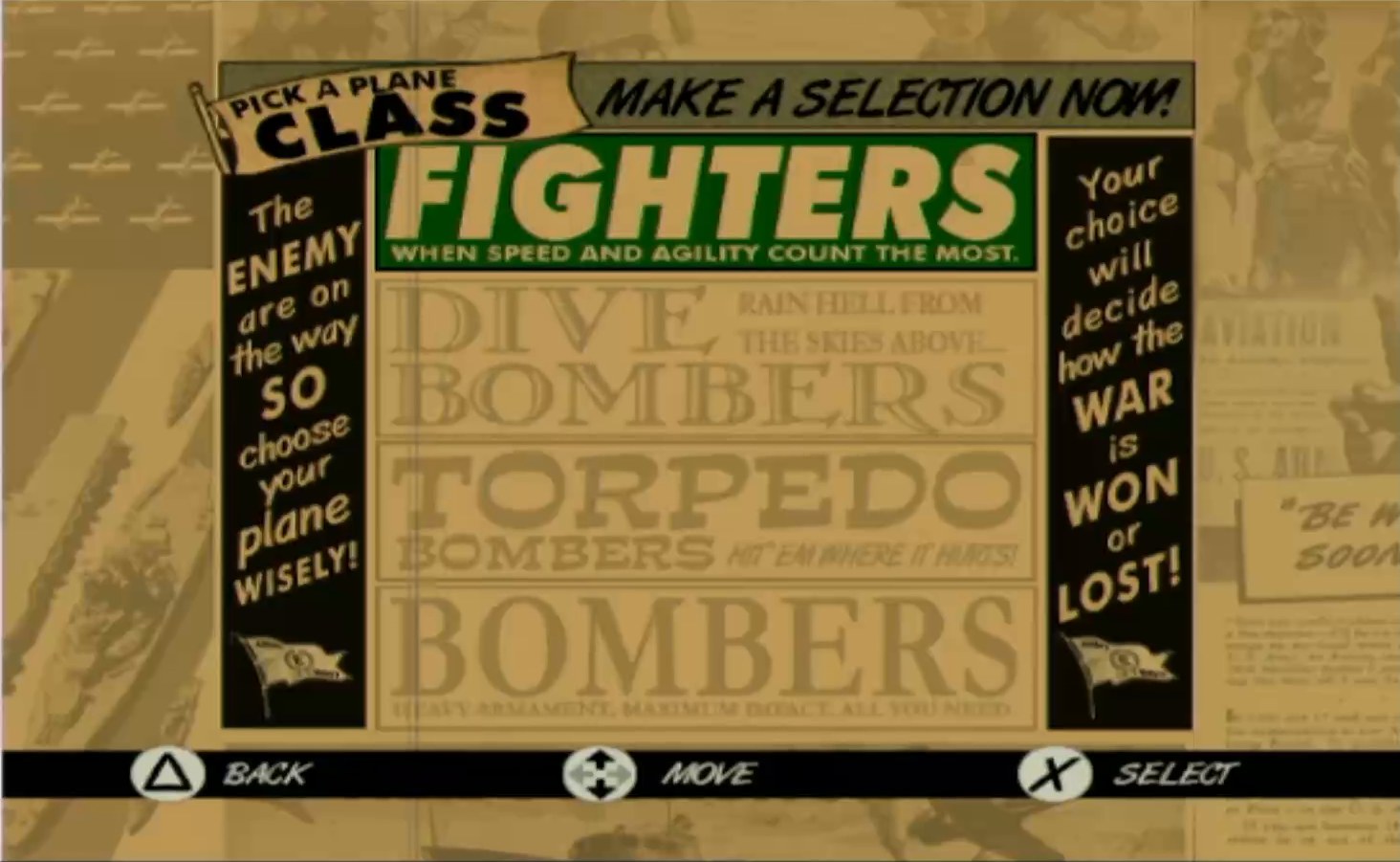
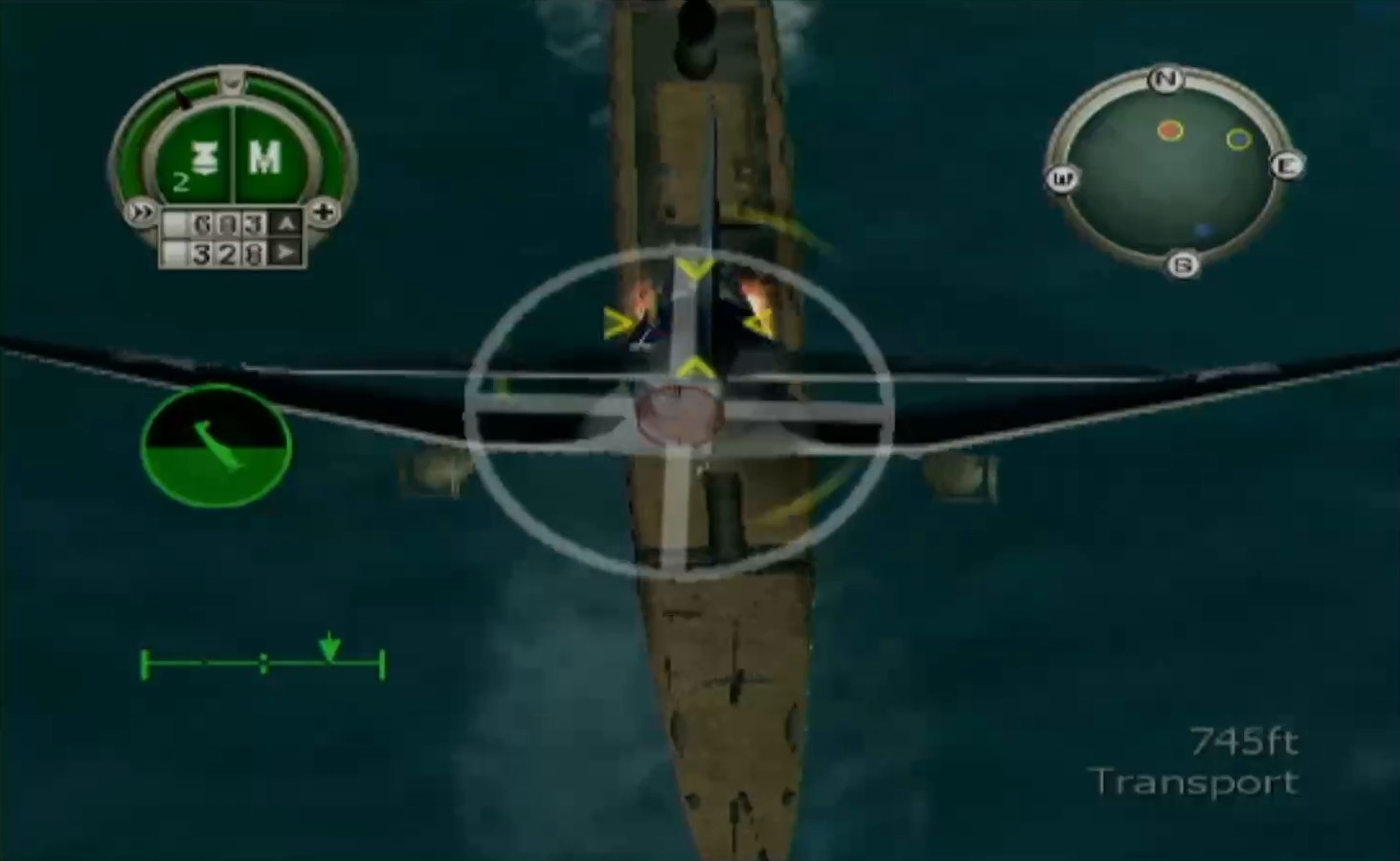
Before you fly, you pick your plane class: fighters, dive bombers or torpedo bombers. Each one changes the mission. Fighters are all about dogfighting, dive bombers drop straight down on ships from above, and torpedo bombers skim low over the water to line up their run.
Then you pick a flight model. Arcade handles the rudder for you, so you just point the plane and go. Professional gives you the full stick-and-rudder treatment for people who want it. I stayed on Arcade, and that’s the whole reason a non-flight guy like me had a blast. In my words from the video: “It leans arcade. It’s not trying to be a simulator… being that free up in the air is honestly for me just a blast.”
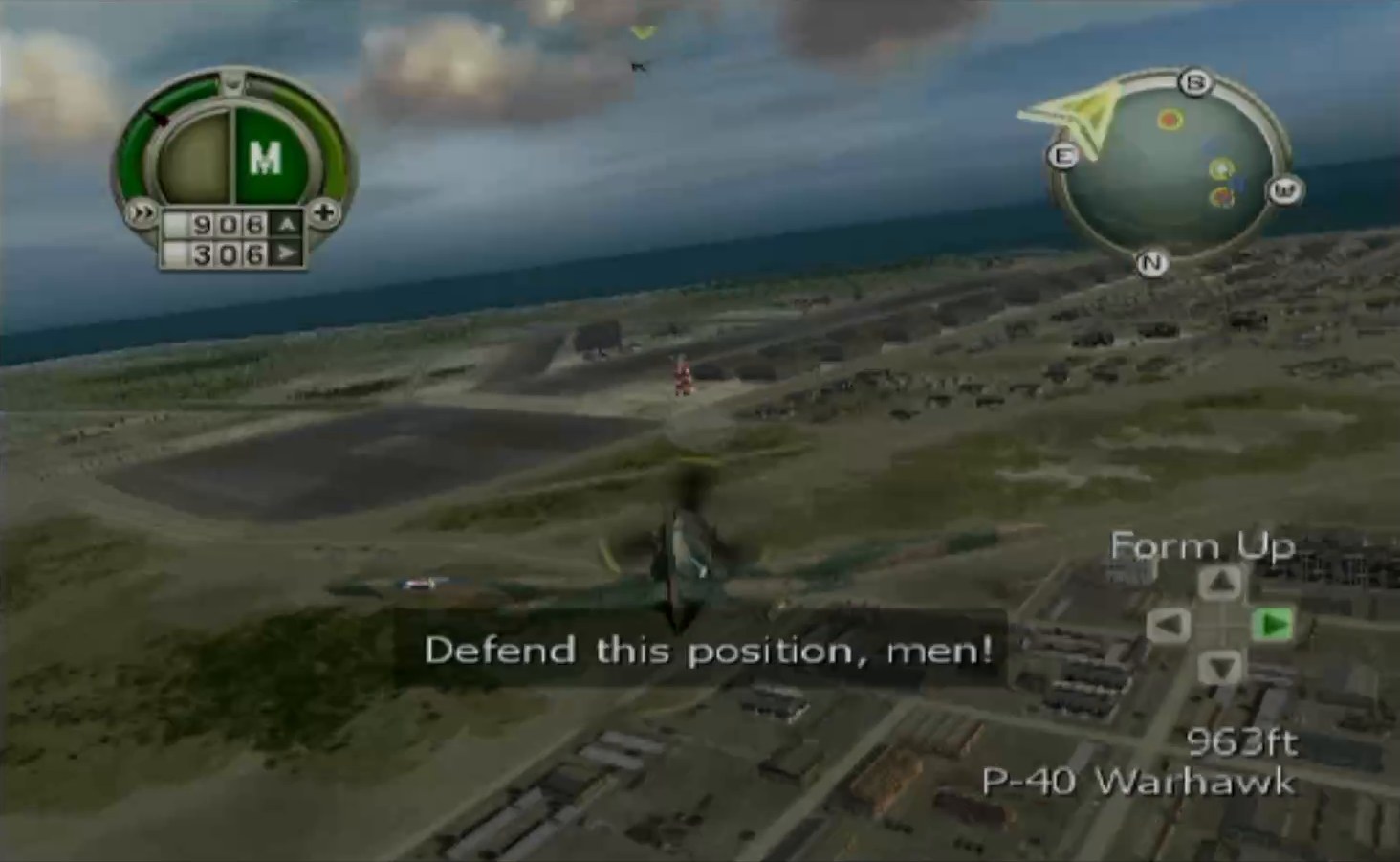
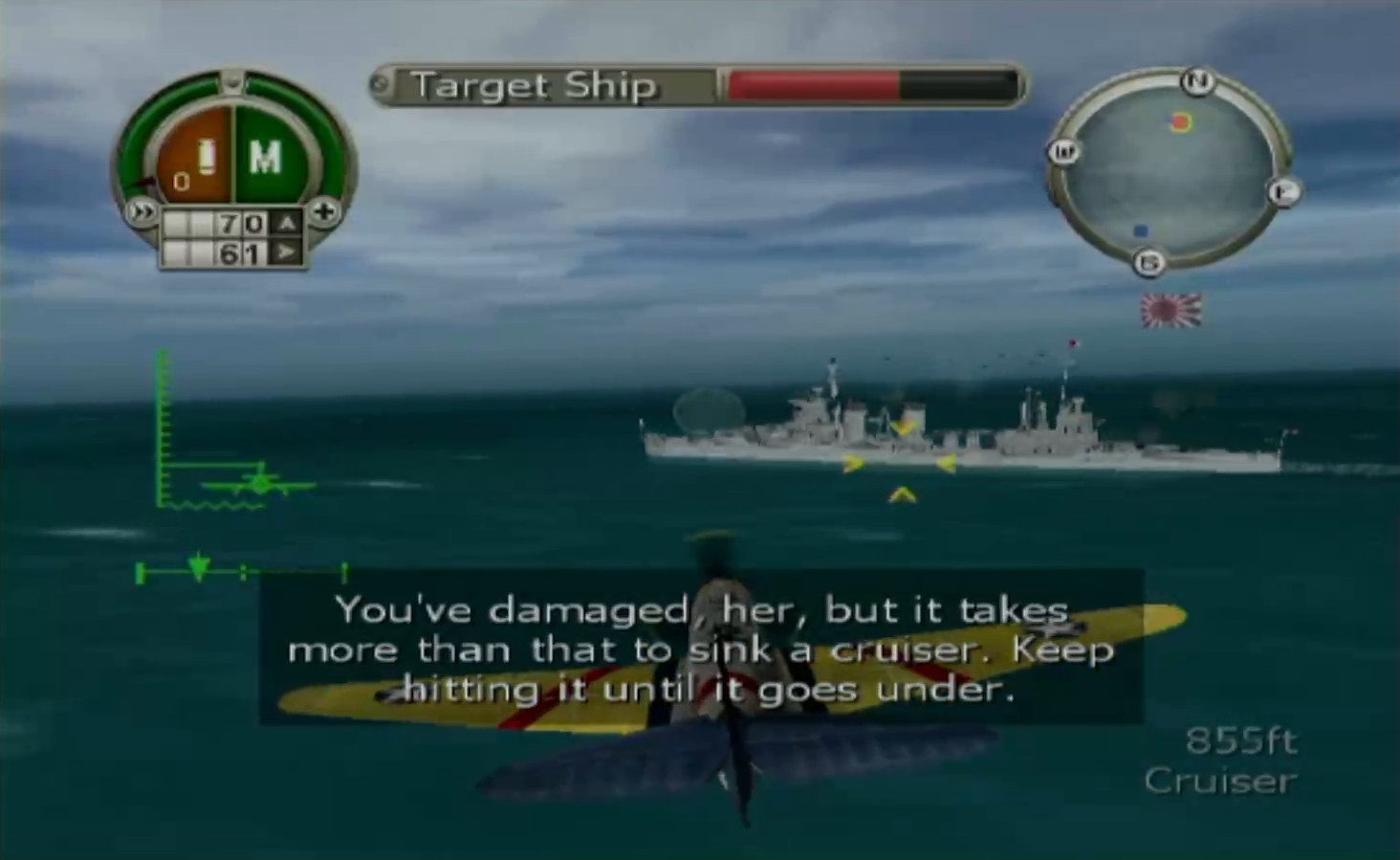
You’re rarely alone up there. You can give your wingmen simple orders with the D-pad, like telling them to form up or go after a target, which comes in handy when the sky gets crowded. And when you go after ships, the game talks you through it. Fire on a cruiser and you’ll get told, “You’ve damaged her, but it takes more than that to sink a cruiser. Keep hitting it until it goes under.”
Four difficulty settings run from Rookie up to Ace, and there’s more than the campaign: instant action, historical missions, training and split-screen multiplayer for two.
So does it hold up? Hmm. Well, mostly. The flying still feels great, the dogfights are loud and busy, and the views are honestly stunning for a PS2 game. But it’s not perfect:
Missions start to repeat after a while.
The map doesn’t help much when you’re hunting for your next target.
Loading times are long, even by PS2 standards.
The frame rate dips when the screen gets crowded.
Some of the 1940s wartime language in the game hasn’t aged well. Worth knowing if kids are in the room.
None of that kept me from having fun. If you go in expecting an arcade game, it holds up better than most flight games from that era.
What comes in a complete copy of Heroes of the Pacific?
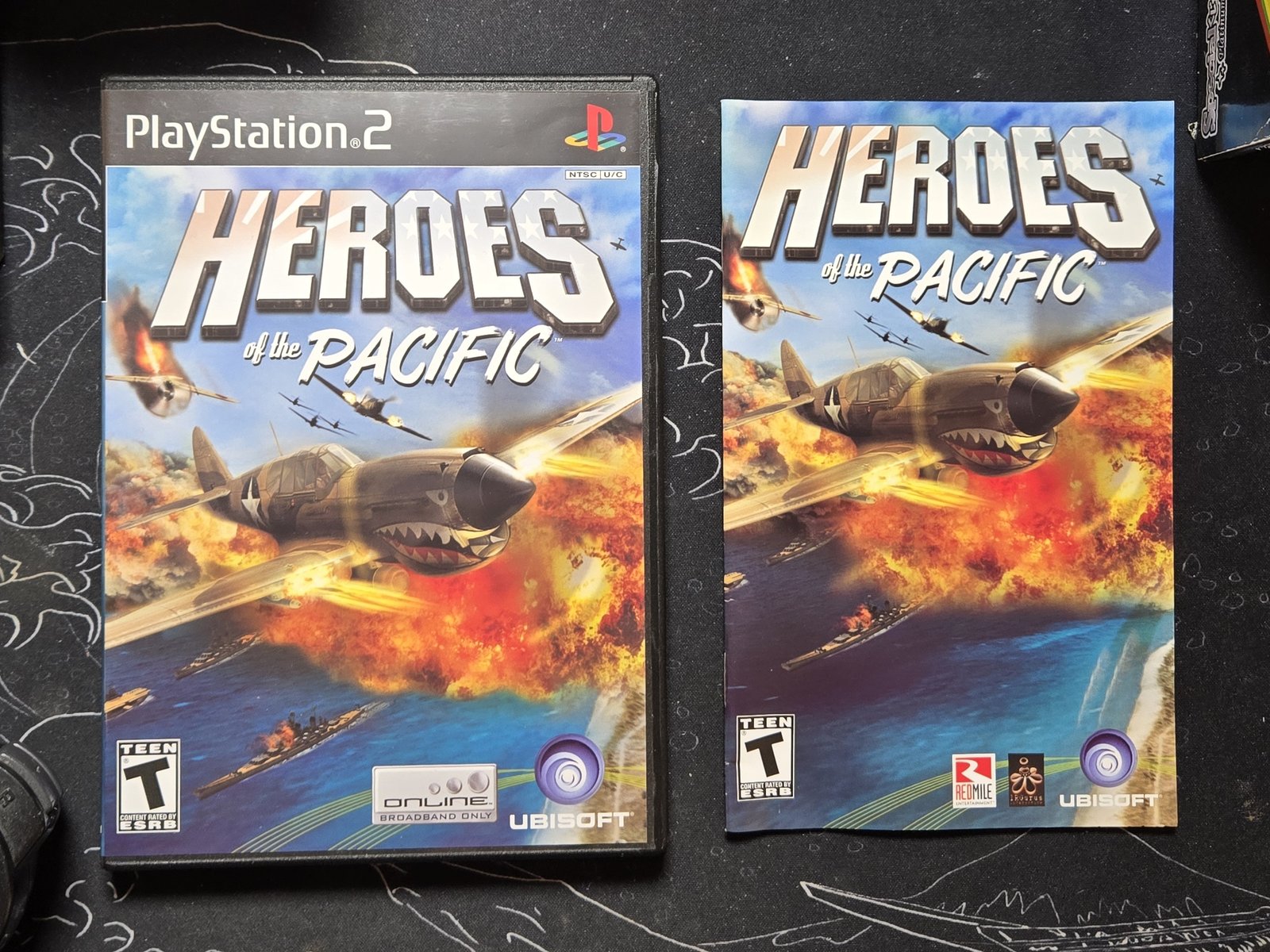
Good news for collectors: complete in box (CIB) is simple on this one. It’s just the case, the disc and the manual. No inserts to hunt down, no pack-ins to worry about.
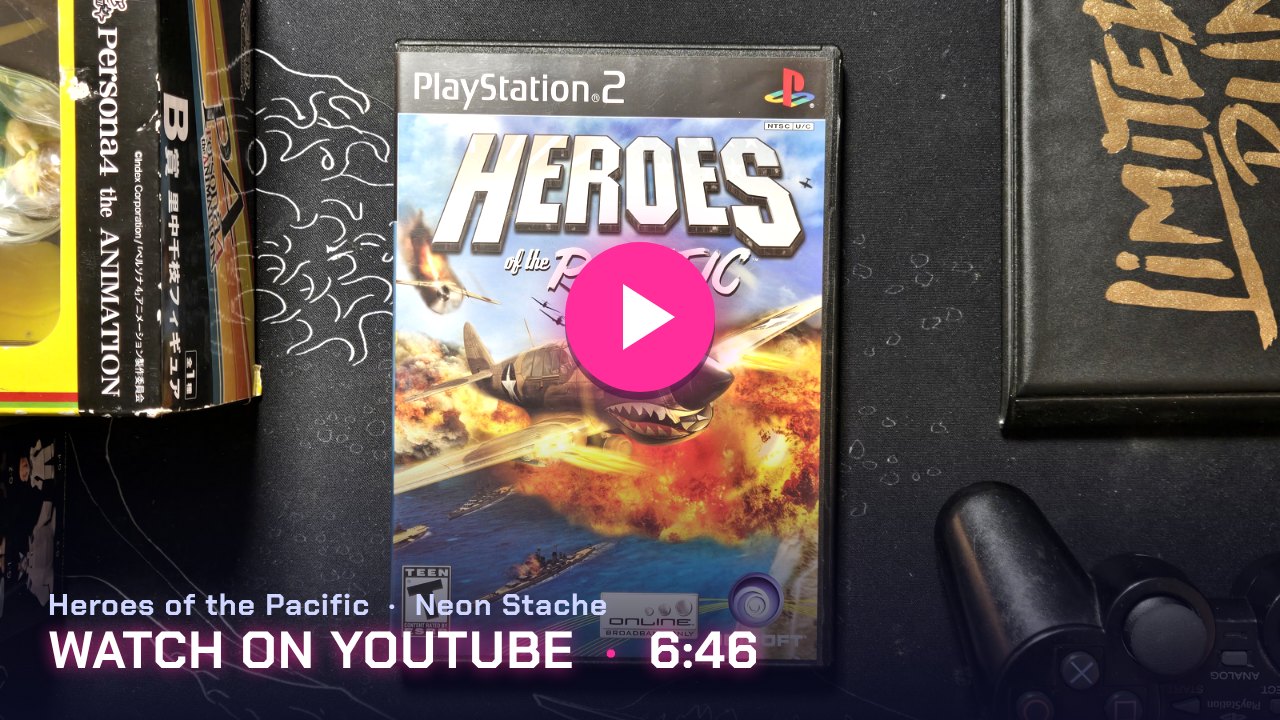
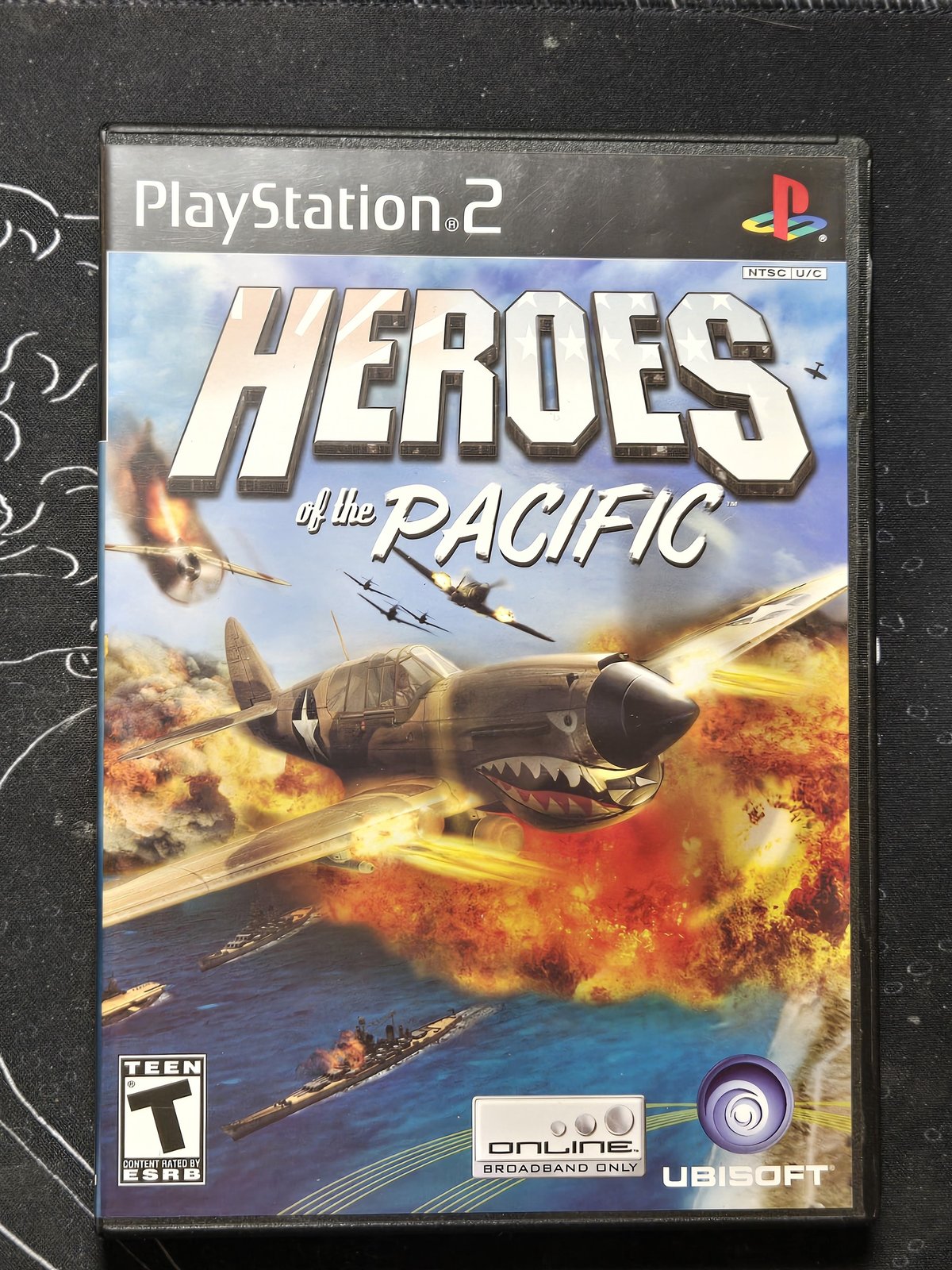
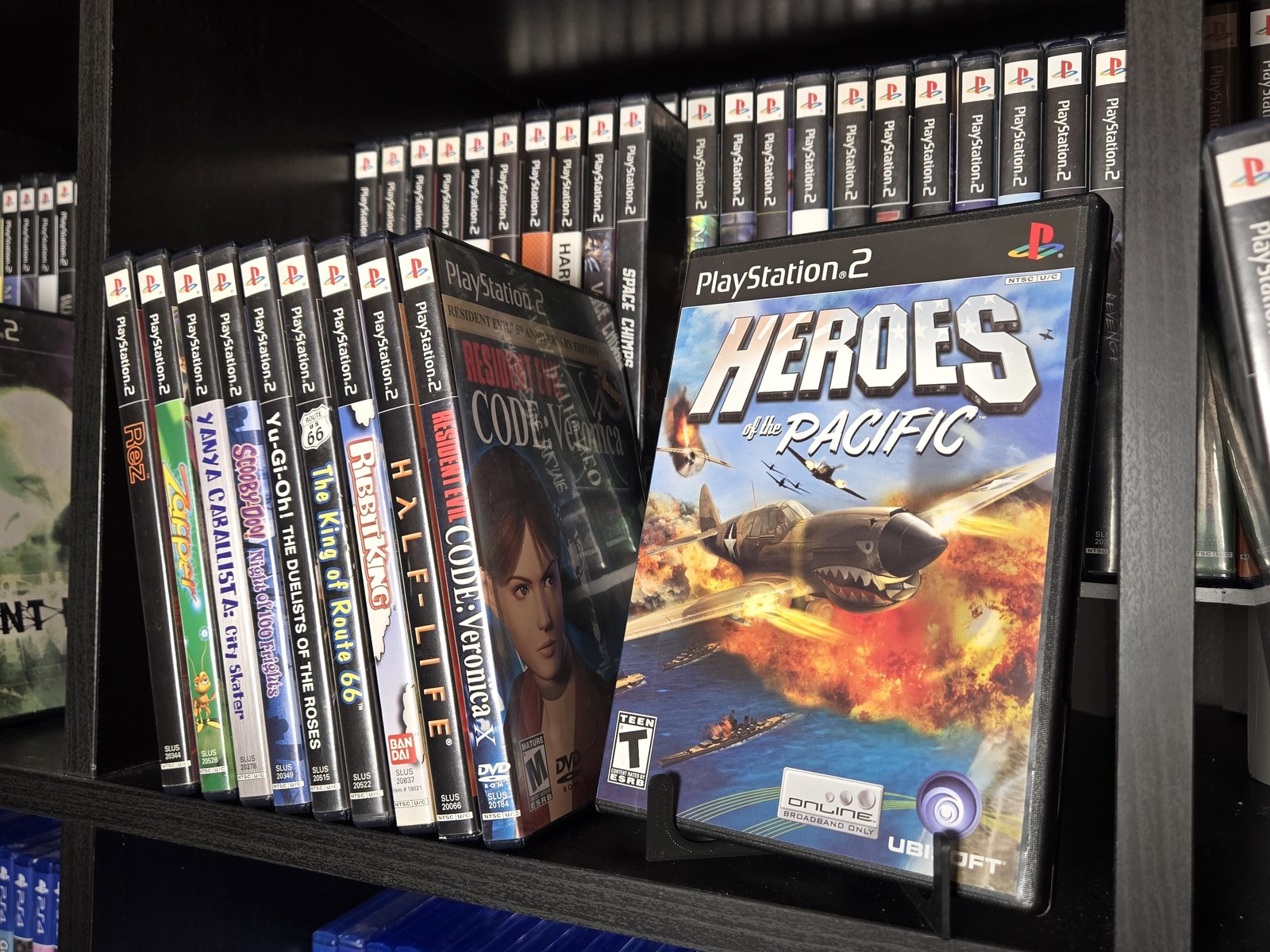
The North American release is the original black label, serial SLUS-20943. I couldn’t find a Greatest Hits version, so if you see a red-label copy listed, take a closer look. The front of the case also carries an “Online Broadband Only” badge, a fun little reminder of the PS2’s online days.
My copy: original black label, North American NTSC-U, complete with case, disc and manual. As I put it in the video: “Mine here is the original black label, of course, North American, not Greatest Hits. I despise that red.”
As a collector who really appreciates value, this is one of my favorite kinds of pickup. When I checked, a complete copy cost less than my coffee order. Prices move, so check current listings.
Would I recommend it? “Yeah. Yeah, I do. It’s arcade enough to just pick up and play.” Between the plane classes and the flight models, you get a few different ways to fight the same war, all for about the price of a sandwich. If you’ve ever bounced off flight games, this is the one to try.
Yes, especially if you want arcade air combat. It’s easy to pick up, the dogfights are busy and the 1940s presentation is great. Repetitive missions, long loads and some frame dips are the trade-offs.
Is Heroes of the Pacific an arcade game or a simulator?
Both. Arcade mode handles the rudder for you so you can just point and fly, while Professional mode gives you full stick-and-rudder control. Most players, me included, will have more fun on Arcade.
What comes with a complete copy of Heroes of the Pacific on PS2?
A complete-in-box copy is just the case, the disc and the manual. There are no extra inserts or pack-ins, which makes it an easy game to complete.
Is there a Greatest Hits version of Heroes of the Pacific?
I couldn’t find a Greatest Hits release for the North American PS2 version. The copy you’ll see is the original black label, serial SLUS-20943.
Is Heroes of the Pacific on Xbox?
Yes. It came out on Xbox and PC as well as PS2 in 2005. This review covers the PS2 version, which is the one in my collection.
Does Heroes of the Pacific have multiplayer?
Yes. You can play two-player split-screen locally. The PS2 version also supported 2-8 player online play with the network adapter, but those servers have been offline for years.
Short version: only a few early PS3 models are backwards compatible with PlayStation 2 (PS2) discs. If you’re hoping to pull a game off your PS2 shelf and pop it into whatever PS3 is under the TV, check one thing first: the model number on the back.
Here’s which PS3s are backwards compatible, how to tell in about ten seconds, and what to do if yours isn’t one of them.
This post contains eBay affiliate links. If you buy through them, I may earn a small commission at no extra cost to you.
Is the PS3 backwards compatible with PS2?
Only the earliest models: in North America, the CECHA01, CECHB01 and CECHE01. Sony’s launch PS3s had actual PS2 hardware inside, the same Emotion Engine processor and Graphics Synthesizer graphics chip from the PS2. Then, to bring the price down, Sony stripped it out in stages: first the processor, then the graphics chip. By late 2007, new PS3s couldn’t play PS2 discs at all.
PS1 is the easy part: every PS3 ever made plays PS1 discs.
Which PS3 is backwards compatible? (North America)
Model number
Storage
PS2 discs?
How
CECHA01
60GB
Yes
Full PS2 hardware inside
CECHB01
20GB
Yes
Full PS2 hardware inside (no Wi-Fi, no card reader)
CECHE01
80GB
Yes, mostly
PS2 graphics chip in hardware, processor emulated; a few more games have issues
CECHG01, CECHH01
40GB
No
PS2 hardware removed
CECHK01, CECHL01, CECHM01
80GB
No
PS2 hardware removed
CECHP01, CECHQ01
160GB
No
PS2 hardware removed
Slim (CECH-20xx to 30xx)
120-320GB
No
Super Slim (CECH-40xx to 43xx)
250-500GB, 12GB
No
Notice the 80GB trap: there are 80GB PS3s that play PS2 discs (CECHE01) and 80GB PS3s that don’t (CECHK01, CECHL01, CECHM01). Storage size alone tells you nothing. The model number tells you everything.
How to tell if your PS3 is backwards compatible
Check the sticker on the back. The model number starts with CECH. If the next letter is A, B or E (CECHA01, CECHB01, CECHE01), you’re in.
Count the USB ports on the front. The backwards compatible fat models have four. The later fat models that dropped PS2 support have two.
Look for the card reader flap. The 60GB and the CECHE 80GB have a small door on the front covering memory card slots. The 20GB doesn’t have one, but it still has four USB ports.
If you’re buying one used, ask the seller for a photo of the back sticker. “80GB, backwards compatible” in a listing title isn’t proof.
No. On every model after the CECHE, the PS2 chips are physically gone. Software updates can’t put hardware back.
What about PS2 Classics?
Starting in October 2011, Sony sold some PS2 games digitally on the PS3 store as “PS2 Classics.” That’s a download, not your disc, and it only covers the games Sony chose to release. If you’re here because you have a shelf of PS2 games, it doesn’t help you play them.
Should you buy a backwards compatible PS3 just for PS2 games?
Honestly? I wish I had a CECHA01. I’ve got three PS2s, and two of them have already needed new lasers. They’re old, real old. A launch PS3 is years younger than my PS2s, built with newer parts, so it would take a lot of the wear off my original consoles. If I could afford one, that’s exactly how I’d play my PS2 games. Of course, launch PS3s have their own reputation for dying (the infamous yellow light of death), so either way you’re babysitting old hardware.
If you’re starting a PS2 collection from scratch, my beginner’s guide covers 20 games worth owning on original hardware:
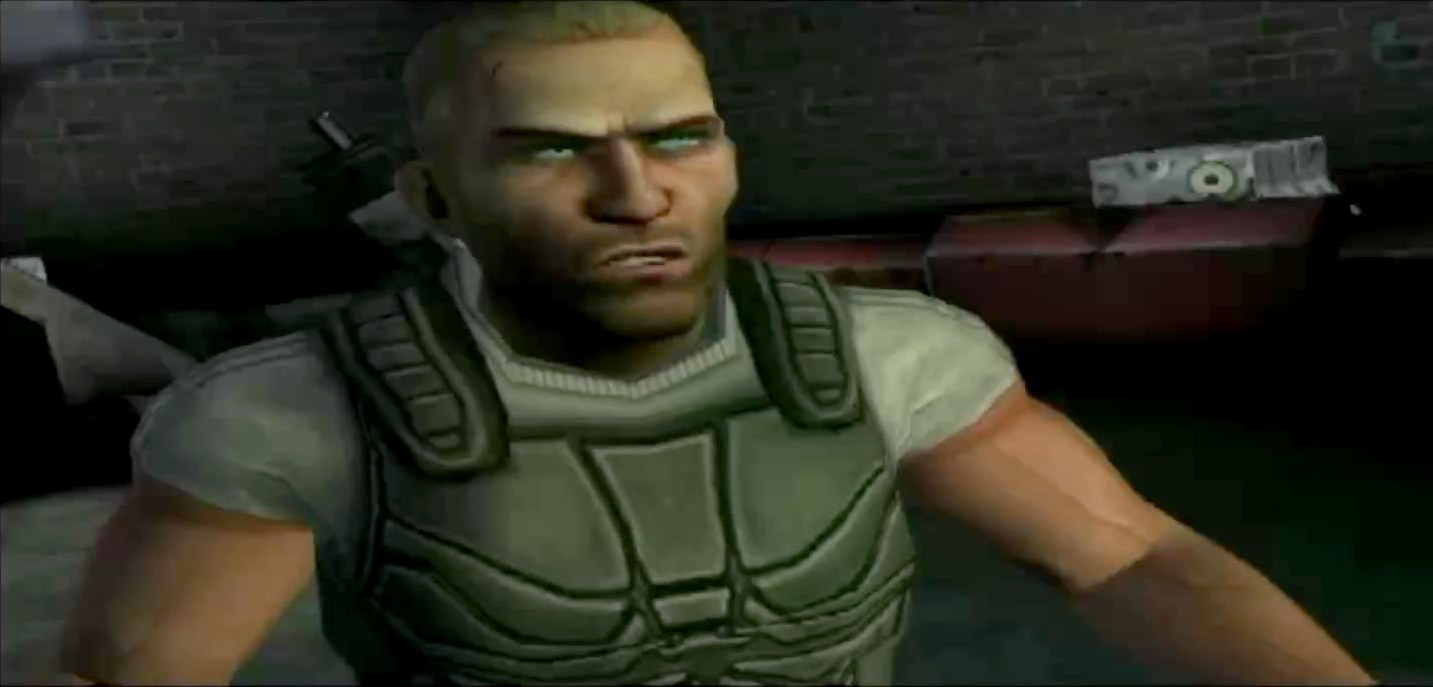
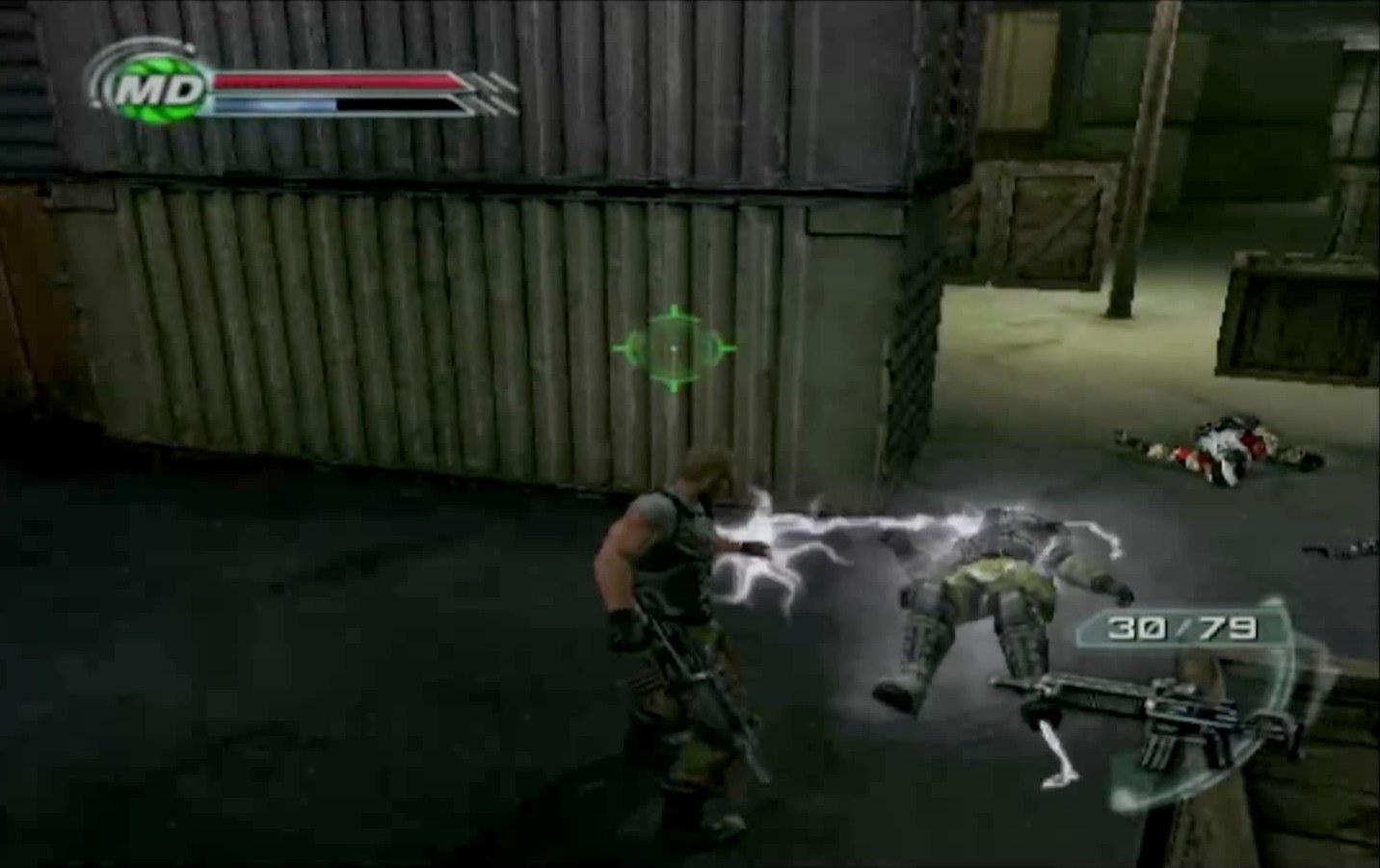
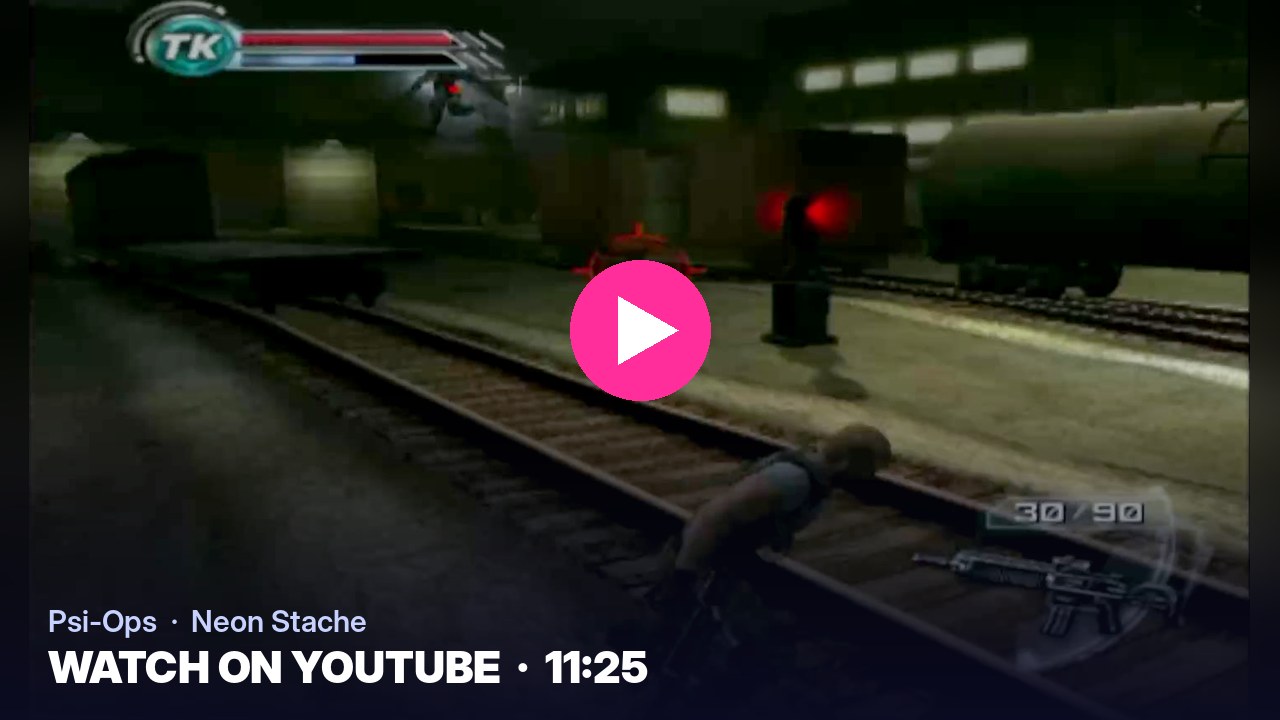
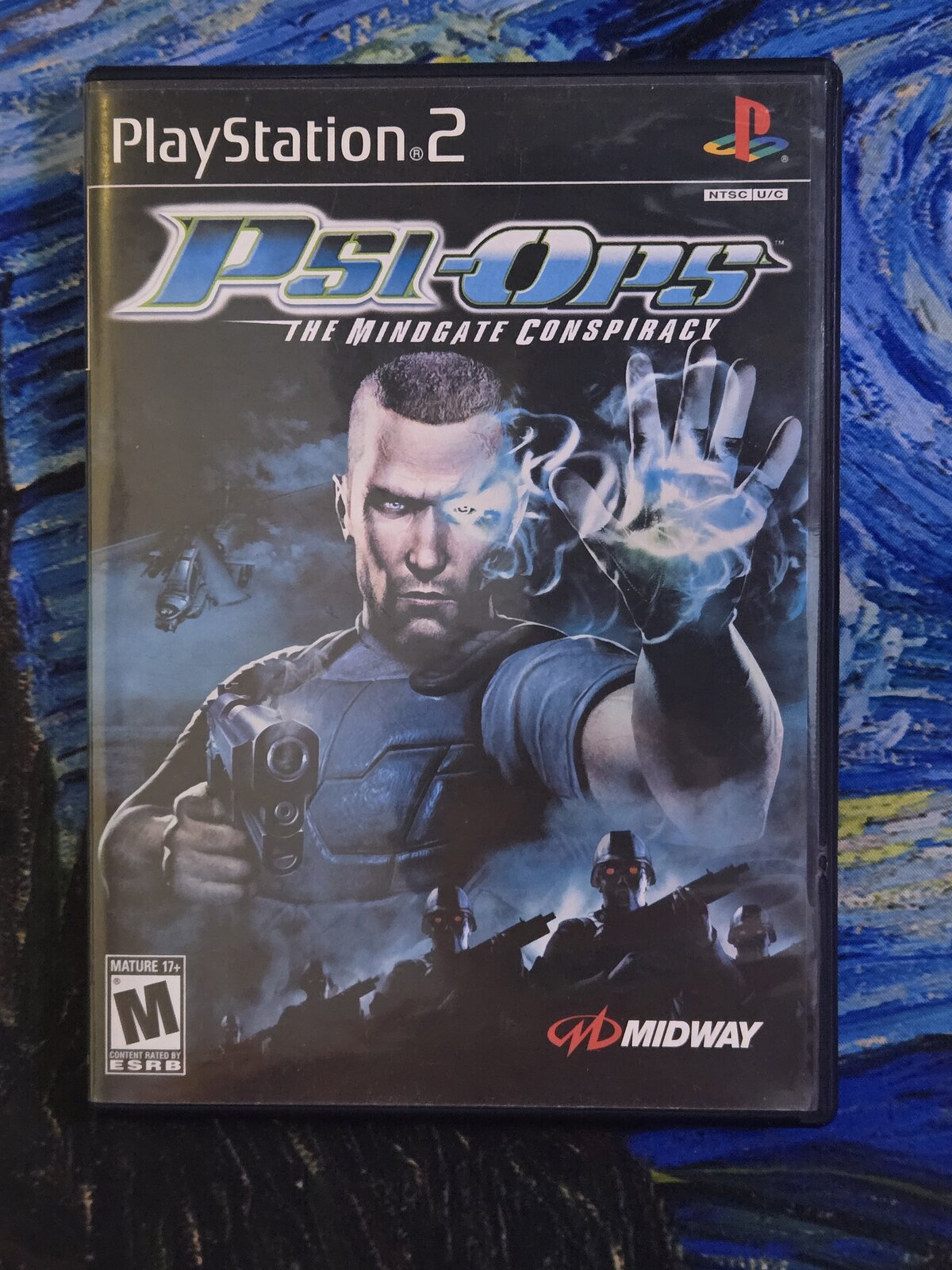
Have you ever been on the couch, really wanting a peanut butter and jelly sandwich, and just not felt like getting up? Same. Every time it happens, I think the exact same thing: man, telekinesis would be really useful right now. I don’t have telekinesis. Nick Scryer does. In Psi-Ops: The Mindgate Conspiracy, instead of making sandwiches, he uses it to pick people up, slam them into walls, throw them off ledges and launch crates across rooms. It’s a PlayStation 2 (PS2) game from 2004, and it’s freaking awesome.
Psi-Ops is one of those PS2 games that never comes up when people list the greats, and that’s exactly why I wanted to cover it. It hands you a stack of psychic powers and a real physics engine, then trusts you to figure out the rest. More than 20 years later, I’m still finding new dumb things to try.
This post contains affiliate links. If you buy through them, I may earn a small commission at no extra cost to you.
Psi-Ops: The Mindgate Conspiracy is a third-person action game developed and published by Midway, released in North America on June 14, 2004 for PS2 and Xbox. You play Nick Scryer, a psychic soldier who builds up six powers, from telekinesis to pyrokinesis, all running on Havok physics.
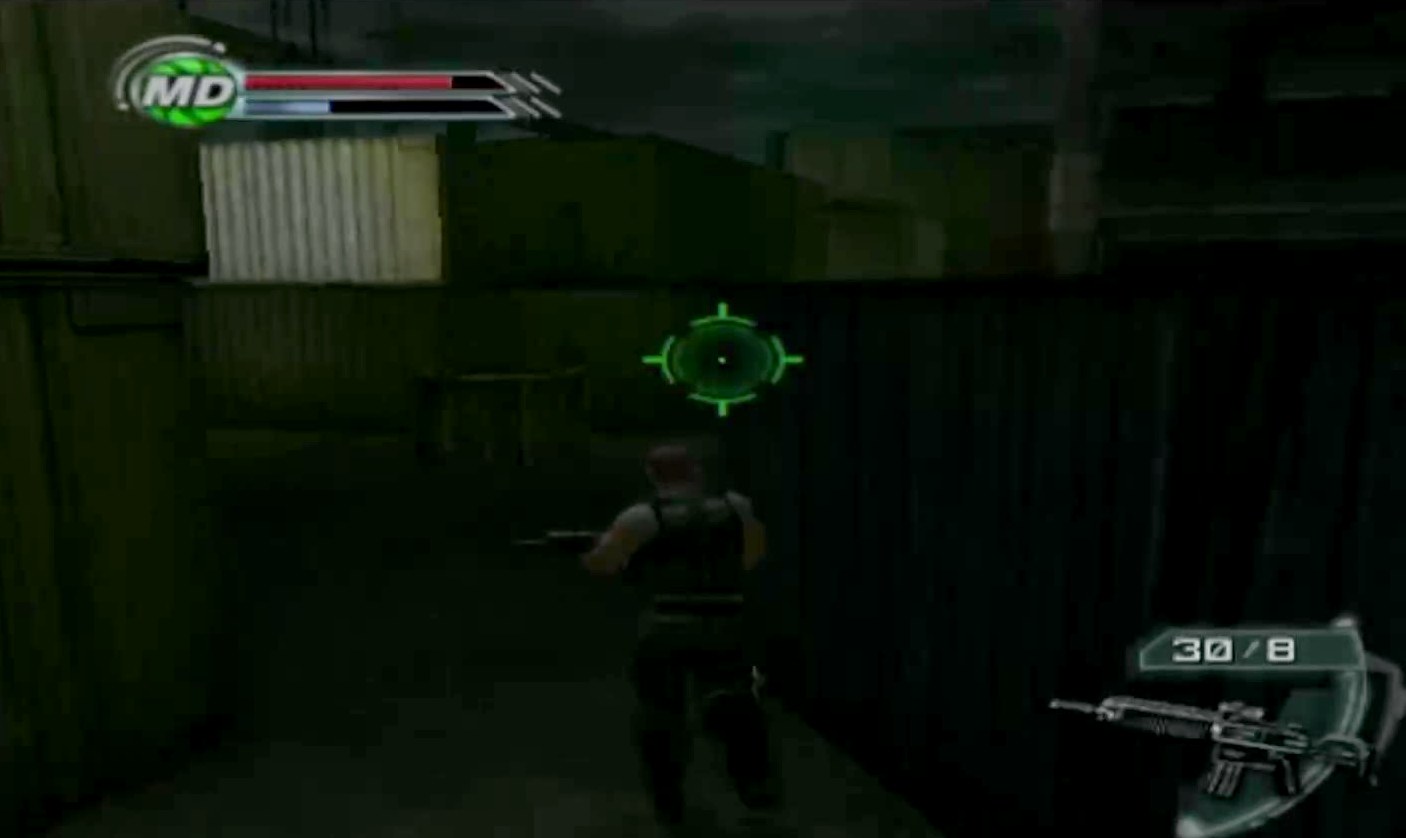
At first glance, it looks like every other action game from that era. You’ve got guns, military bases, a terrorist organization, stealth, cover, and a hero who looks like he probably hasn’t smiled since 1997. Pretty standard stuff. Then the game gives you telekinesis, and suddenly you don’t care about your gun anymore.
The setup: Nick is a Mindgate agent sent undercover into The Movement, a group of former Mindgate psychics led by a man called The General. To get him past their psychic screening, his memory was wiped and his abilities were suppressed. As his memories come back, so do his powers, which is a slick excuse for the game to hand them to you one at a time.
Fun one: early in development, Nick wasn’t Nick Scryer. He was Nick Geller, a nod to the famous spoon-bender Uri Geller.
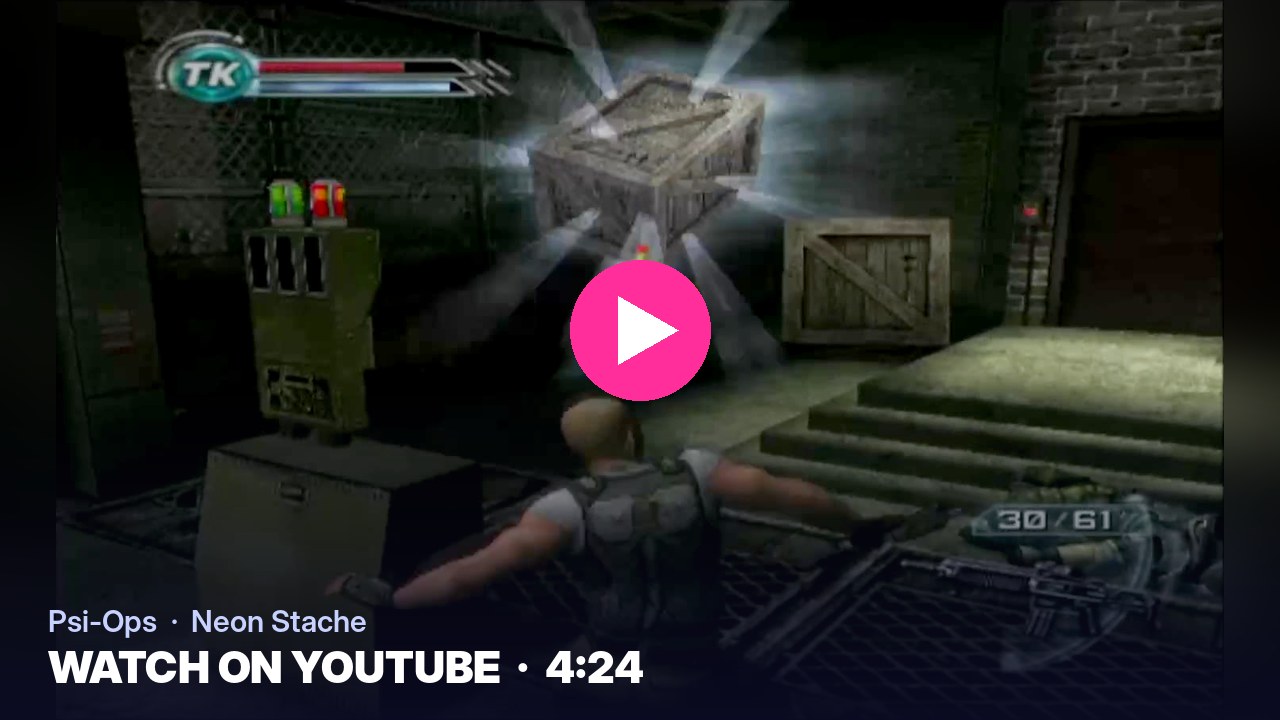
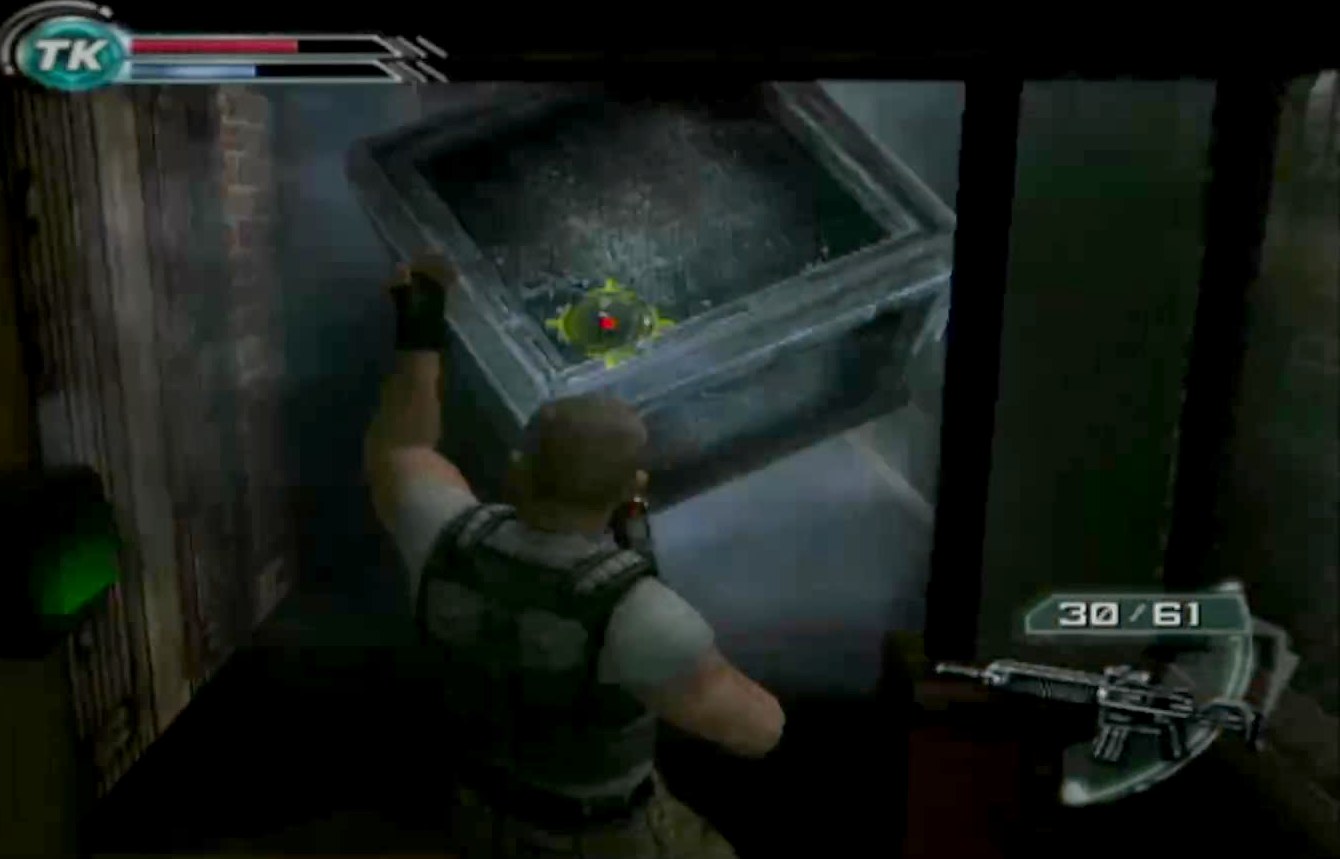
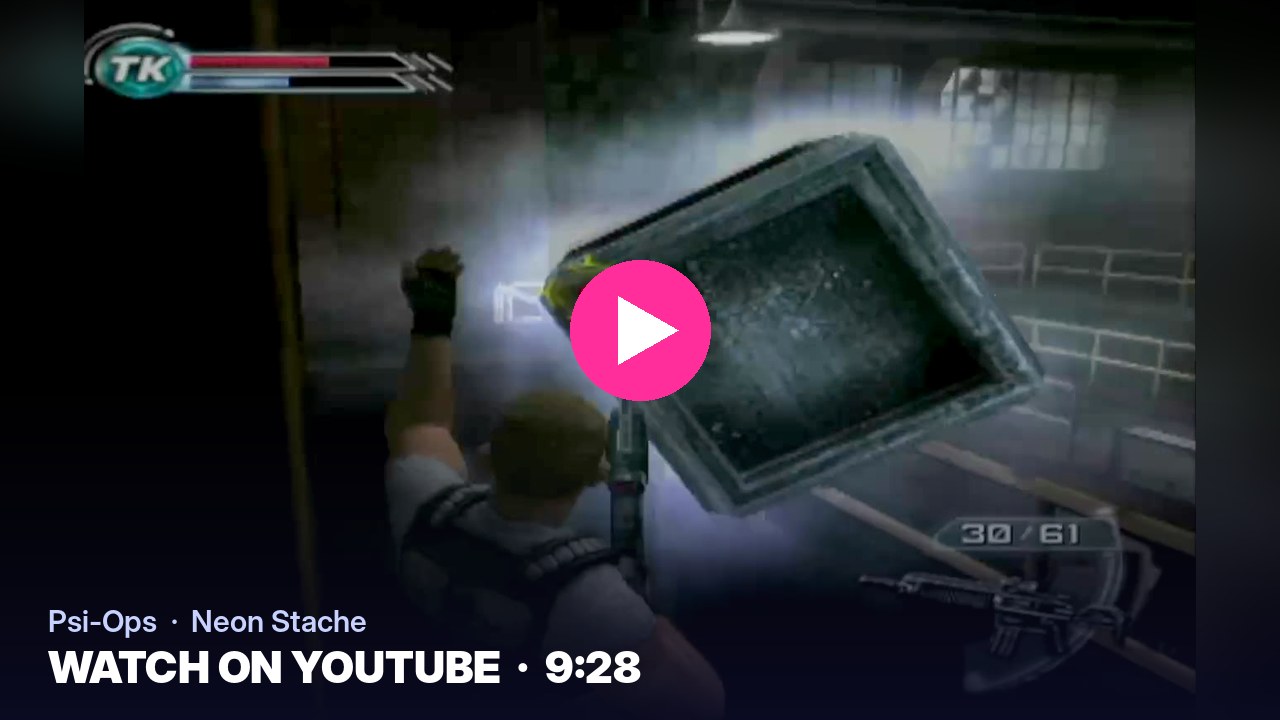
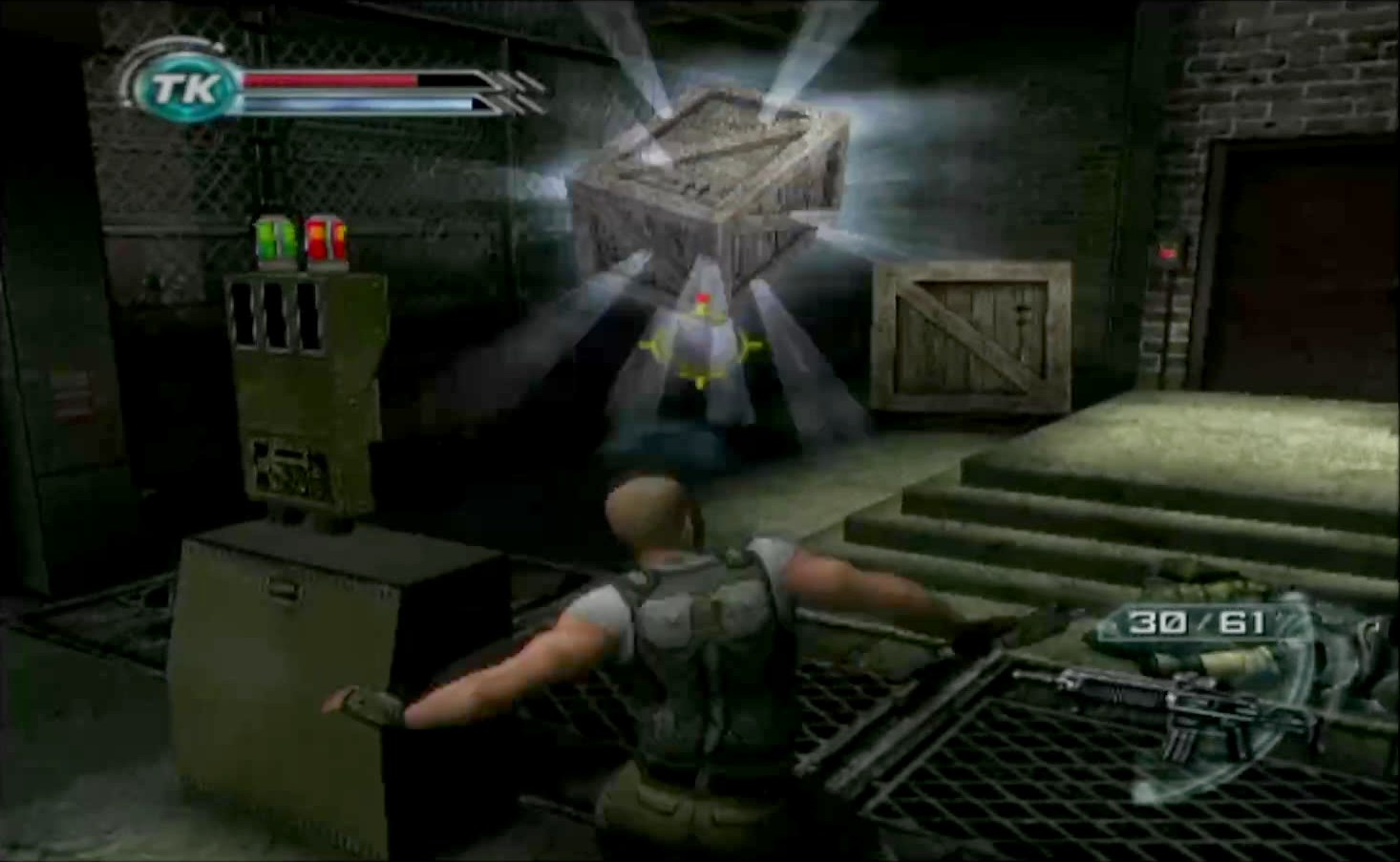
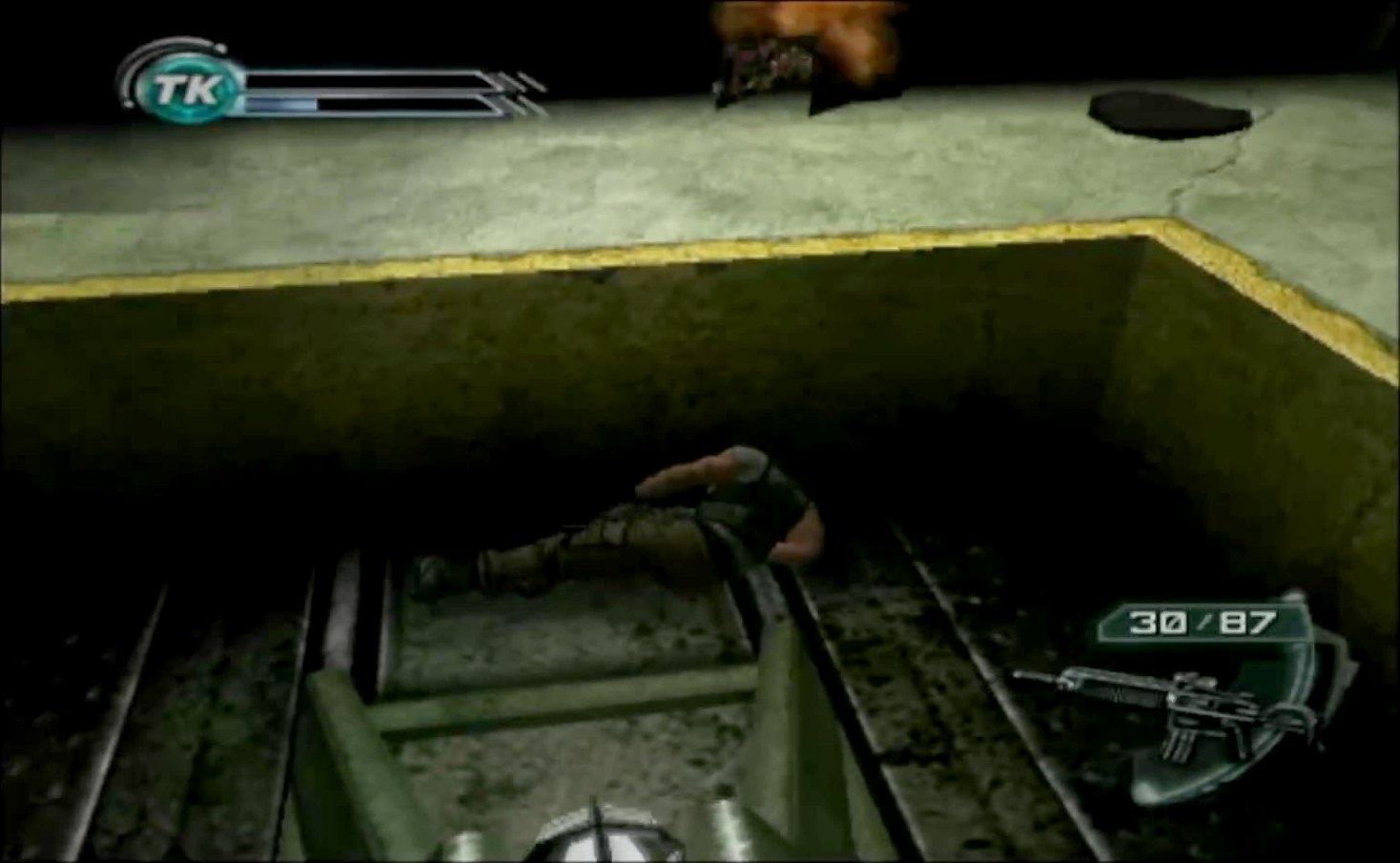
See that crate? Pick it up with your mind and throw it at somebody. See that guy? Pick him up with your mind and throw him at somebody. Or into a wall. Or off a ledge. Or into something that’s probably, most likely, explosive.
The game doesn’t tell you exactly how to use any of this. It gives you the powers, a legit physics engine and a room full of enemies, then basically says: you figure it out. There’s something incredibly satisfying about lifting an enemy completely off the ground and watching him flail around while you decide what to do with him.
And it’s not a canned animation. The physics react to what’s happening around you. Bodies hit walls. Objects collide with enemies. Enemies collide with other enemies. Stuff falls over, things go flying, and that unpredictability is a big part of why the game is still fun.
Midway built Psi-Ops around that idea. The game runs on Havok physics, and the team wanted the powers and the physics to work together as real gameplay. During development they built a simple sandbox room full of enemies and objects just to experiment with the powers, and it was fun enough that they kept it as bonus content. Makes complete sense to me. Give me an empty room, three guards, a few crates and telekinesis, and I’ll entertain myself way longer than any responsible adult should.
More than throwing people
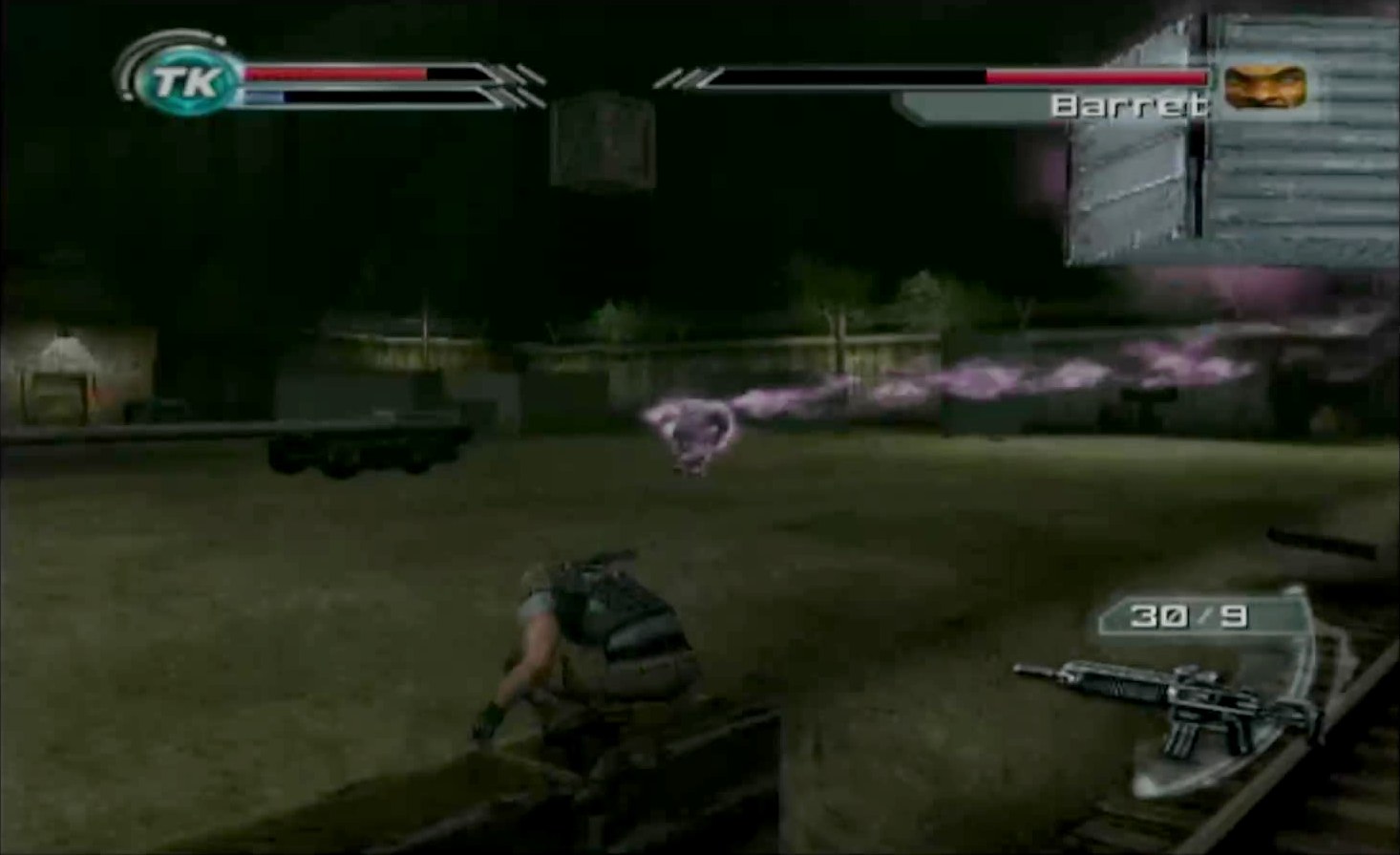
Telekinesis isn’t only for throwing people, either. You can move objects to solve puzzles, use the environment as a weapon, and pull health kits or ammo down from up high. You can even use telekinesis on an object while you’re standing on it, which means with a little creativity, Nick can move himself around. That’s the magic of Psi-Ops: you keep asking “can I do this?” and surprisingly often, the answer is yes.
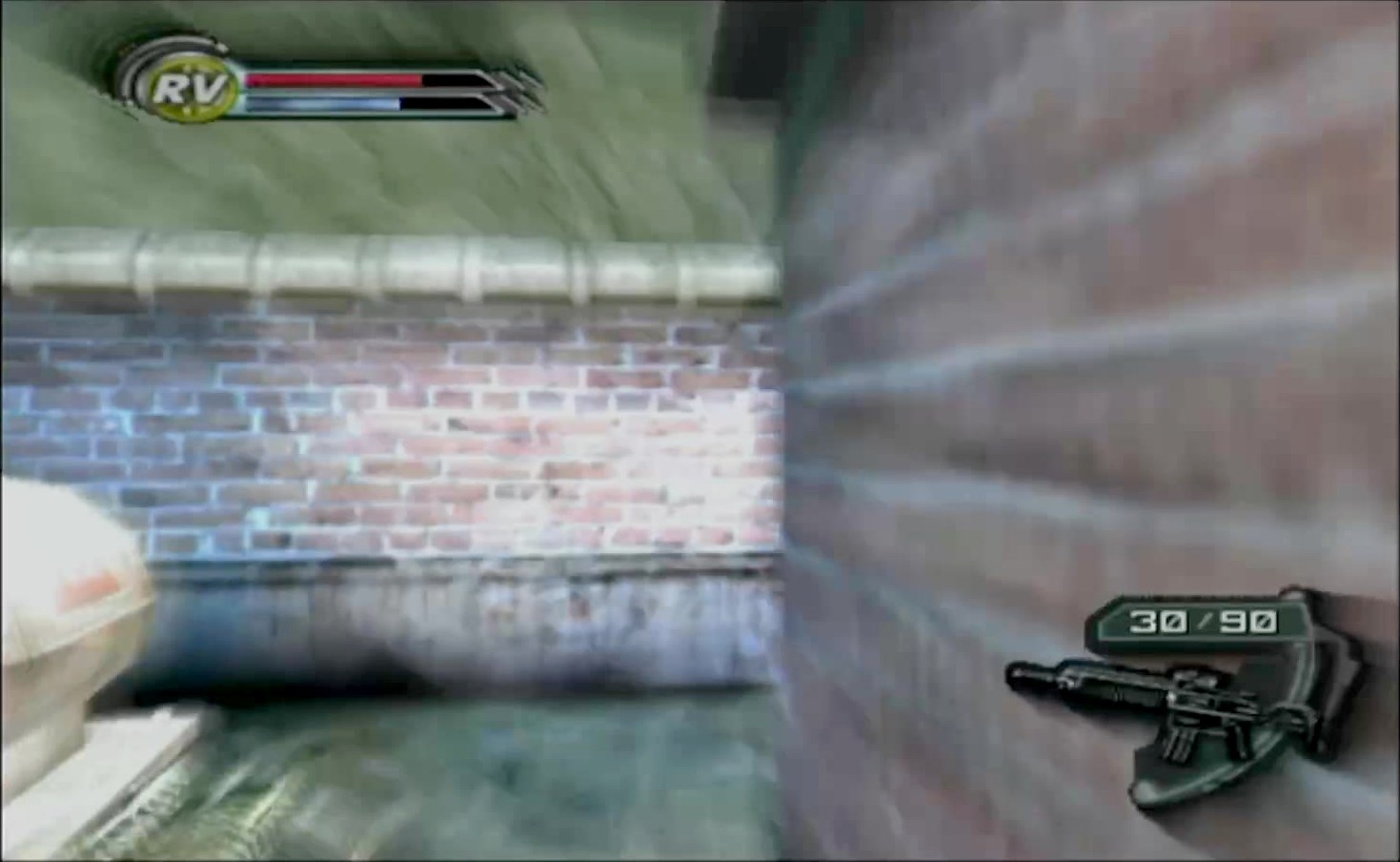
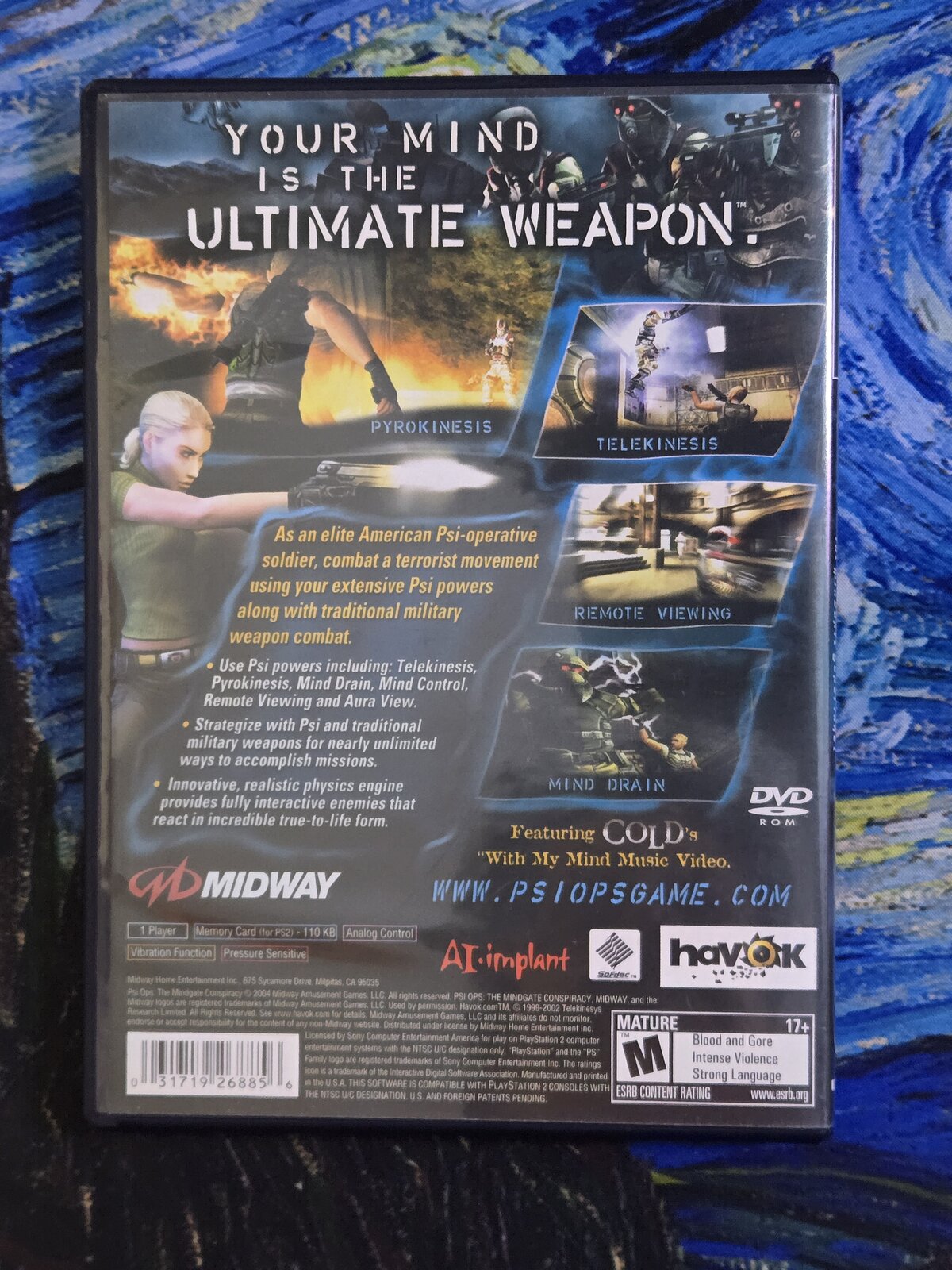
Remote Viewing lets Nick leave his body and scout ahead without walking into the room himself. You can look through rooms, find enemies, figure out what’s waiting for you, and sometimes pick up information you couldn’t reach on foot.
Mind Drain is a little less socially acceptable. You drain psi energy directly from an enemy to refill your own. And if you use it on a living enemy, let’s just say the procedure doesn’t end well for the patient. Yeah. Their head explodes.
Mind Control is another one of my favorites. You take over an enemy, walk around as him, use his weapons, attack his own buddies, and use him to get into spots Nick couldn’t safely reach. Think about how ridiculous that is for a game from 2004. You aren’t just stunning an enemy. You’re temporarily becoming him, and he turns into another tool in your toolbox.
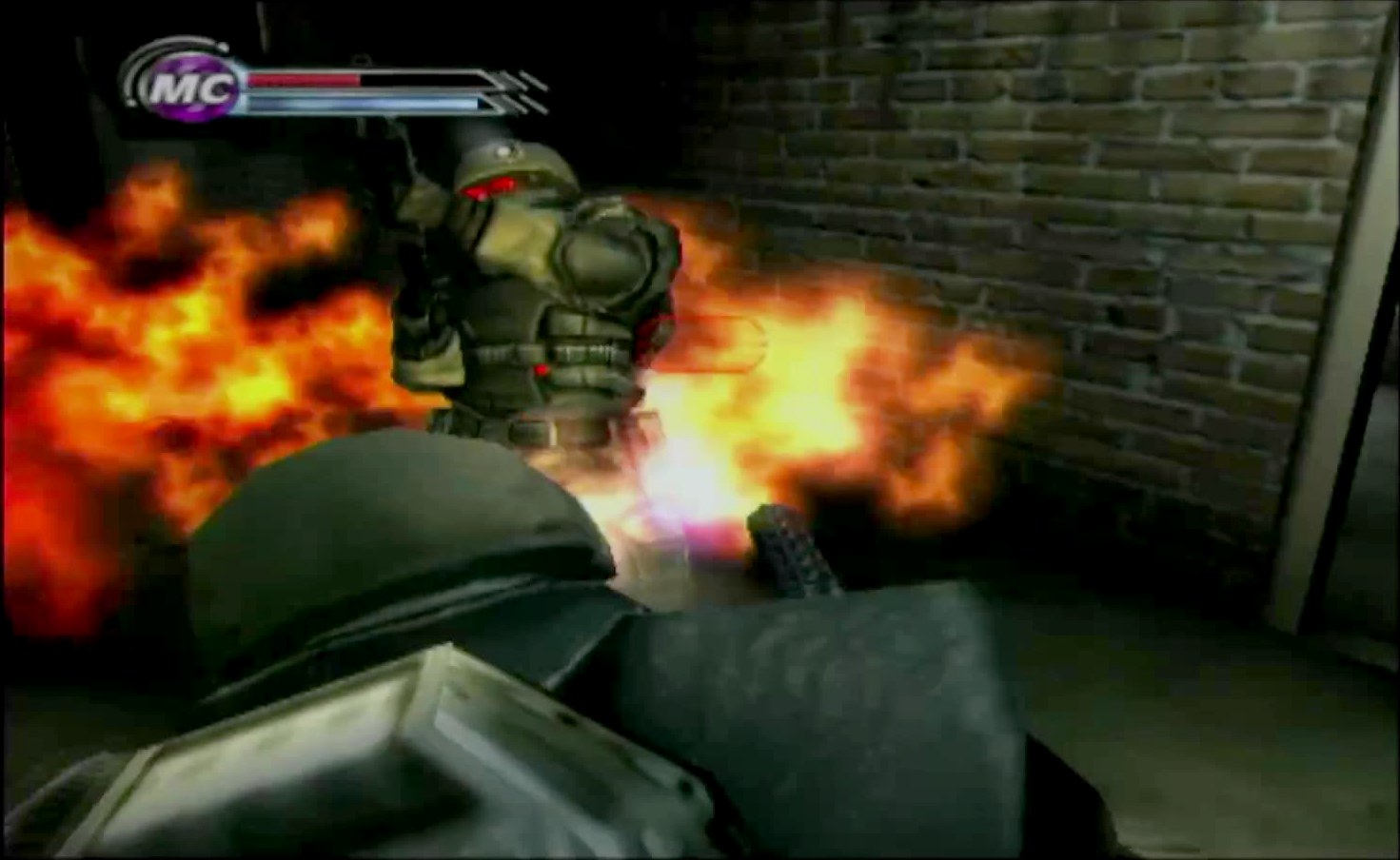
Pyrokinesis is fire with your mind. You can ignite enemies and set objects on fire, and better yet, combine it with telekinesis: light something on fire, pick it up and throw it at somebody. That’s where Psi-Ops stops feeling like a third-person shooter and starts feeling like a psychic playground. The powers don’t live on their own. You start combining them, and that’s when the combat really opens up.
Aura View lets Nick see things that normally aren’t visible, including hidden objects and certain supernatural stuff. It’s probably not the power you’ll spend hours screwing around with, but it rounds out the toolkit and gives the game another way to build puzzles and encounters around Nick’s abilities.
Psi-Ops wasn’t always called Psi-Ops. Its earliest promotion used the name ESPionage. ESP plus espionage. Psychic spying. Get it? I actually kind of love it. That’s peak early-2000s video game naming right there.
Producer Brian Eddy told GameSpot the old name made people think it was just another military game, so Midway went with Psi-Ops: The Mindgate Conspiracy instead. Which sounds approximately 12 times more dramatic, and I’m completely fine with that.
This could have been a shooter with psychic powers slapped on top. Press button, watch psychic animation, keep shooting. That’s not what Midway made. The physics are part of the gameplay. The environment is part of your weapon set. Enemies are part of your weapon set. The powers interact with the world, so two encounters don’t have to play out the same way.
It gives you all the toys, then trusts you to play with them. It gives you systems instead of scripting every cool moment for you. And for real, I miss that kind of experimentation in games.
Psi-Ops isn’t perfect. The shooting isn’t the reason I’d recommend it. Some of the environments have that gray, industrial, early-2000s action-game look, which I actually love. And the story probably isn’t what you’ll remember 20 years later. I know I don’t.
What you’ll remember are the powers. The first time you realize you can pick up an enemy. Throwing that enemy into another enemy. Setting something on fire and launching it across the room. Experimenting. That’s why Psi-Ops still works for me today.
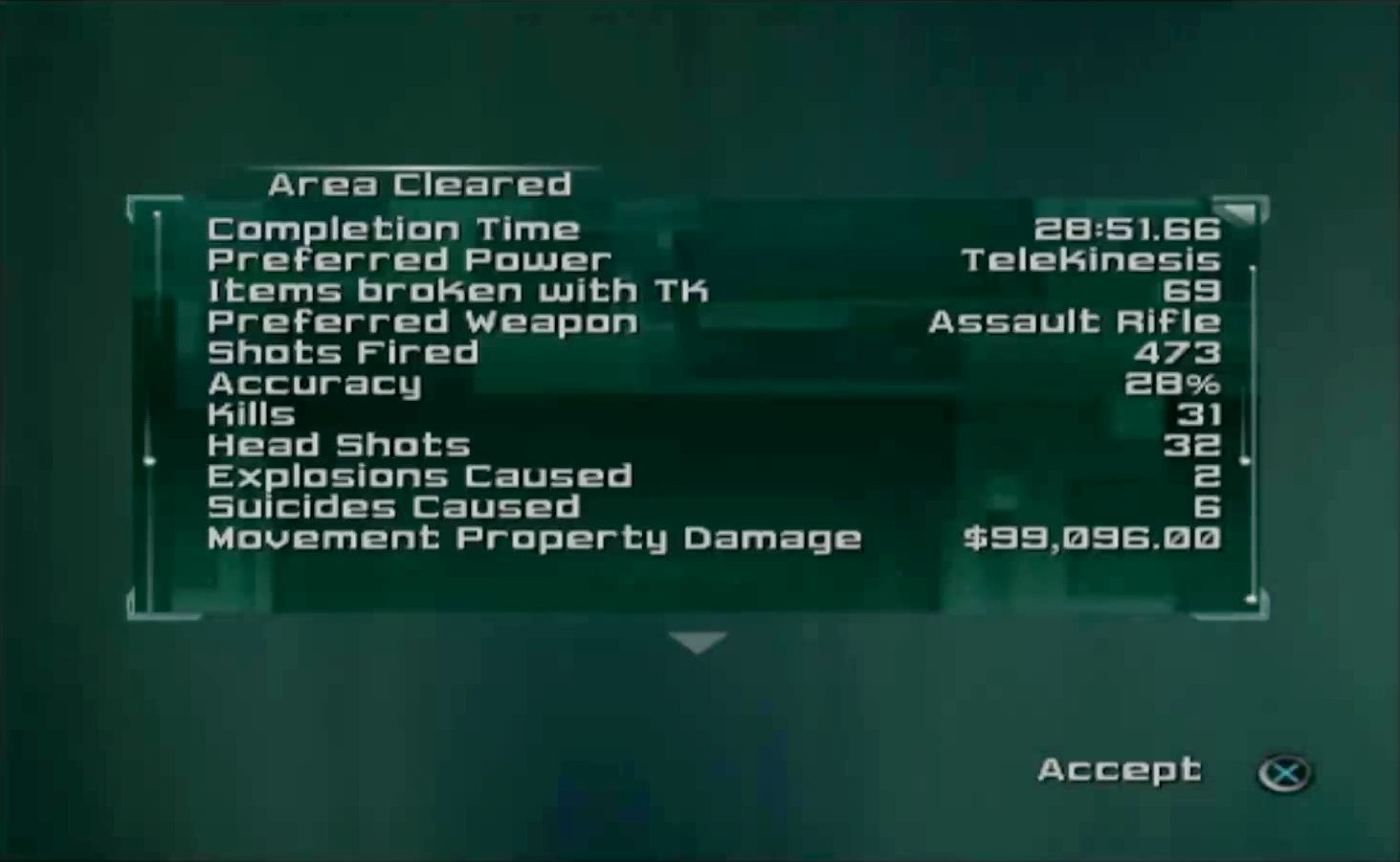
The game seems to know it, too. The stats screen after an area tracks your “Preferred Power” and your “Movement Property Damage.” On one of mine, that read Telekinesis and $99,896.00. Seems about right.
Here’s something else I love about playing Psi-Ops today. I can pull the original PS2 case off my shelf, open it, take out the disc, put it into original hardware and play it more than 20 years later. Nobody has to authenticate my license. Nobody has to keep a server running. Nobody can remove it from my account. I own it. That’s preservation, and that’s why physical media matters to me.
Psi-Ops is also one of my favorite things about collecting for the PS2. Everybody knows Grand Theft Auto, Metal Gear Solid, God of War, Final Fantasy and Kingdom Hearts. But underneath those massive games, the PS2 library is loaded with stuff like this. You pick up the case, maybe you’ve never even heard of it, you put the disc in, and a few hours later you’re wondering how in the world you missed it. Hunting for more PS2 hidden gems? Try my Eternal Poison review, Scaler, the blue lizard PS2 platformer, or the PS2 Beginner’s Guide.
Release notes for collectors: the North American (NTSC) PS2 version came out on June 14, 2004, the same day as the Xbox version. The European PS2 release followed on October 1, 2004, a Windows port came out in Europe in February 2005, and Capcom published it in Japan on November 10, 2005.
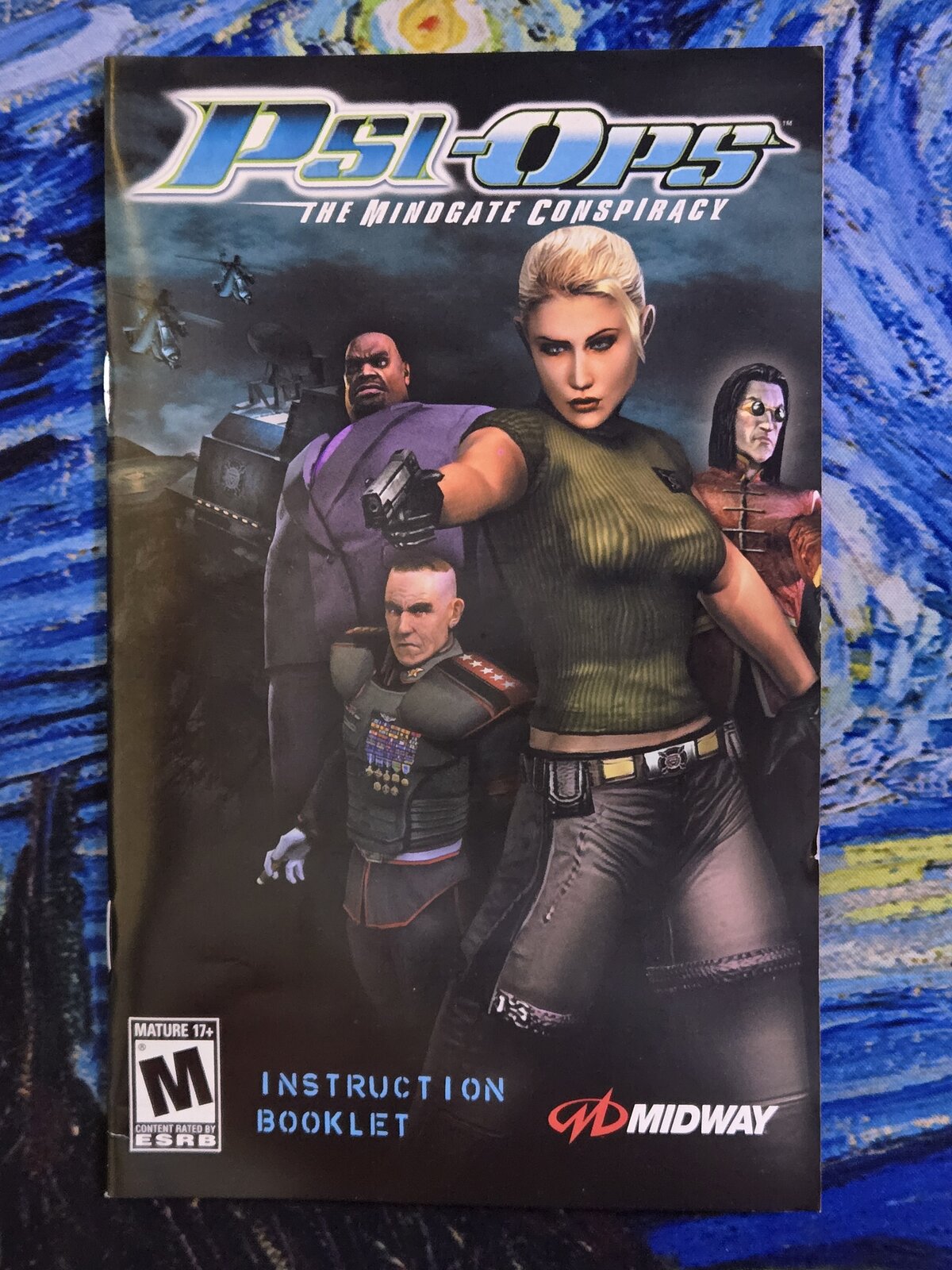
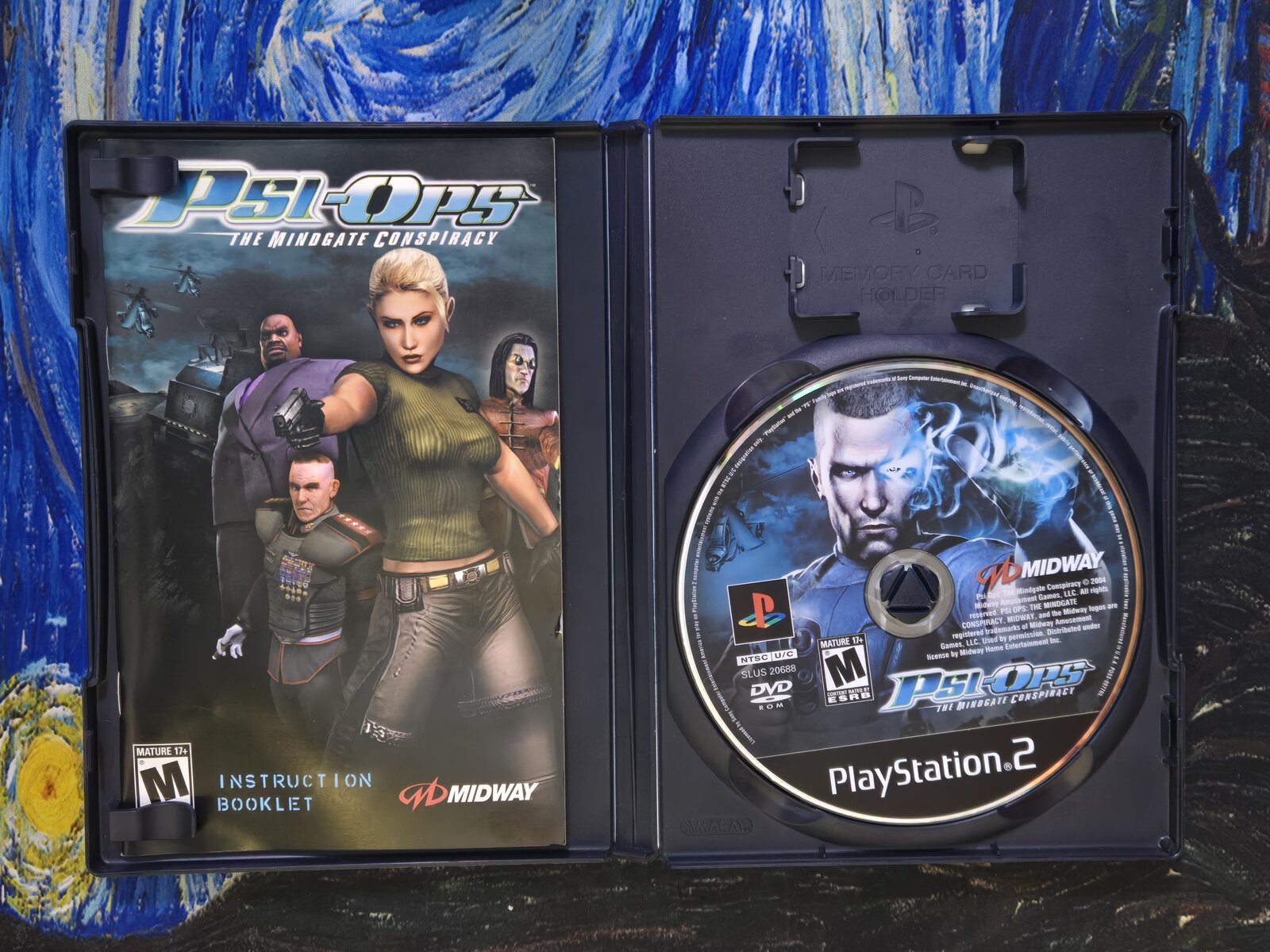
My copy: Psi-Ops: The Mindgate Conspiracy, PS2, North American (NTSC), complete in box with the case, disc and manual.
Is Psi-Ops: The Mindgate Conspiracy worth playing today?
Yes, if you want powers you can actually play with. The shooting is just okay and the story won’t stick with you, but telekinesis, Mind Control and Pyrokinesis on top of Havok physics still feel unique more than 20 years later.
When did Psi-Ops come out?
Psi-Ops: The Mindgate Conspiracy came out in North America on June 14, 2004 for PS2 and Xbox. Europe got the PS2 version on October 1, 2004, and a Windows port on February 11, 2005.
Is there a Psi-Ops 2?
No. The ending sets up a sequel, and Midway considered one, but it was shelved because the first game didn’t sell well.
Who is Nick Scryer?
Nick Scryer is the hero of Psi-Ops: a Mindgate psychic agent sent undercover into The Movement with his memory wiped and his powers suppressed. As his memories return, so do his abilities.
What powers do you get in Psi-Ops?
Six: Telekinesis, Remote Viewing, Mind Drain, Mind Control, Pyrokinesis and Aura View. Telekinesis is the star, and the game lets you combine powers, like setting an object on fire and throwing it.
Is Psi-Ops on PC or Xbox?
Yes. It came out on Xbox the same day as the PS2 version in North America, and a Windows port followed in Europe in 2005.
The verdict
Telekinesis alone makes Psi-Ops worth experiencing. Combine it with Mind Control, Pyrokinesis, Remote Viewing, Mind Drain, Aura View and a physics system that keeps letting you experiment, and you get something that still feels super unique today.
That’s probably the biggest compliment I can give it. The game came out in 2004, and more than 20 years later I’m still thinking of stupid new things I want to try with telekinesis.
Which psychic power would you actually use in real life? Tell me in the comments.
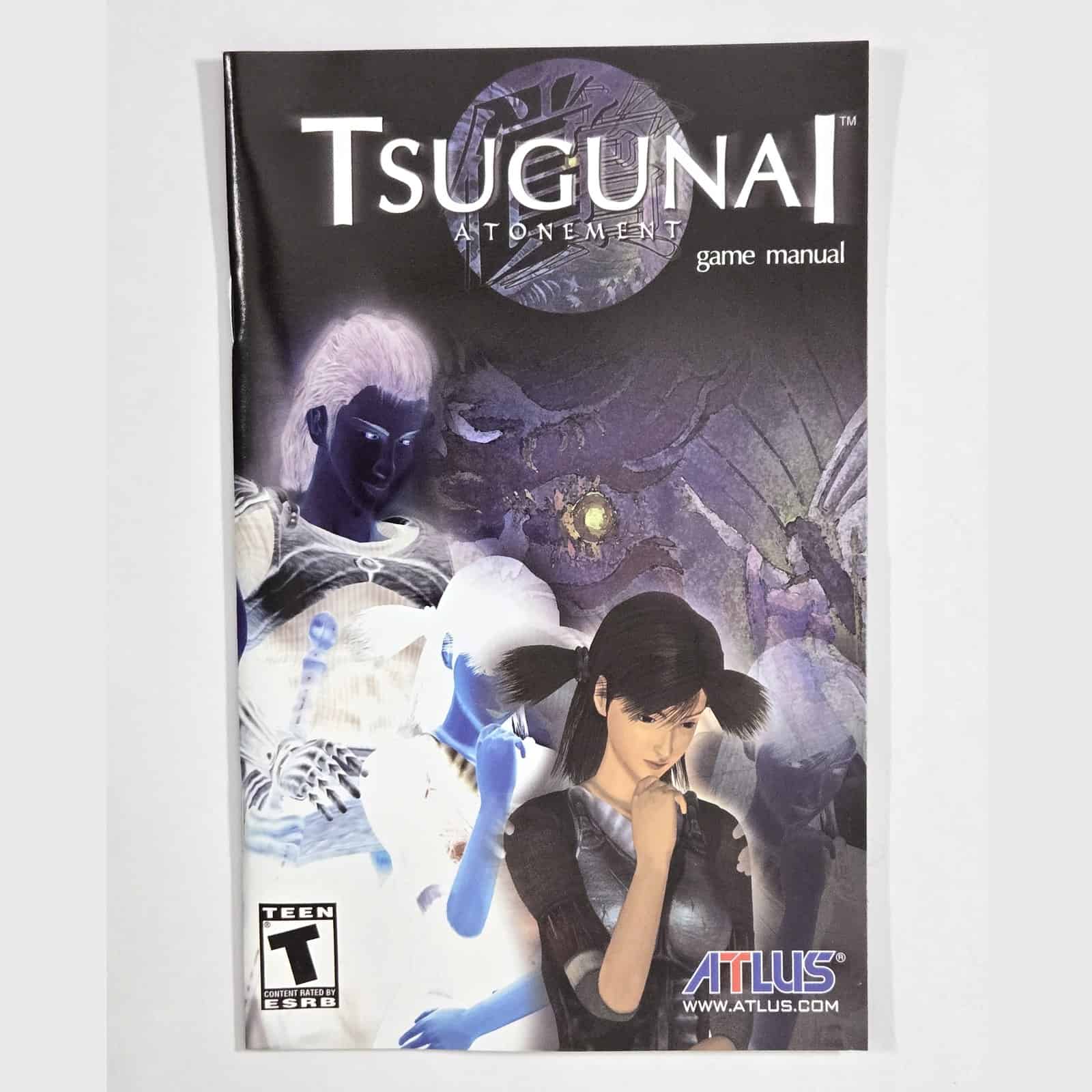
Most RPGs start with a hero destined to save the world. Tsugunai: Atonement does the exact opposite. It starts with a man committing a terrible crime, and then makes you spend the whole game paying for it.
Tsugunai: Atonement on PlayStation 2 (PS2) has one of the most unusual mechanics I’ve seen in a PS2 RPG. Instead of leveling up one hero, you spend the game possessing other people and fixing their lives.
This post contains affiliate links. If you buy through them I may earn a small commission, at no extra cost to you. It helps keep the channel going.
Tsugunai was developed by Cattle Call and first came out in Japan on February 22, 2001, published by Sony. Atlus brought it to North America in November 2001.
Fun fact: tsugunai is Japanese for atonement. So the full title basically translates to “Atonement: Atonement.” We’re off to a great start. A game so nice they named it twice.
It’s also another one of those obscure Atlus-published RPGs, like Eternal Poison. During the PS2 era, Atlus became known for bringing unique Japanese RPGs to the West, and Tsugunai fits right into that category.
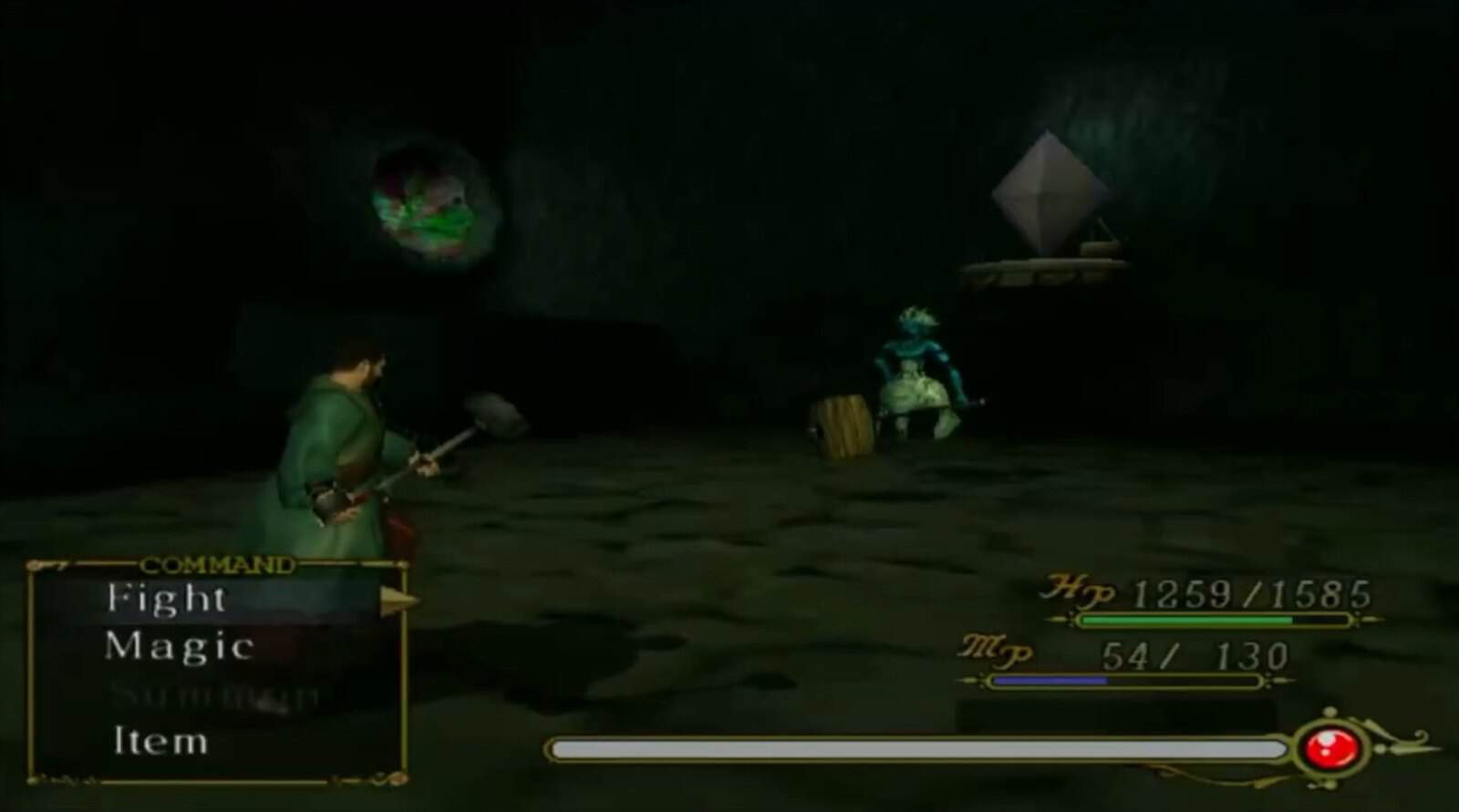
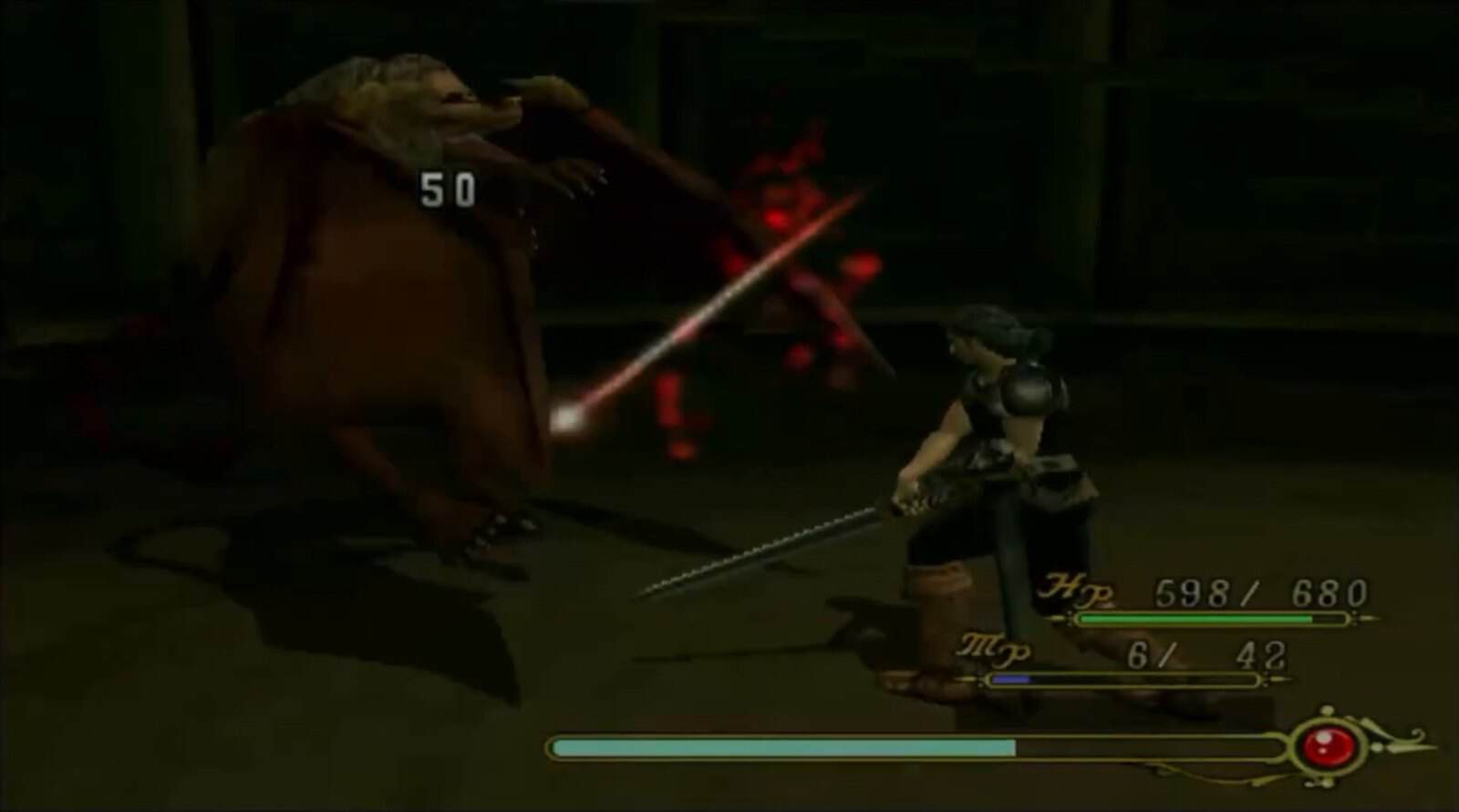
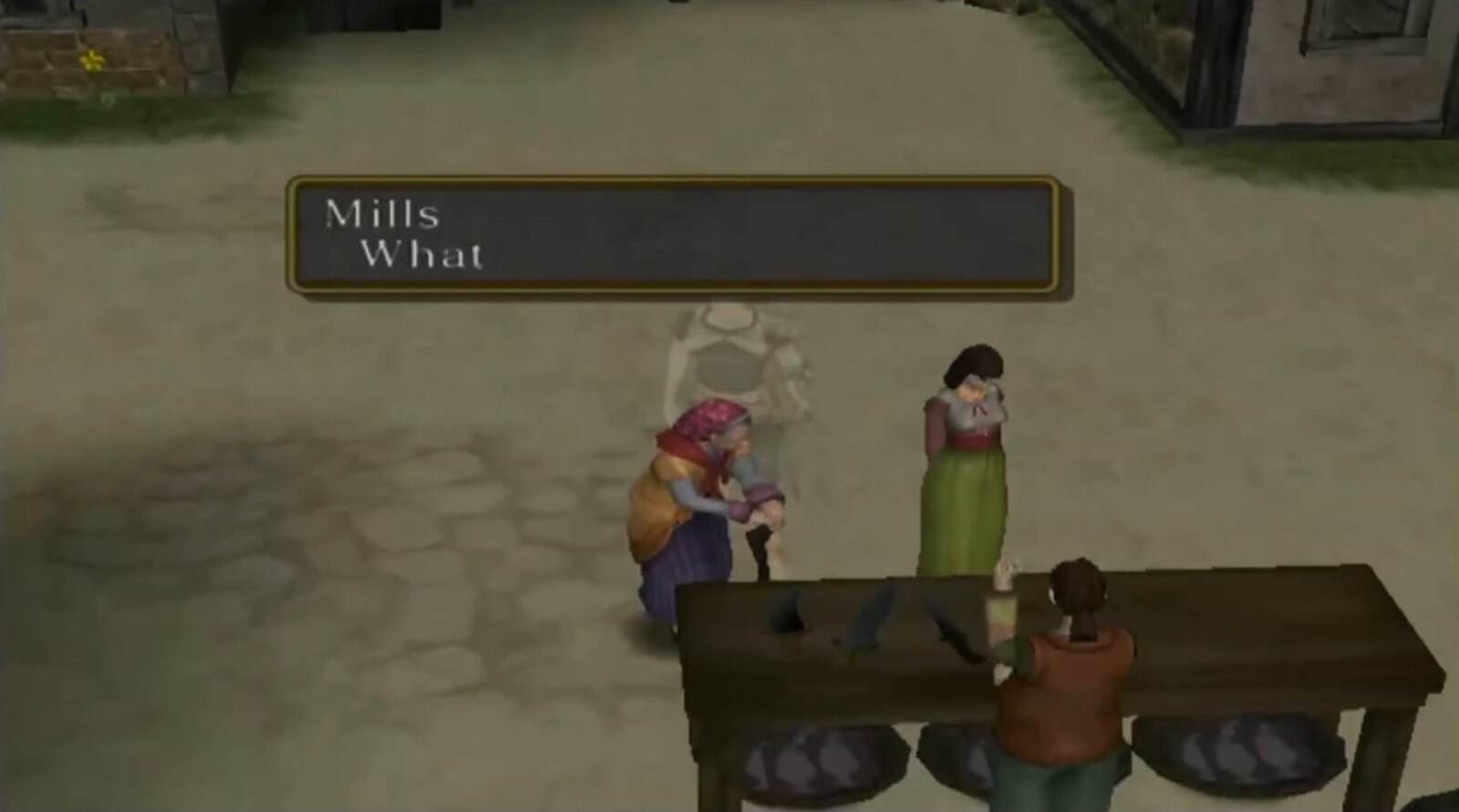
You play as Reise, a mercenary who steals a sacred Treasure Orb. An unknown voice warns him not to, and he grabs it anyway. Right away you know it’s a bad idea, especially when what looks a lot like Diablo swoops down from the sky as your first boss. He can be tough if you’re not prepared.
Yep. That’s the first boss.
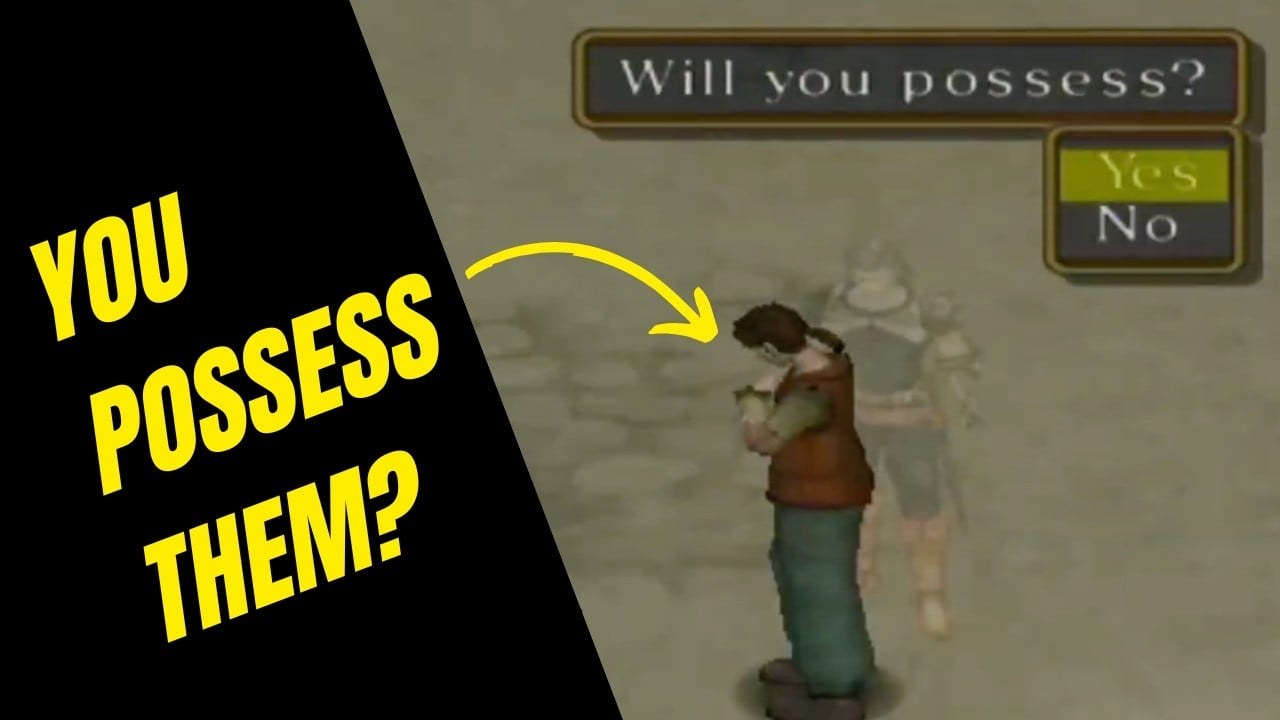
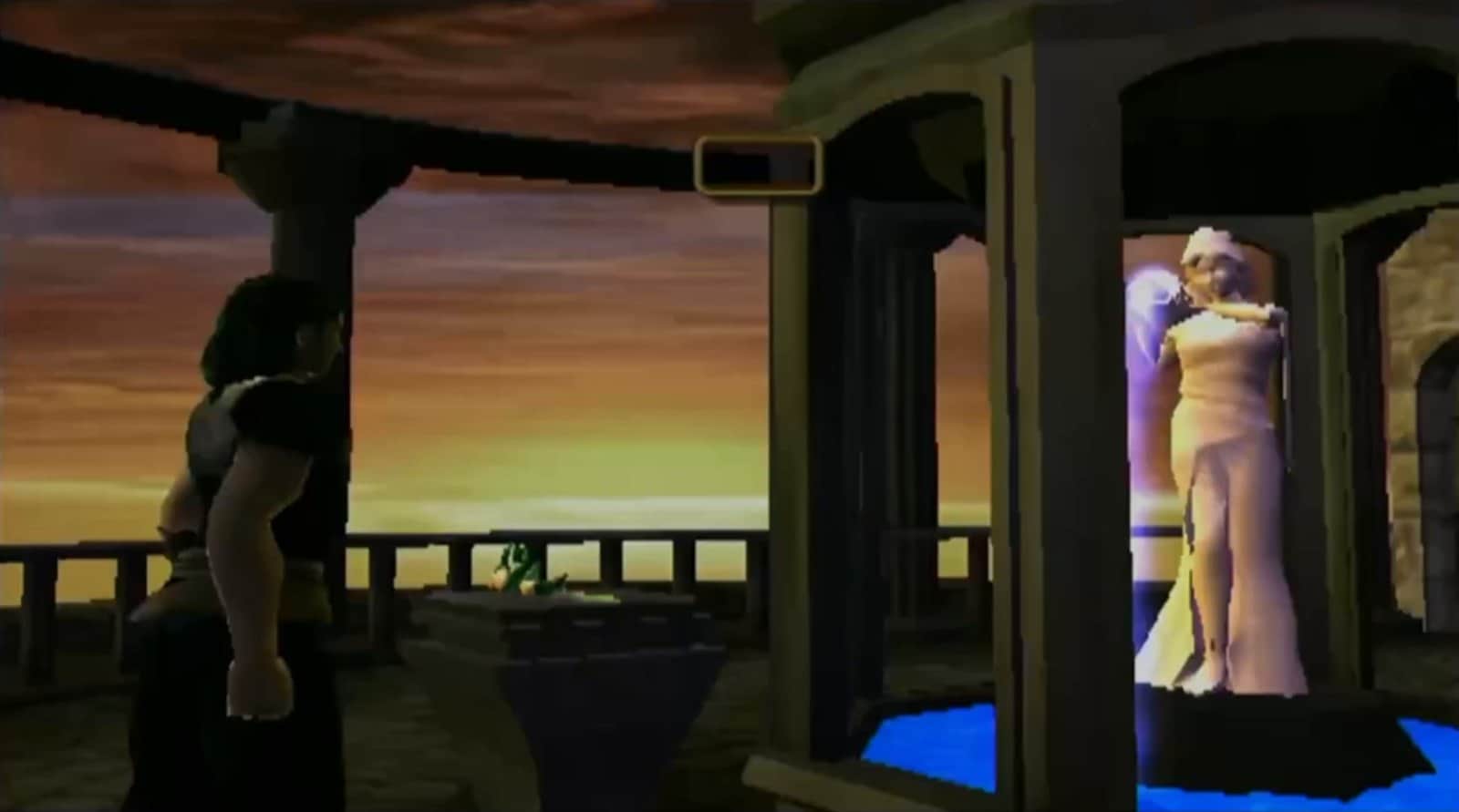
As punishment, the Goddess of Light separates Reise’s soul from his body. He doesn’t die. He’s trapped in a spirit state, and the only way back into his body is to atone for what he did by helping the people of Walondia.
Reise’s body stays behind while his soul goes to work.
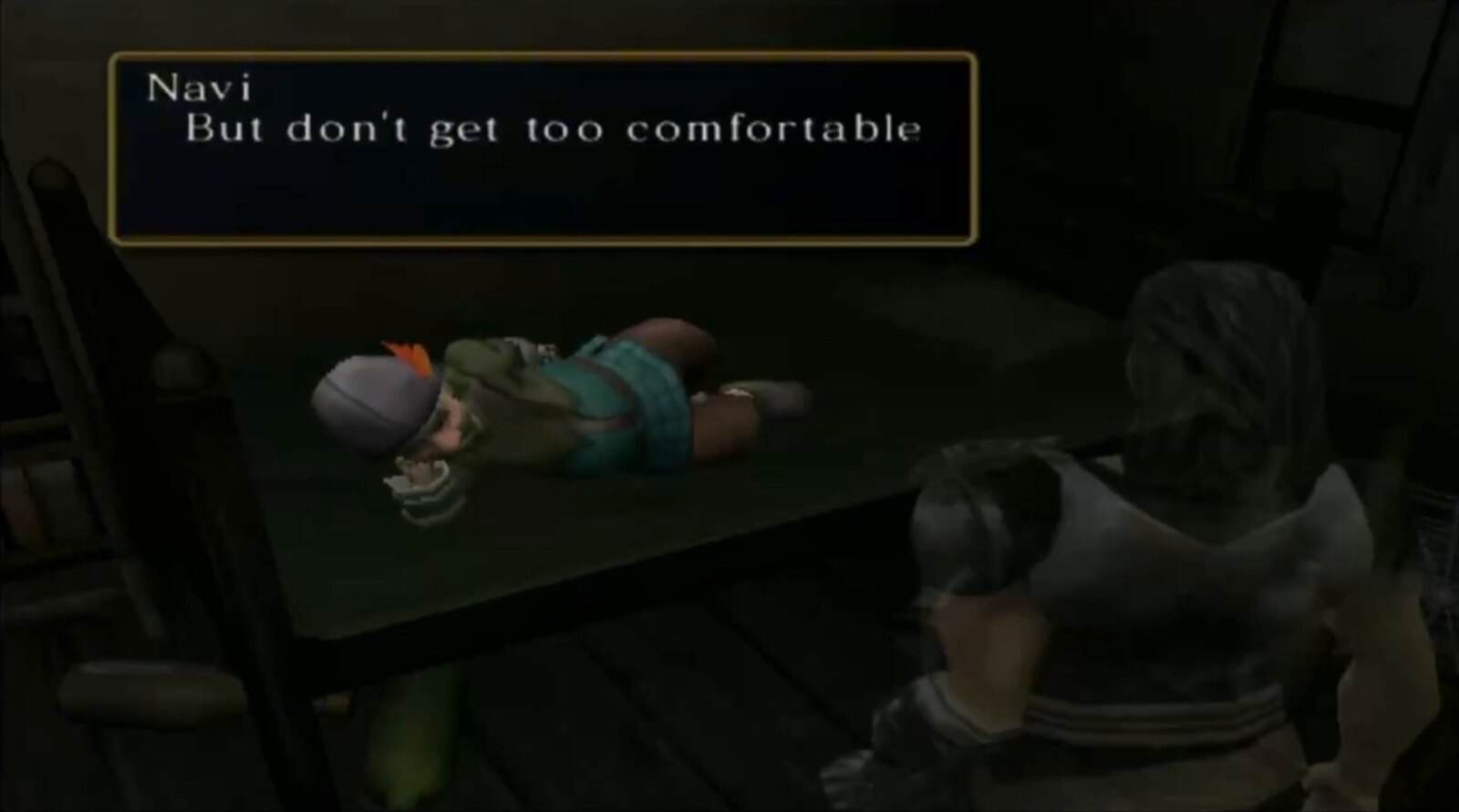
He gets some help from a very unusual gnome named Navi, who may or may not have a drinking problem. Navi explains the deal: to get his body back, Reise has to heal the hearts of the people around him, and the only way to do that is by possessing the bodies of people filled with sadness or anger.
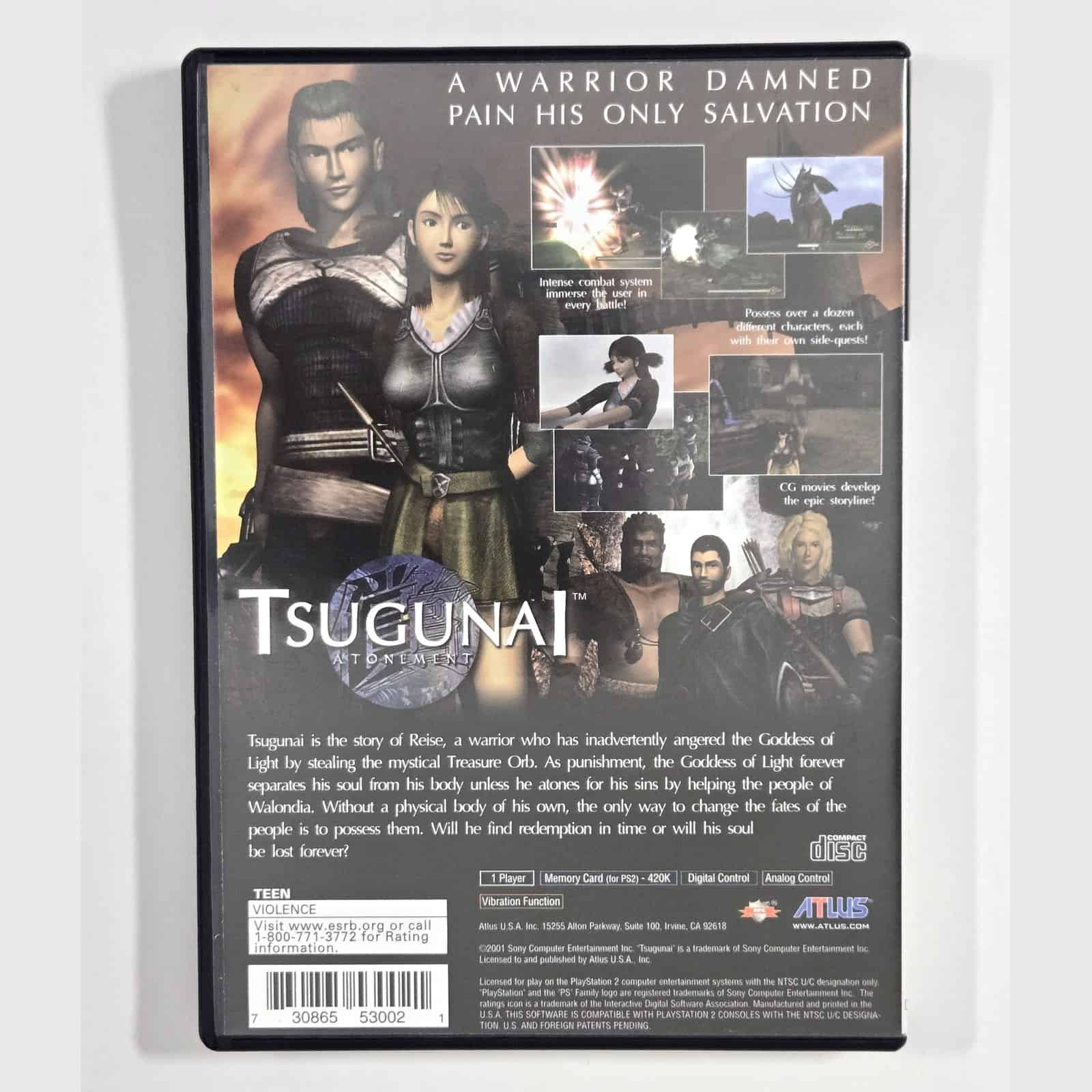
This is what makes Tsugunai stand out. Instead of controlling one main character the entire game, you’re constantly taking control of different hosts, people dealing with regret, loss or conflict. You fight their battles, help them resolve their struggles, and slowly move Reise closer to redemption. The back of the box promises over a dozen characters to possess, each with their own side quests.
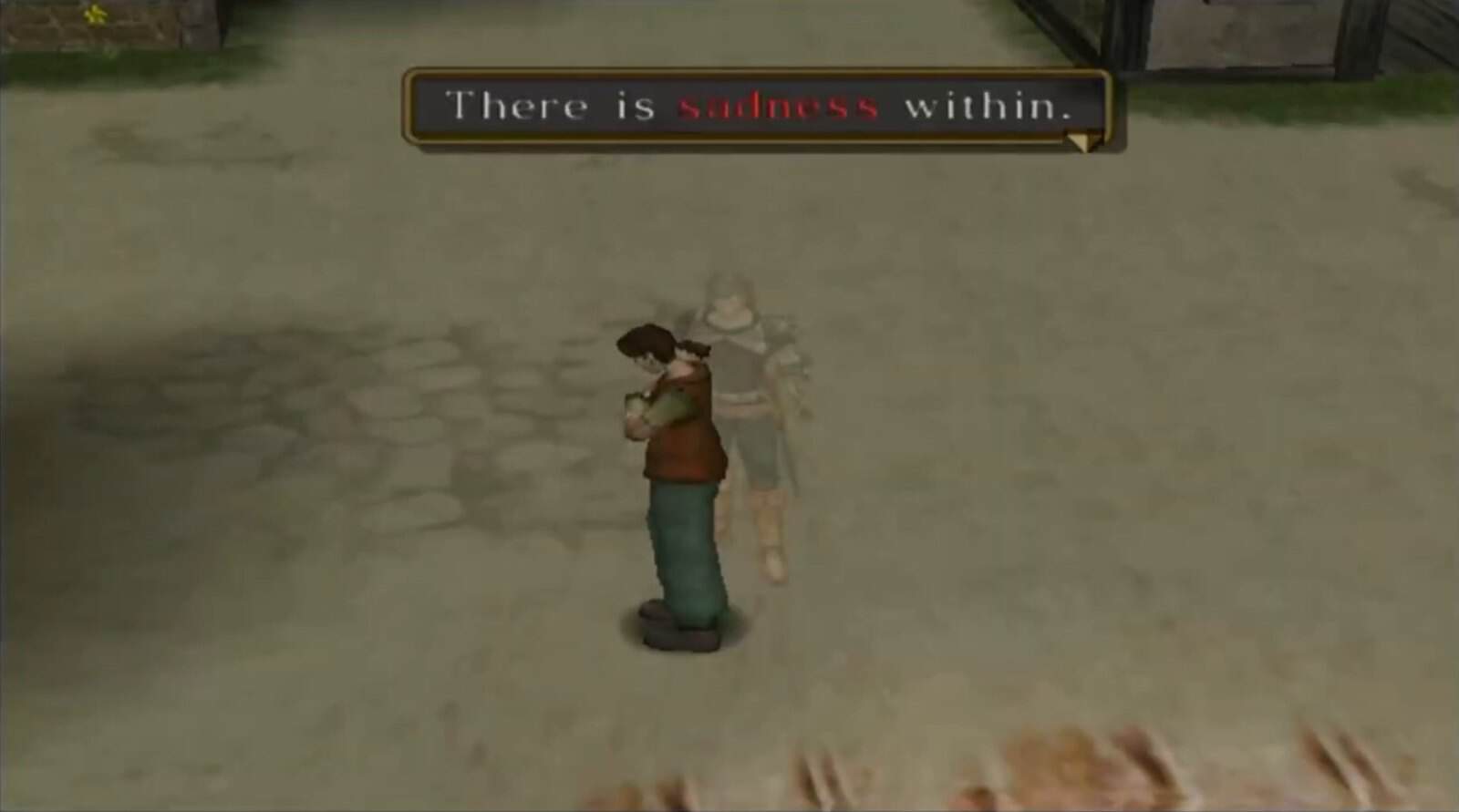
Find someone with sadness within, and Reise can step inside.
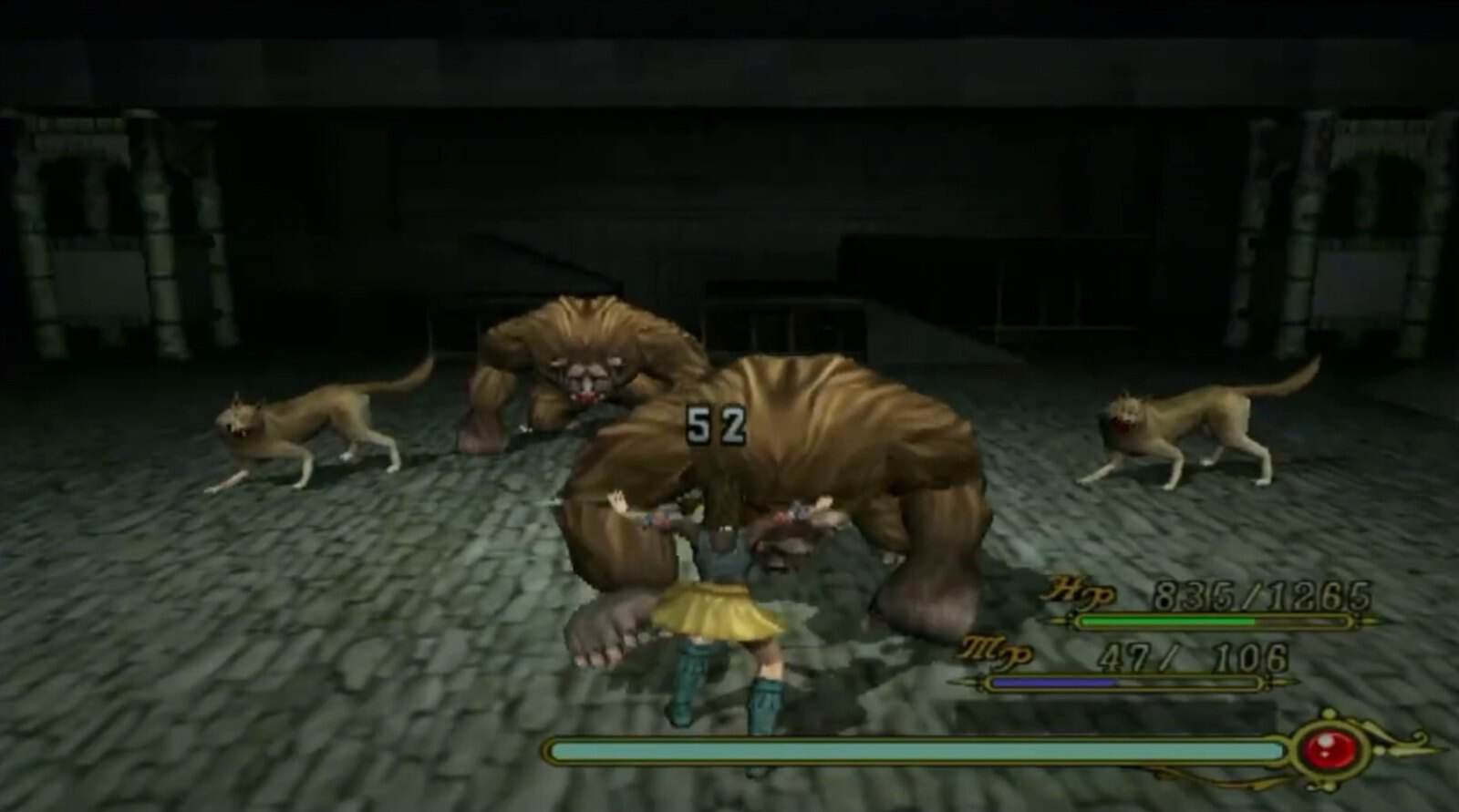
Every host has their own weapons, equipment and role in combat. One might specialize in physical attacks, another might lean on magic, another might play more defensively. So every time the story shifts to a new character, the gameplay shifts too.
And you guys know I love to grind up to level cap, so this was a big change for me. You’re not leveling one character, you’re learning how to play a bunch of them. It keeps the game feeling fresh, and it ties right into the story: Reise can only redeem himself by helping others.
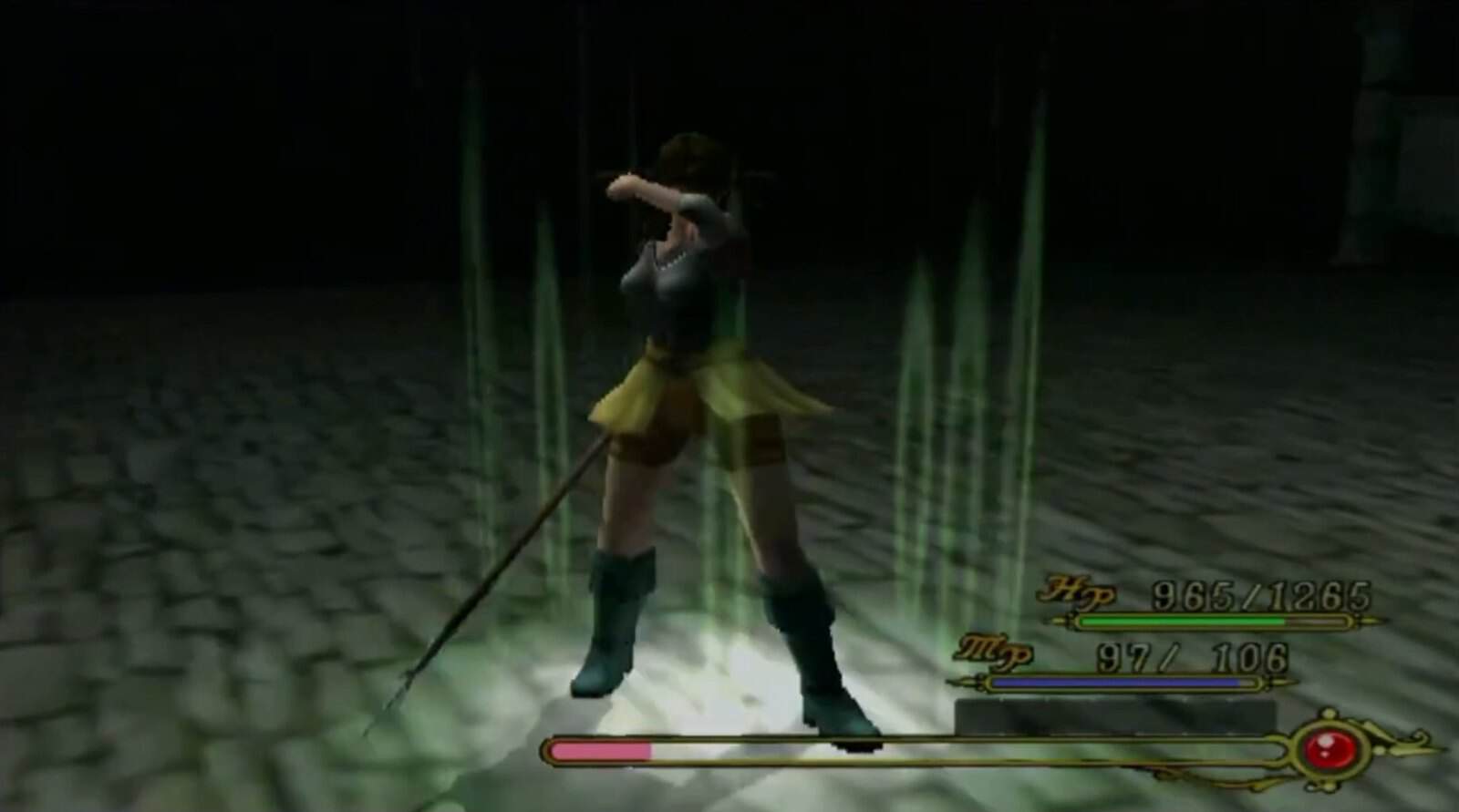
My favorite host is Fisela, with her spear and her deep, branching story. I found myself looking forward to possessing her again and again.
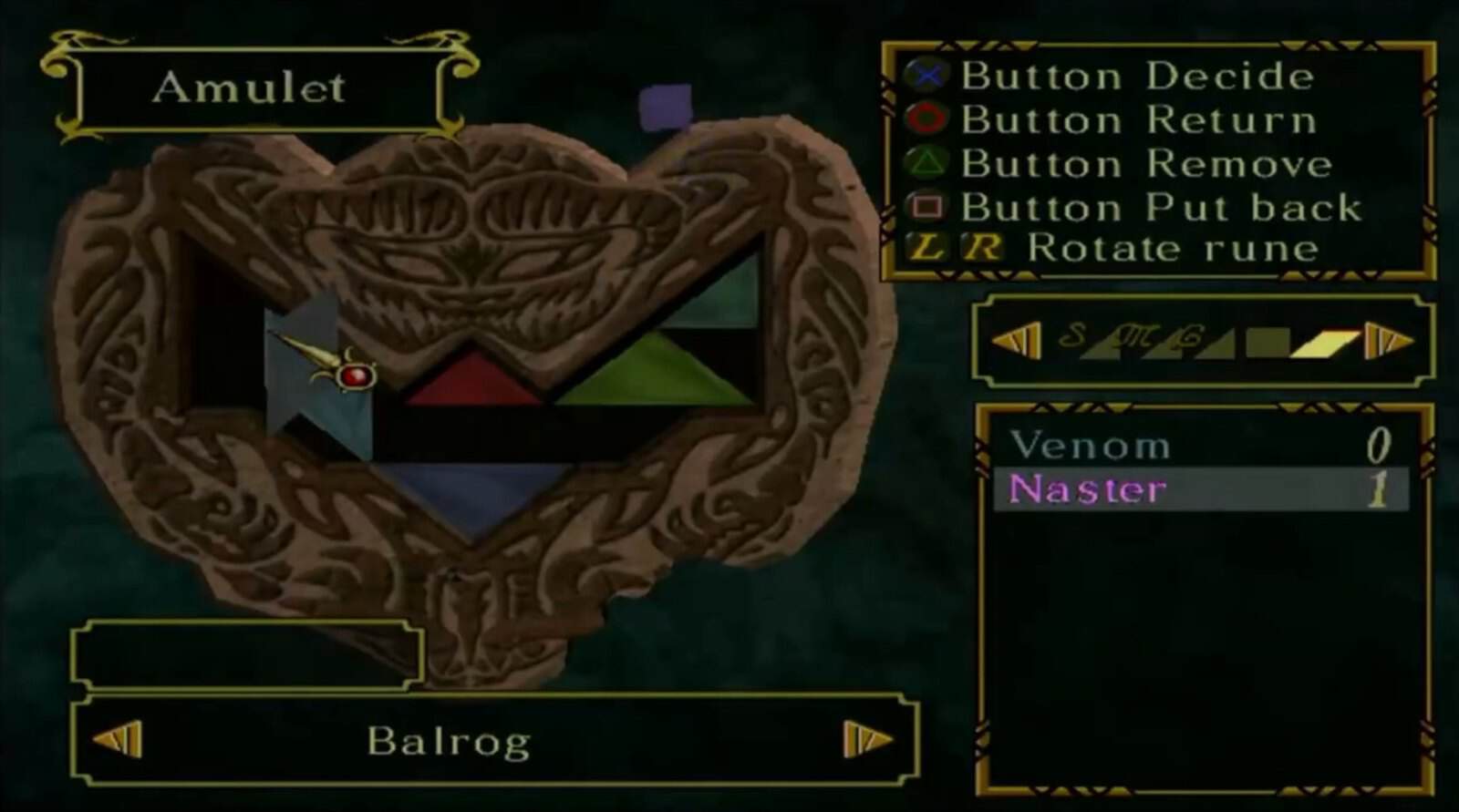
Magic works through runes that you slot into amulets. It’s similar to Final Fantasy VII’s materia, except the runes come in different shapes, and you have to rotate them and make room to fit them in, like a puzzle. Fill an amulet and you can call on a summon. Definitely a unique angle on equipping magic.
Rotate the runes and fit them in. Magic as a puzzle.
Combat follows a traditional turn-based structure, but it adds a few mechanics that bring extra strategy. When an enemy attacks, you don’t just stand there and take it. You literally can parry, which, if you weren’t living under a rock last year, is the mechanic Clair Obscur: Expedition 33 made extremely popular and satisfying. Here are your options:
Guard: reduces incoming damage.
Strage Guard: blocks less, but builds your Strage gauge, which works like a super meter.
Counter: time it just right and you negate the damage and strike back. It’s my personal favorite, but be warned: miss it and you take extra damage.
Backstep: dodges the attack completely, but you don’t earn any gauge.
Fill the Strage gauge and you can unleash a heavy attack that’s unique to each character.
That makes defensive choices just as important as offensive ones. In big boss fights, the right defensive option can completely change the outcome, and in rare cases, if you don’t backstep, Strage Guard or counter, you can literally get one-shotted. I learned that the hard way.
One thing I remember about playing Tsugunai is how tense some of these fights could get. There were definitely moments where I mistimed a counter or picked the wrong defensive option, and a boss fight that was under control turned into complete chaos.
But once you understand how those defensive options work together, timing a counter perfectly and turning the momentum of a battle around feels fantastic.
Visually, Tsugunai has a more subdued fantasy look than a lot of RPGs from the same era. Towns feel quiet and reflective instead of bustling, and the environments have a slightly melancholic tone that fits the story perfectly. This isn’t a world full of heroes. It’s a world full of people dealing with the consequences of their past.
The soundtrack is by Yasunori Mitsuda, the composer behind Chrono Trigger, Chrono Cross and Xenogears. Instead of constant high-energy battle tracks, a lot of it leans toward softer melodies that support the emotional tone and the slower pace of the story. Some areas have some genuinely eerie tunes too, which add to the darker atmosphere of certain areas and story arcs.
Critics were split back then. IGN gave it an 8.4 out of 10, GameSpot gave it a 4.1, and it landed at 67 on Metacritic.
My take: it isn’t a traditional RPG. It’s slower and more reflective, and it’s built around the idea that redemption comes from helping others. If you go in expecting a big save-the-world adventure, it’ll feel strange. If you’re into experimental RPGs, that unusual premise leads to mechanics and storytelling that still feel unique today.
From a collector’s perspective, Tsugunai is a great example of the kind of RPGs Atlus was bringing to the PS2 in the early 2000s. They weren’t always the biggest releases, but they often explored ideas you didn’t see in mainstream RPGs. That willingness to experiment is one of the reasons the PS2 library is still so interesting to explore today.
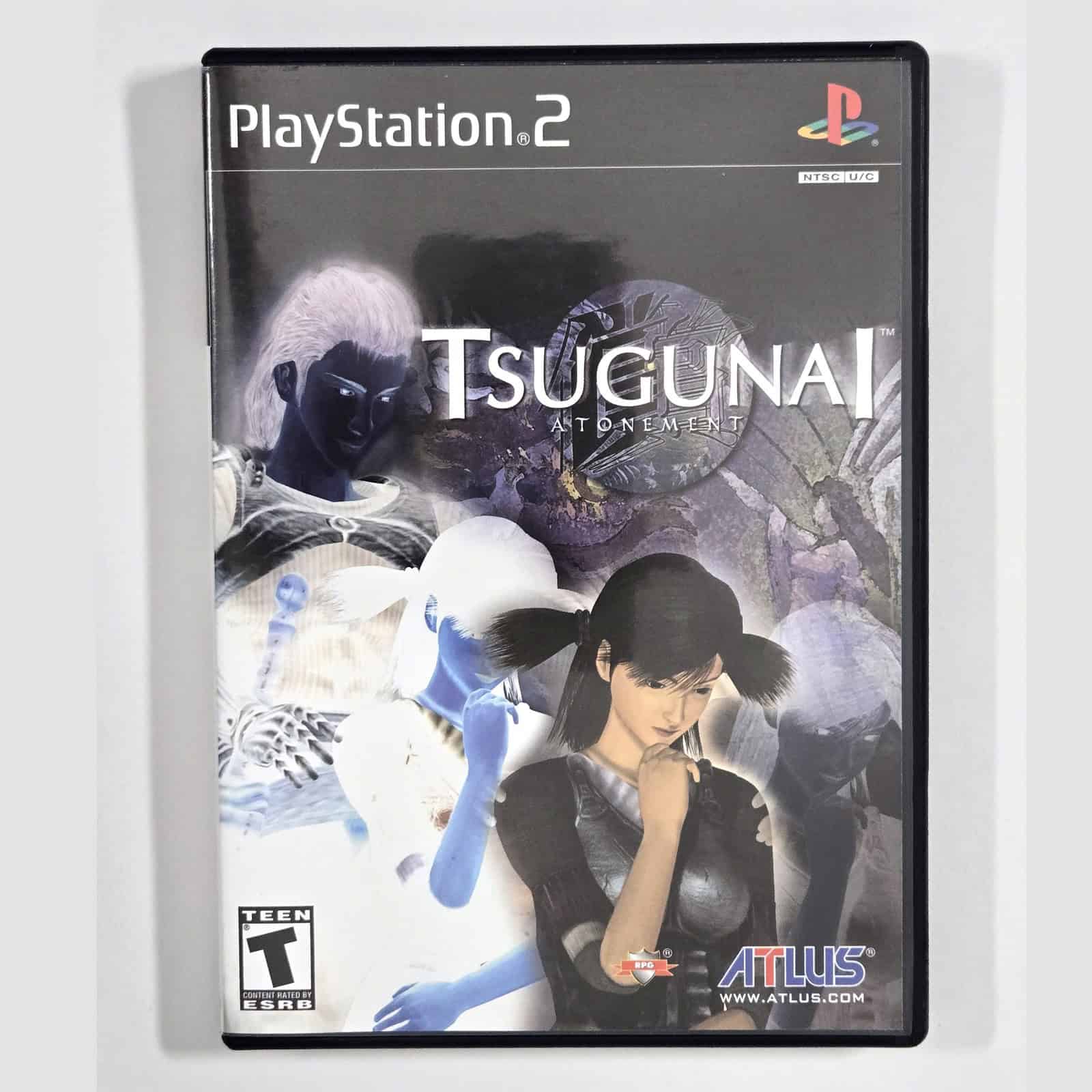
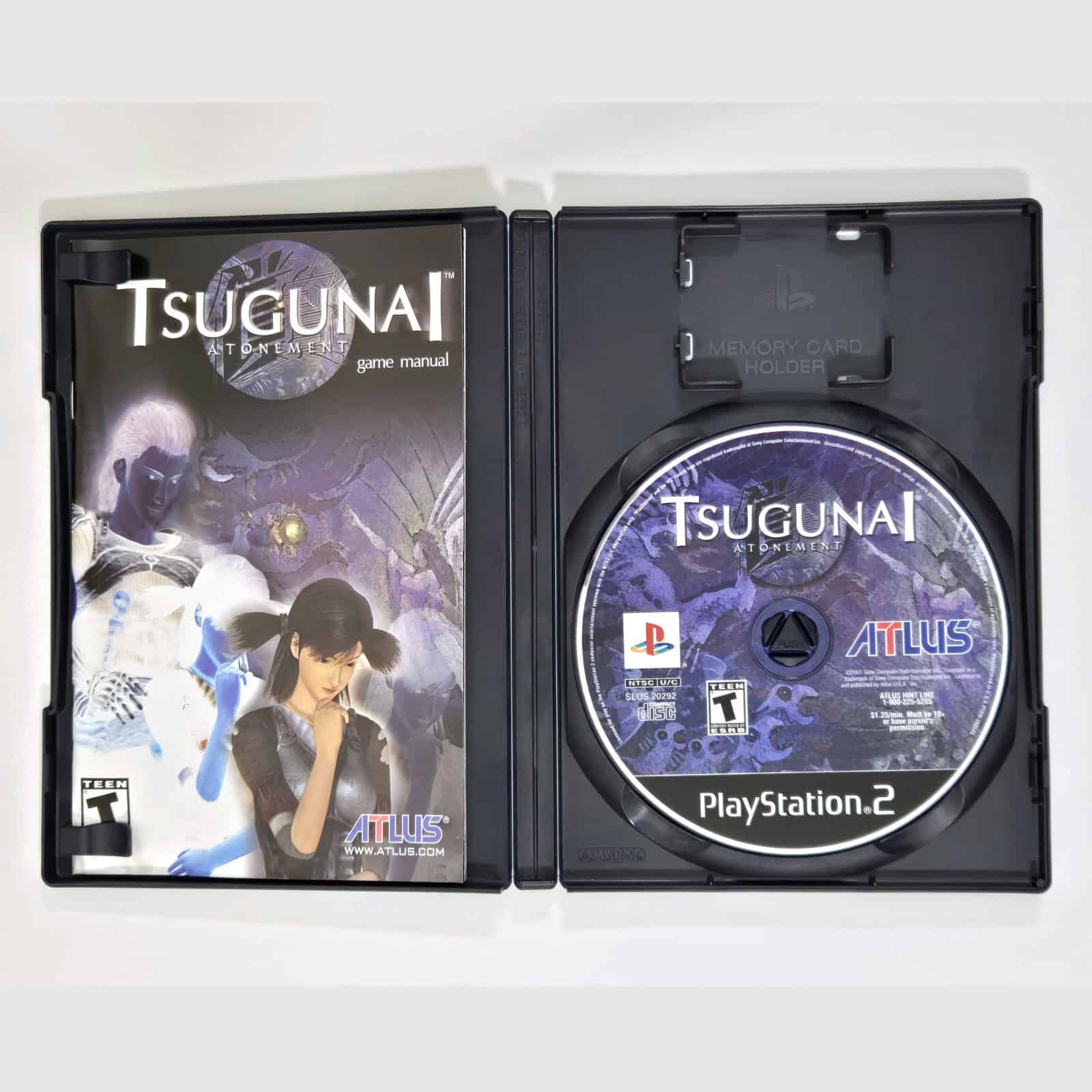
A complete North American copy is the case, the disc and the manual. Mine is complete:
Who made Tsugunai: Atonement? Cattle Call developed it. Sony published it in Japan in February 2001, and Atlus published the North American version in November 2001.
What does Tsugunai mean? It’s Japanese for atonement, so the full title is basically “Atonement: Atonement.”
Who is the main character in Tsugunai? Reise, a mercenary whose soul is separated from his body after he steals a sacred Treasure Orb. He has to atone by helping the people of Walondia.
How does possession work in Tsugunai? Reise possesses people who are struggling, and you play as them to fight their battles and solve their problems. Each host has their own weapons and combat role.
Who composed the music for Tsugunai: Atonement? Yasunori Mitsuda, known for Chrono Trigger, Chrono Cross and Xenogears.
Is Tsugunai: Atonement worth playing today? If you like unusual, slower-paced RPGs and don’t mind a challenge in boss fights, yes. It’s one of the most original RPGs on the PS2.
The verdict
Tsugunai: Atonement isn’t a traditional RPG, and that’s the point. Possessing other people, slotting puzzle-shaped runes and timing counters in tense boss fights all add up to something that still feels unique. For anyone exploring the stranger corners of the PS2 RPG library, it’s a fascinating hidden gem.
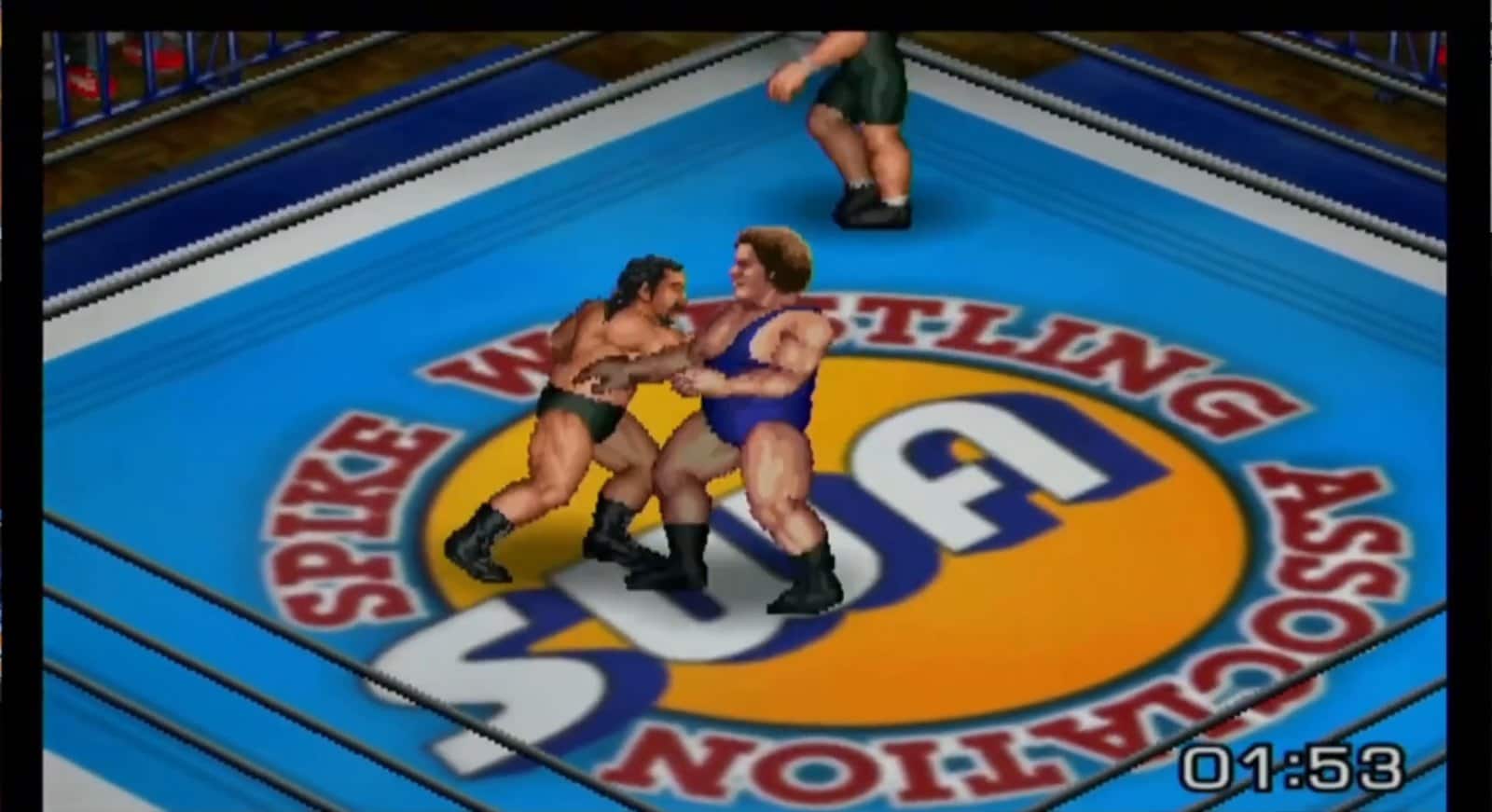
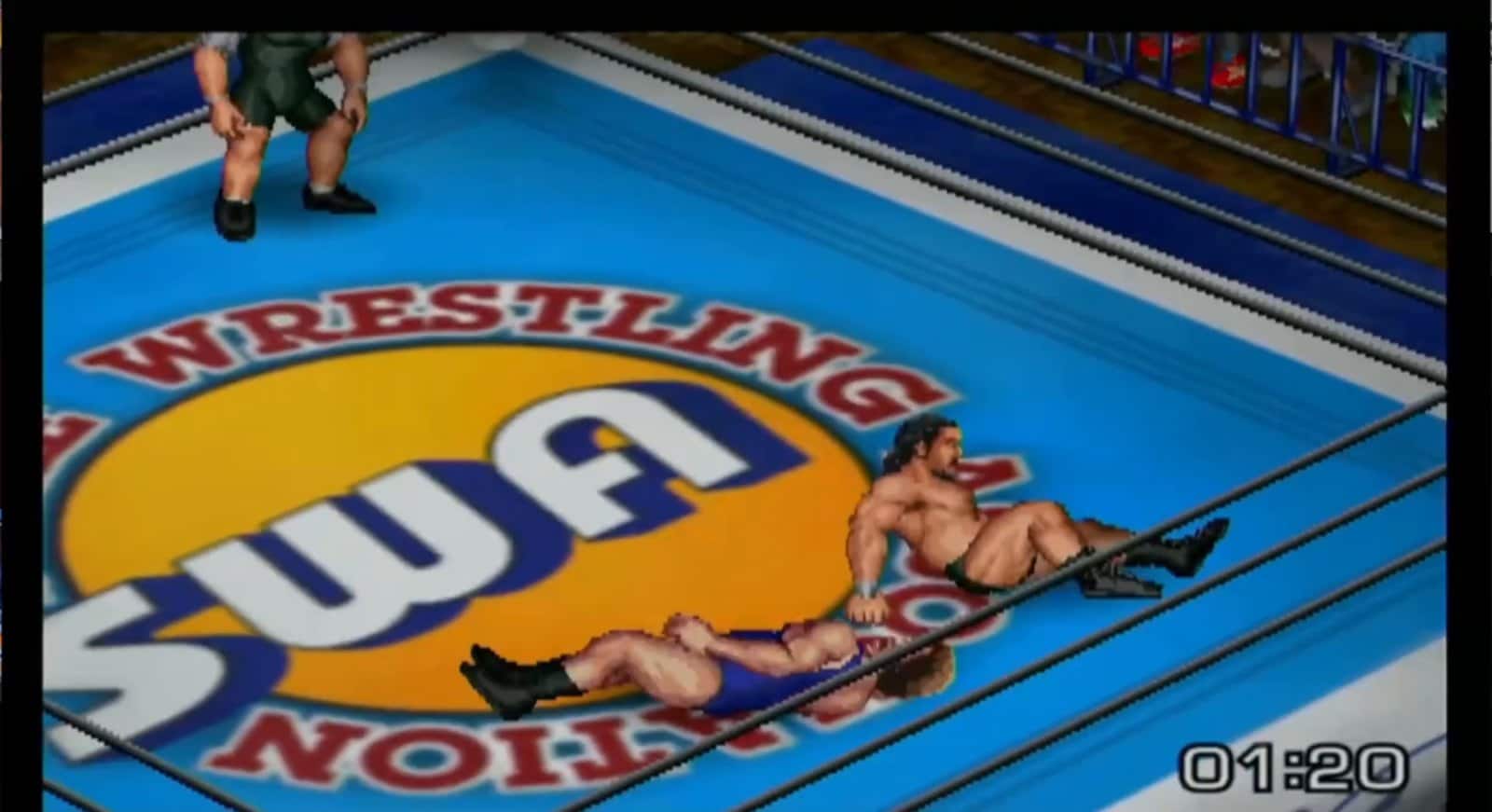
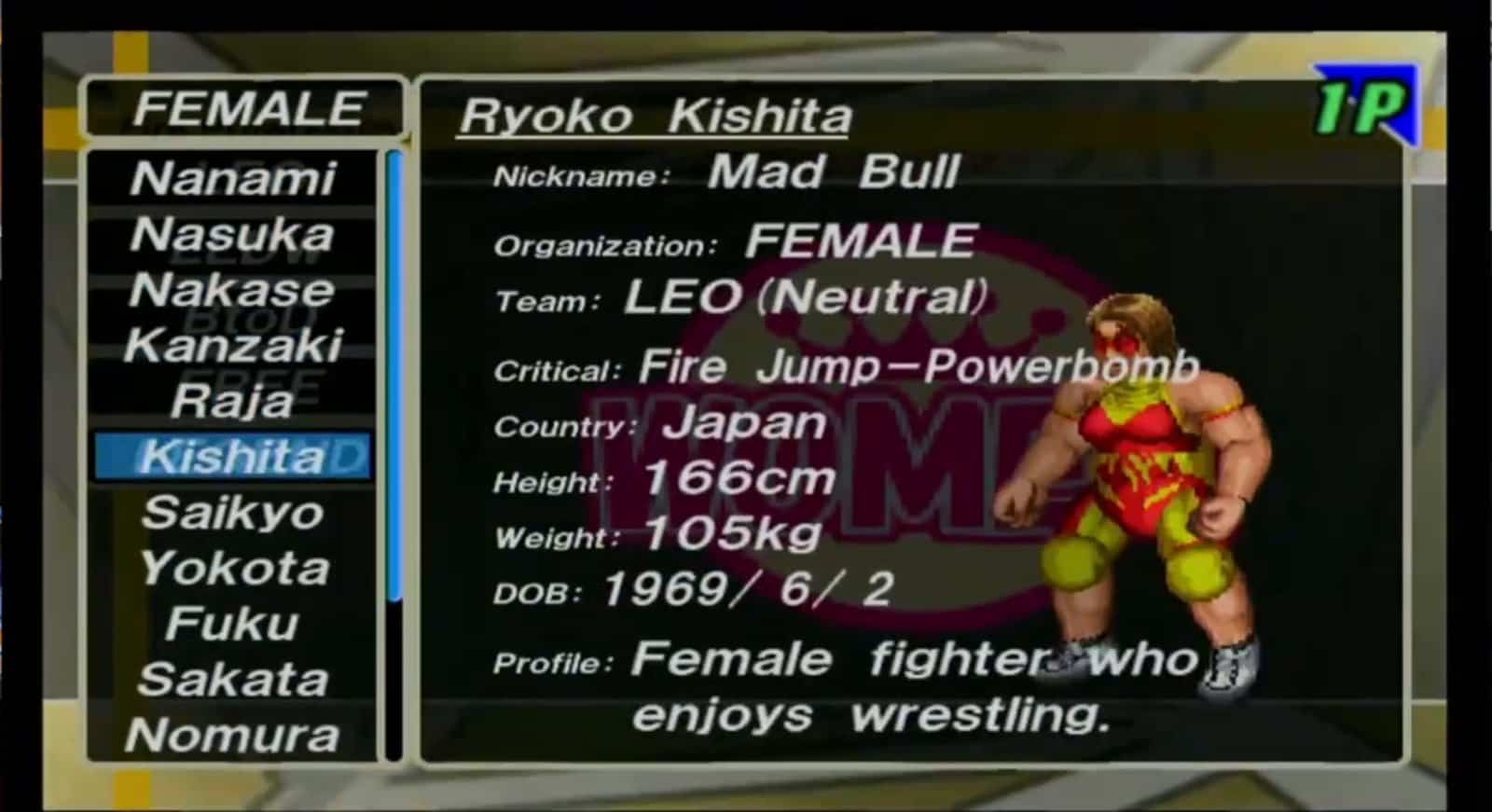
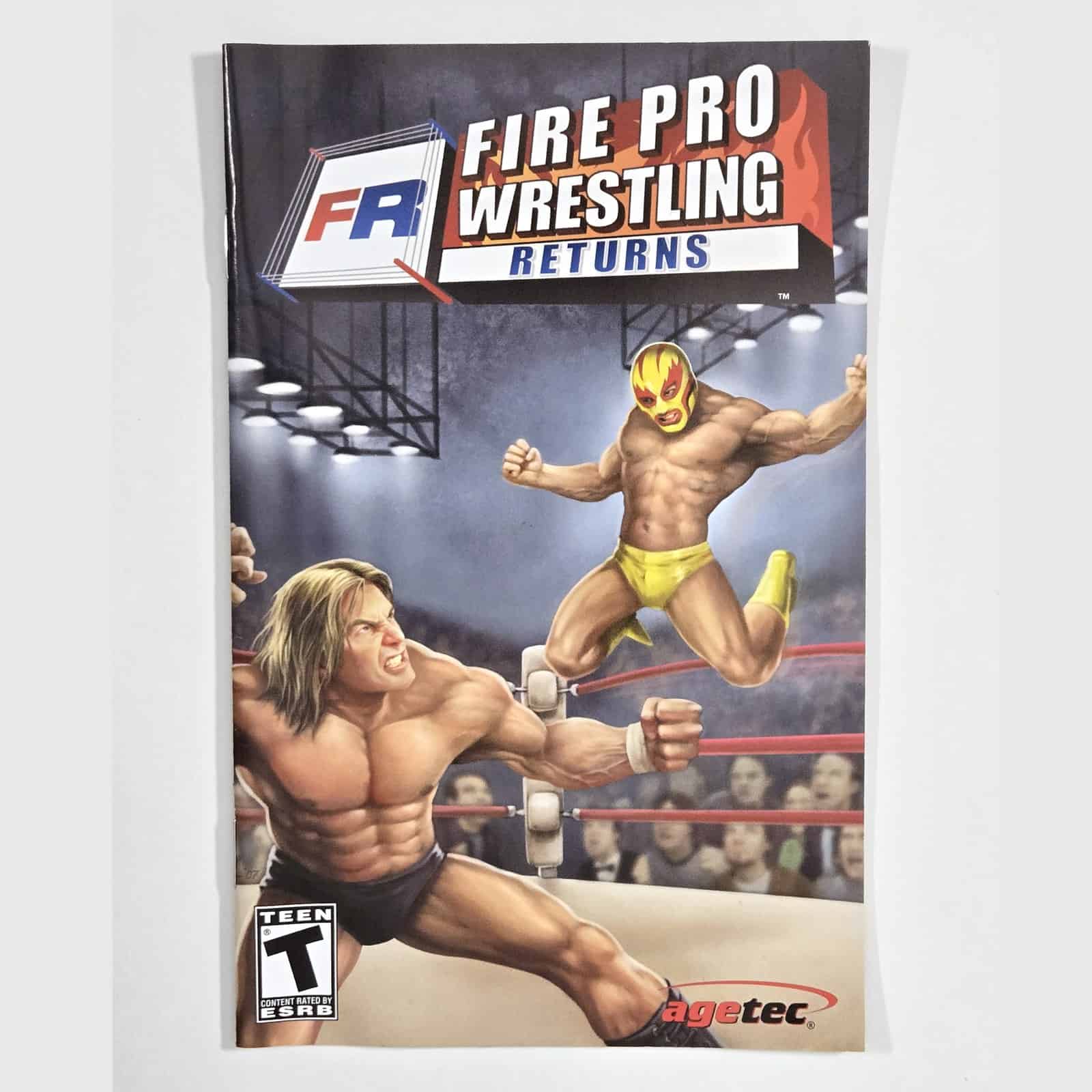
Most wrestling games reward button mashing. Hit the buttons as fast as you can and something cool happens, right? Fire Pro Wrestling Returns punishes you for that. Mash and you lose. Miss your timing and you lose. And if you go in expecting something like SmackDown: Here Comes the Pain, you’re going to get humbled real fast.
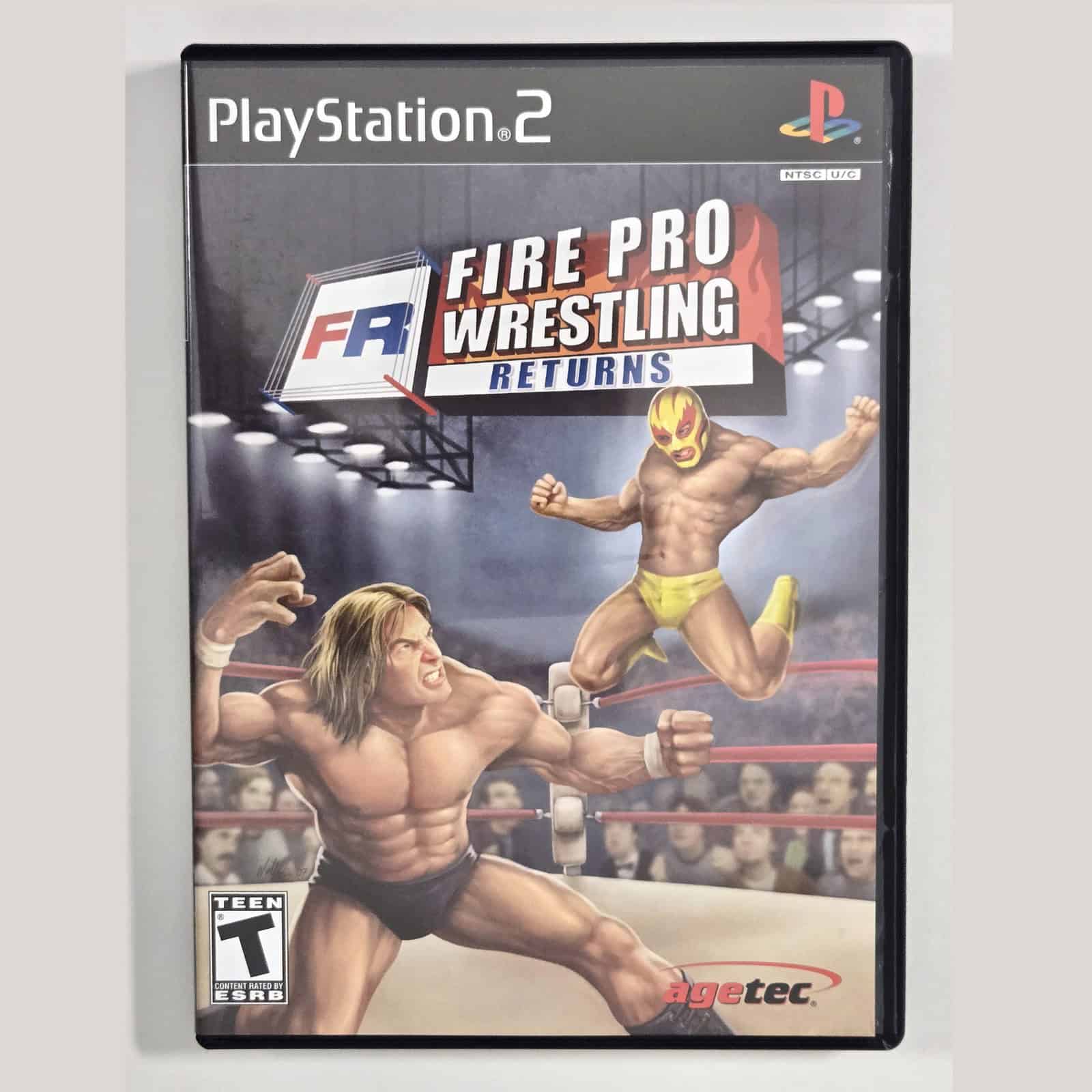
Fire Pro Wrestling Returns on PlayStation 2 (PS2) might be one of the most misunderstood games on the system, and it’s my pick for the best wrestling game on the PS2.
This post contains affiliate links. If you buy through them I may earn a small commission, at no extra cost to you. It helps keep the channel going.
Fire Pro Wrestling Returns was developed by Spike. It came out in Japan on September 15, 2005, and Agetec brought it to North America on November 13, 2007, at a budget price of $14.99.
The Fire Pro series goes back to 1989 on the PC Engine, and it built its reputation by doing things differently. Instead of leaning on licenses, presentation or flashy entrances (all still cool), Fire Pro focuses on what happens inside the ring, and on how wrestling actually works.
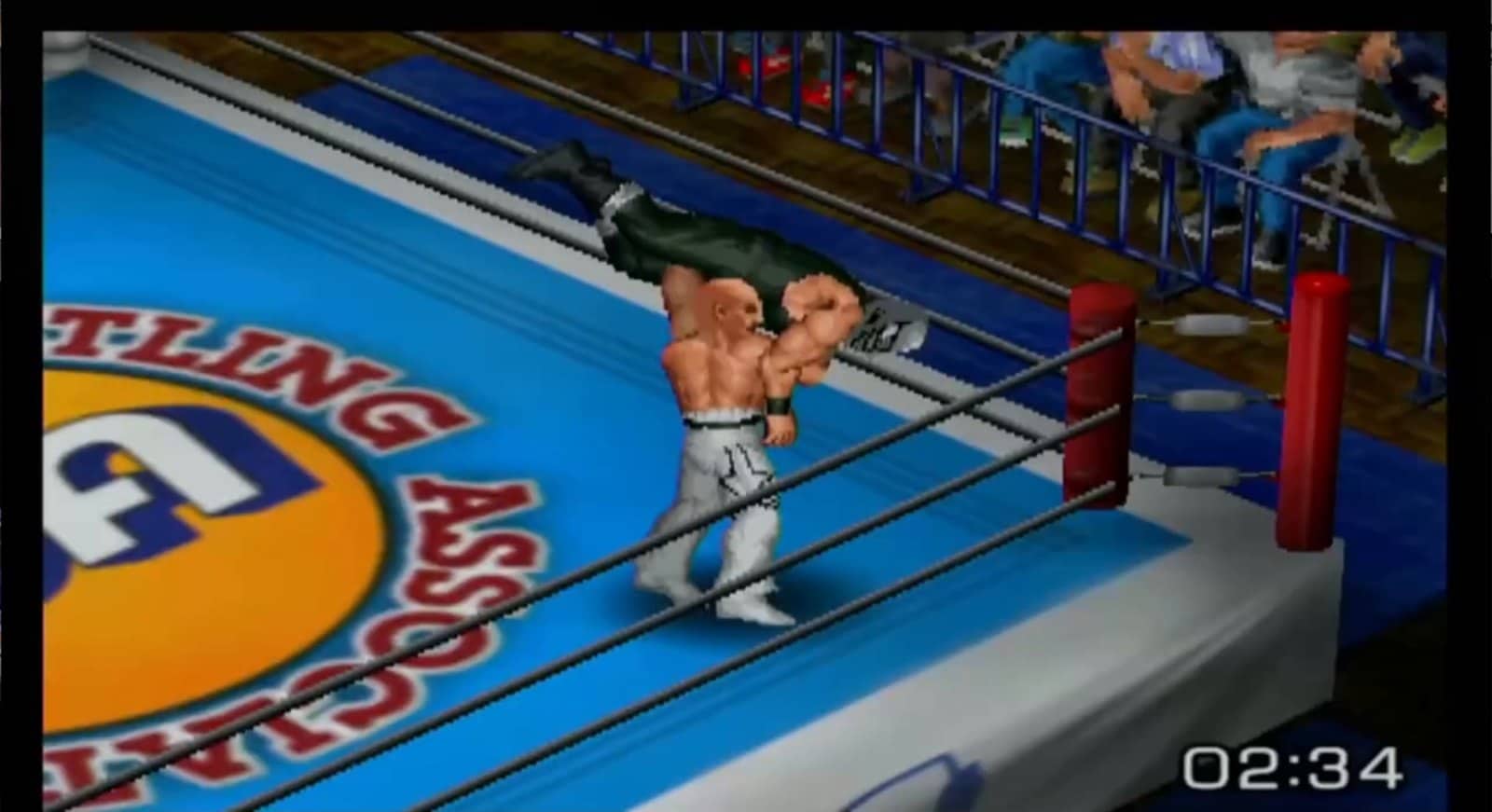
Every grapple starts with a lock-up, and timing decides who wins it.
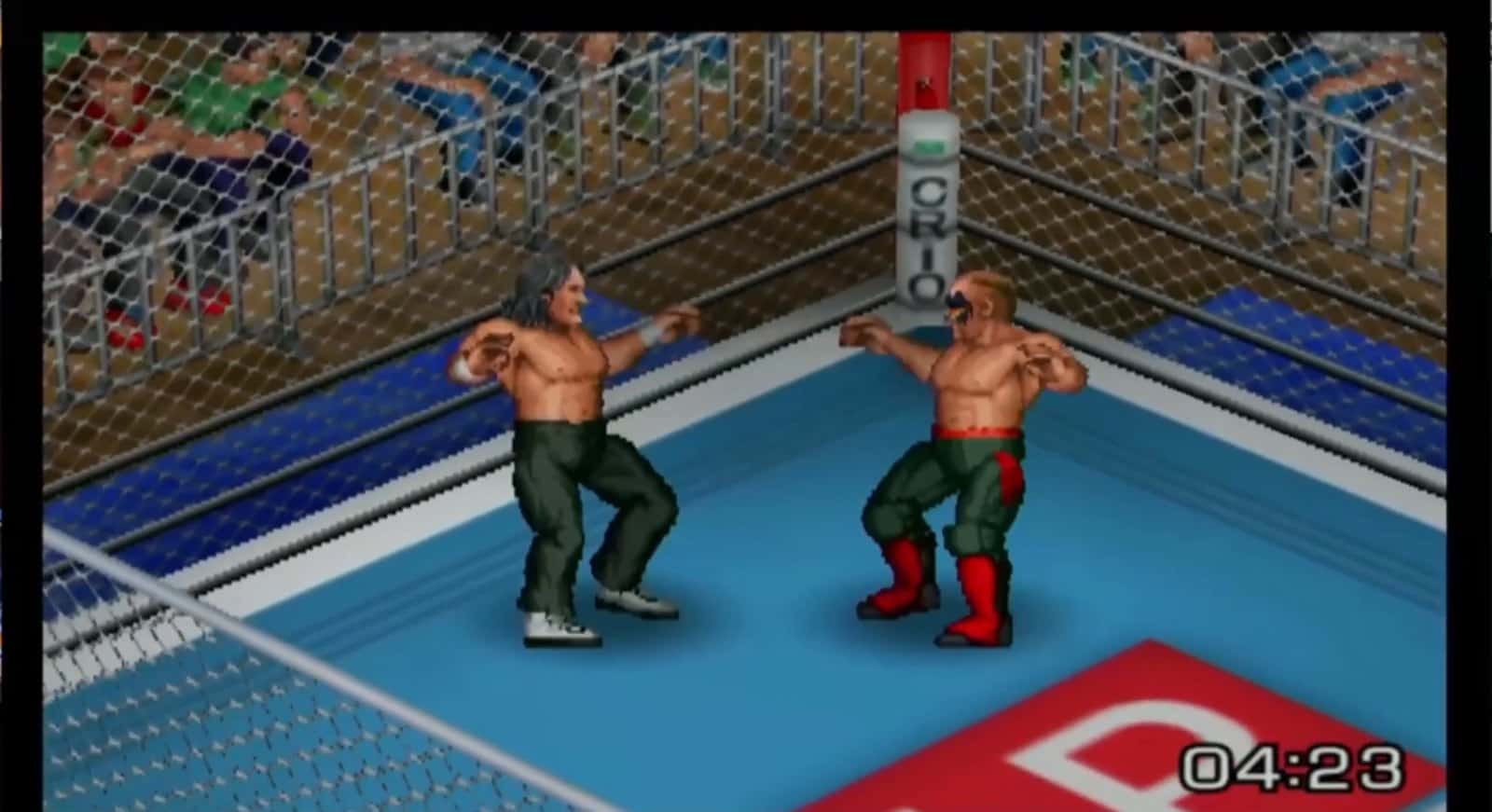
Grappling in Fire Pro Returns is all about timing. When you lock up with an opponent, there’s a specific moment to press the button. Too early and nothing happens. Too late and you get countered.
Early in the match those timing windows are even tighter, so you can’t jump in and start throwing big moves. You build momentum the way real wrestlers do: light grapples first, then medium, then the heavy, real-deal stuff.
Try to play it like a traditional wrestling game and you’ll get destroyed. Mashing doesn’t just fail to help, it actively works against you.
One of the most unique features in Fire Pro is the wrestler logic system. You can program how a wrestler behaves: how aggressive they are, which moves they prefer, and how they react in different situations.
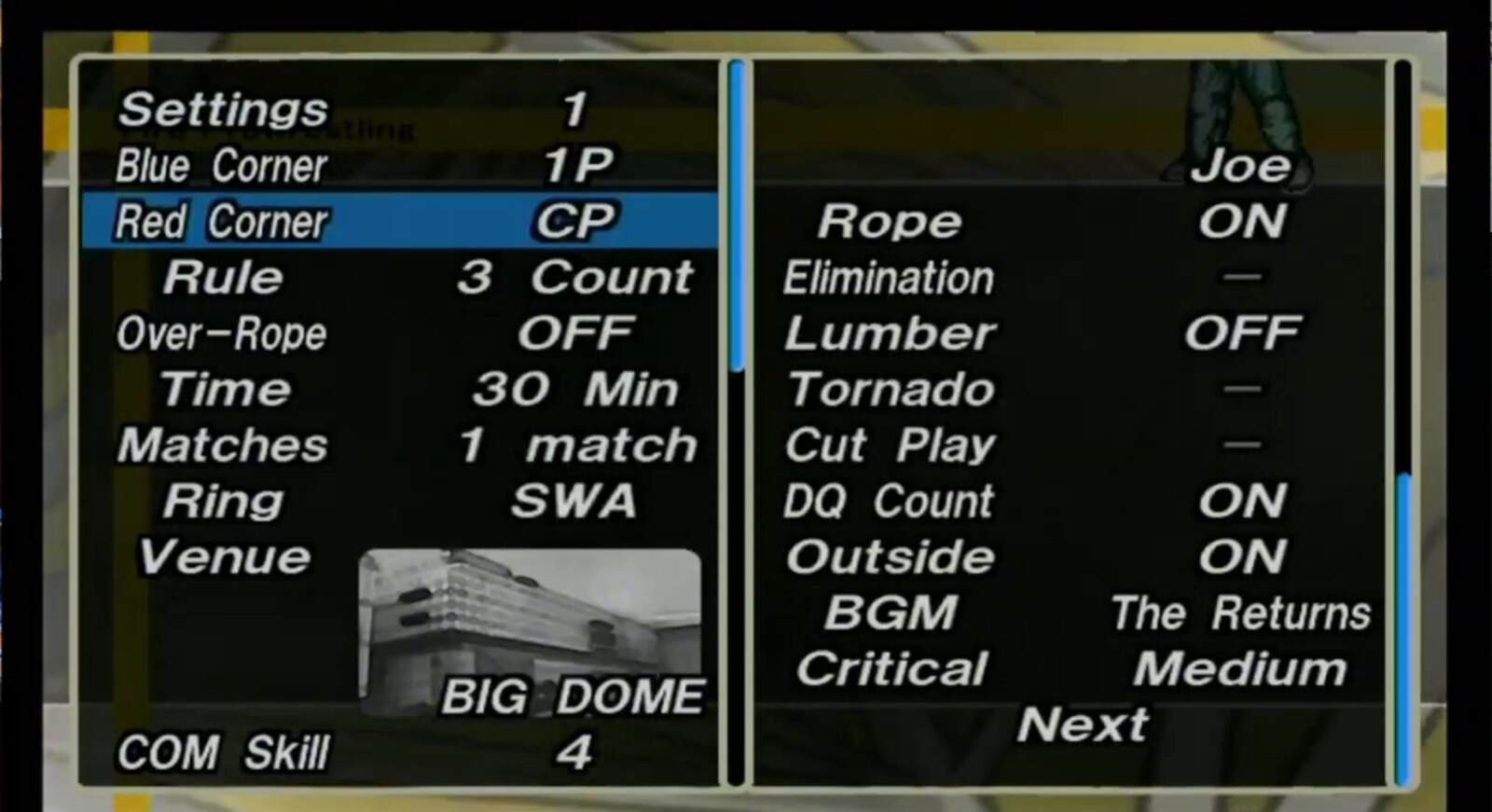
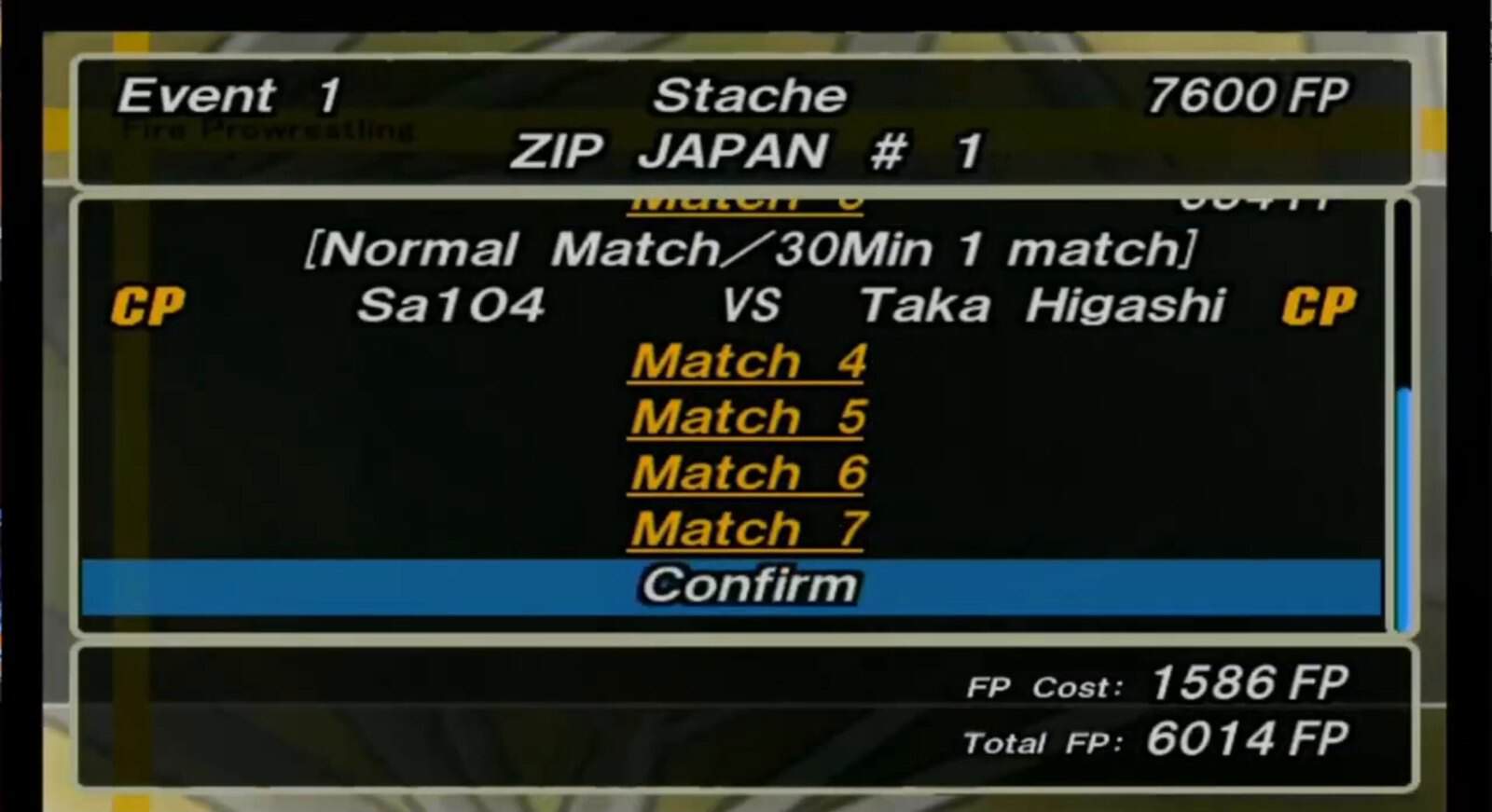
Then you can set up CPU vs. CPU matches and just watch them play out. At that point it stops feeling like a fighting game and starts feeling like a wrestling simulator.
Set both corners to CP and the game wrestles the match for you.
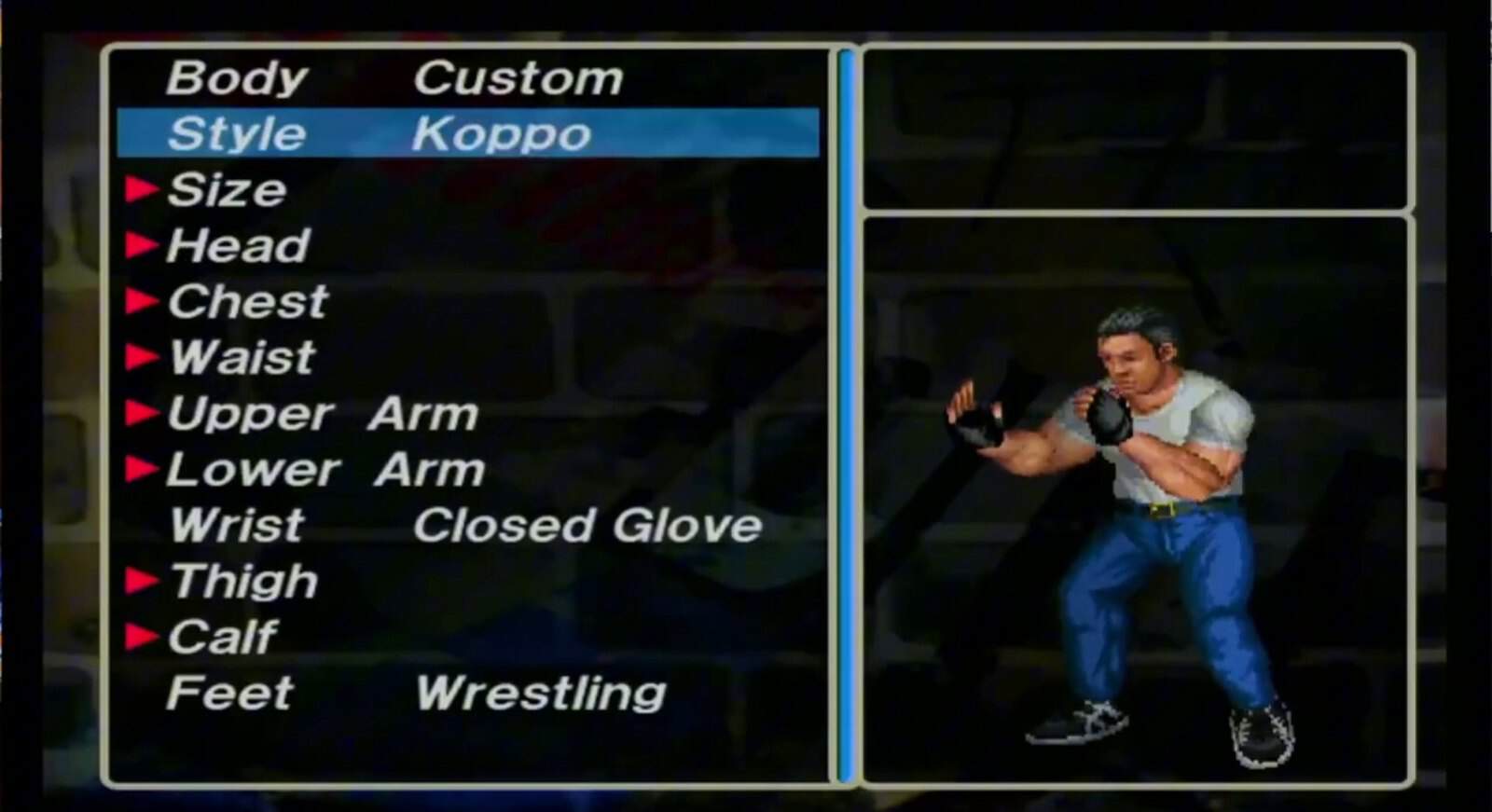
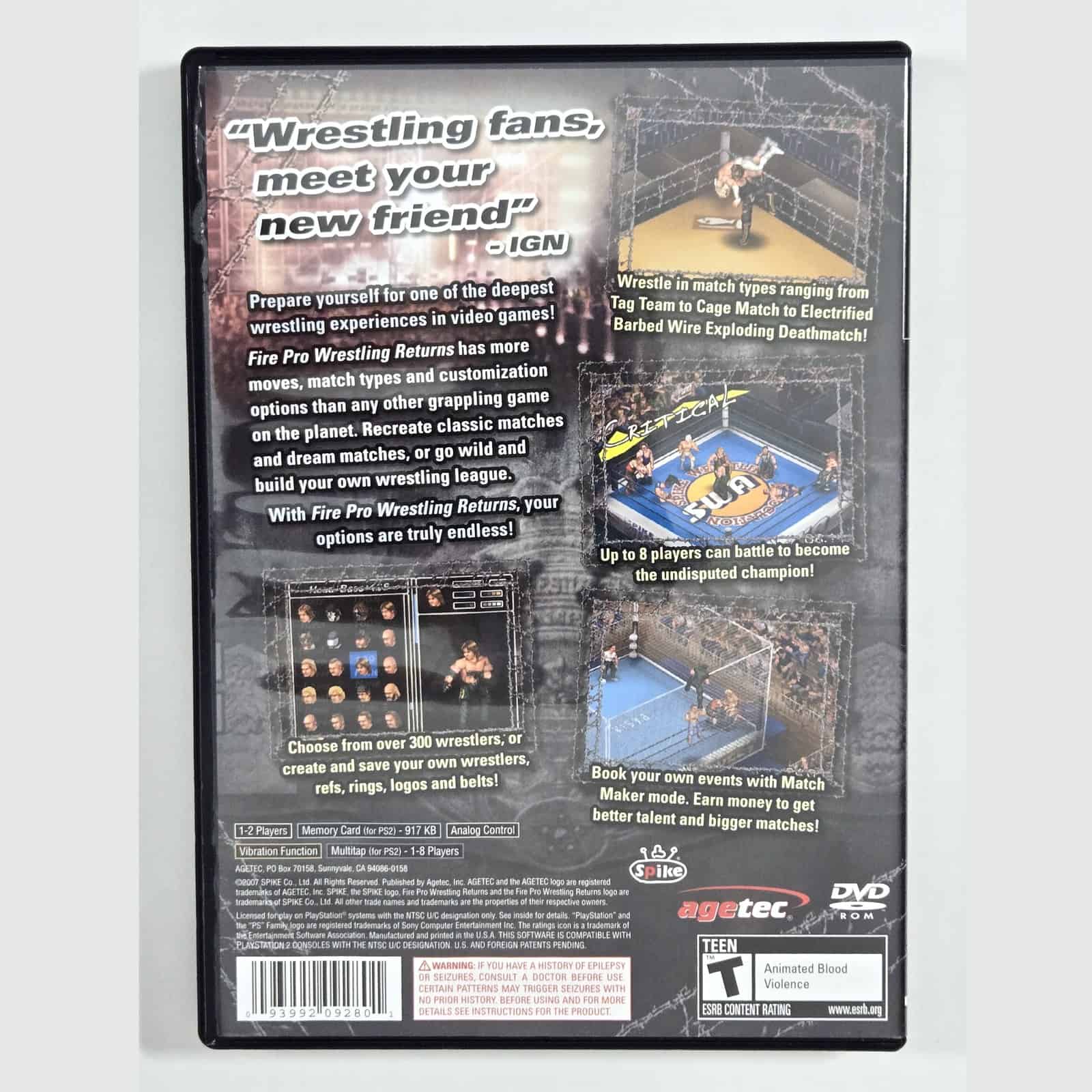
The creation tools are incredibly deep. You can build custom wrestlers, move sets and appearances, plus your own referees, rings, logos, belts and entire promotions.
Because the system is so detailed, players have recreated real-world wrestlers, full rosters and entire organizations. That gives the game almost unlimited replay value.
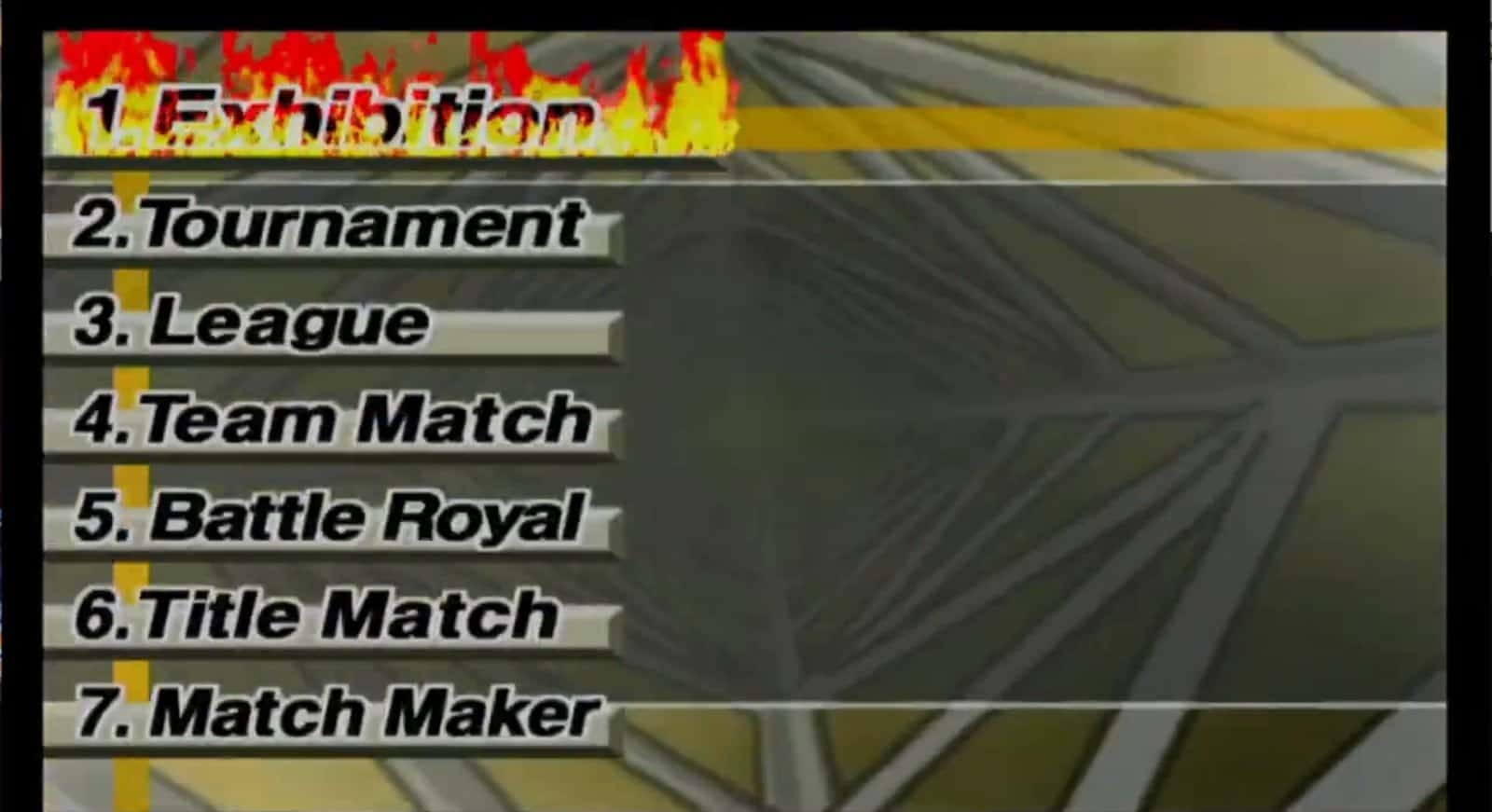
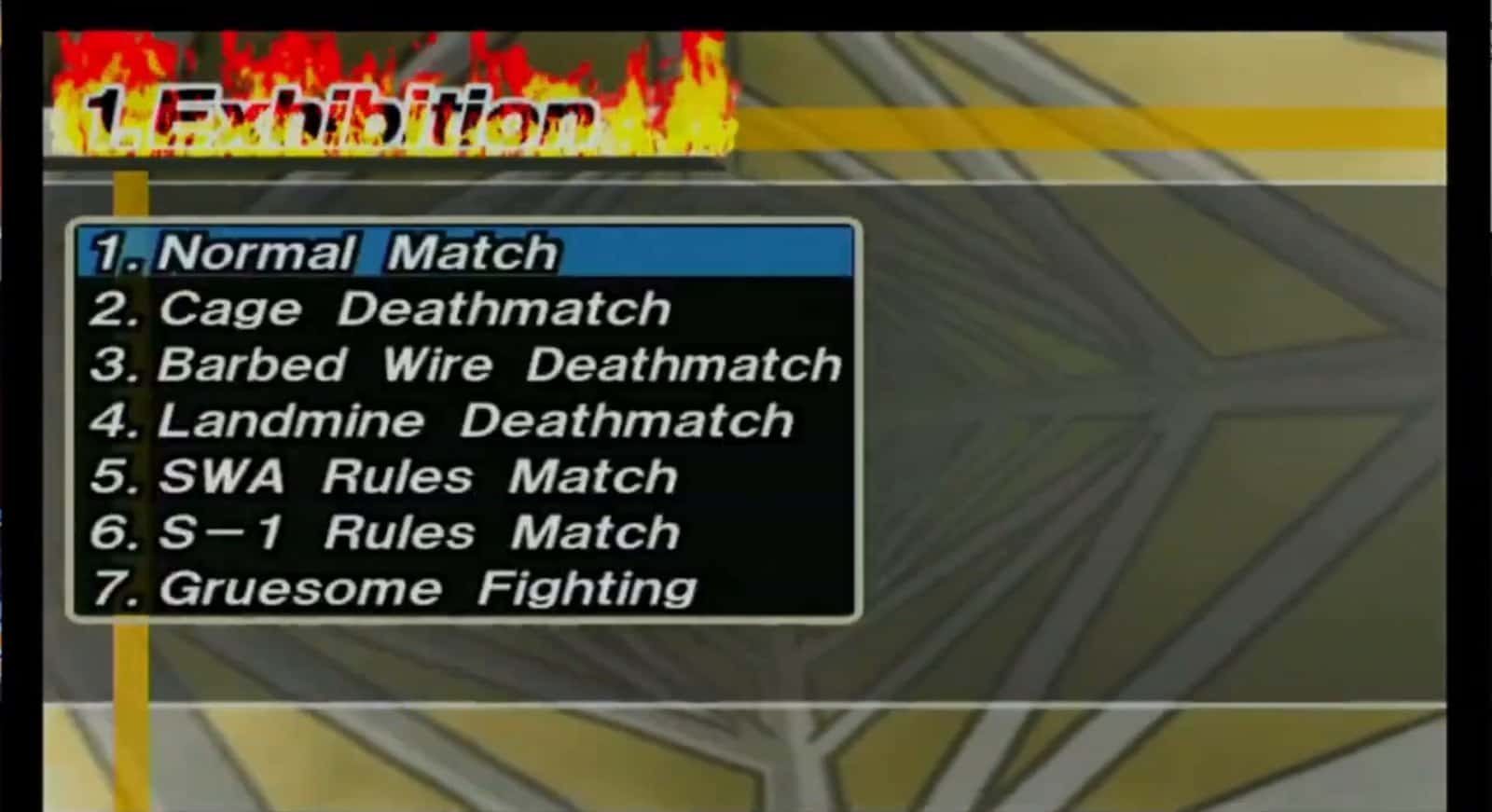
At first glance it looks like it’s just exhibition matches, but there’s a lot more here. You get single matches, tag team matches, battle royals, leagues, title matches and full tournament brackets, with match types ranging from cage matches all the way up to an electrified barbed wire exploding deathmatch. With a multitap, up to 8 players can get in on it.
There’s also Match Maker mode, where you book your own events and earn money to sign better talent and put on bigger matches. You end up thinking more like a promoter than a player.
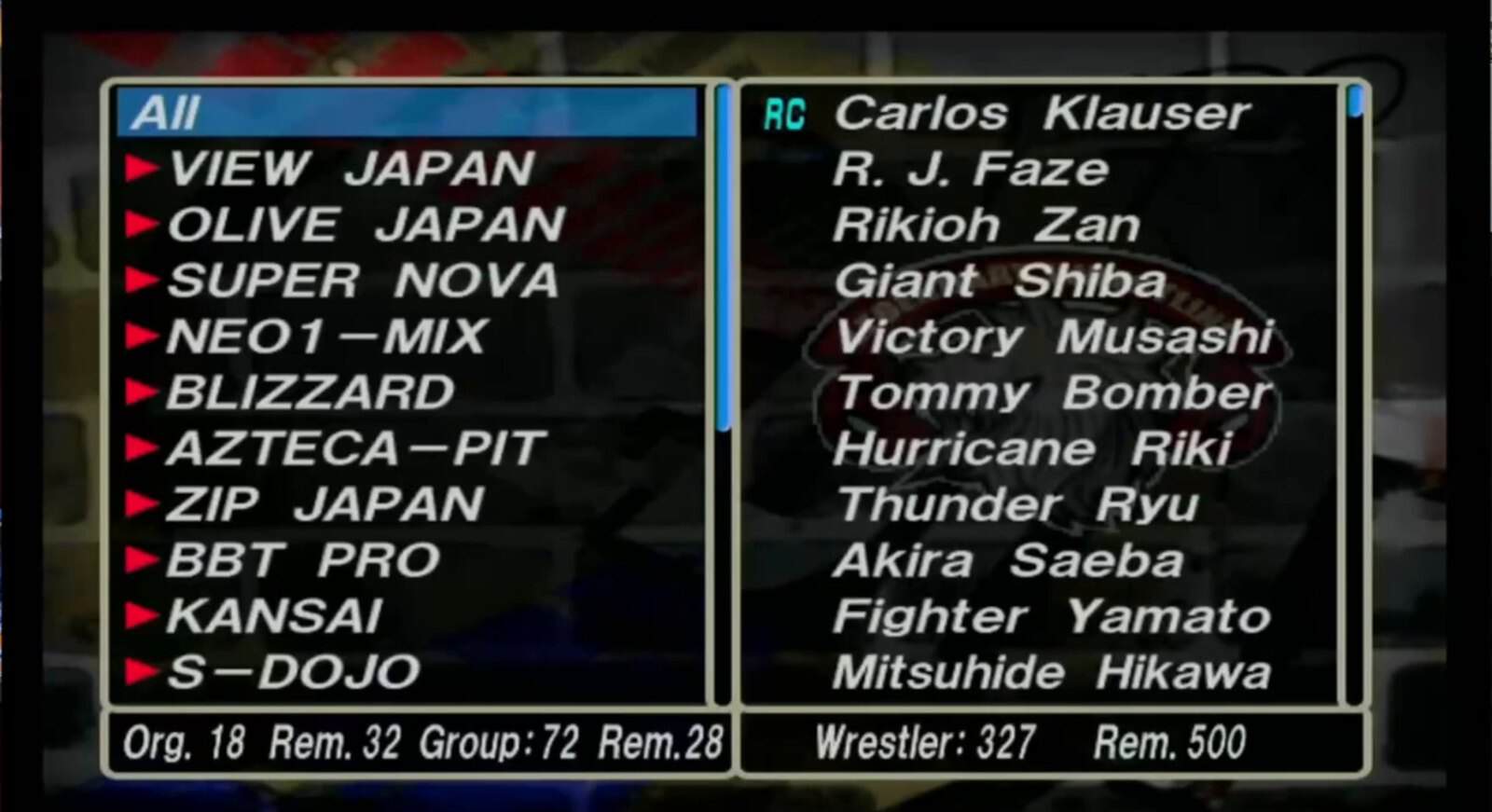
Instead of building around one licensed brand, Fire Pro takes a different approach. The game ships with 327 wrestlers (plus room for 500 of your own), and the roster is inspired by wrestlers from around the world. You’ll see clear influences from Japanese promotions like New Japan Pro-Wrestling and All Japan Pro Wrestling, plus American and Mexican styles.
None of it is officially licensed, but if you’re a wrestling fan you’ll recognize the inspiration immediately. It feels like a celebration of wrestling as a whole, not just one company.
Wrestlers don’t all play the same, either. You’ve got technical wrestlers, power wrestlers, high-flyers and submission specialists, and every matchup feels different.
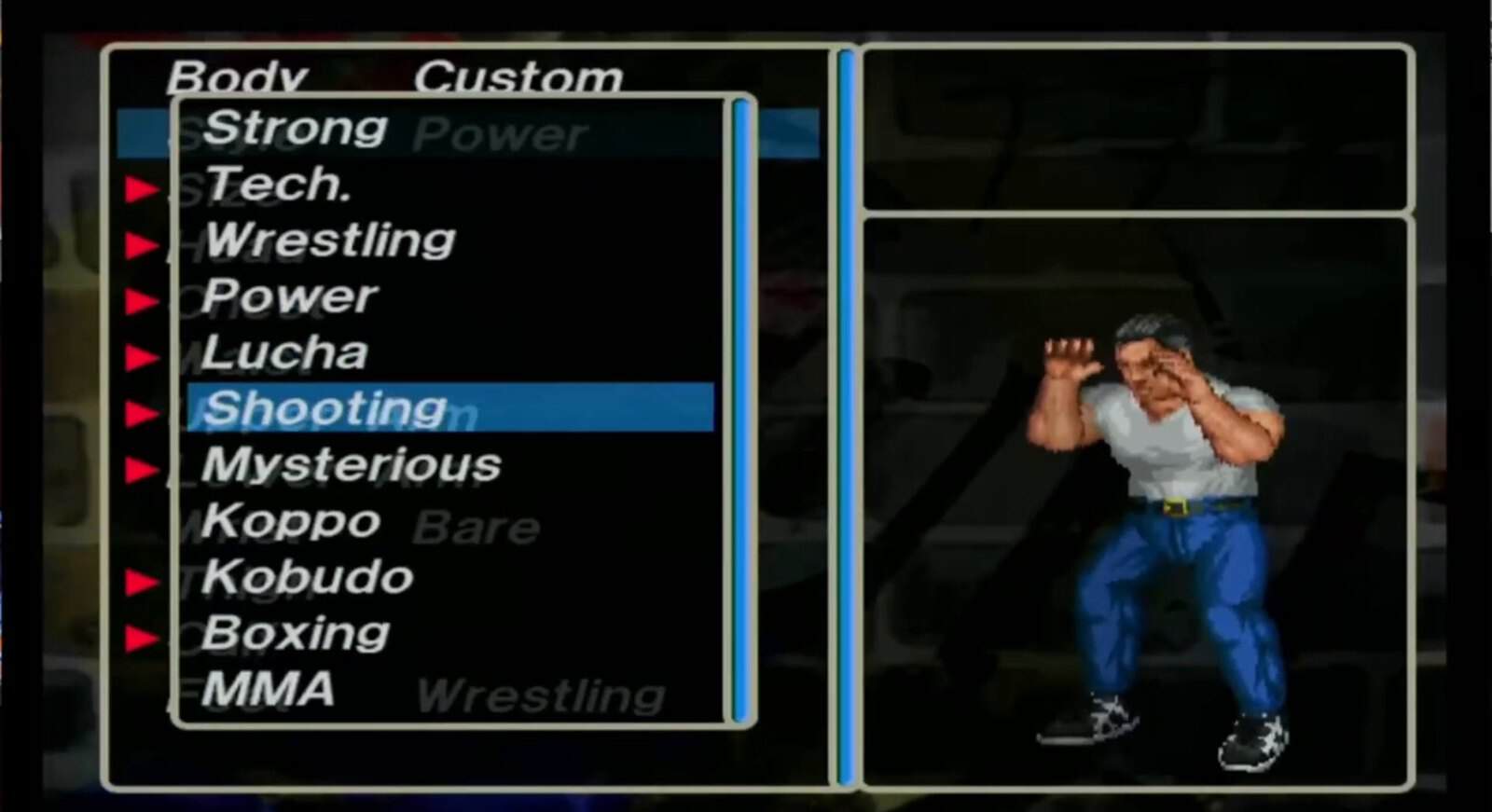
Every wrestler has a fighting style, from Lucha to Shooting to MMA.
Another cool detail: the roster includes women wrestlers representing Joshi wrestling, and they’re not an afterthought. They get their own move sets, their own pacing and the same depth as everyone else, which wasn’t always handled this well back then.
I remember the first time I played this game. I went in expecting something like SmackDown and got destroyed. Nothing worked. My moves wouldn’t land, I kept getting countered, and honestly it got really frustrating.
Then something clicked. I started to understand the timing, the pacing and the rhythm of a match, and suddenly every move I landed felt earned.
Fire Pro doesn’t care about flashy presentation. No big entrances, no over-the-top production, and the 2D sprite visuals are very simple. That’s on purpose: everything is focused on what happens inside the ring.
It isn’t for everyone. It’s slower, more technical, and it takes patience. My tip: start with light grapples and don’t go for the big moves until the match has warmed up. If you’re willing to learn it, it’s one of the most unique wrestling experiences on the PS2.
From a collector’s perspective, this game represents something really unique on the PS2: a completely different philosophy. No licenses, no mainstream push, just deep mechanics and a dedicated audience. To me, that’s made it a true classic.
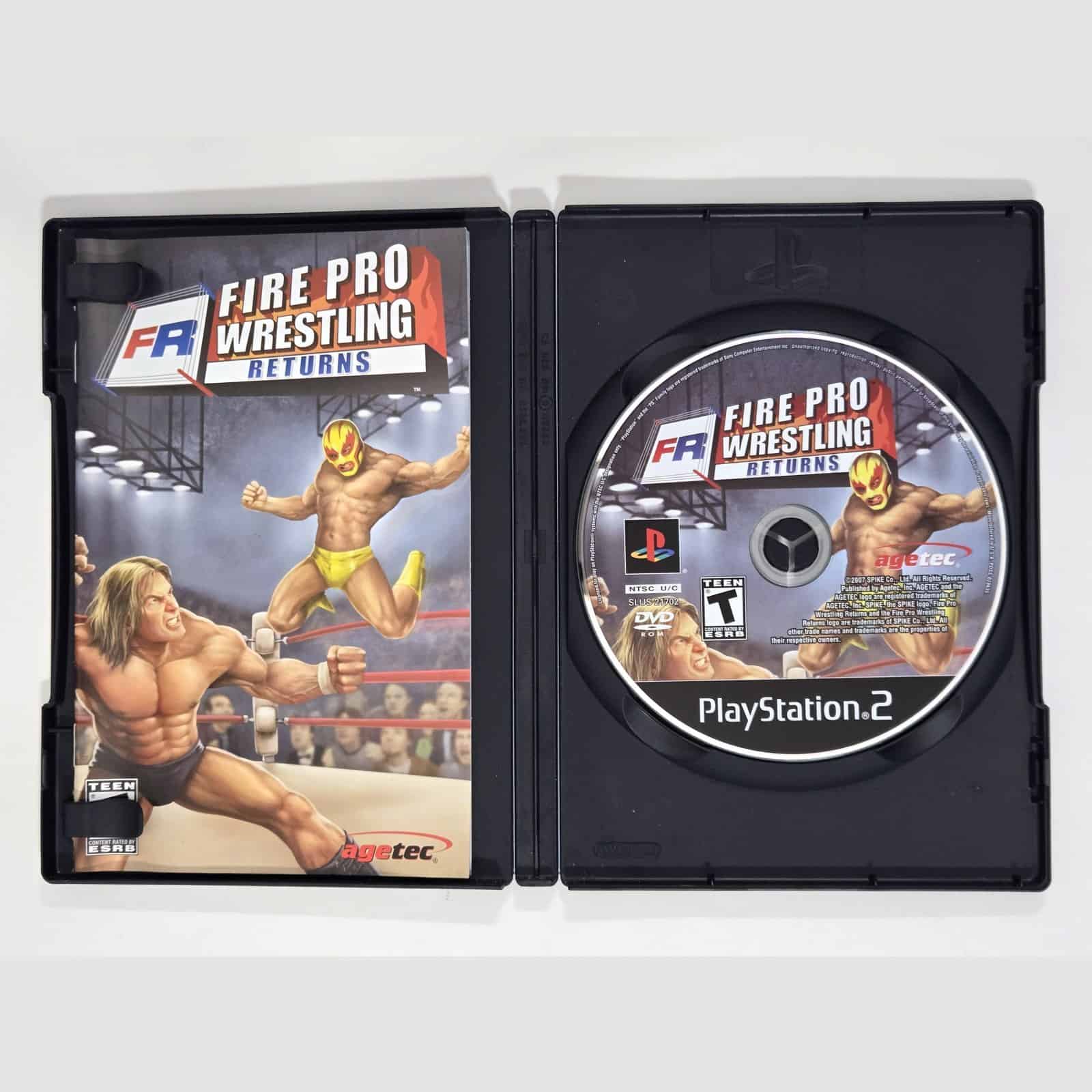
A complete North American copy is the case, the disc and the manual. Mine is complete:
Want one for your shelf? Find Fire Pro Wrestling Returns on eBay, and look for listings that show the manual.
Who made Fire Pro Wrestling Returns? Spike developed it. It came out in Japan in 2005, and Agetec published the North American version in 2007.
When did Fire Pro Wrestling Returns come out in North America? November 13, 2007, on PS2, at a budget price of $14.99.
Is Fire Pro Wrestling Returns a button masher? No. Grapples are won on timing, and mashing actually works against you.
Does Fire Pro Wrestling Returns have real wrestlers? It’s unlicensed, but the 327-wrestler roster is clearly inspired by real wrestlers from Japan, America and Mexico, and you can edit or create your own.
Can you watch CPU vs. CPU matches? Yes. You can program each wrestler’s logic and simulate matches, which is a big reason fans call it a wrestling simulator.
Can you play Fire Pro Wrestling Returns on PS3? Yes. A digital PS2 Classic version came to the PlayStation Store in 2013. I’ll always take the disc, though.
Is Fire Pro Wrestling Returns worth playing today? If you want a technical, sim-style wrestling game and have the patience to learn the timing, yes. If you want SmackDown-style action, it might not be for you.
Fire Pro Wrestling Returns isn’t trying to be flashy. It’s trying to be authentic, and that’s exactly what makes it stand out. For me, it’s the best wrestling game on the PS2.
Most platformers on the PlayStation 2 (PS2) have you jumping, running, maybe gliding. Scaler has you get captured, experimented on, and turned into a lizard. Suddenly you’re climbing walls, sticking to surfaces, and smacking enemies with your tongue.
This isn’t just another mascot platformer. Scaler on PS2 is one of those games that quietly tried something different and somehow flew under the radar.
This post contains affiliate links. If you buy through them I may earn a small commission, at no extra cost to you. It helps keep the channel going.
What is Scaler on PS2?
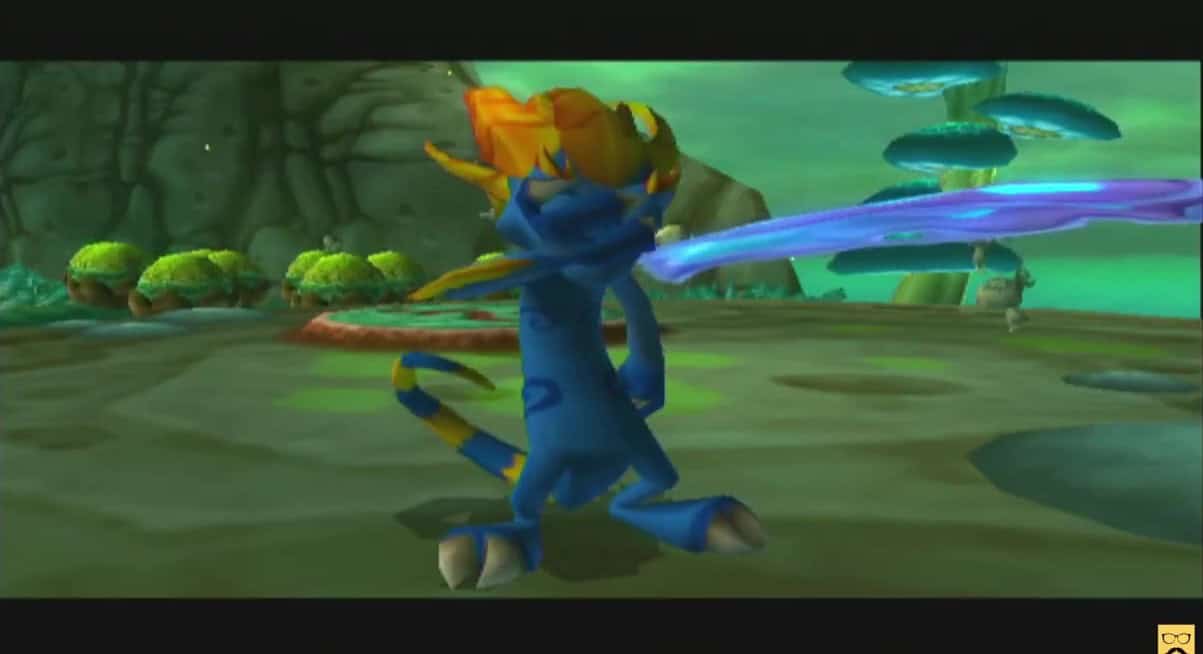
Trying to remember that PS2 game where you play a blue lizard who climbs walls and smacks enemies with his tongue? That’s Scaler, a 2004 3D platformer that also came out on Xbox and GameCube, and almost nobody noticed it.
It was developed by A2M (Artificial Mind and Movement) and published by Global Star Software, and it hit PS2 and Xbox in North America in October 2004, with the GameCube version following a month later.
That timing was rough. Platformers were everywhere on the PS2 back then, and standing out next to the big mascot series wasn’t easy.
You play as Bobby Jenkins, a 12-year-old who loves skateboarding and lizards, not necessarily in that order. He stumbles onto a villain’s plot to build an army of mutant lizards, gets caught, and comes out the other side as a blue reptile with a new nickname: Scaler.
From there he’s dropped into a strange parallel world, and the game becomes about learning a completely different way to move and fight.
This is where Scaler stands out. You’re not just running across the ground. You’re climbing walls, sticking to surfaces, and moving through levels vertically. Movement is the main mechanic, and once it clicks, you start seeing every level differently.
Combat fits the lizard theme. Your tongue lets you hit enemies from a distance. It takes out smaller enemies outright and stuns the bigger ones, which keeps the action flowing.
For heavier fights you’ve got claws. You start with a basic claw attack and upgrade your way up to the ultimate claw attack. Add a jump and you get a claw dash.
The best part: beat enough enemies of one type and Scaler can turn into them and borrow their abilities. There are five forms:
Bakudan: rolls bombs to take out enemies from a safe distance and blast open barriers.
Krock: a rolling spike attack that crushes enemies and breaks through barriers.
Doozum: flies to new areas and fights with a sonar attack.
Fruzard: a frilled lizard that’s basically a walking sniper rifle, picking enemies off from range.
Swoom: slow and awkward on land, but it’s the only form that can swim.
These transformations are pretty awesome, and they’re a big reason the levels don’t feel samey.
Like a lot of platformers from this era, you collect items, clear levels, and unlock new areas. The part the game doesn’t explain right away is how much those collectibles matter.
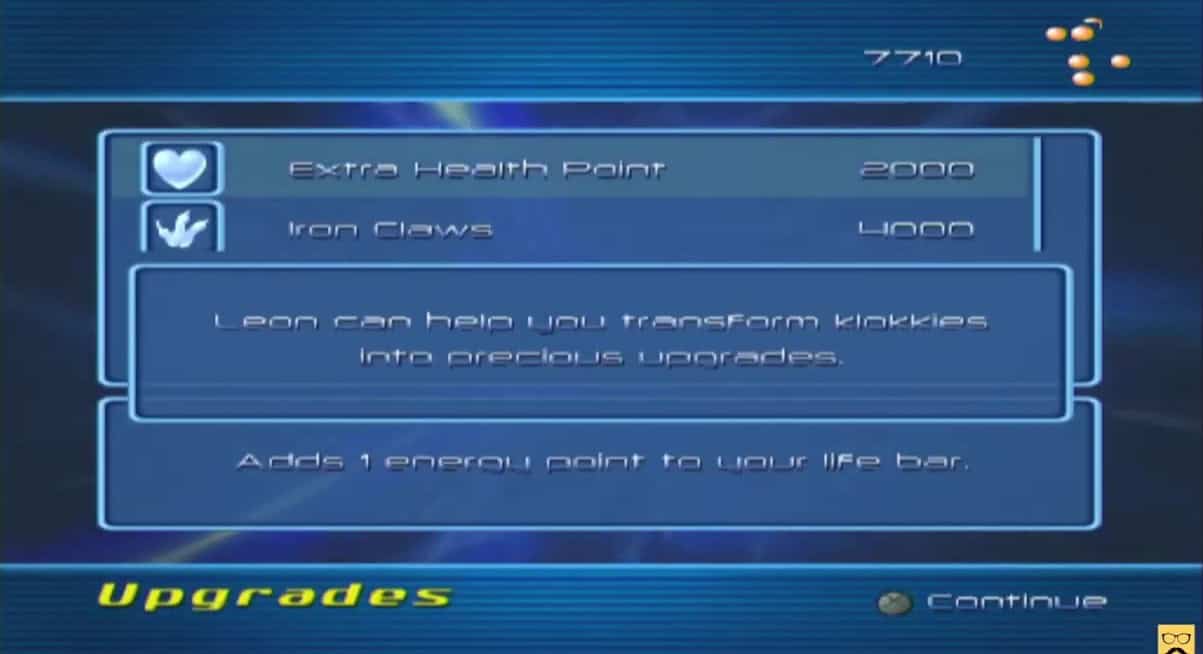
The energy you collect comes in the form of Klokkies, and as the upgrade screen puts it, “Leon can help you transform Klokkies into precious upgrades,” like extra health and Iron Claws. So it’s not just for completion’s sake. The more you explore and collect, the stronger Scaler gets.
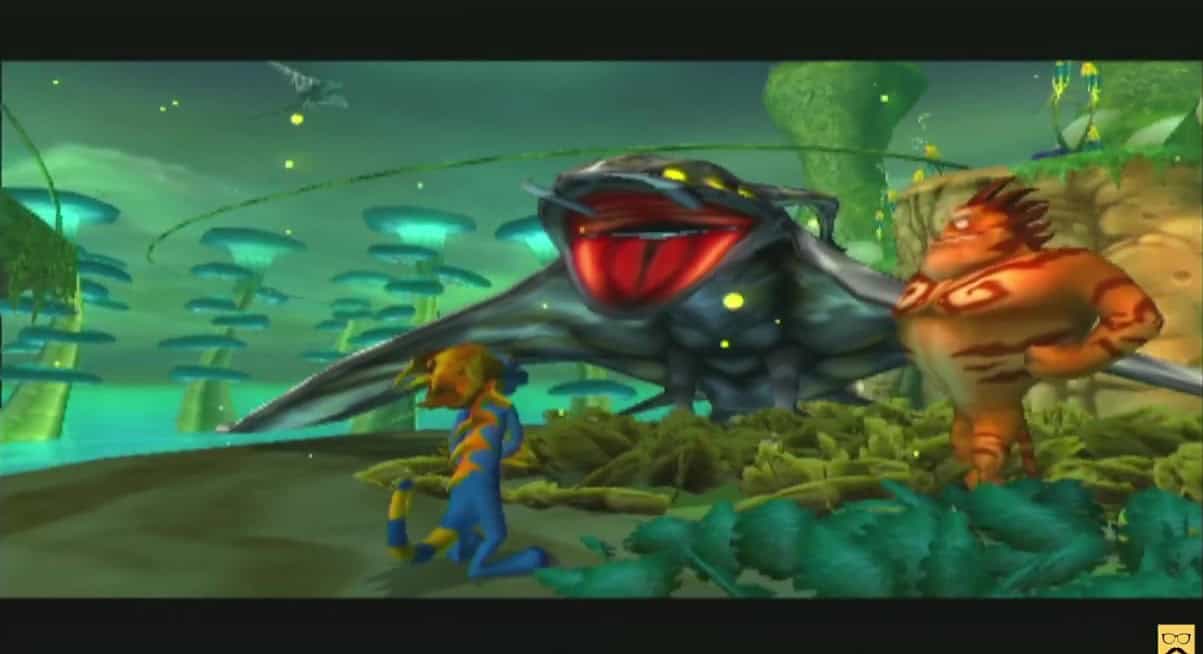
And the way you get those upgrades is the best part. You hand over your Klokkies, and a giant creature basically throws up on you. Yuck. It’s gross, it’s hilarious, and it’s very 2004.
What makes Scaler interesting to me is that its uniqueness comes from movement, not complexity. Being able to climb and reposition yourself changes how you approach every challenge.
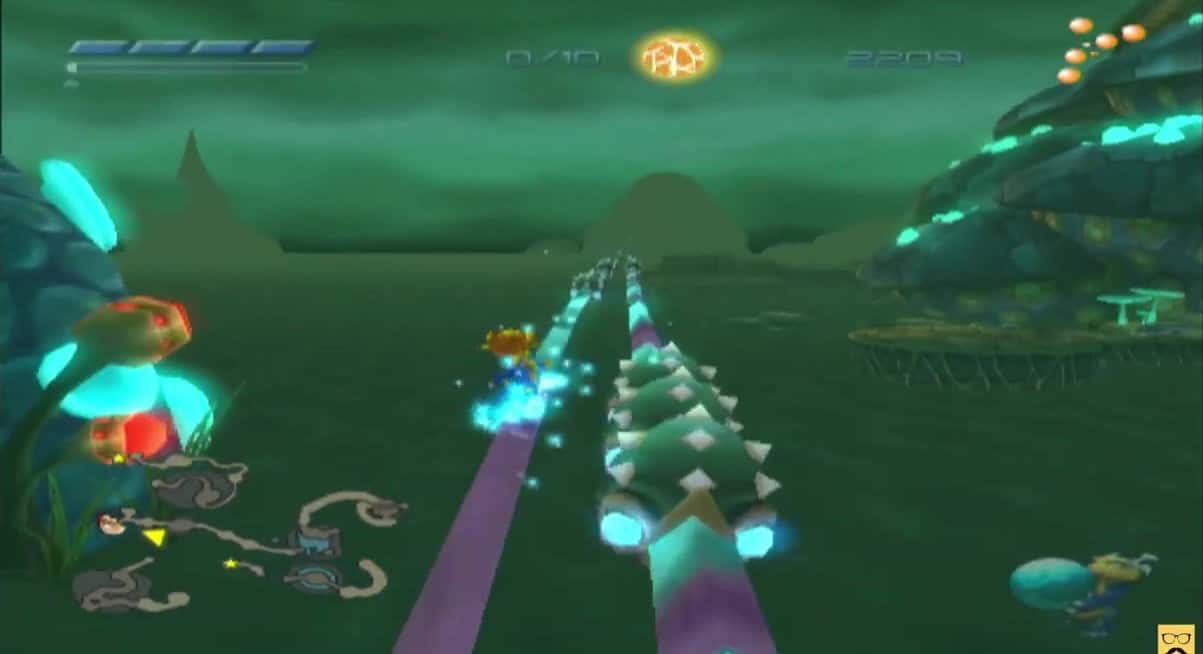
On top of climbing and camouflage, you’ve got vine riding, which I think is one of the coolest features in the game. You surf along vines to reach new areas, and riding them also charges up your electric bomb attack.
Explore, climb, fight, collect, progress. Simple structure, but the way you move through the world makes it feel fresh.
Scaler leans into colorful, stylized visuals. The environments are clear, easy to read, and built around vertical movement, which matters when you’re spending half the game on walls.
The soundtrack keeps the energy up during platforming sections and stays subtle while you explore, which I thought was a nice touch.
At first the movement feels awkward. It’s a new game and you’re learning how to climb, reposition, and figure out how everything works. But once it clicks, you start flowing through levels, and that’s where Scaler really shines.
Critics were split. IGN gave it an 8 out of 10, Game Informer gave it a 4.5, and it averaged around 70 on Metacritic. Most reviews liked how it looked and played but called the story and level design formulaic. That lines up with my take: it’s not reinventing the genre, but it does just enough to feel different.
I’ve also noticed Scaler popping up in conversations again, especially on Reddit, where overlooked PS2 platformers are getting a second look. Not because it was a massive hit, but because it tried something different.
From a collector’s perspective, Scaler sits in an interesting middle ground. Not rare, not super common, but definitely overlooked. Those are often the most fun games to rediscover.
The North American PS2 release is SLUS-20957, and a complete copy is the case, the disc and the manual. Mine is complete:
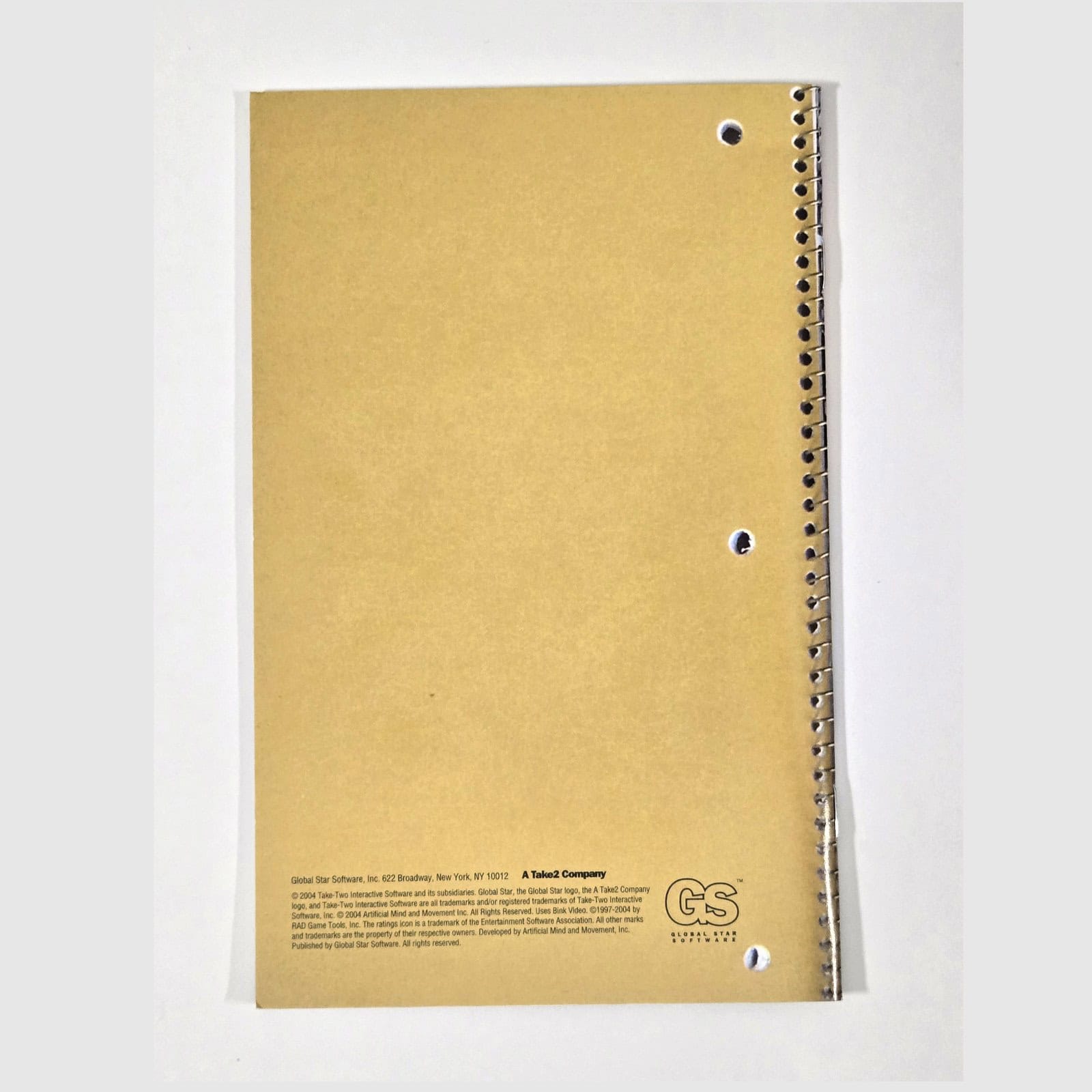
The back of the manual is styled like a school notebook, spiral and all.
Want one for your shelf? Check Scaler on eBay, and look for listings that show the manual.
If you’re new to PS2 collecting, my PS2 Beginner’s Guide covers how to get set up cheap. And if you want something stranger after this, check out my Eternal Poison review.
Scaler FAQ
What’s the PS2 game with the blue lizard? It’s Scaler (2004). You play Bobby Jenkins, a kid who gets turned into a blue lizard, climbing walls, grabbing enemies with your tongue and transforming into other creatures. It also came out on Xbox and GameCube.
Who made Scaler? A2M (Artificial Mind and Movement) developed it, and Global Star Software published it in 2004.
What platforms is Scaler on? PlayStation 2, Xbox and GameCube. The PS2 and Xbox versions came out in North America in October 2004, and the GameCube version followed in November.
Who is Scaler? Scaler is Bobby Jenkins, a 12-year-old who gets turned into a blue lizard after stumbling onto a villain’s plan to build an army of mutant lizards.
What can Scaler transform into? Five enemy forms: Bakudan, Krock, Doozum, Fruzard and Swoom. You unlock them by defeating enough enemies of each type.
What are Klokkies in Scaler? The energy you collect, which Leon can turn into upgrades like extra health and stronger claws.
Is Scaler worth playing today? If you like PS2 platformers and want something a little different, yes. The movement feels awkward at first, but once climbing clicks, the levels open up.
Scaler isn’t trying to reinvent platformers. It introduces just enough to feel different: wall climbing, a tongue attack, enemy transformations and vine surfing. For PS2 collectors like me, it’s one of those games worth revisiting.
Most tactical RPGs want you to wipe the enemy off the map as fast as possible. Eternal Poison wants you to leave one alive, beat it to within an inch of its life, and drag it home in a book.
That one idea is what makes this game. It turns every battle into a gamble and every map into a hunt, and it’s why Eternal Poison is one of my favorite hidden gems on the PlayStation 2 (PS2).
This post contains affiliate links. If you buy through them I may earn a small commission, at no extra cost to you. It helps keep the channel going.
Eternal Poison is a tactical RPG developed by Flight-Plan, the studio behind Summon Night. It came out in Japan in early 2008 as Poison Pink, and Atlus brought it to North America in November 2008.
That timing matters. This is late-era PS2, when most publishers had already moved on to the PS3 and Xbox 360. Atlus was still doing what Atlus does best: bringing over strange, system-heavy games for the people who love that stuff.
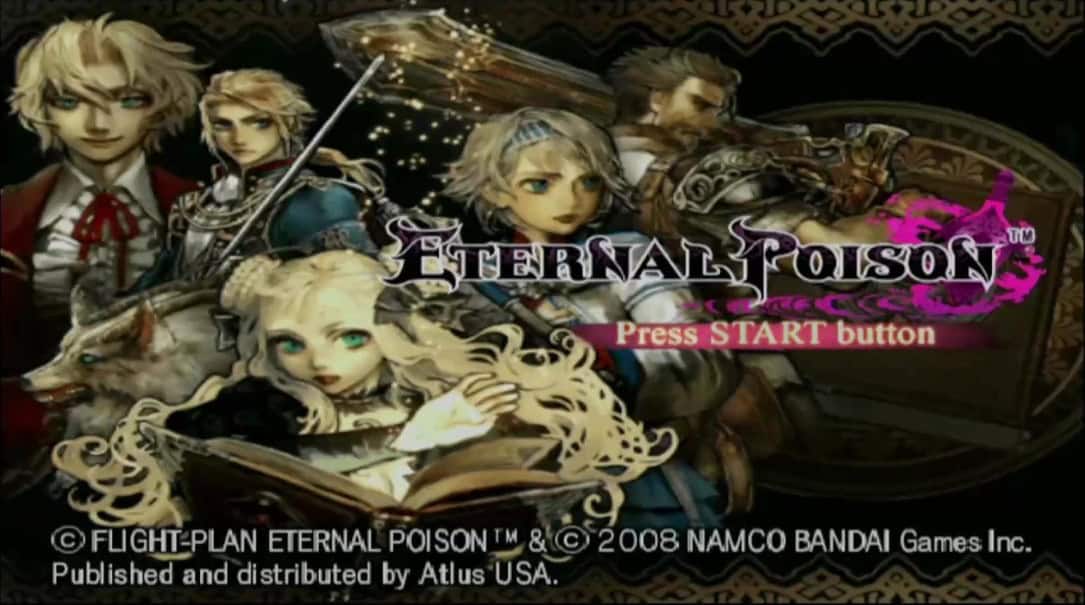
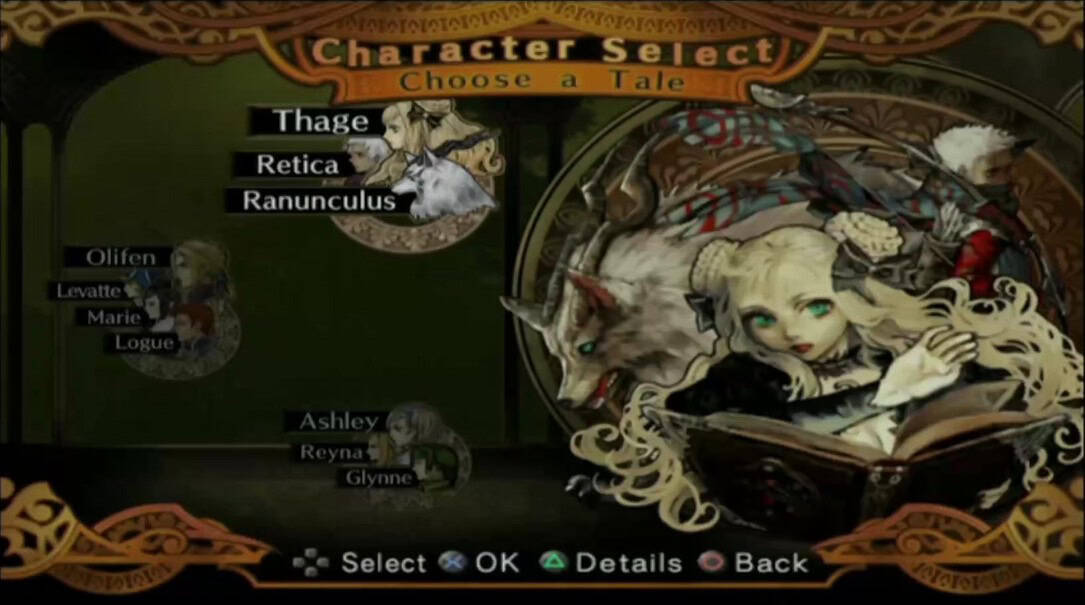
The setup is dark fantasy. A demon realm called Besek appears and starts swallowing the kingdom, and different groups head inside for their own reasons. The back of the box calls it “five stories in one”: you pick which of five parties to follow, each with its own branching path, and not all of them are heroes.
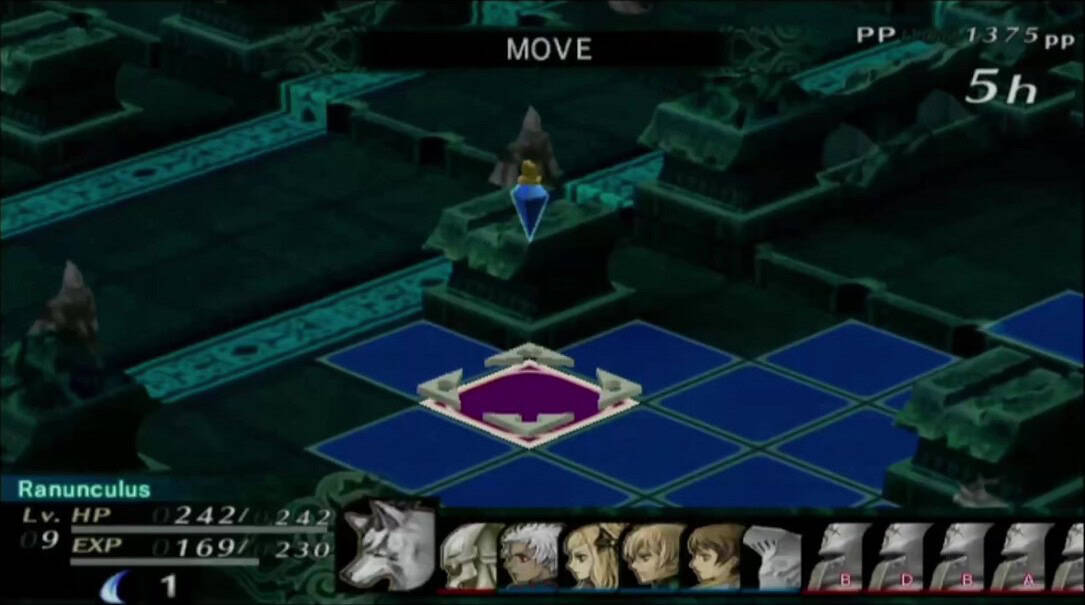
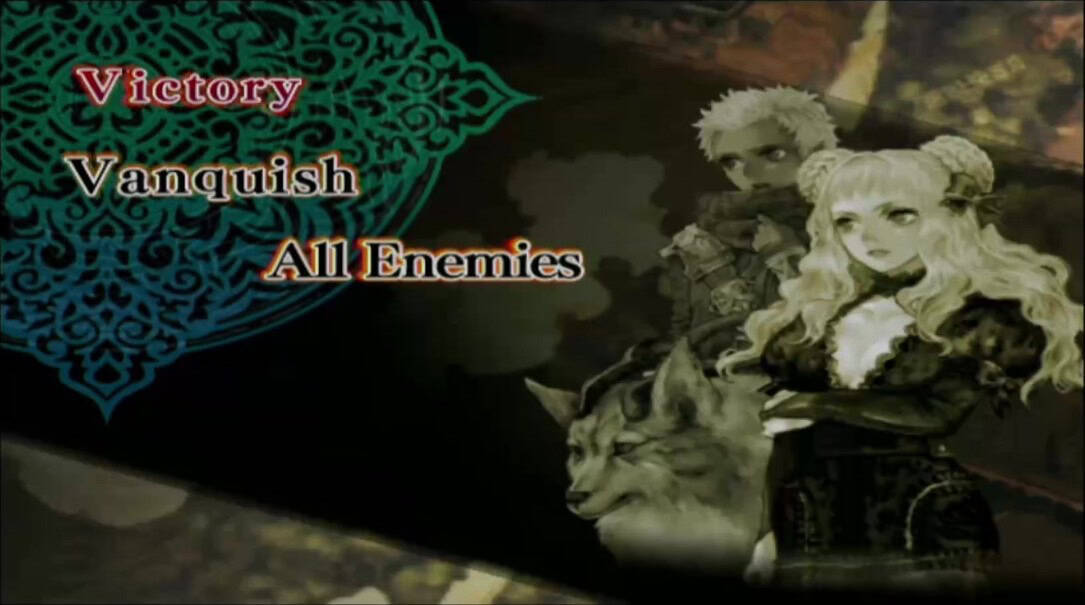
I started with Thage, a witch who walks into Besek with a talking wolf named Ranunculus (Raki for short) and a book called the librum. Her goal is simple: “I’ll seize all the Majin. That’s why I’m in Besek.”
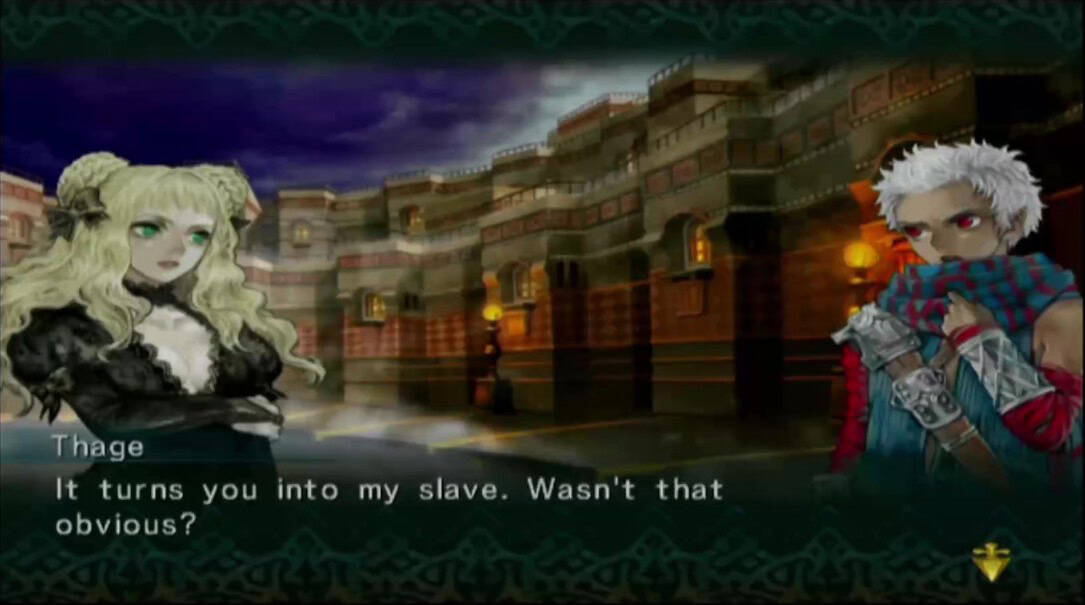
She is not a nice person, and that’s what makes her fun. Early on she runs into a kid named Retica in the middle of a Majin attack and binds Retica with something called the Oath of Obedience. When Retica asks what that means, she answers: “It turns you into my slave. Wasn’t that obvious?”
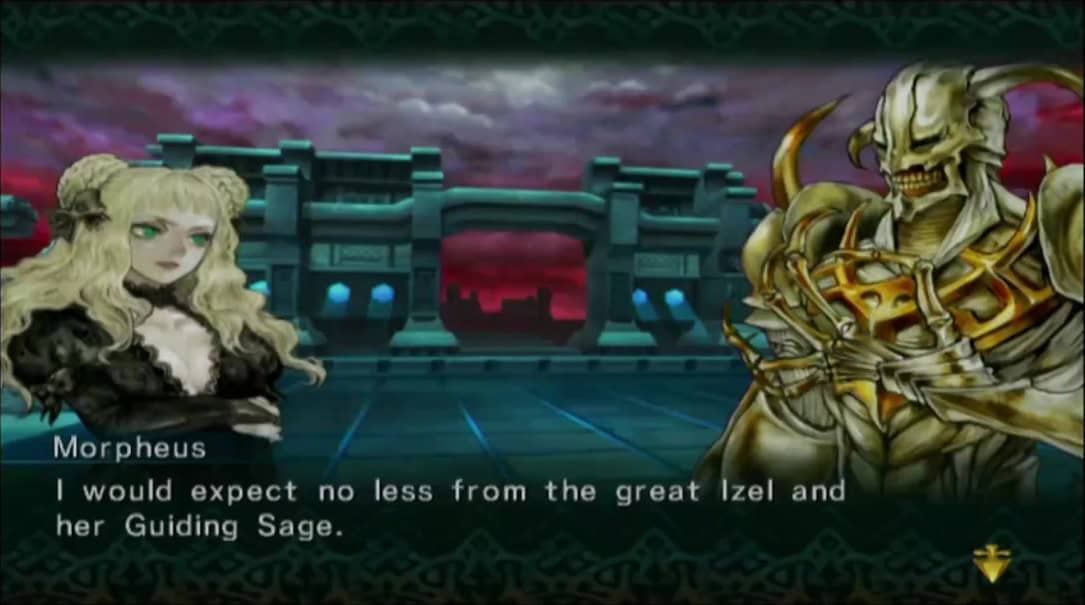
Then there’s Morpheus, a Majin Lord in gold armor who wants Thage’s librum and keeps showing up to threaten her for it. The game is full of characters with motives, and very few chosen-one speeches.
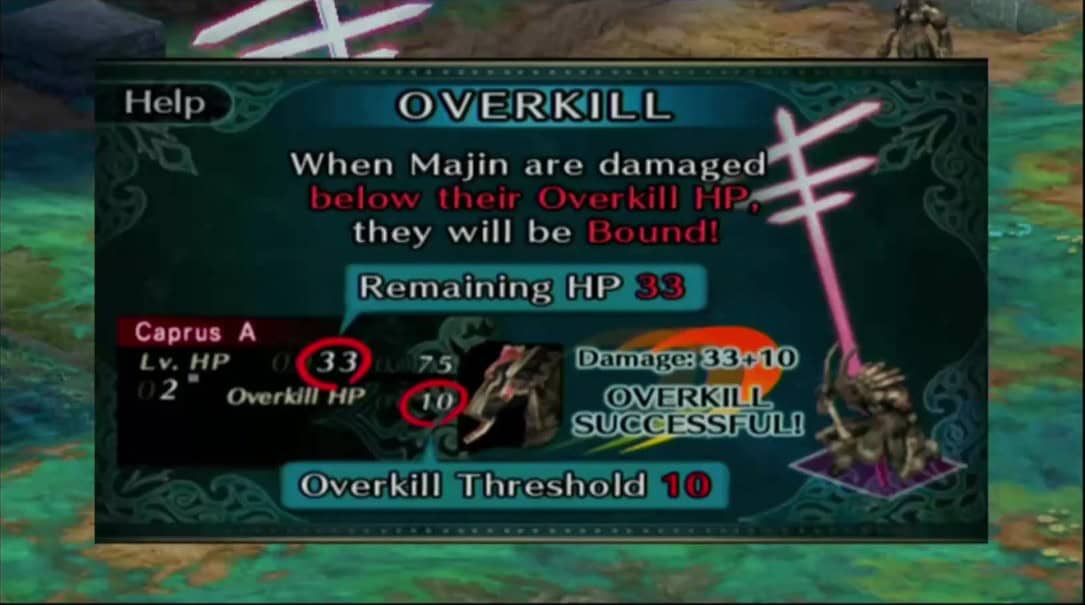
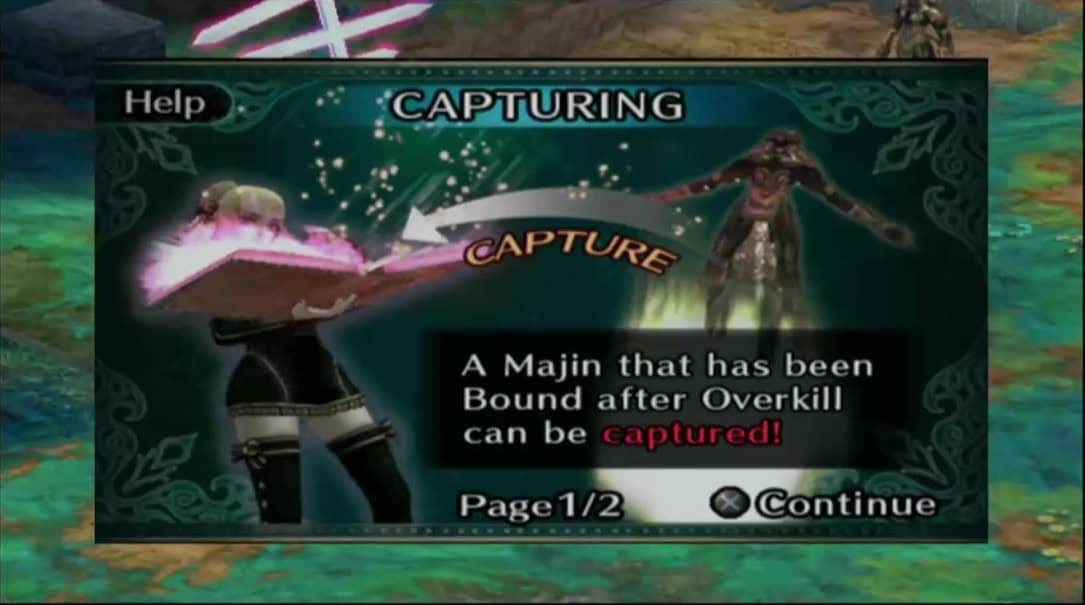
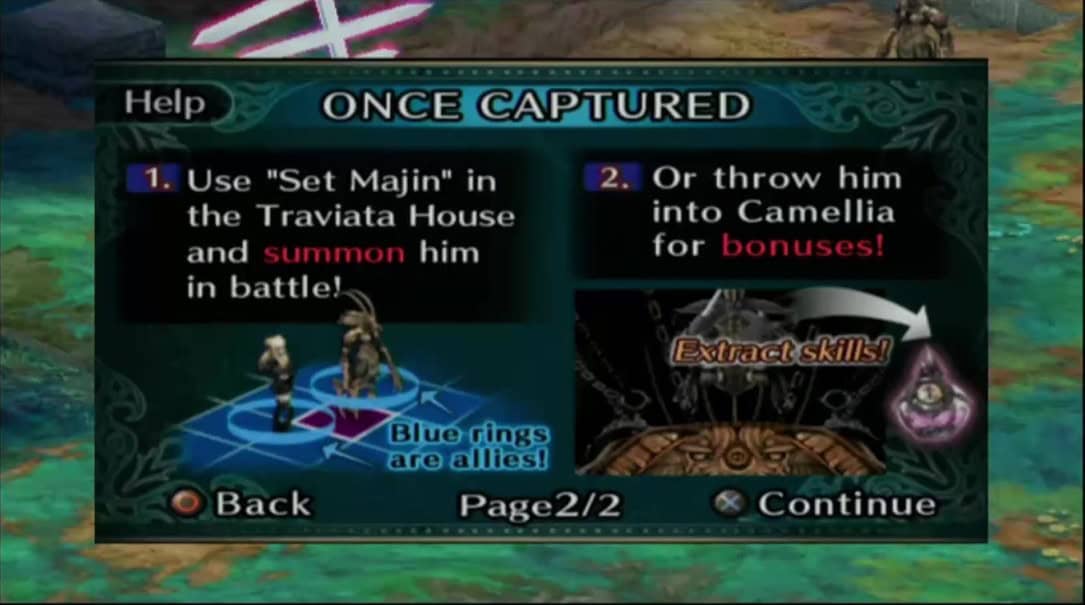
The demons of Besek are called Majin, and catching them is the heart of the game. Here’s how it works, straight from the game’s own help screens:
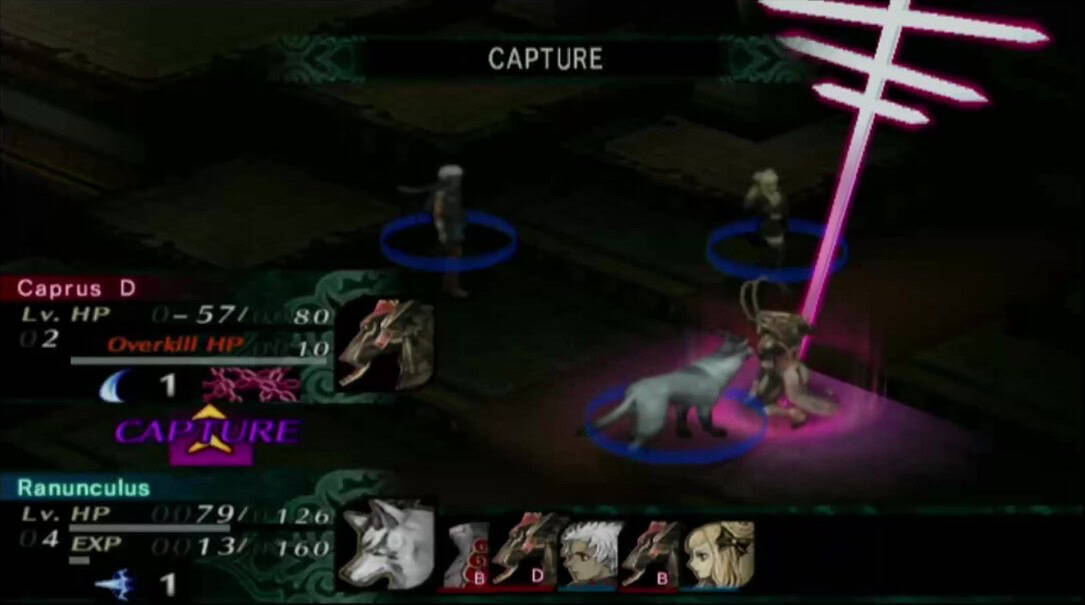
Overkill: every Majin has an Overkill threshold. Hit it hard enough to drop its HP below that number, and it becomes Bound.
Capture: a Bound Majin can be captured. Any party member can do it, storing the Majin in Thage’s librum.
Once captured, you have two choices: set the Majin and summon it to fight for you in battle, or throw it into Camellia for bonuses. More on Camellia in a second.
Straight from the game’s help screens.
This changes how you play. You can’t just hit everything as hard as possible. You want each Majin low enough to bind, but not dead. So every fight becomes “win this battle, catch the one I want, and don’t get my party smoked doing it.”
Once I realized capturing wasn’t optional, that it was basically a second progression system, I started playing way more carefully. I’d go into fights thinking: which one do I want, and how do I get it without losing anybody?
Camellia: the blender
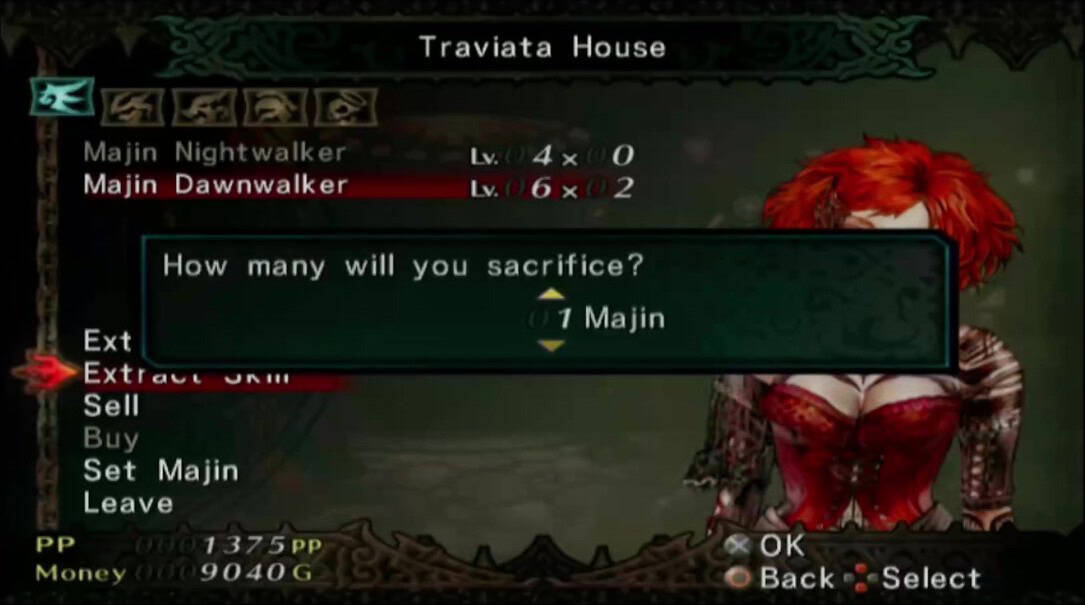
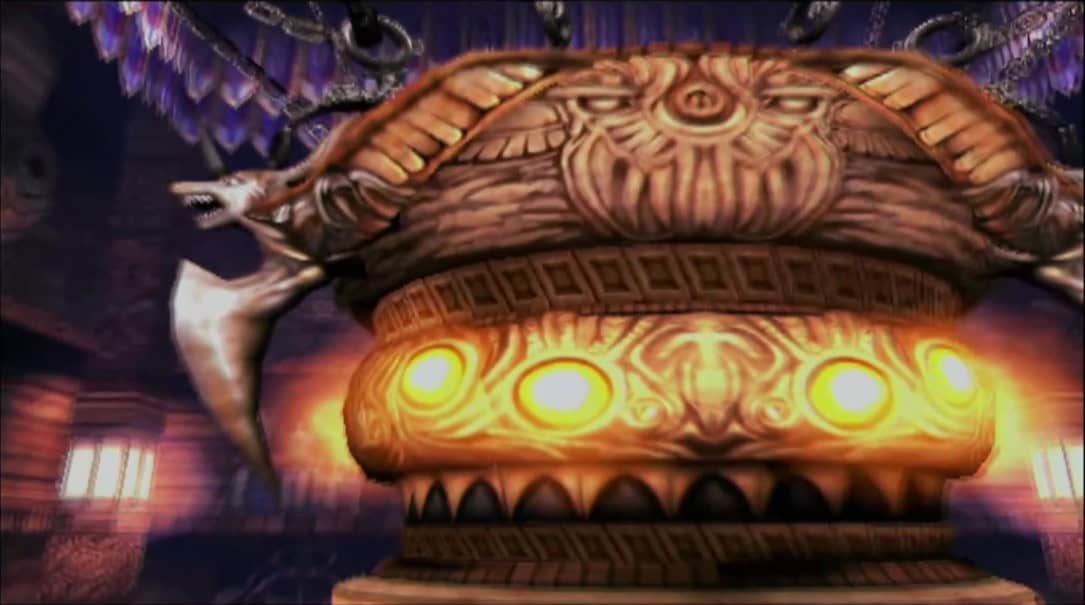
Back in town, the Traviata House is where you manage your captured Majin. You can set them for battle, sell them, or feed them to Camellia, a giant ornate machine that turns Majin into PP and new skills. The menu literally asks, “How many will you sacrifice?”
I call it the blender in the video, and I stand by that. You sure about that?
The blender. Officially, Camellia.
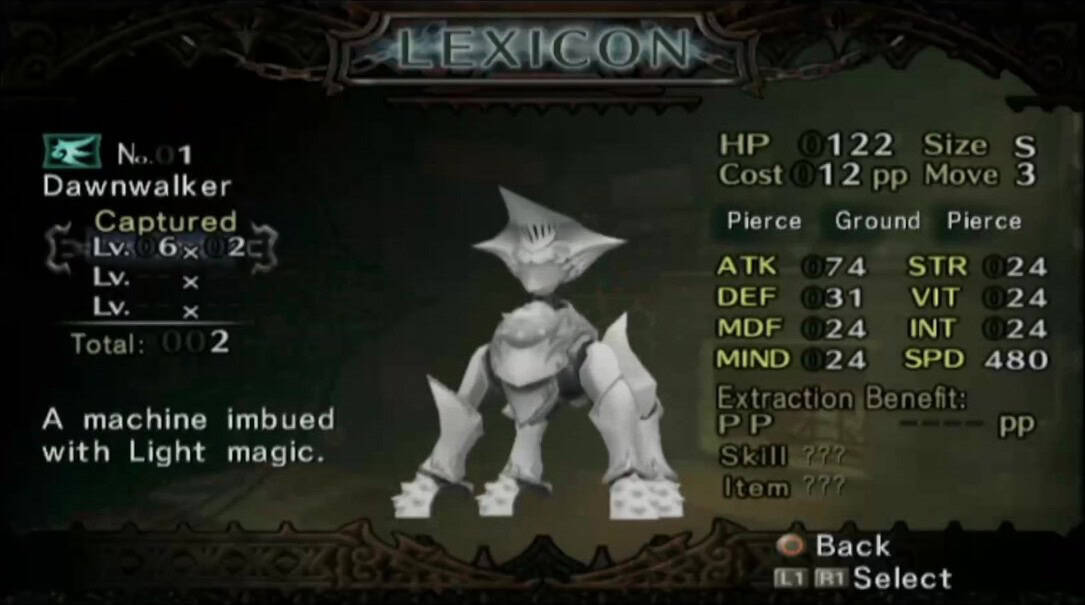
Every Majin you catch also gets logged in the Lexicon, sorted into types like Starving, Wretched, Howling, Dreadful and Infernal, with stats and a short description for each. If you’re the kind of player who has to fill every page, it’s dangerous.
The battles are classic tactical RPG territory: an isometric grid, movement ranges, attack ranges, and enemies that punish sloppy positioning. Charging in because your stats are higher won’t save you.
A few systems keep it interesting:
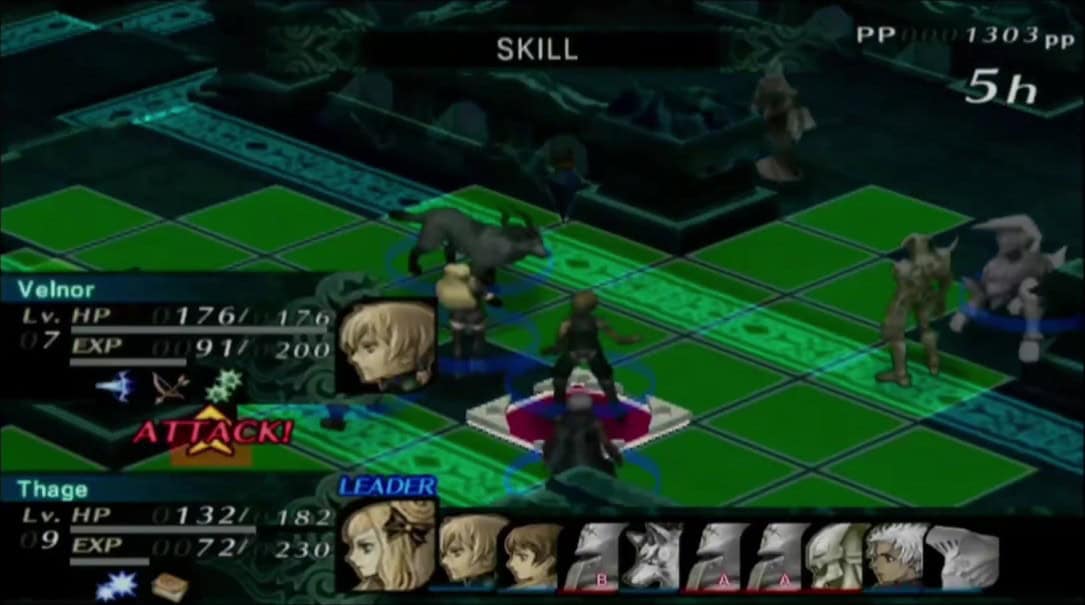
Lead and Waiting: units that don’t act on their own can move and attack during your leader’s turn instead.
Combos: two allies can attack the same target at once for a lot more damage, which is handy when you’re trying to hit an Overkill threshold.
Weaknesses and resistances: every Majin has a weakness, and some are wrapped in a Demon Aura that blocks every attack until you find it.
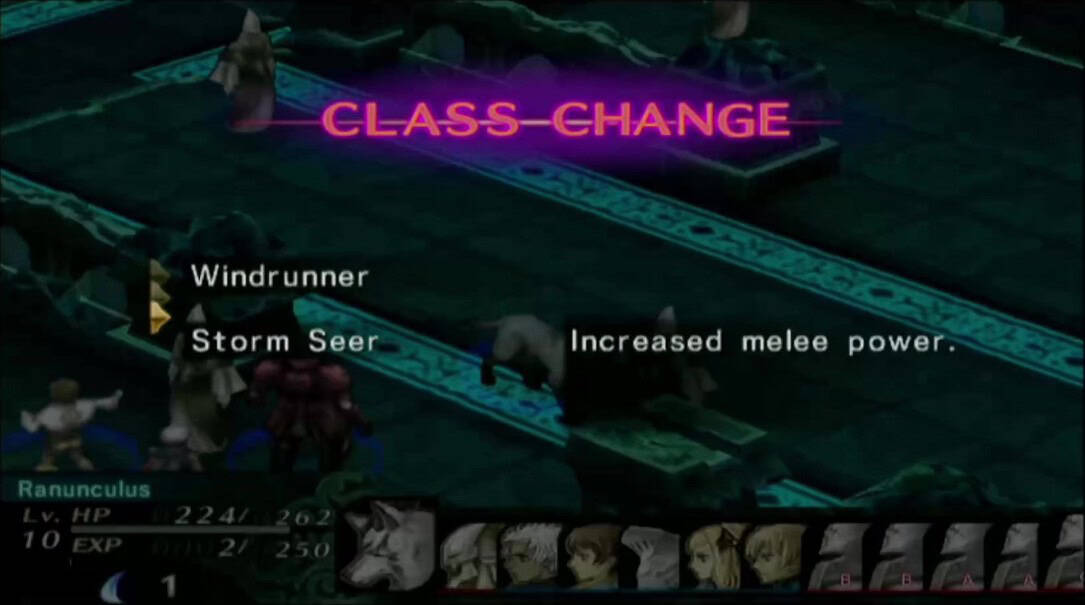
Class changes: characters can switch classes as they level up.
Lose your main character and it’s over. Protect the witch.
You won’t find a big crafting grind here. No farming materials for two hours to make one sword. The depth comes from how you fight and what you catch. It scratches the collector itch through hunting instead of crafting.
Between battles
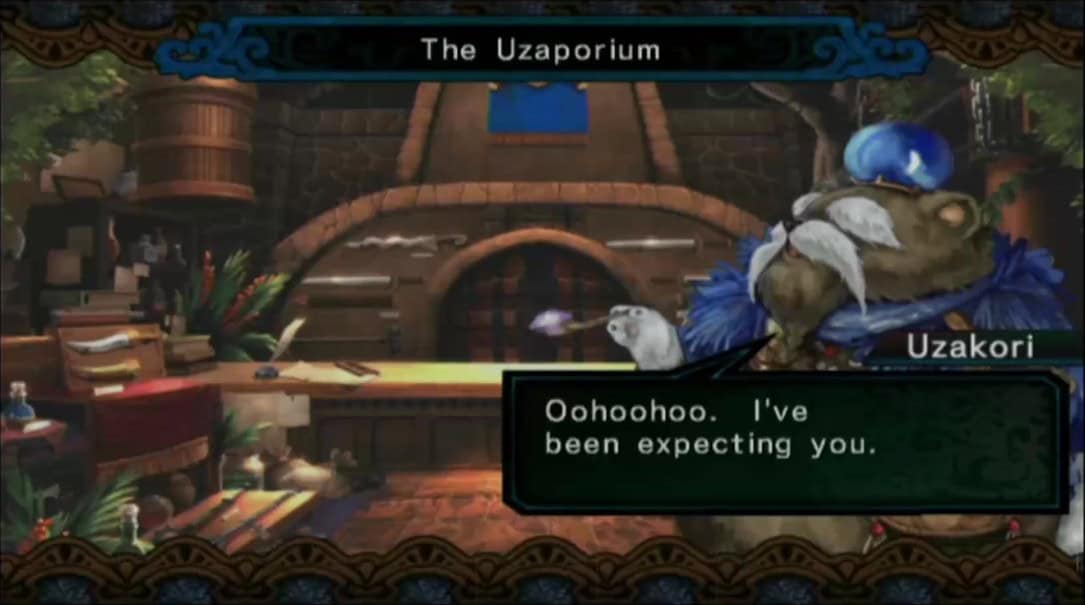
Your home base is Twilight’s Rest, in the city of Isapolis. From there you shop, gear up, save, and talk to some memorable weirdos, like Uzakori, the frog-like merchant who runs the Uzaporium and greets you with “Oohoohoo. I’ve been expecting you.”
Eternal Poison has a look you’ll remember, whether you love it or not. The character designs are by an illustrator who goes by Tomatika, and they feel like they’re from one very specific moment in PS2 RPG history. If the style looks familiar, Tomatika has also drawn Final Fantasy XIV characters, which have their own following online. Fans of her work still find their way back to this game and wonder why nobody talks about it. Same.
The soundtrack, from a team that includes Takashi Okamoto, Yuki Nakagawa and Kazuma Katagiri, isn’t hero-anthem energy. It’s restrained and unsettling, more “you’re somewhere you shouldn’t be” than “go save the world.”
Does it hold up?
I think it still holds up today. The art style and the animations look great, and that’s a big part of the charm. After a while, though, the battle animations get repetitive and can slow things down. My move: leave them on the first time through a new area so you get the full show, then switch them off when you’re replaying areas.
Critics were split when it came out. IGN gave it a 3.5 out of 10, and Destructoid gave it an 8. That gap tells you a lot. If you want a polished, mainstream strategy game, this might not be it. If you like games that are a little strange but clearly made on purpose, it’s exactly your thing.
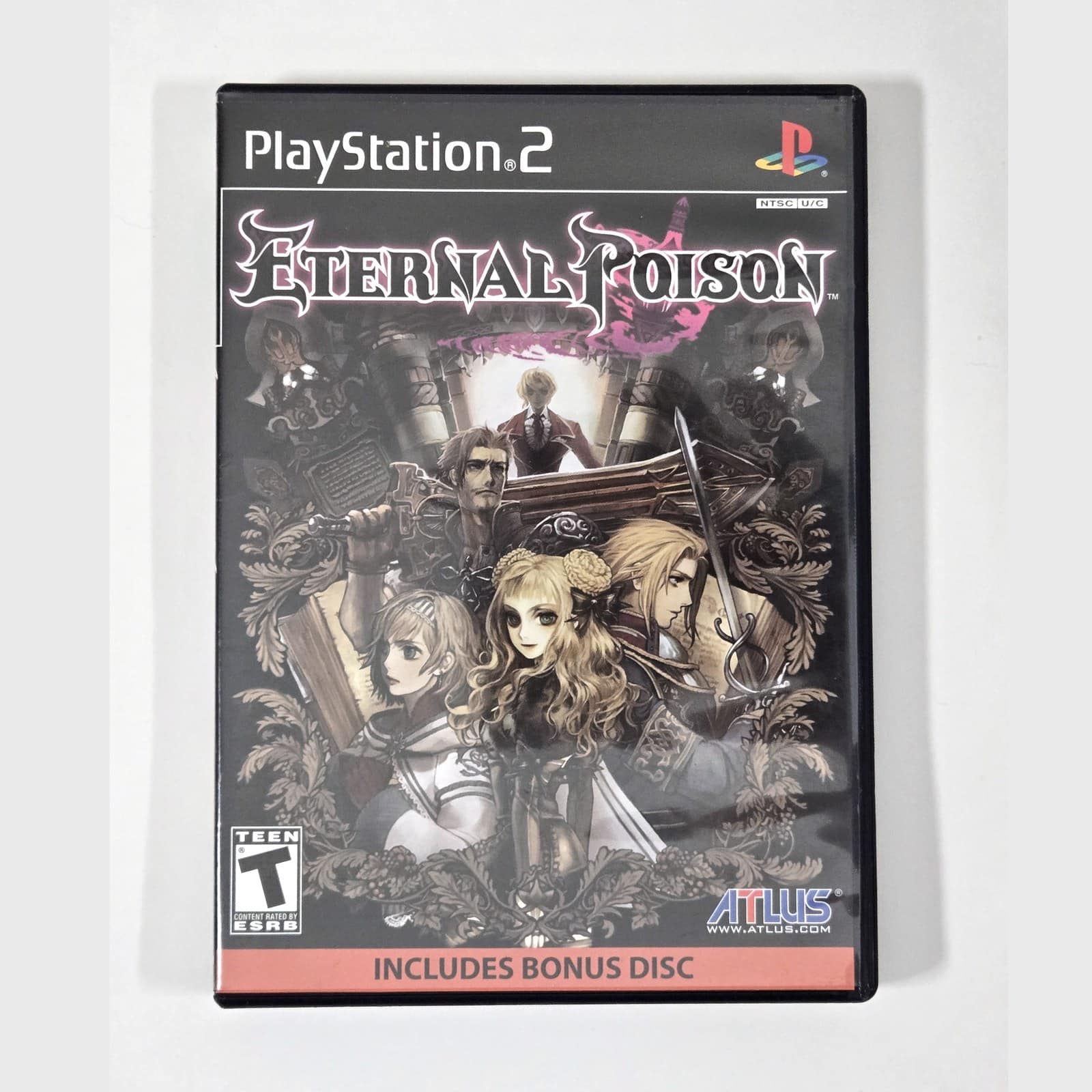
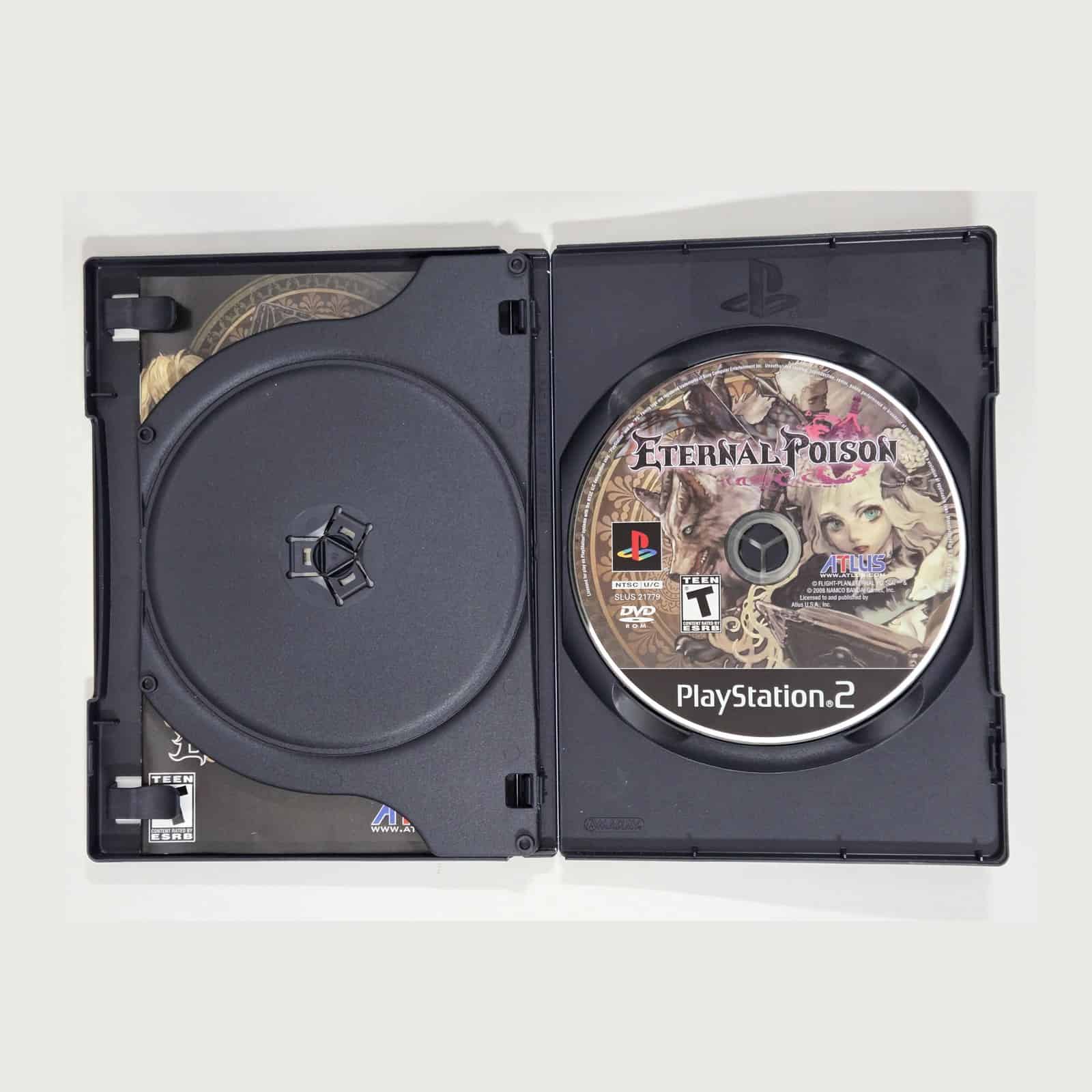
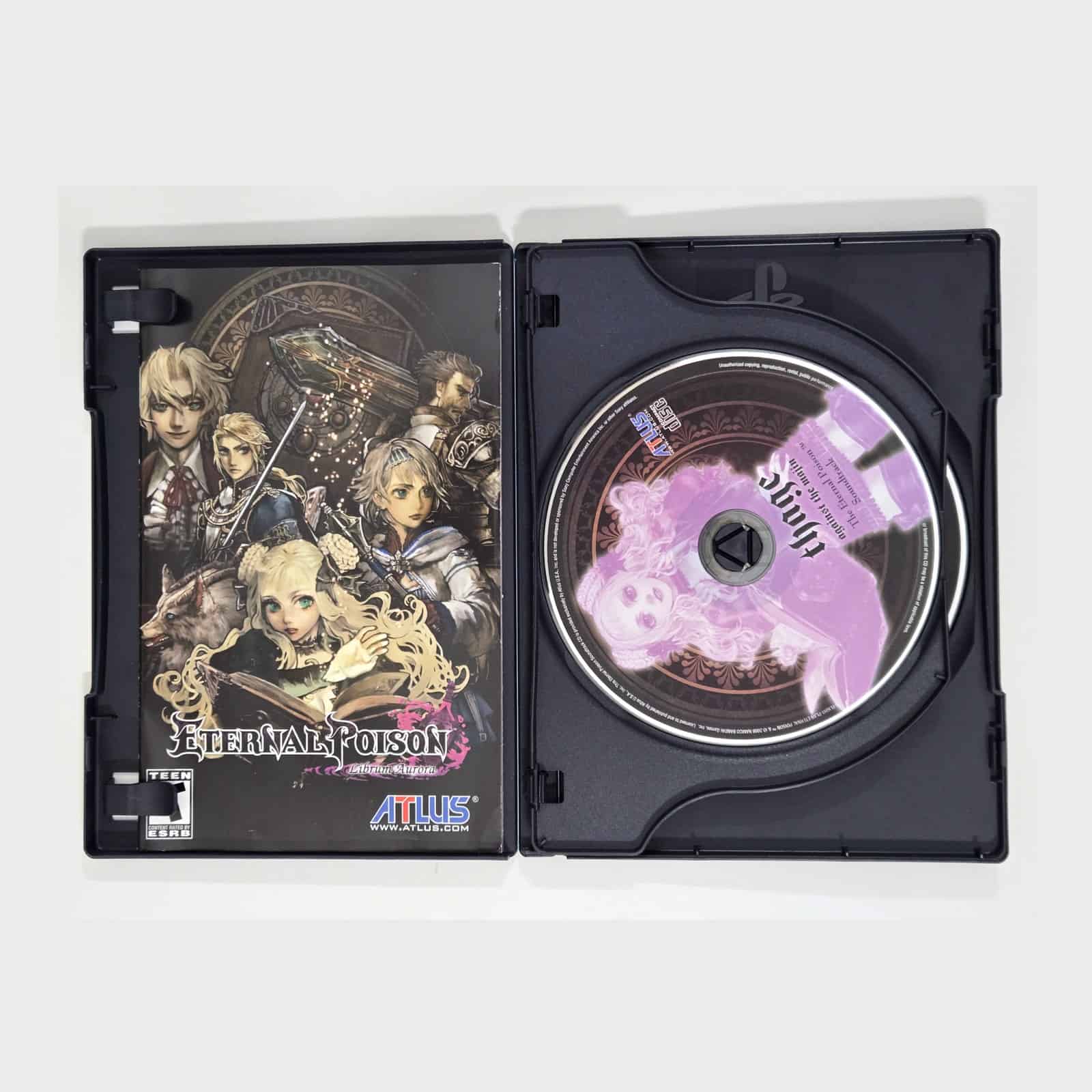
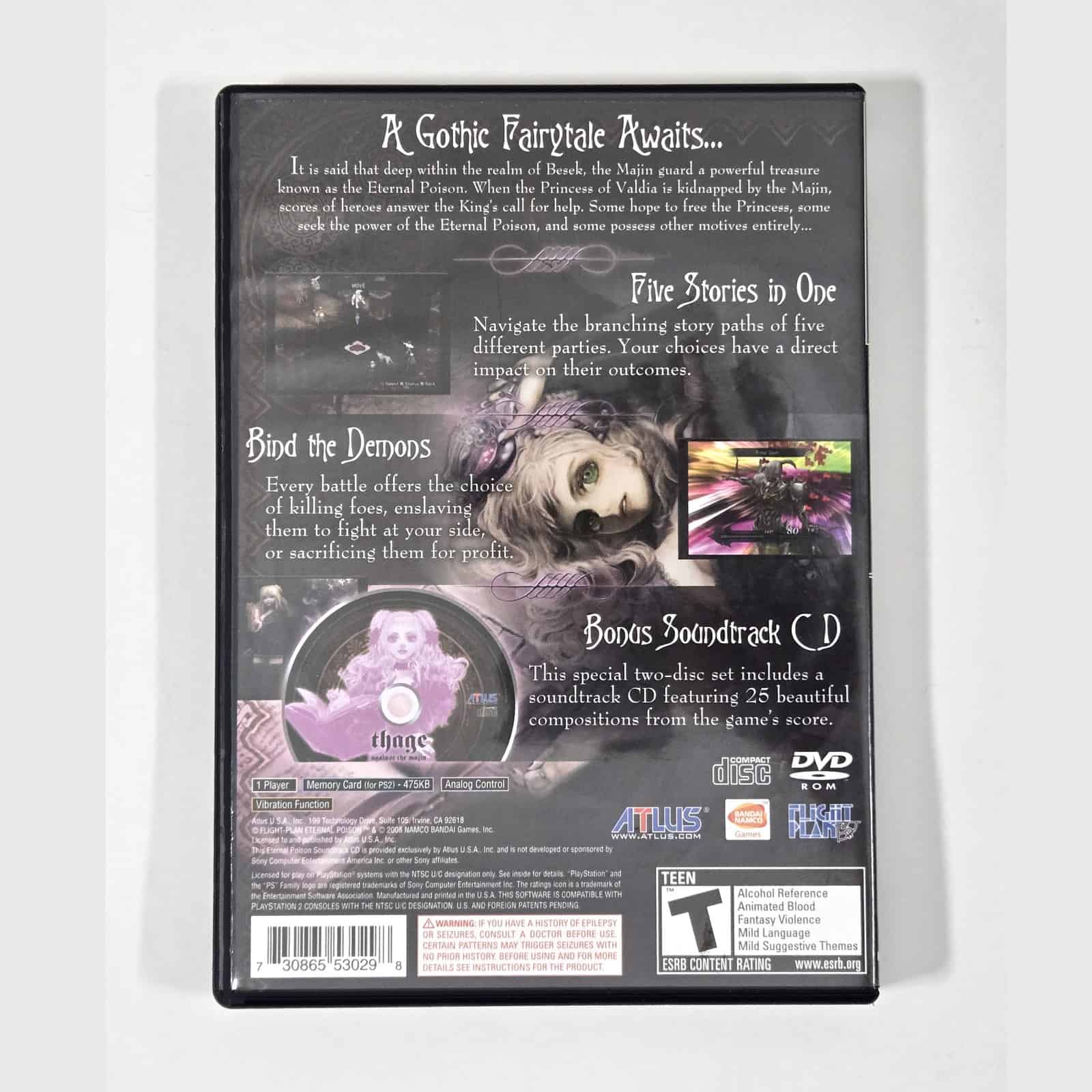
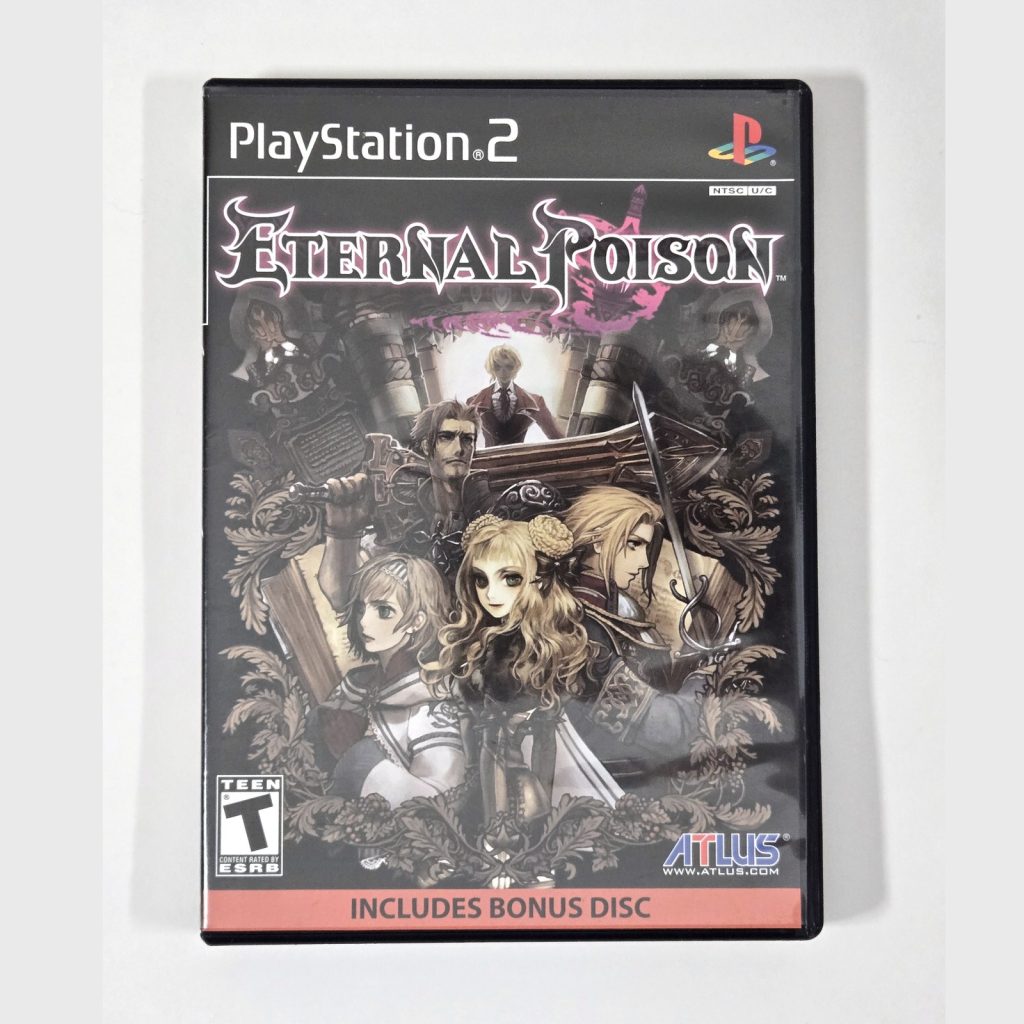
Here’s what matters if you’re hunting for a copy. The North American release came packed with a soundtrack CD. So a complete-in-box (CIB) copy is the case, the game disc, the soundtrack disc, and the manual. Plenty of loose copies and “complete” listings are missing that second disc, so check the photos before you buy.
My copy is the full set, soundtrack CD and all, which made me very happy. And it’s in great condition still. I’ve taken very good care of this game.
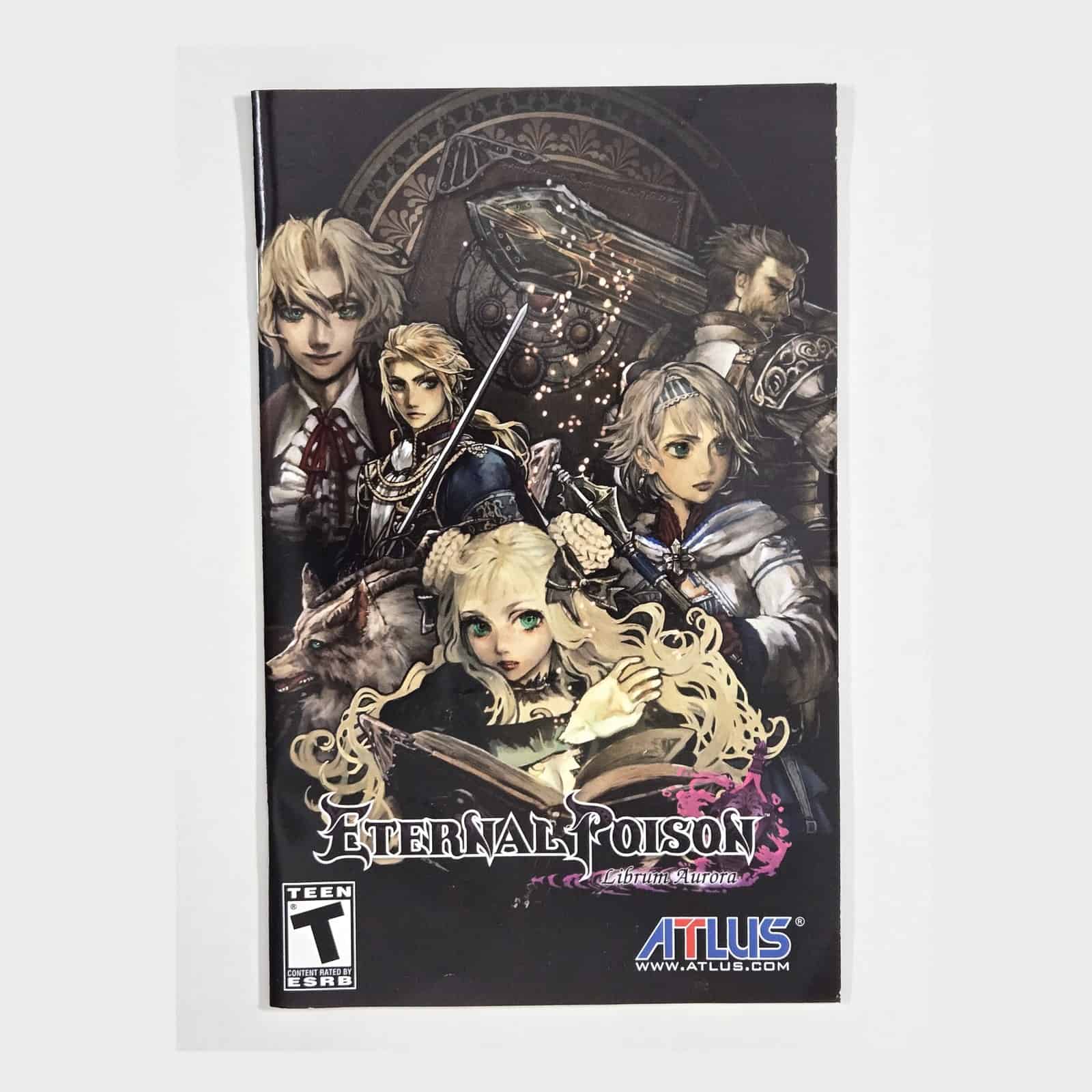
My copy: game disc, soundtrack CD, manual and case. Note the “Includes Bonus Disc” banner on the front.
Dark fantasy, Atlus on the spine, a mechanic nobody else was doing, and a presentation that looks PS2-weird in the best way. That’s the kind of game that tends to age well on a shelf. It’s also the kind of game where someone pulls it off your shelf and goes, “Wait, what is that?”
If you’re new to PS2 collecting, my PS2 Beginner’s Guide covers how to get set up cheap. And if La Pucelle: Tactics from that list clicked for you, Eternal Poison is a natural next step.
Join r/EternalPoison
I also run r/EternalPoison on Reddit. It’s quiet, but if you’ve played it, or you’re about to, come say hi.
Eternal Poison FAQ
Who made Eternal Poison? Flight-Plan developed it. Banpresto published it in Japan as Poison Pink in 2008, and Atlus published it in North America in November 2008.
Is Eternal Poison a PS2 exclusive? Yes. It only came out on the PlayStation 2, with no remaster or port.
What are Majin in Eternal Poison? Majin are the demons of Besek. You capture them in battle, then either summon them to fight for you or throw them into a machine called Camellia for PP and new skills.
How do you capture Majin in Eternal Poison? Drop a Majin’s HP below its Overkill threshold so it becomes Bound, then use the capture command. Any party member can capture, and the Majin is stored in Thage’s librum.
What comes in a complete copy of Eternal Poison? The North American release includes the game disc, a soundtrack CD, the manual, and the case. Check listings for the soundtrack disc, since it often goes missing.
Is Eternal Poison hard? It can be. Sloppy positioning gets punished, and trying to capture Majin means keeping dangerous enemies alive longer on purpose.
Eternal Poison isn’t just a tactical RPG. It’s a tactical RPG with a capture system that changes how you think about every fight. It rewards patience, it rewards planning, and it rewards the kind of player who likes things slightly strange. If you’re digging through the PS2 library for something that doesn’t feel like every other strategy game, put this one on your list.
Maybe you grew up with the PlayStation 2 and you’ve been thinking about coming back. Maybe everything happening with digital-only games has you thinking a little harder about actually owning what you buy. Or maybe you’ve never touched a PS2 in your life and have no idea where to start. This PS2 beginner’s guide is for all of you.
We’re building a PlayStation 2 (PS2) starter kit: the cheapest way to get a PS2 running on a modern TV, plus 20 games I think are genuinely worth owning. They cover a huge range of what this console does, and you can still collect every one of them without wrecking your wallet.
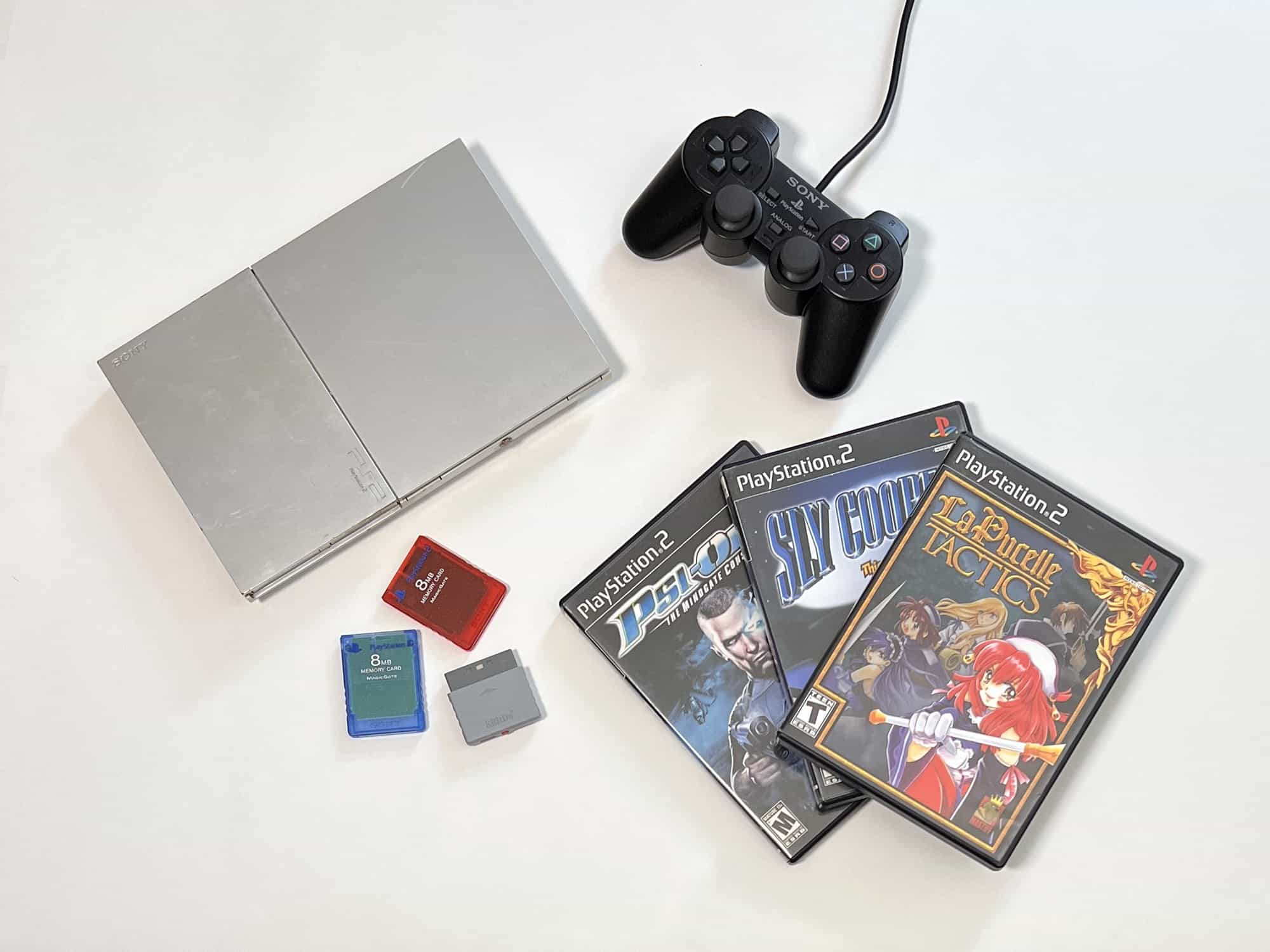
The starter kit: a slim PS2, a DualShock 2, a couple of memory cards, and a few games to get going.
This post contains affiliate links. As an Amazon Associate I earn from qualifying purchases. It doesn’t cost you anything extra, and it helps keep the channel going.
Quick answer: what do you need to start collecting PS2 games? A PlayStation 2, an original DualShock 2 controller, an official 8 MB memory card, and a cheap composite-to-HDMI converter for your TV. That’s it. Skip the expensive upscalers until you know you love it. Then pick a few games from the list below.
Before we get to the games, let’s make sure you can actually play them. Here’s the cheap starter setup, the same one I started with.
1. A PlayStation 2
I know. Big surprise. My PlayStation 2 slim is my daily driver (although I do have a fat PS2 as a back up).
2. A controller
I’d start with an original Sony DualShock 2. If you can find one in good shape, that’s the controller these games were designed around, and it still plays great.
If you’re coming from modern wireless controllers, you’ll notice something right away: there’s a cable attached to this thing. Depending on where your PS2 sits, it might not reach the couch. Thankfully there’s an extremely complicated technological solution. A longer cable. A cheap PS2 controller extension cableplugs in between the controller and the console, and congratulations, you can now play from the couch. We’re really pushing the limits of technology here.
3. A memory card
This is the one people new to the PS2 don’t realize they need. The PS2 doesn’t save your progress internally. Your saves live on a PS2 memory card, and the official Sony memory card holds a glorious 8 MB. Not gigabytes. Megabytes. Your phone probably used more storage on a picture of your lunch today.
The cool part: your saves were portable. Pull the card out, put it in your pocket, plug it into a friend’s PS2, and your progress came with you. No account, no cloud. Just 8 MB of your gaming life in your pocket.
4. A way to connect it to your TV
This is where retro gaming can get expensive and confusing fast. There are specialty cables, dedicated upscalers, and whole setups built around squeezing out the best possible picture. We’re not doing any of that. Not yet.
The cheapest way to get a PS2 on a modern TV is a basic composite (RCA) to HDMI converter. Your standard PS2 cable has three plugs: yellow for video, red and white for audio. Plug those into the converter, run an HDMI cable to your TV, give the converter a little USB power, and you’re playing PS2.
Before anyone runs to the comments: no, this isn’t the best picture a PS2 can produce. Not even close. And despite the “1080p” label on some of these, it isn’t turning your games into HD. It’s converting an old composite signal into something your TV can display over HDMI. That’s all we need right now.
Here’s the mistake I don’t want you to make: buying a PS2 and immediately convincing yourself you need hundreds of dollars of retro gear before you’re allowed to enjoy it. Get the console working. Play some games. Then decide how far down the rabbit hole you want to go.
You don’t need any of this. I’m showing it because it’s fun to see where the hobby takes you. The cheap setup above is exactly how I started, and it worked great for a long time.
Wireless controller adapter. The extension cable eventually became a Bluetooth controller adapter that plugs into the PS2’s controller port and lets me use a modern wireless controller. Great, but it costs more than a cable, and you need a compatible controller too.
A real upscaler. I retired the cheap converter (it’s in a bag with my other backup cables, because I hoard cables) and moved to an ODV GBS-C scaler using the PS2’s component video output. It looks glorious. It also cost me around $80, plus the right cables, plus a lot of settings to tinker with. Suddenly you’ve gone from “I just want to play some PS2” to explaining your analog-to-digital video chain. Congratulations, you are now one of us.
Start cheap. If you end up with 50 PS2 games on your shelf wondering how to make them look better on your 4K TV, that’s when you upgrade. That’s part of the fun.
The 20-game PS2 starter collection at a glance
These are in no particular order. I’m not ranking them. Every game earned its spot for a different reason, and any one of them makes a great first pickup. Years are North American PS2 release years.
We’re starting with an RPG, which feels about right for me. If this name means nothing to you, good. This is exactly the kind of game I want you discovering.
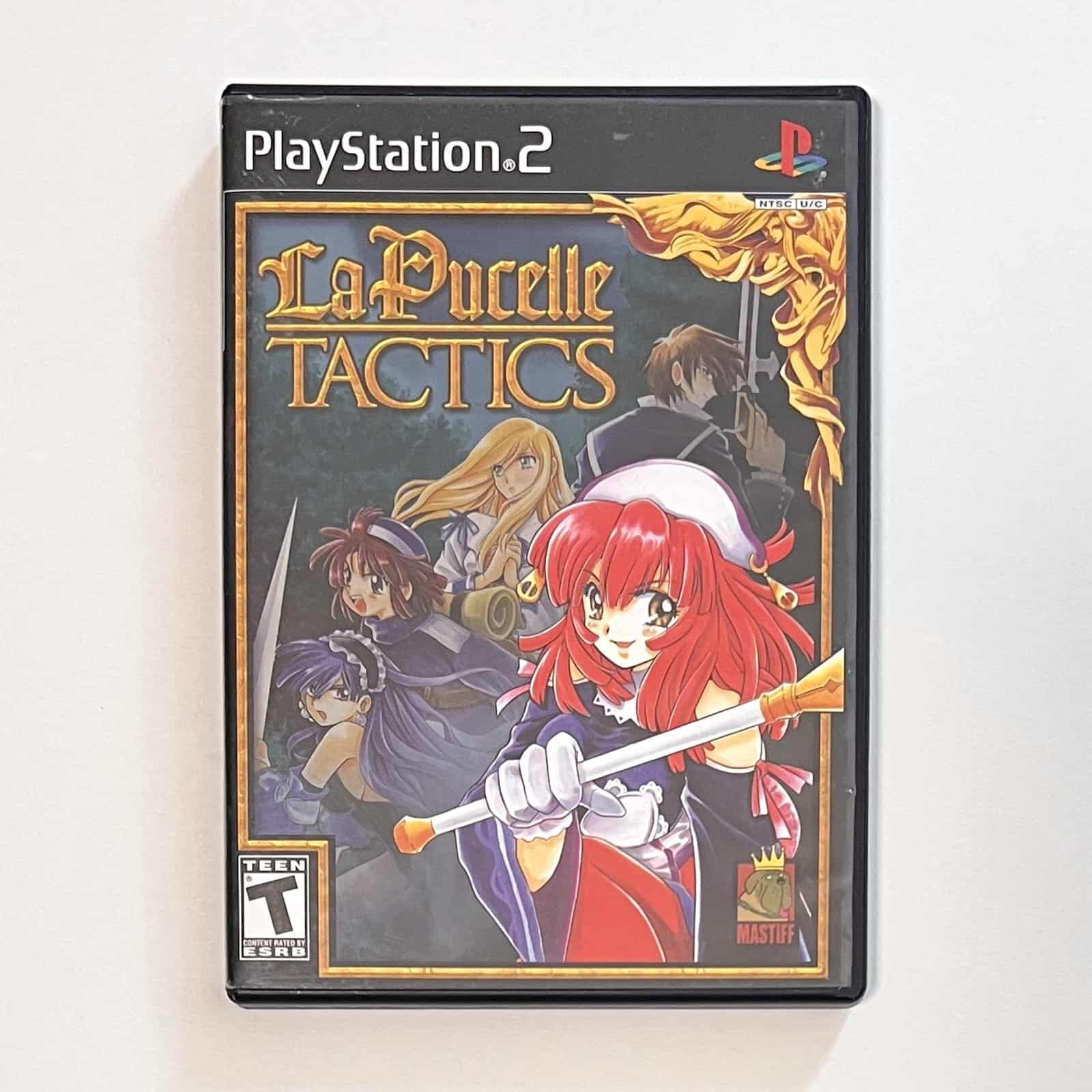
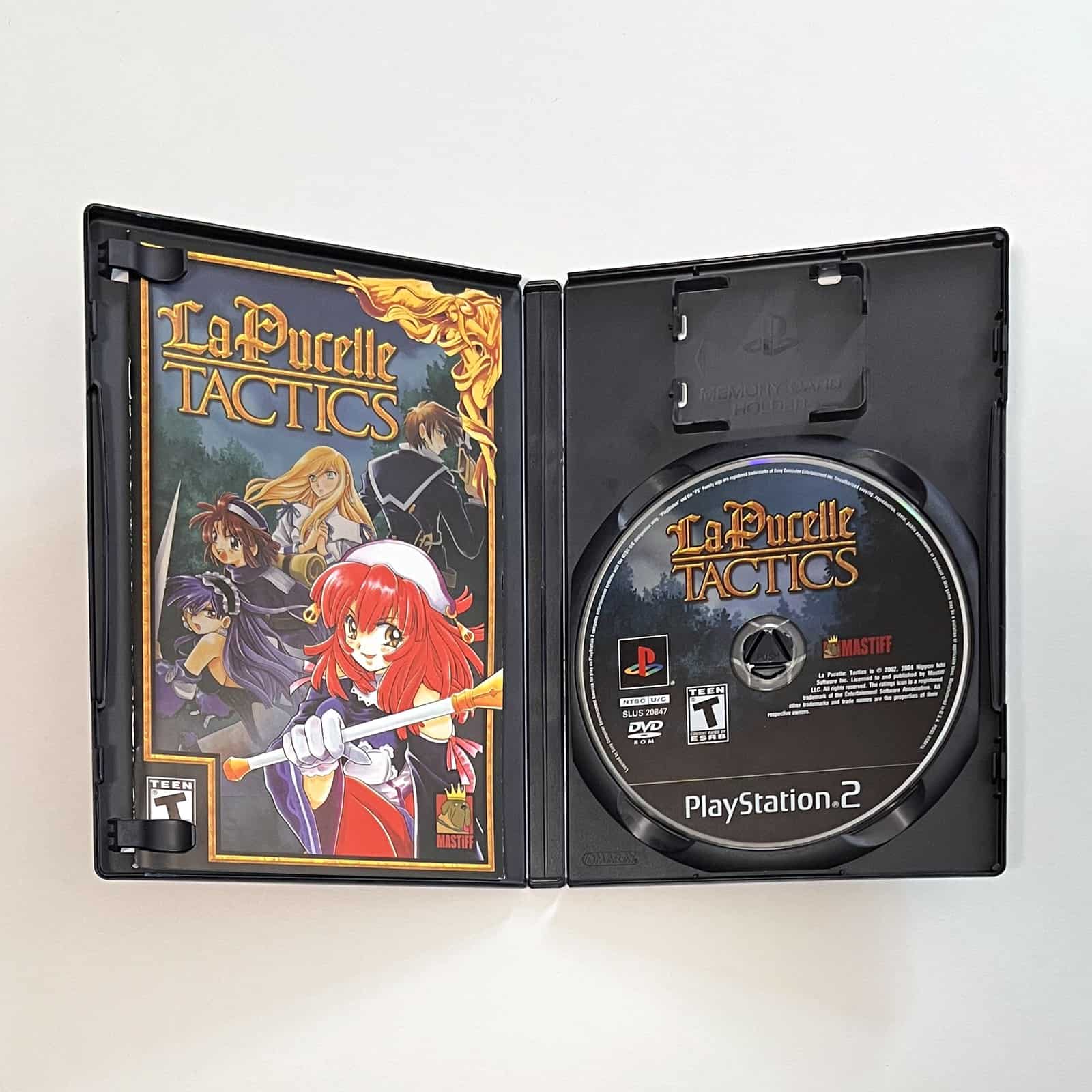
La Pucelle is a tactical RPG from Nippon Ichi Software, the studio that became much better known for Disgaea. Instead of everyone lining up and taking turns, you move characters around a battlefield and think about positioning. Where do I put this guy? Can I hit that enemy from behind? Every fight turns into a little puzzle.
You follow Prier, a young demon hunter for the Church of the Holy Maiden, along with her younger brother Culotte. It’s colorful, funny, slightly ridiculous, and surprisingly deep underneath. At first you’ll look at all the systems and wonder what you’re supposed to do with them. Stick with it. They click. You can also purify certain monsters and recruit them, which leads to the problem I have in every game that lets me collect things: now I want all of them.
The PS2 library is enormous, and a lot of it is games like this, from genres you may never have tried, made by studios you’ll only learn about once you start digging.
This is one of those games where I’m almost jealous of anyone playing it for the first time. You’re Jade, a photographer on the planet Hillys, which is under constant attack by an alien species called the DomZ. Pretty quickly you realize there’s a lot more going on than the government is telling everyone.
Instead of being an unstoppable action hero, Jade is trying to uncover the truth. That means exploring, sneaking past enemies, solving puzzles, piloting a hovercraft, and using her camera to photograph evidence and catalog creatures. Nothing overstays its welcome. But what really got me was the world: memorable characters, strange colorful places, and Pey’j, who is a talking pig and also Jade’s uncle. Just go with it.
Beyond Good & Evil reviewed well but never became the hit it deserved to be. It has since been remastered, including a 20th Anniversary Edition on modern consoles, but the original PS2 version is still affordable. My suggestion: play the PS2 version first, then try the remaster and compare. You might even prefer some things about the original.
Let’s blow some stuff up. Black is a first-person shooter from Criterion Games, the studio behind Burnout, and it had one simple goal: make guns feel awesome. They nailed it.
The weapons have real weight. They’re loud, the recoil hits hard, shell casings fly, and rooms come apart around you. Even reloading gets a dramatic animation where the background blurs and the gun takes center stage. Criterion treated guns the way other studios treat cars in a racing game.
This is a game I’d show someone who has never seen a PS2 running. Look at it, listen to it, then hand them the controller. It’s straightforward too: no inventory, no skill trees, just kick the door open and wreck the room. Twenty years later, shooting things in Black still feels really good.
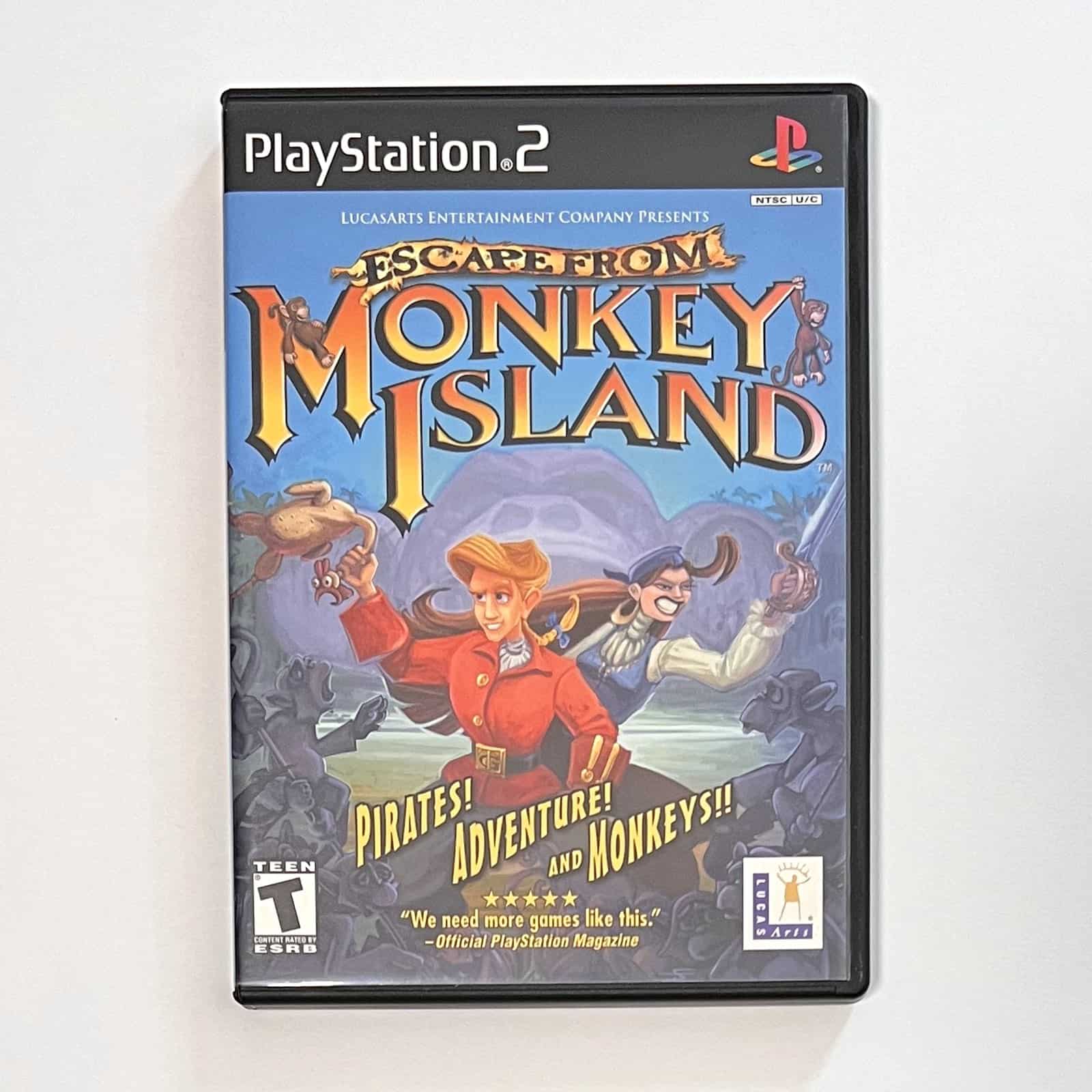
4. Escape from Monkey Island (2001)
My copy’s missing the manual. Still hunting for one.
Putting the guns away. Escape from Monkey Island is an adventure game, and if you’ve never played one, that’s exactly why it’s here.
You play Guybrush Threepwood. Yes, that’s really his name. He’s a pirate, or at least he really wants everyone to think so. Instead of fighting, you explore, talk to absolutely ridiculous characters, collect objects, and figure out how to use them. Sometimes the solution makes perfect sense. Sometimes you stare at the screen for 20 minutes. And sometimes you finally figure it out and think, there’s no way that’s actually the answer. It is. Welcome to Monkey Island.
The puzzles aren’t even my favorite part. It’s the writing. The series makes fun of pirate stories, adventure games, and itself. And who could have guessed my battles with LeChuck would introduce me to the love of my life, Governor Elaine Marley. Slow down, talk to everybody, and don’t be afraid to try something stupid. In Monkey Island, it’s usually encouraged.
Let’s get you in an airplane. Aerial combat doesn’t get nearly the attention it should these days. And before you picture a flight sim with 50 controls, relax. This one just wants you in the air having fun.
You fly dozens of World War II aircraft through missions based on major Pacific battles, including Pearl Harbor, Midway, and Guadalcanal. It gets chaotic fast: fighters cutting across the screen, planes on your tail, anti-aircraft fire from below. Then you finally line one up, open fire, see the smoke, and down he goes. That never gets old.
Dogfighting is where it clicked for me: turning, climbing, and diving to get behind someone while making sure nobody does the same to you. You’ll crash. More than once. Give it a little time and you’ll be chasing planes across the Pacific like a pro.
Remember when I said I’d convince someone with zero interest in golf to buy a golf game? Here we are.
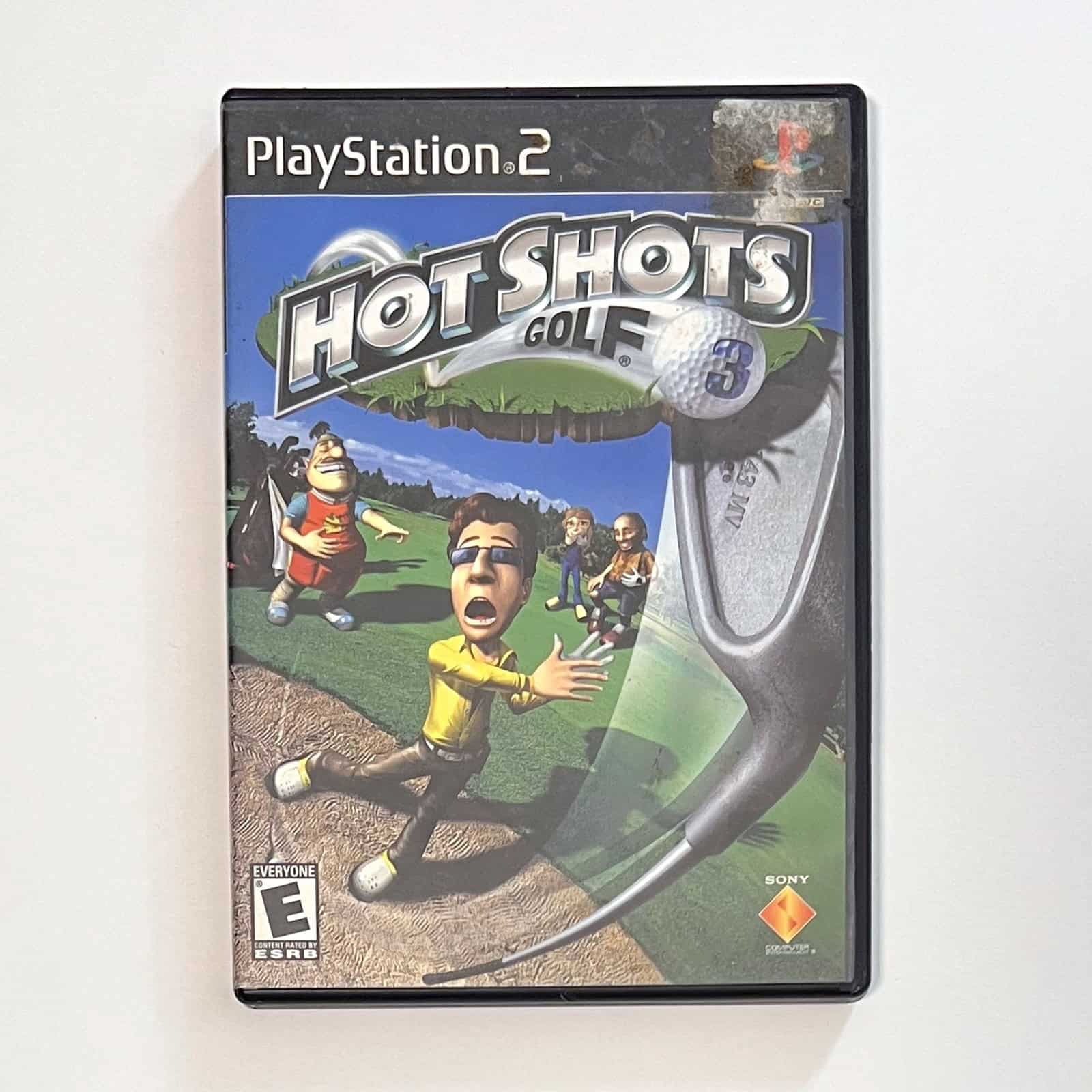
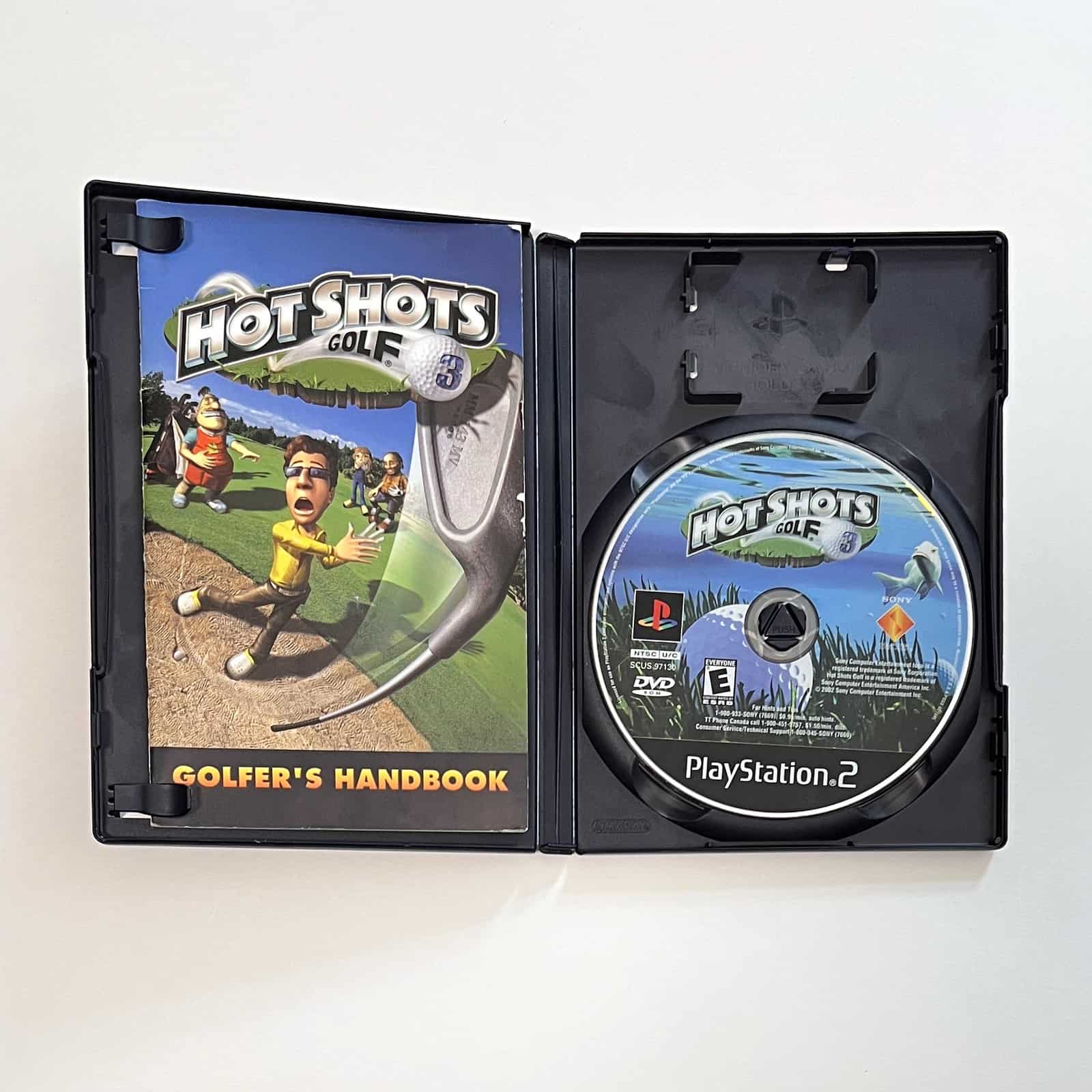
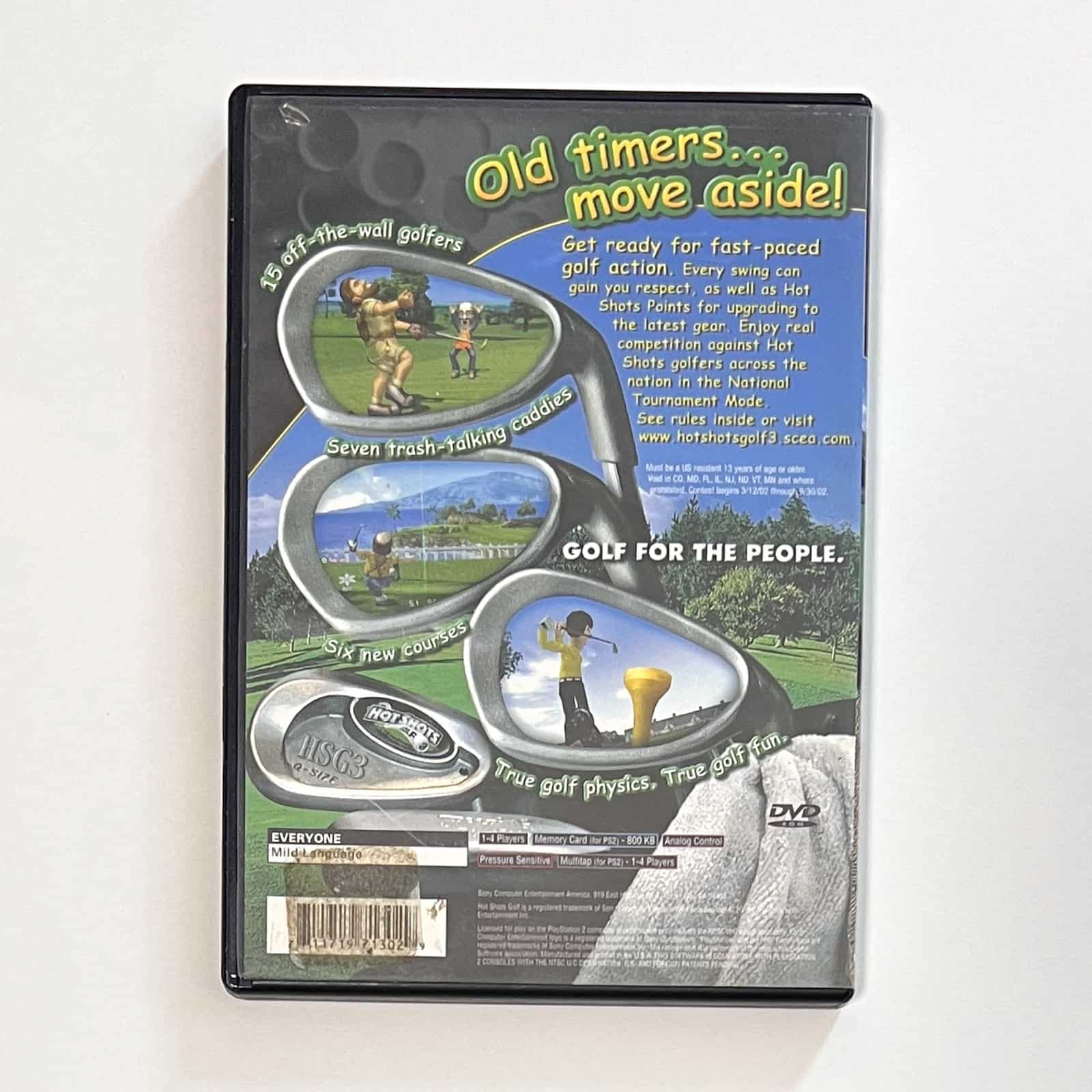
Hot Shots Golf 3 isn’t really a sports sim. It’s arcade golf: big personalities, colorful courses, and controls you’ll understand within two or three holes. Pick a club, aim, watch the meter, tap the button, tap it again. Getting good is another story. You’ll start reading the wind, learning each club, and playing with spin.
Then you hit that one perfect shot. It lands on the green, rolls toward the hole, and you’re leaning forward like it’s the final round of the Masters. That’s what makes it dangerous. “Just one more hole” turns into six hours of golf.
Here’s one a lot of people missed. It’s an action-adventure set in a colorful fantasy version of ancient Egypt, and you actually play as two characters.
Sphinx’s side is classic adventure: explore, fight monsters, solve puzzles, find new abilities, open up areas you couldn’t reach before. Then there’s the Mummy, and that’s where it gets weird. His sections focus on puzzles and stealth, and since he’s already dead, the game can electrocute him, set him on fire, or flatten him. Often that’s exactly what you need to solve the puzzle. This is one of the few games where your character bursting into flames means you’re doing it right.
Switching between the two gives the game a great rhythm, and the whole thing has a Saturday-morning-cartoon take on Egyptian mythology. If you’re new to 3D adventure games, it’s an easy place to start.
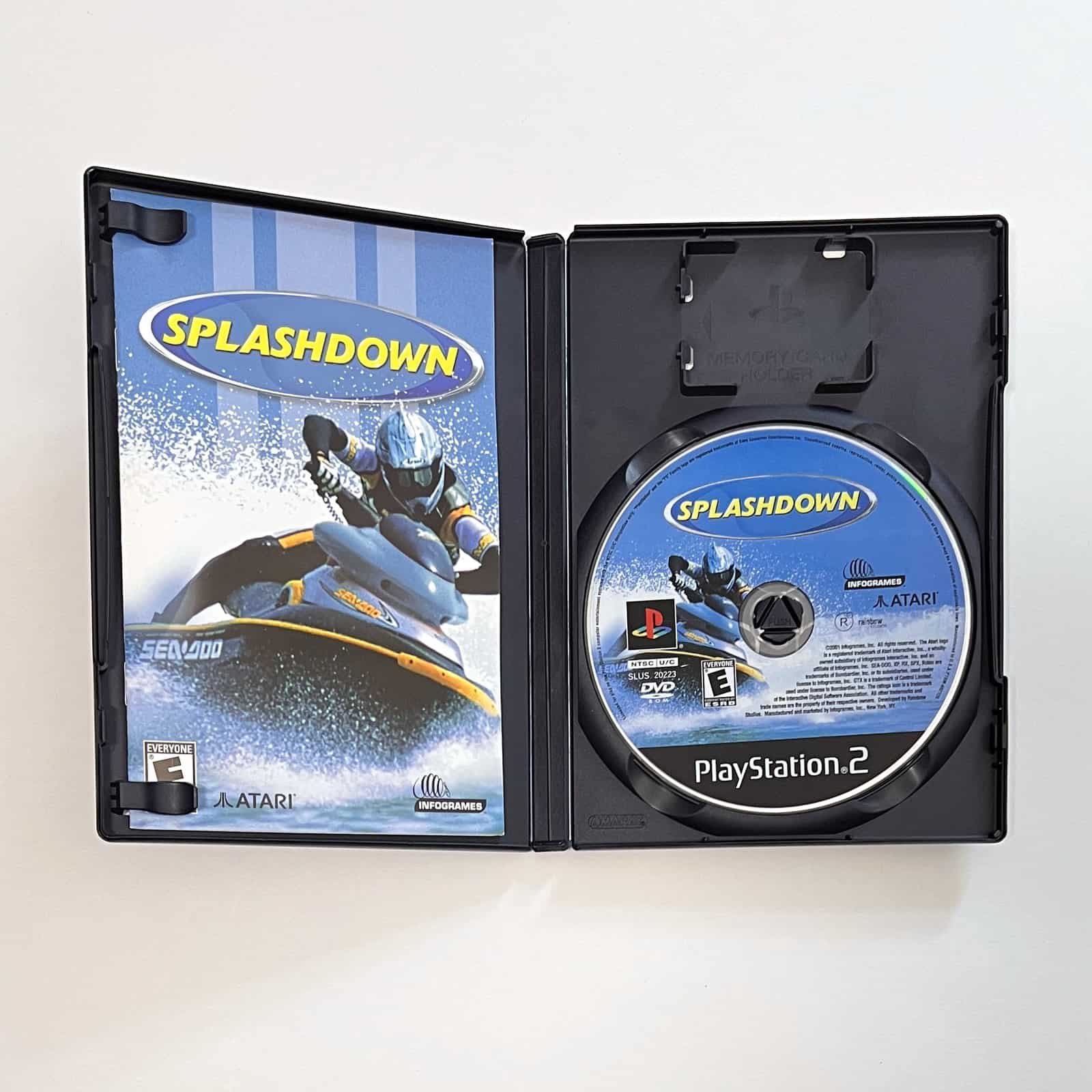
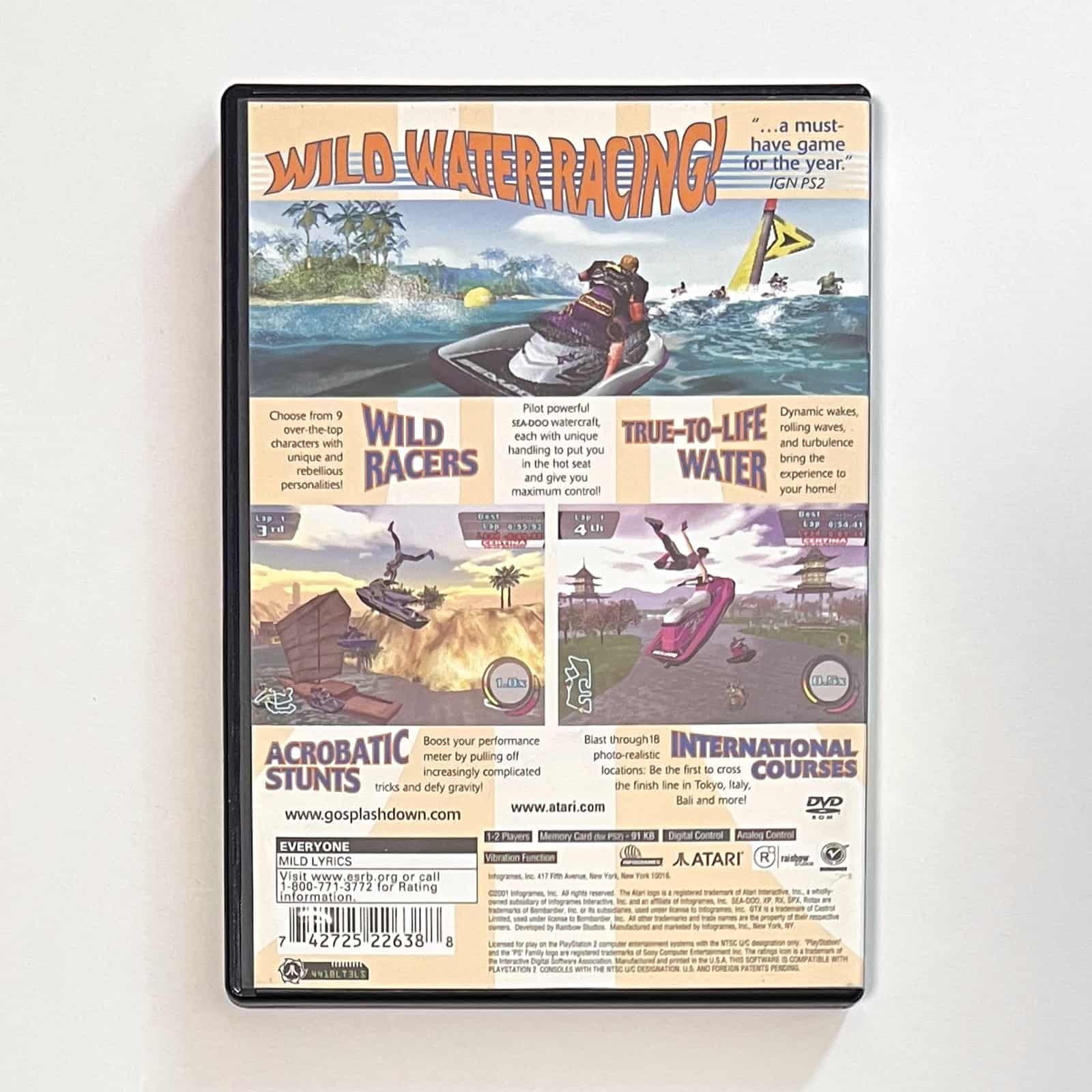
We haven’t raced anything yet, so let’s fix that with jet skis. You race personal watercraft around big courses, hit ramps, pull tricks, and try not to eat it on every landing.
The first thing you’ll notice is the water. For a 2001 PS2 game, it looks surprisingly good, and the waves aren’t decoration. Your jet ski bounces across a surface that’s moving underneath you. Hit a wave right and it’s a ramp. Hit it wrong and there go your plans for the next five seconds. That makes it feel totally different from racing cars.
The courses run through tropical islands, rivers, and amusement parks, and the soundtrack is pure early-2000s. Bright colors, loud music, people doing unnecessarily dangerous things for your entertainment. I miss this era.
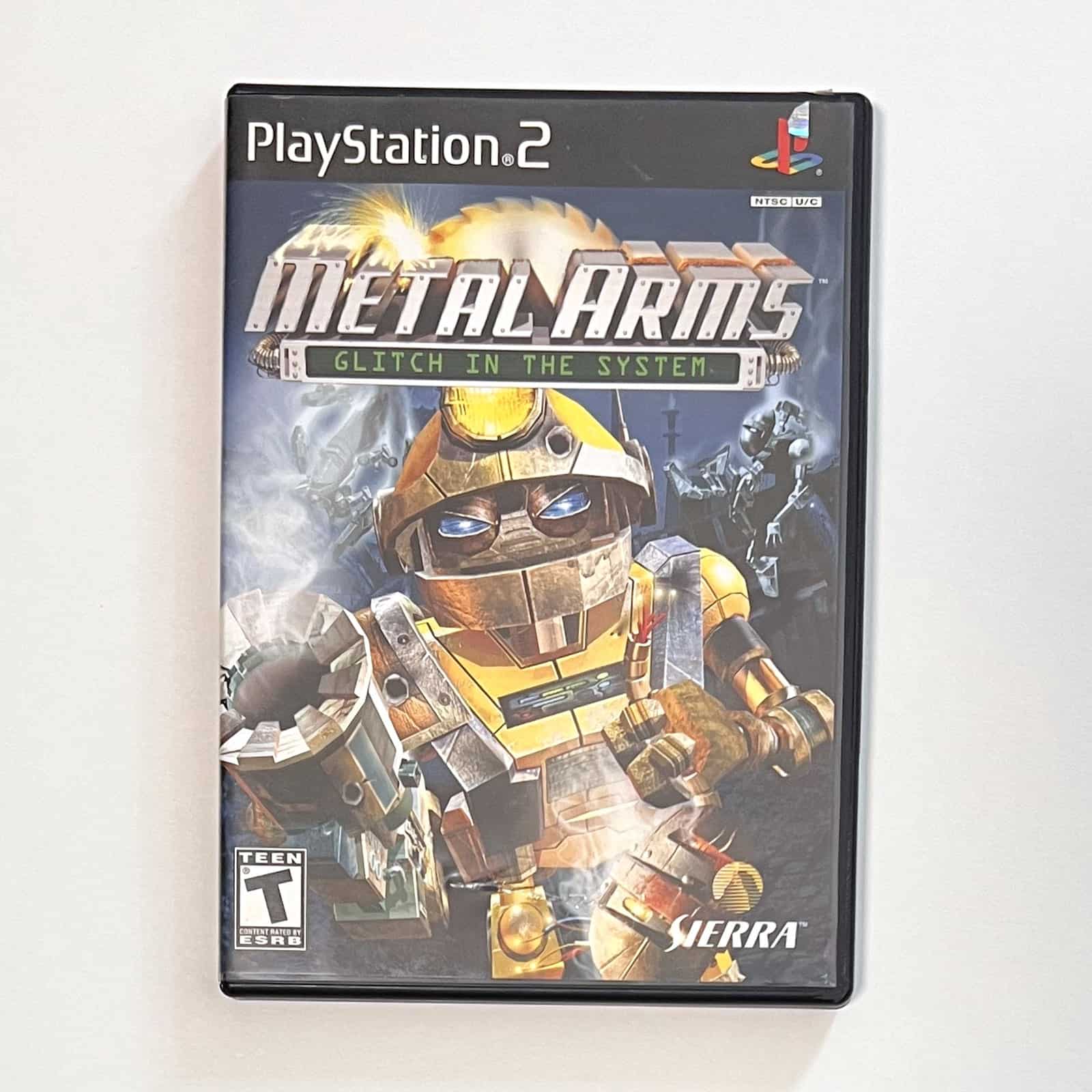
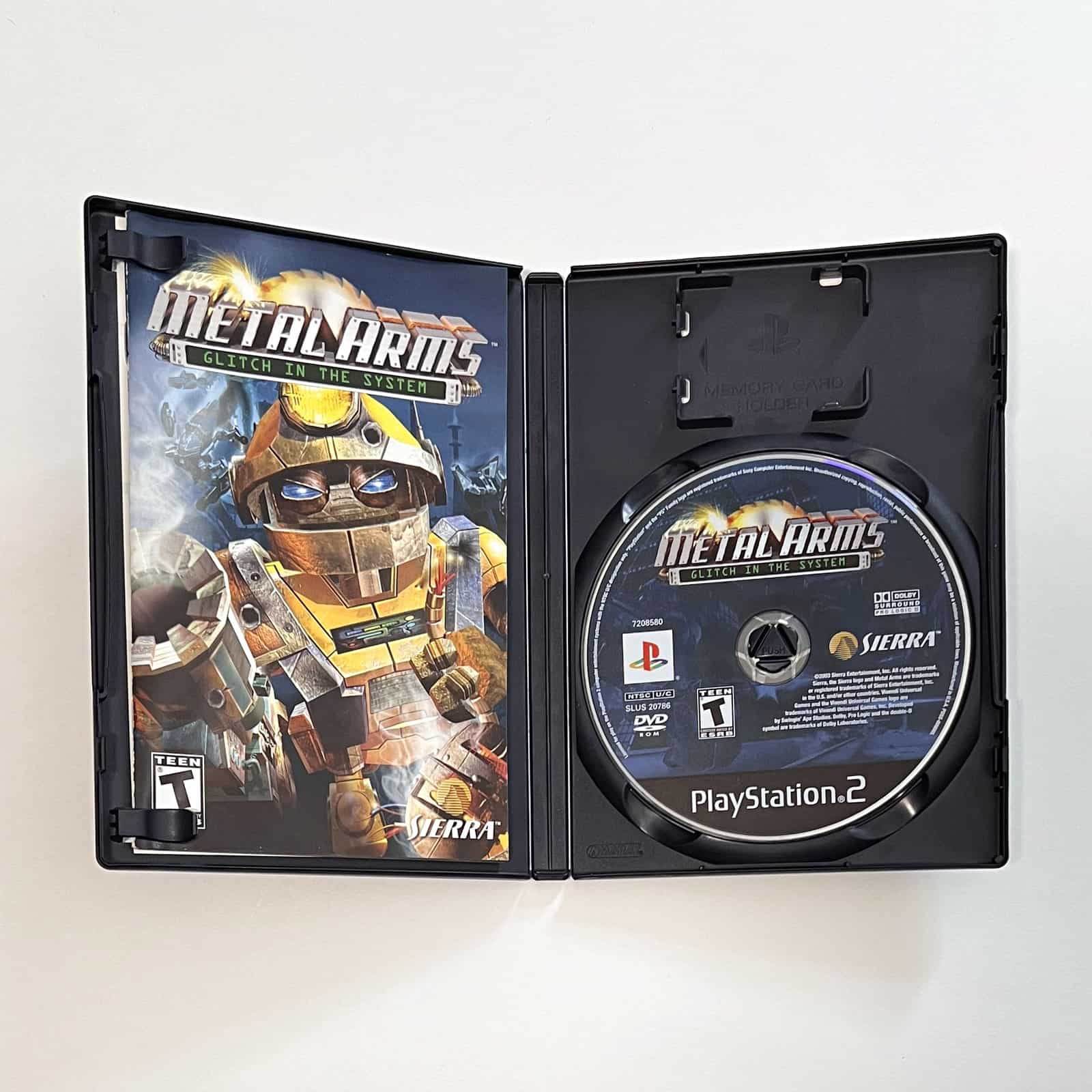
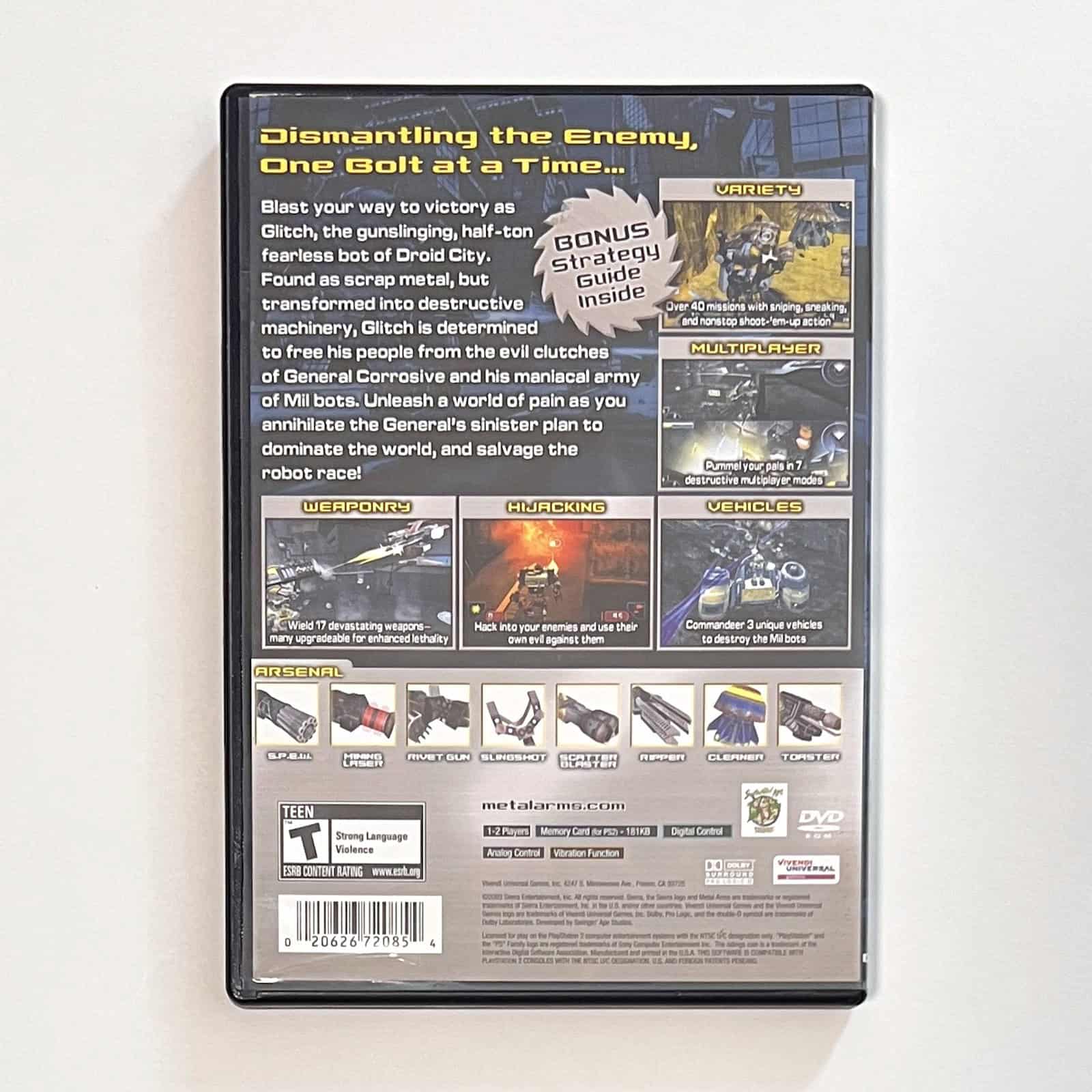
After the jet skis, let’s shoot some robots. You play Glitch, a little robot pulled into a war against an army of machines led by the completely unhinged General Corrosive.
My favorite thing about the combat: enemies don’t just fall over. You can blast pieces off them. Shoot an arm enough and there goes the arm. Take out a leg and they can barely move. Watching an enemy get slowly dismantled never stops being satisfying, and you’ll have plenty of weapons to do it with, from rivet guns and rocket launchers to stuff I won’t spoil.
Metal Arms also has a great sense of humor. These robots are sarcastic, they insult each other, and they swear. It’s crude in that very early-2000s way, and it fits perfectly.
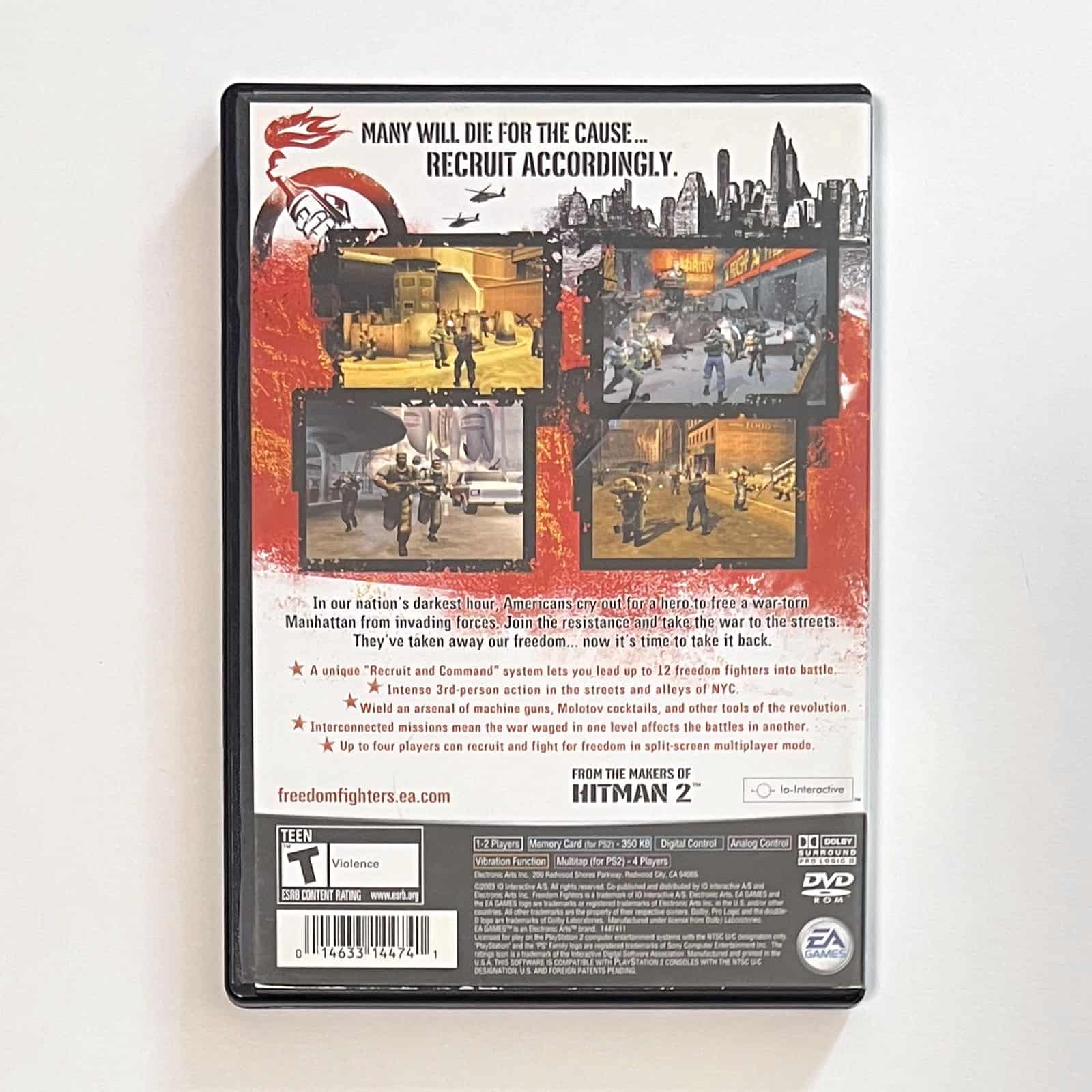
One more third-person game, but we’re trading robots for an alternate-history Cold War where the Soviet Union invades the United States. You play Chris Stone, an ordinary New York plumber who ends up leading the resistance. Yes, a plumber saves the day again. Video games really believe in that profession.
At first it looks like a straightforward cover shooter. Then you start recruiting followers. As your charisma grows, more fighters join your squad, and the commands are dead simple: follow, attack, defend. Send a couple of guys at a position while you flank, leave someone to hold an area, or do what I eventually do and charge in with the whole resistance behind you. Sometimes strategy is overrated.
And the music. The soundtrack is by Jesper Kyd, and it makes every fight feel bigger than what’s on screen. Play this one with the volume up.
Halfway check: if you’re already a PS2 collector, what affordable game would you hand someone starting out? Skip the obvious picks. Tell me the one people overlook, in the comments.
This one stars a guy in a weird suit, a mad scientist, and a six-legged robot dog that can carry four guns at once. Trying to explain it makes it sound insane. It kind of is.
Aliens are invading Earth and you’ve got three playable characters. Kurt Hectic, a janitor (close enough to a plumber), wears a coil suit with a chain gun, a sniper rifle, and a parachute, and his levels mix shooting and platforming. Dr. Fluke Hawkins, the mad scientist, slows things down with puzzles where you combine random objects into ridiculous inventions. And then there’s Max: two legs for walking, four arms for holding guns. Max has already solved the problem.
The kicker is who made it: BioWare. Before Mass Effect, before Dragon Age, before Knights of the Old Republic, BioWare made a game where a robot dog fights aliens with four guns. Knowing that makes it even more fun to go back to.
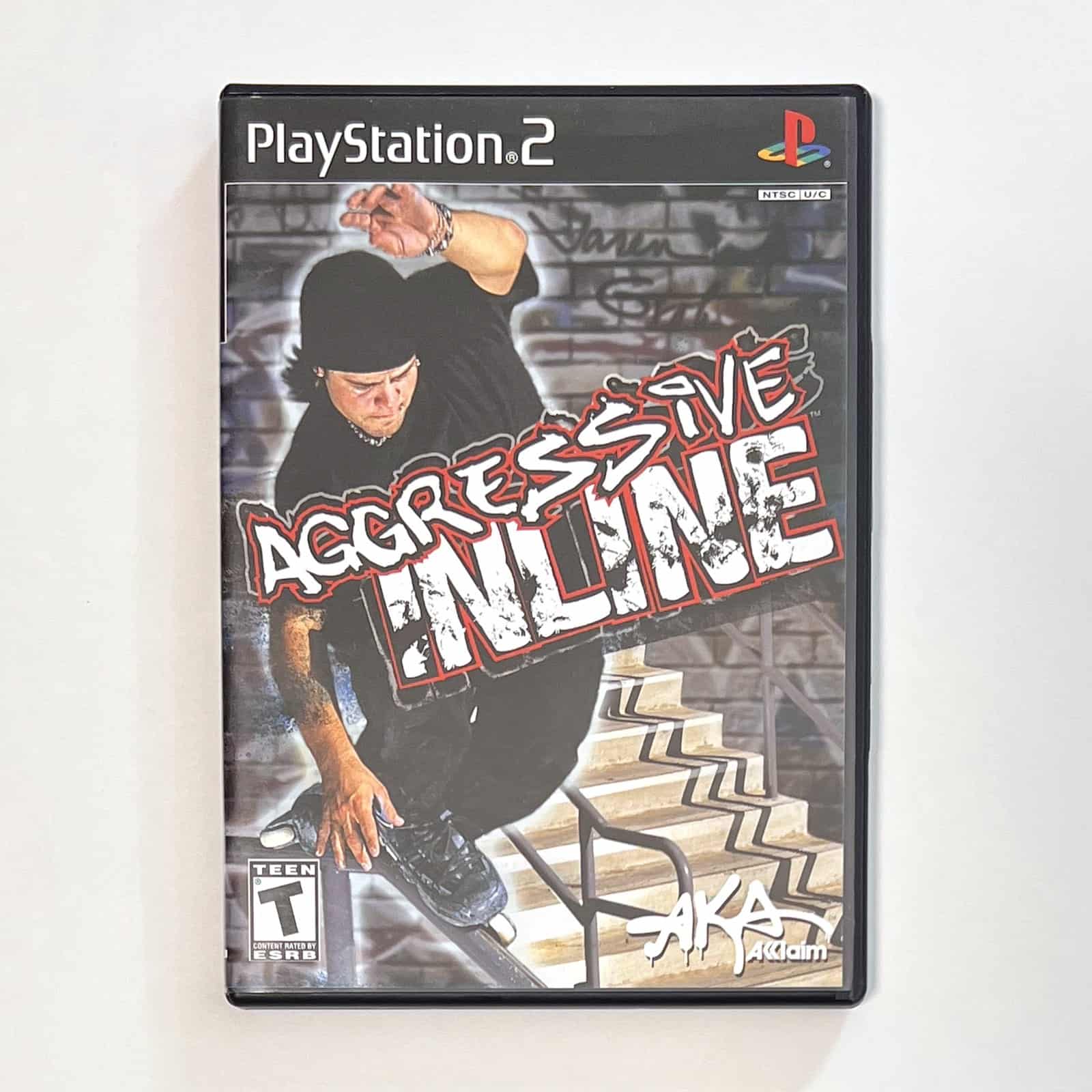
If you weren’t around in the late ’90s and early 2000s, understand this: we were obsessed with extreme sports. If you could hurt yourself doing it, there was a video game. And I wasn’t just playing them. You could catch me outside in my K2 Backyards with Arlo Eisenberg Senate wheels. I was 100% the target audience.
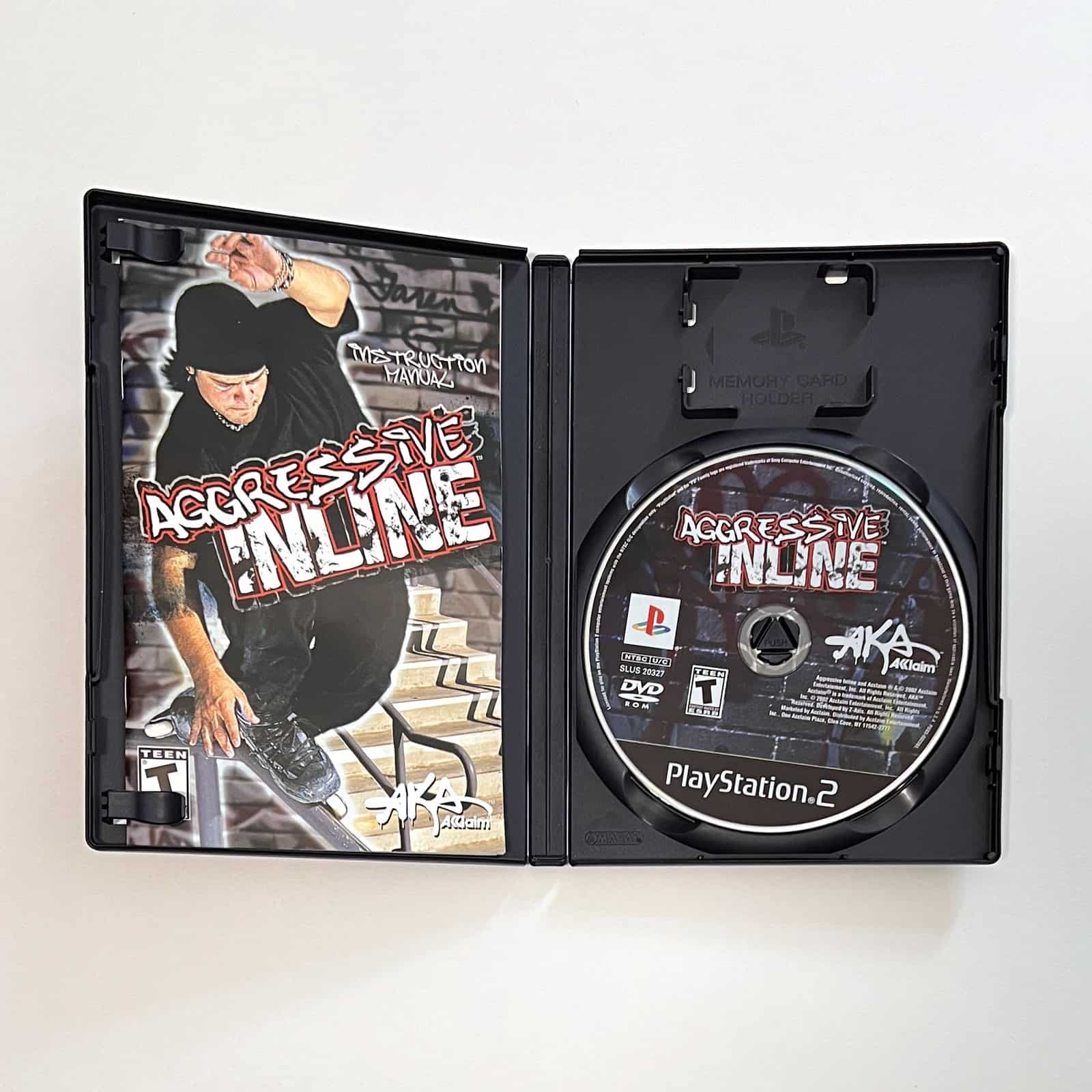
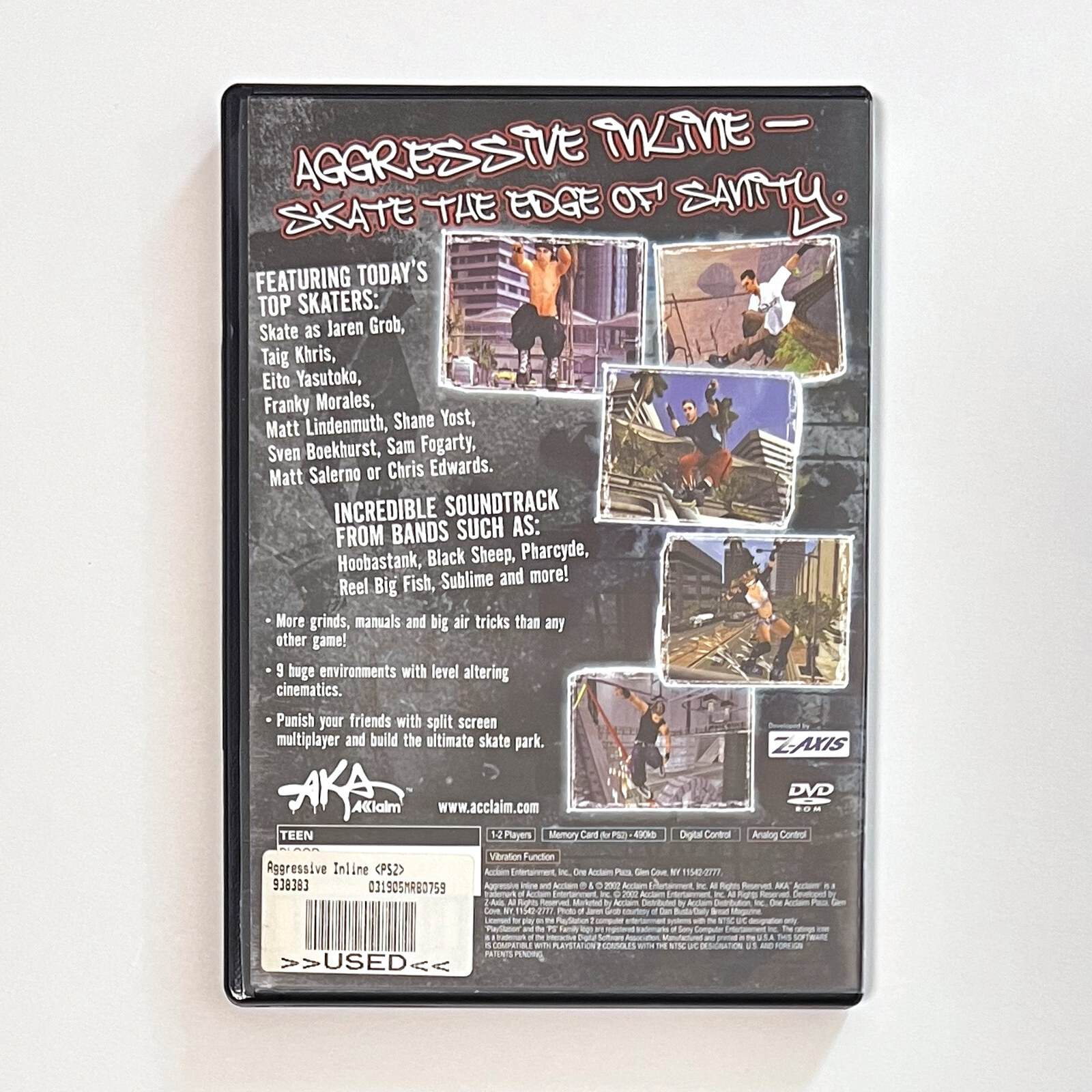
If you’ve played classic Tony Hawk, you’ll get Aggressive Inline fast: big levels, grinds, ramps, tricks, objectives, and combos that get more ridiculous the longer you hold them. It was made by Z-Axis, the studio behind the Dave Mirra BMX games, so these guys knew the genre. And the levels are huge, packed with rails, ledges, half-pipes, and random objects someone looked at and thought, “yeah, you could grind that.”
Give it 20 minutes. Land one combo you had no business landing and you’ll get it. Just please don’t try any of this outside. We’re in our 40s now. Well, I am. I have responsibilities.
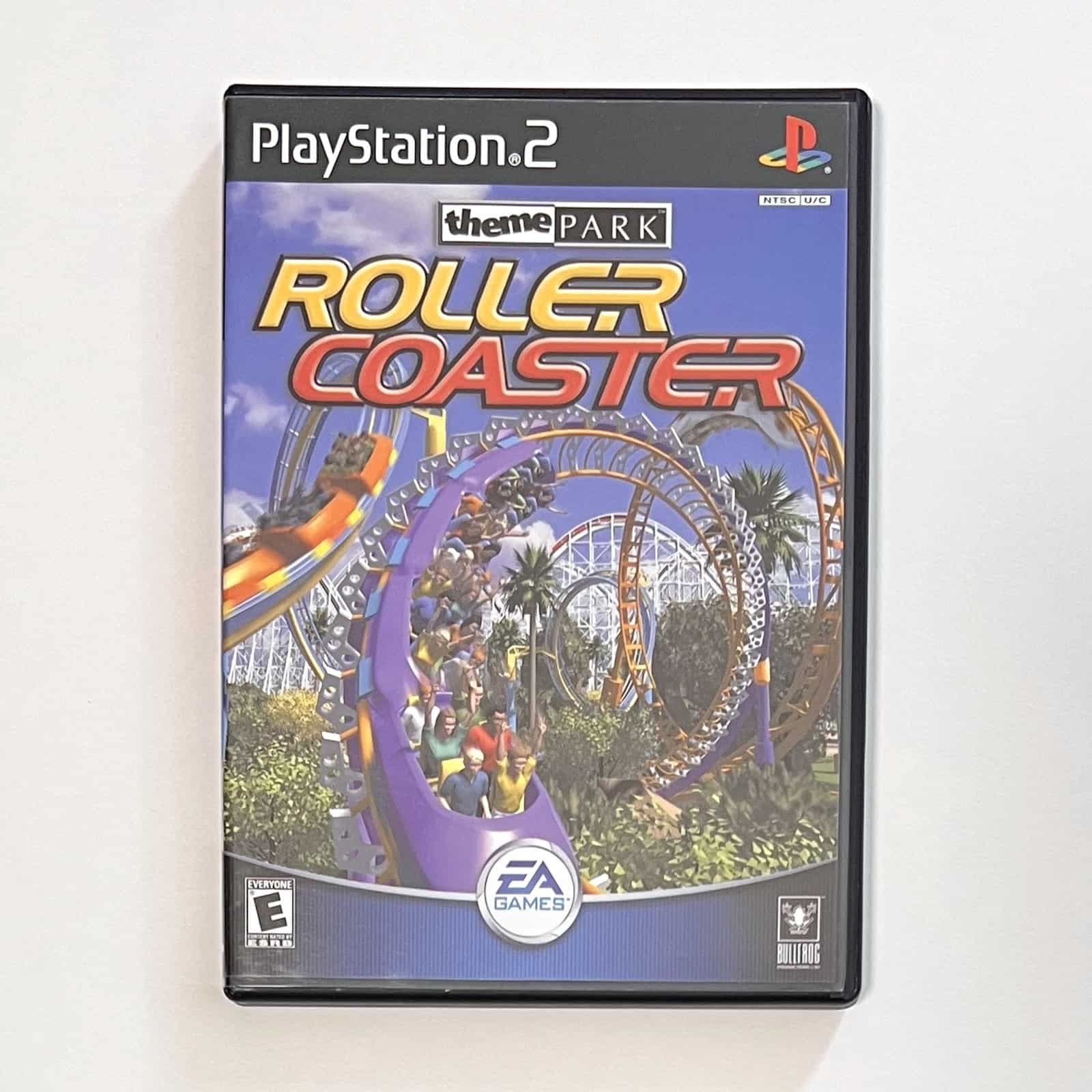
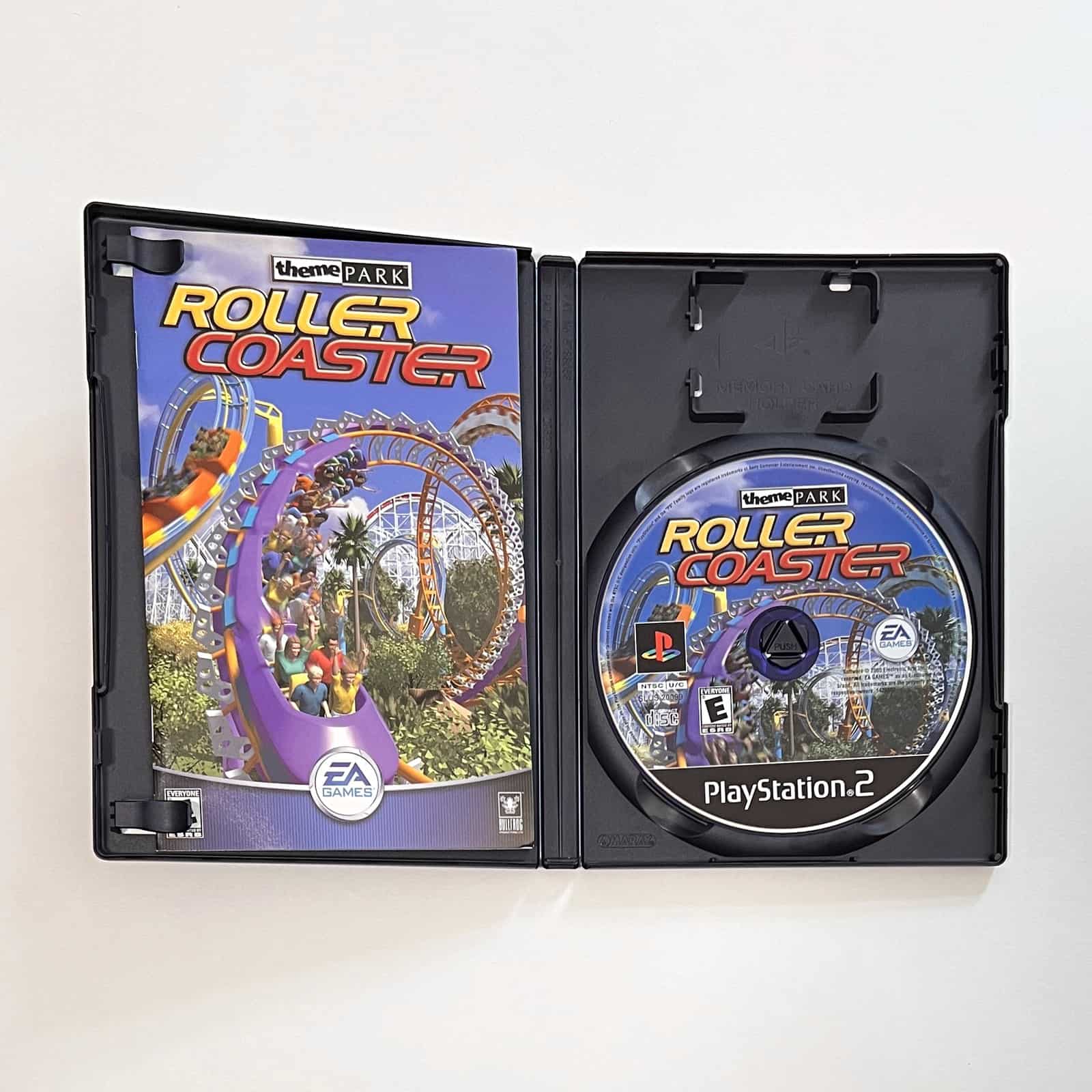
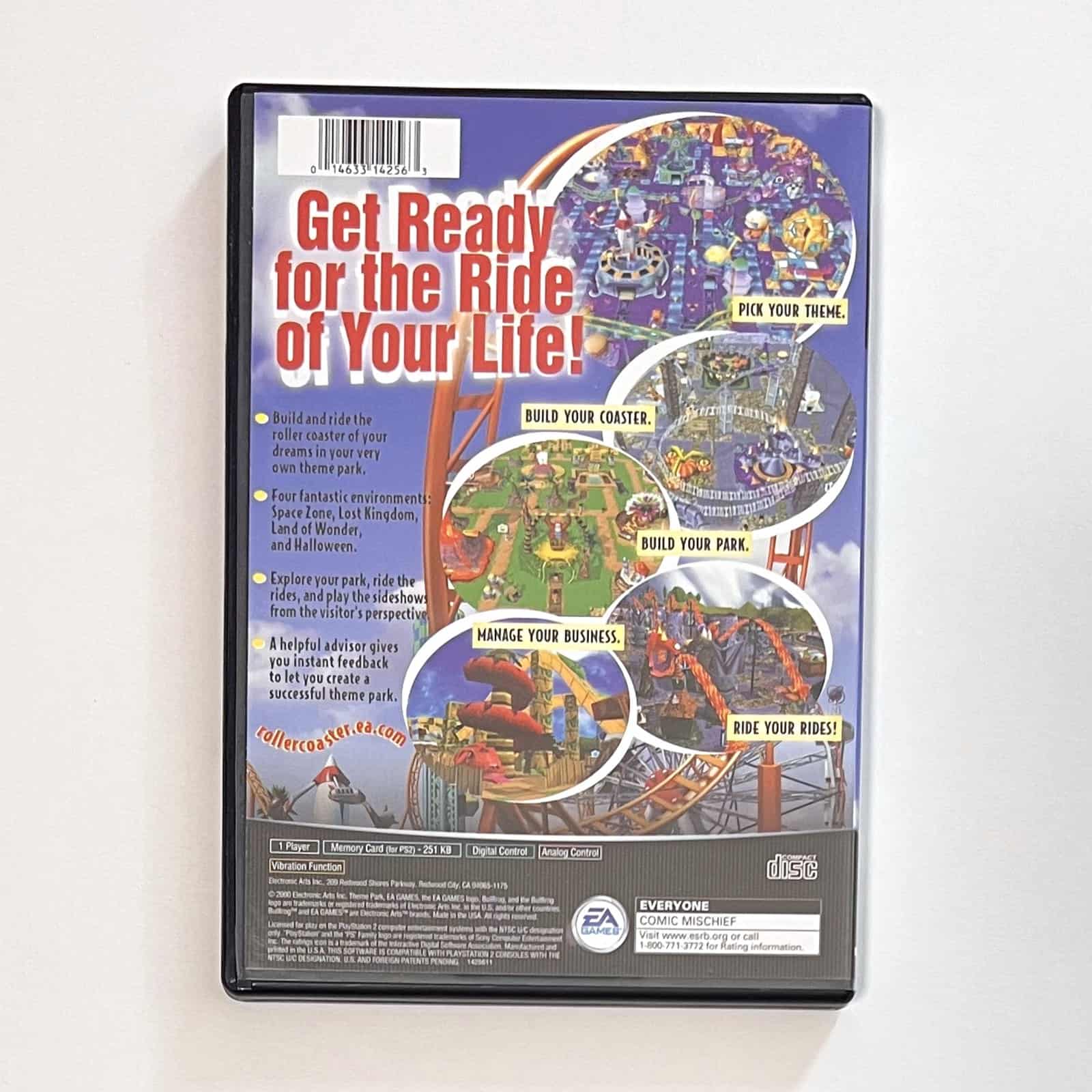
Our first real management game, and a disclosure: I love roller coasters. Growing up, I’d ride Kingda Ka at Six Flags Great Adventure over and over. Zero to about 128 mph, straight up more than 450 feet, then straight back down. My first reaction every time: let’s do that again.
So a game where I build an amusement park and design my own coasters? I’m in. You get a plot of land and build the park: rides, attractions, staff, prices, bathrooms, trash cans, food stands. Keep the guests happy and try not to go broke.
The best part: you can walk around your park in first person and ride what you built. Design what you’re sure is an engineering masterpiece, then strap in and find out. For a game this early in the PS2’s life, that was a really cool idea.
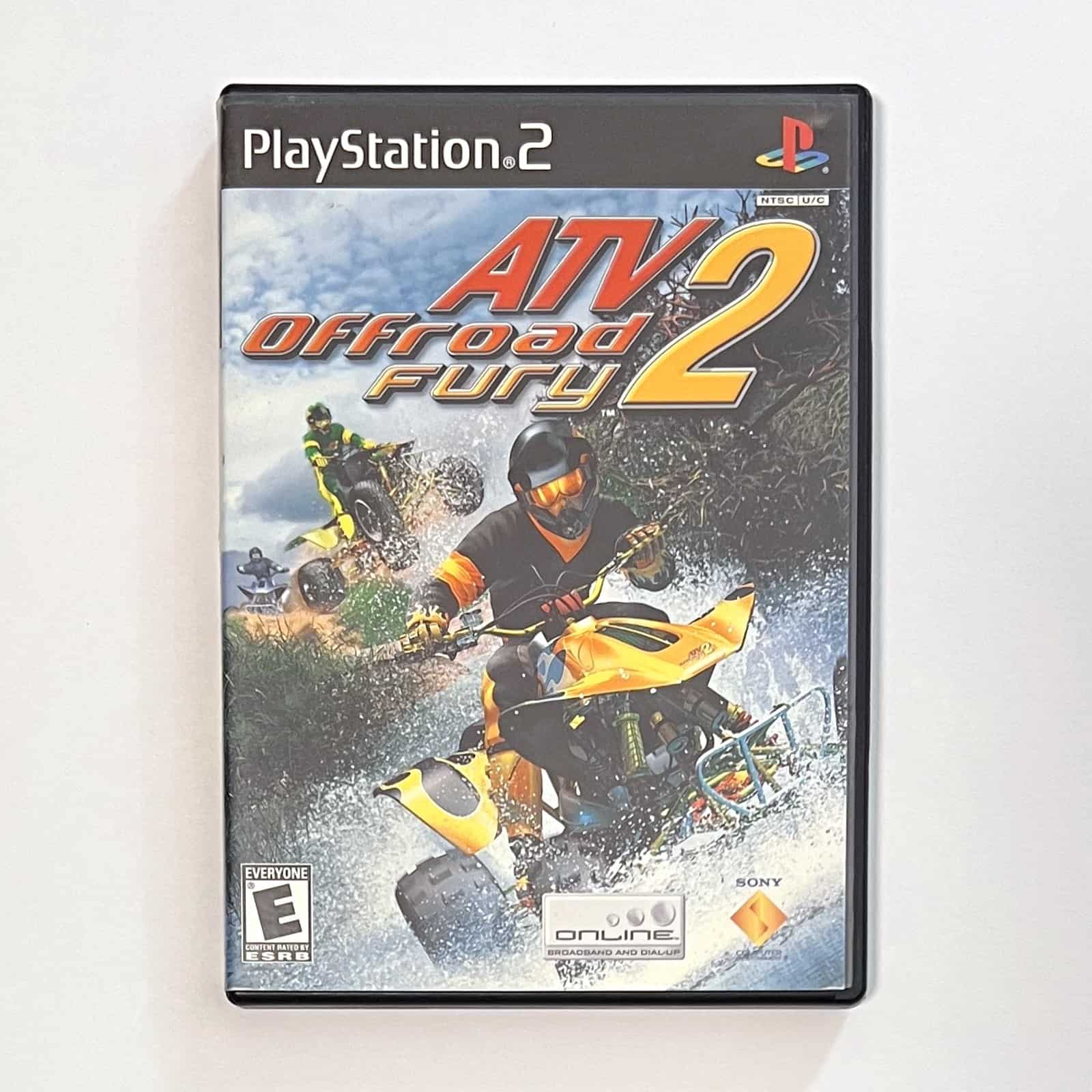
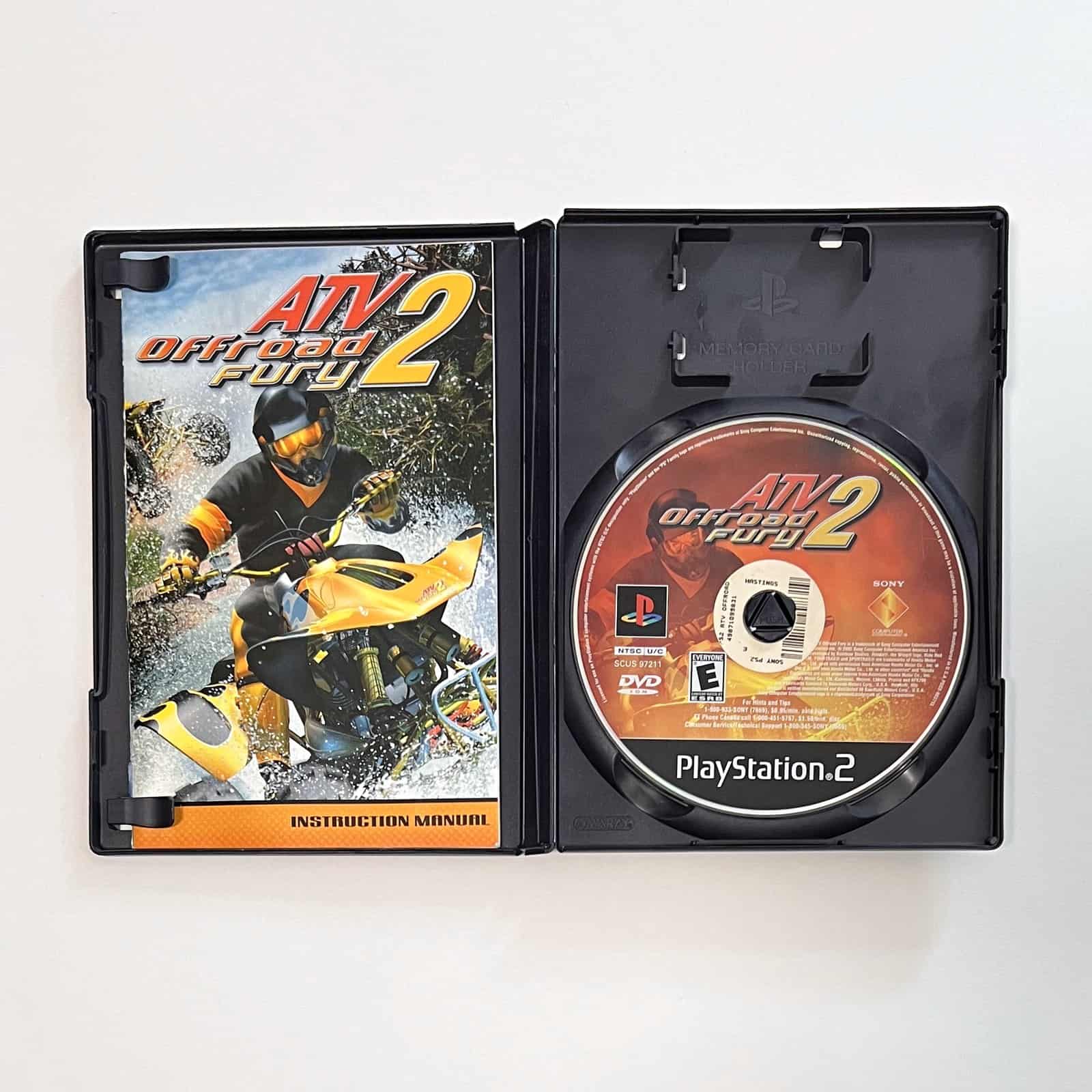
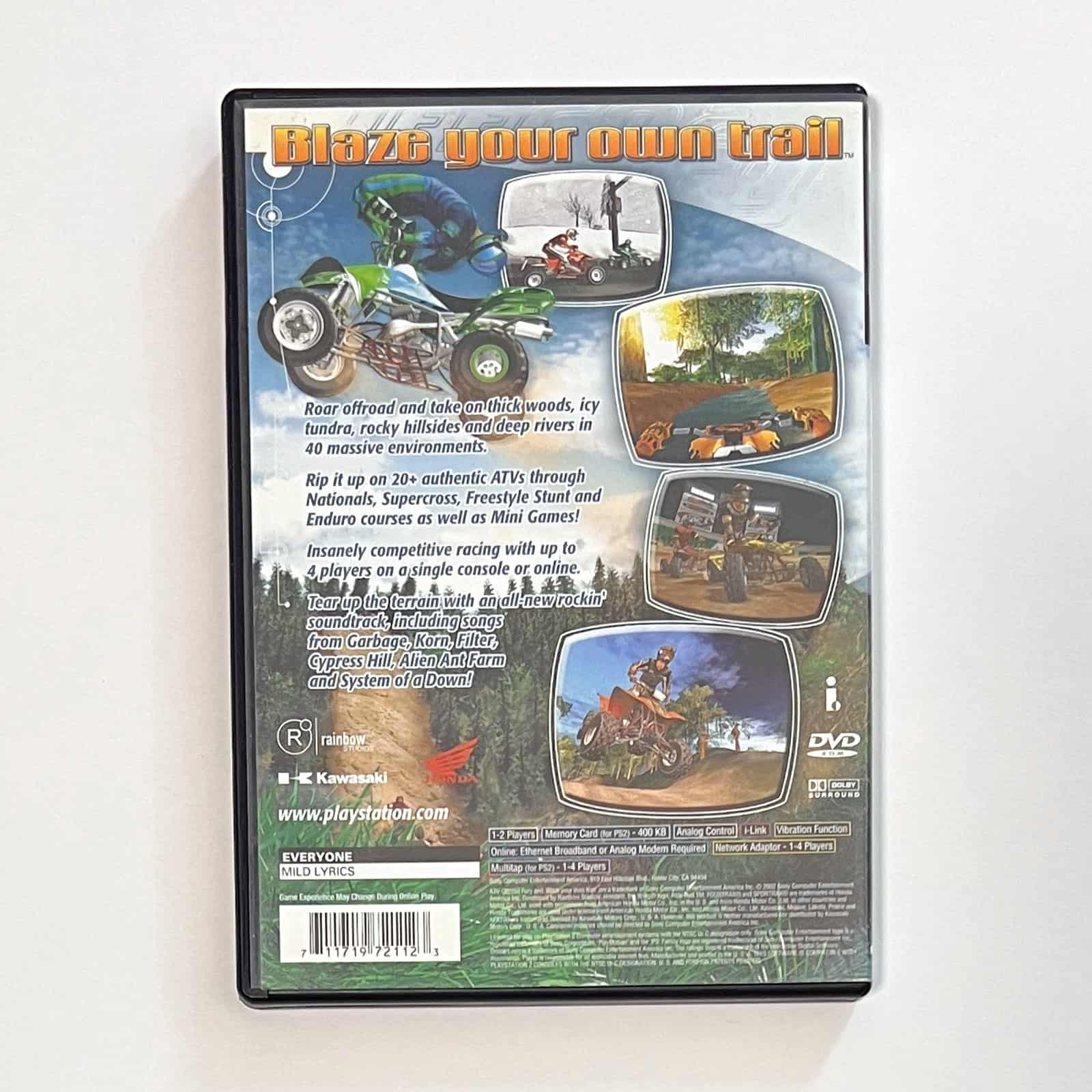
Apparently rollerblading wasn’t enough outdoor activity for me. I love ATVs. One of my favorite memories from my honeymoon was riding ATVs with my wife in Curaçao, along the cliffs with the ocean crashing below. A storm rolled in, so we did the responsible newlywed thing and tried to outrun it. We lost badly. We got drenched. It was awesome.
The game is exactly what the name says: dirt tracks, big jumps, elevation changes, and spending way more time in the air than any ATV should. It’s easy to pick up, the sense of speed is great, and there’s a trick system for when the fastest line isn’t the most entertaining one. There’s plenty to unlock, plus local multiplayer: grab a second controller and go do something stupid together.
One lesson the game won’t teach you: ATVs are fast. Weather is faster.
One of my favorites of all time. Sly isn’t some obscure hidden gem, but I’ve always felt the series got less attention than the other big platformers of the era. Everyone talked about Ratchet & Clank and Jak and Daxter. Both are great. I’ve always preferred Sly.
You’re Sly Cooper, a raccoon from a long line of master thieves. Sucker Punch mixed classic 3D platforming with stealth: sneaking past guards, dodging spotlights, balancing on ledges, and using Sly’s cane to pickpocket, hang, and swing. The cel-shaded, comic-book art style gave it an identity all its own, and it has aged remarkably well. Add in Bentley and Murray, Sly’s partners in crime, and the whole thing plays like a Saturday-morning cartoon about a heist crew. The leader is a raccoon, which makes sense, since he’s already wearing the mask.
If you’ve never played the series, start here. Ratchet had the guns, Jak had the attitude, but Sly had style.
If you played Control and thought throwing office furniture at people with your mind was awesome, I’ve got a 2004 game for you. You’re Nick Scryer, an agent whose memory has been wiped, and as it comes back, so do his psychic powers.
You’ve got guns and stealth, but forget that for a second. You’ve got telekinesis. See that crate? Throw it at somebody. That guy shooting at you? Pick him up and throw him into a wall, or off something, or into his buddy. You stop seeing scenery and start asking, can I pick that up with my mind? The answer is usually yes. Later you add pyrokinesis, mind control, mind drain, and remote viewing.
The physics are what make it. Objects and enemies react to what you do instead of playing canned animations. I’m not saying Psi-Ops invented telekinesis in games, and I’m definitely not saying Remedy copied it. But it was doing physics-based psychic combat on the PS2, and doing it really well. Twenty years later, launching some poor guy across a room is still hilarious.
17. SoulCalibur II (2003)
My copy came with a second disc: the Namco Transmission demo disc.
Seventeen games in and I realized we don’t have a fighting game. Anyone who knows this channel knows I love fighting games (Mortal Kombat II is still my all-time favorite), so let’s fix that.
What sets SoulCalibur apart from Mortal Kombat or Street Fighter is weapons: swords, axes, staffs, nunchucks, and giant blades no human could actually lift. Every fighter feels different, and experimenting with the roster is half the fun. My favorite is Voldo and his weird hand claws. It’s easy to pick up, so a newcomer will be doing cool stuff within minutes (maybe by accident, but it counts), with plenty of depth if you want it. Playing solo, Weapon Master mode gives you a long run of battles and challenges.
Fun early-2000s detail: each console got its own guest fighter. GameCube got Link, Xbox got Spawn, and PS2 got Heihachi from Tekken. Somewhere out there, some poor guy bought the game three times. That guy was me.
Remember that amusement park we built a few games ago? Now we’re stopping one. Apparently this list has continuity.
No guns, no swords, no psychic powers. Just farming. You inherit your grandfather’s farm and learn the area is about to be bulldozed and redeveloped into an amusement park. You have one year to stop it. So you plant crops, raise animals, fish, make some money, and get to know the people in town.
That’s the magic of Harvest Moon. “I’ll just water the crops” turns into feeding the animals, helping a neighbor, going fishing, and suddenly you’ve spent three hours doing chores in a video game after a full day of work in real life. Save the Homeland also has multiple endings depending on how you go about saving the town, so there’s always a goal pushing you forward.
Put down the watering can, pick up a sword. You’re Maximo, a king who comes home to find his kingdom taken, his girlfriend kidnapped, and the dead rising from their graves. So naturally, we hit everything with a sword.
It’s an action platformer heavily inspired by Capcom’s Ghosts ‘n Goblins, and if you know those games, you know what that means: this one will kick your butt. Enemies hit hard, platforming punishes mistakes, and you have to pay attention. That’s also why it’s so satisfying when you finally clear the area that was beating you up ten minutes ago.
My favorite Ghosts ‘n Goblins callback: as you take damage, your armor comes off piece by piece until you’re fighting monsters in your boxer shorts. That’s not a joke. It’s a gameplay mechanic. Sly wants you to sneak past the guard. Maximo wants you to beat him up.
One last spot, and there was no way I’d build a PS2 starter kit without a traditional RPG. RPGs are one of my favorite genres, and the PS2 is one of the best RPG consoles ever. We started with an RPG, so we’ll end with one.
Wild ARMs 3 asks: what if a JRPG was also a western? Gunslingers, deserts, trains, drifters, and old ruins, all in a world called Filgaia. You mostly follow Virginia Maxwell, a young drifter who teams up with three other travelers, and your whole party fights with guns, called ARMs. You track your ammo and reload mid-battle, which fits the gunslinger theme. The cel-shaded art has aged really well, and under the western coat of paint it’s a proper old-school JRPG: big world, towns, dungeons, turn-based battles, puzzles, and secrets.
If all you know about the PS2 is GTA and Madden, there’s a huge RPG library waiting: Final Fantasy, Shadow Hearts, Suikoden, Shin Megami Tensei, Dragon Quest, and plenty of stranger stuff we’ll save for another post.
Finished the list? Here’s a deep cut
If La Pucelle: Tactics was your favorite of the 20, try Eternal Poison next. It’s a darker tactical RPG from Atlus where you capture the demons instead of just beating them, then toss them into a giant blender for upgrades. Read my Eternal Poison review →
Want more deep cuts? My PS2 hidden gems Vol. 1 list has eight more, all from my own shelf.
Quick collector tips before you buy
Buy the right region. PS2 consoles are region-locked. A North American PS2 plays North American (NTSC-U/C) games, so check the back of the case before you buy, especially from international sellers. PAL (European) and Japanese copies won’t run on a stock US console.
CIB vs. loose. “CIB” means complete in box: case, disc, and manual. “Loose” usually means disc only. Loose is cheaper if you just want to play. CIB is what you want if you care about the shelf.
Greatest Hits are your friend. Popular PS2 games were reissued as Greatest Hits with a red-banner case. Same game, often cheaper. Some collectors want the original black-label release, but if you’re starting out, Greatest Hits copies are a great way to save.
Check the disc. Light scratches are usually fine. Deep scratches or cracks near the center hole are not. Ask for a photo of the disc when buying online.
PS2 collecting FAQ
Do I need a memory card for the PS2? You can play most games without one, but you can’t save your progress. The PS2 doesn’t store saves internally. An official Sony 8 MB card is the safe pick.
How do I connect a PS2 to a modern TV? The cheapest way is a composite (RCA) to HDMI converter: plug the PS2’s yellow, red, and white cable into the converter, then run HDMI to your TV. For a sharper picture later, use the PS2’s component output with a dedicated upscaler.
Can a PS2 play PS1 games? Yes. The PS2 is backward compatible with most original PlayStation games, which makes it an easy two-for-one console.
Are PS2 games region-locked? Yes. A North American PS2 plays NTSC-U/C games. PAL and Japanese games won’t run on a stock US console.
What’s the best PS2 controller? An original Sony DualShock 2. These games were designed around it. Add an extension cable if the cord doesn’t reach your couch, or a Bluetooth adapter later if you want to go wireless.
What does CIB mean? Complete in box: the case, the disc, and the manual. Loose usually means disc only.
Your first PS2 shelf
Twenty games, twenty different reasons to own a PlayStation 2. We raced jet skis, built an amusement park, then decided amusement parks were evil and became farmers. We went rollerblading, fought off a Soviet invasion, threw people across rooms with our minds, fought monsters in our underwear, and somehow I convinced you to buy a golf game.
You don’t need to buy all of these tomorrow. Pick two. Pick five. Pick the weird one that made you say, “What is that?” That’s how collecting starts. You don’t need the perfect setup, the most expensive gear, or a wall of games. A console, a controller, a memory card, a cheap way to hook it up, and a couple of games that look fun. That’s it. You’re officially collecting for the PS2, and trust me, the shelf fills itself from there.
I started exactly where you are. Now I’ve owned nearly 500 PS2 games, so maybe don’t follow my advice too closely. The PS2 library is big enough that your collection doesn’t have to look anything like mine. Maybe you fall for RPGs, or fighting games, or weird 3D platformers nobody talks about. Or maybe, against all odds, you buy Hot Shots Golf. If so, my work here is done.
Now it’s your turn. Already a PS2 collector? Drop the affordable game you’d put in a starter kit in the comments. Not the grail behind the glass counter. Something someone can actually find, play, and love. Brand new to the PS2? Tell me which game you’re buying first. I really want to know.